美国内战

Search documents
新联储和新一期的All-in:并不完全是康庄大道
Xin Lang Cai Jing· 2026-01-31 23:42
Core Viewpoint - The recent appointment of a new Federal Reserve candidate by the Trump administration is perceived as a positive development for the market, despite ongoing uncertainties [1][4]. Group 1: Economic Policy Implications - The current economic strategy is characterized as "stealth easing," where the government appears to maintain a tight monetary policy while subtly providing liquidity to the market [1][5]. - A proposed tax increase on high-income individuals is seen as a more effective approach to reducing fiscal deficits compared to previous tax hikes, potentially facing less resistance [1][5]. - The anticipated economic logic includes continued interest rate cuts to ease government debt pressures, a halt to indiscriminate quantitative easing to control inflation, and a focus on fiscal expansion benefiting the AI and technology sectors [5]. Group 2: Market Dynamics and Risks - The discussion around the U.S. dollar's weakness highlights a 10% decline in the dollar index over the past year, with significant money printing expected to continue [6]. - The perception that the stock market is performing well is challenged; when measured in gold rather than dollars, the U.S. stock market has experienced a substantial decline over the past seven years [6]. - The disparity in wealth accumulation due to aggressive monetary policies is noted, with asset holders benefiting while those without assets face ongoing financial strain [6].
ICE事件或将美国推至内战边缘
Xin Lang Cai Jing· 2026-01-30 16:39
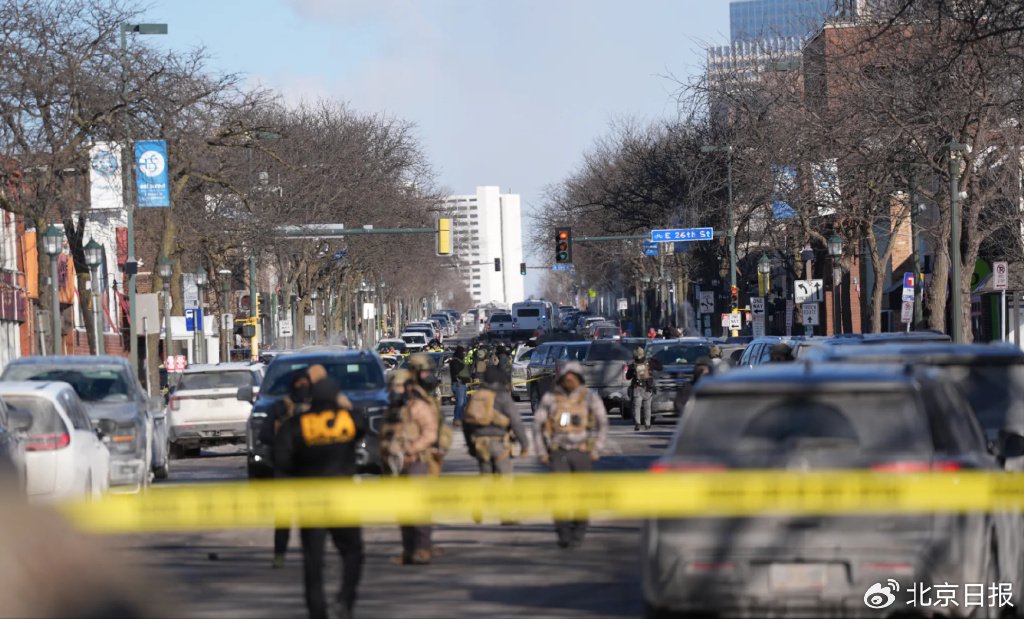
Core Viewpoint - The article discusses the escalating tensions in the United States, particularly in Minneapolis, where federal enforcement actions against illegal immigrants have led to violent confrontations and fatalities, reflecting a broader societal divide and the potential for civil unrest [3][4][6]. Group 1: Federal Enforcement Actions - The U.S. federal government has deployed armed ICE personnel in Minneapolis to conduct mass deportations of illegal immigrants, resulting in public outcry and protests across major cities [3][4]. - Two American citizens were killed by federal enforcement officers during these operations, igniting nationwide protests against the immigration policies and the use of force by law enforcement [3][4]. Group 2: Public and Political Reactions - Public sentiment has turned against the federal government's actions, with protests erupting in cities like Washington, New York, and Seattle, demanding accountability for the shootings and an end to violent enforcement tactics [3][4]. - Prominent figures, including Ray Dalio, have warned that the situation could push the U.S. to the brink of civil war, suggesting that political leaders need to take steps to de-escalate tensions [4][6]. Group 3: Political Implications - The incident has sparked a backlash within the Republican Party, with some members calling for investigations into the actions of ICE and questioning the administration's handling of the situation [5][6]. - The National Rifle Association (NRA) has also expressed dissatisfaction with the narrative surrounding the victims, calling for a thorough investigation into the circumstances of the shootings [5][6]. Group 4: Government Response - In response to the backlash, President Trump has initiated personnel changes within the enforcement teams and has called for a fair investigation into the shootings, indicating a potential shift in strategy to mitigate political fallout [6]. - The Department of Homeland Security has suspended the two federal officers involved in the shootings, reflecting an acknowledgment of the need for accountability [6].

“做好美国内战准备!”特朗普在全美高级将领大会上讲了70分钟,台下沉默70分钟,没掌声也没回应!
Mei Ri Jing Ji Xin Wen· 2025-10-01 14:03
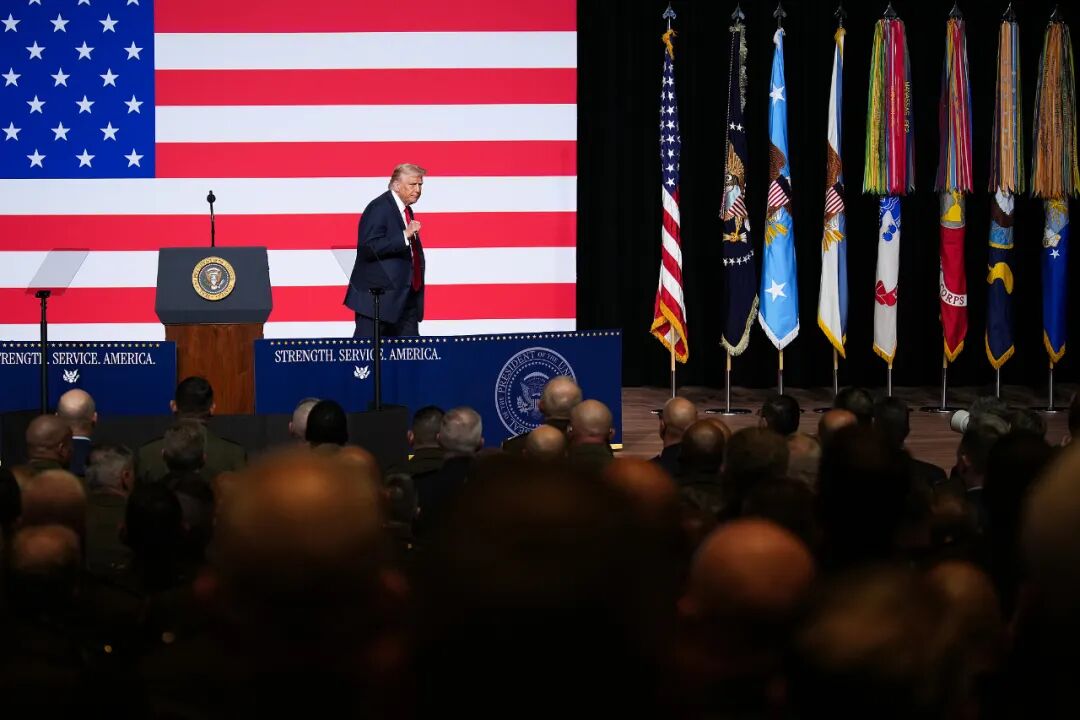
Core Points - The U.S. Secretary of Defense, Mark Esper, emphasized the need for "the right talent" and "the right culture" within the military, introducing ten new directives aimed at reforming military standards and practices [1][3] - President Trump addressed military leaders, framing the current political climate as an "internal war" and suggesting that certain cities should serve as training grounds for the National Guard [1][4] Summary by Sections Defense Secretary's Directives - Esper's directives include strengthening physical fitness standards, enhancing grooming requirements, and reviewing policies related to "toxic leadership" and bullying [3] - He announced that combat-related personnel must meet male standards for physical tests, achieving a score of 70% or higher [3] - The grooming policy will no longer allow beards, and there will be scrutiny on overweight personnel [3] - A "last warning" was issued to military officers, stating they must comply with his directives or resign [3] President Trump's Address - Trump called for military readiness to combat "internal enemies" and criticized Democratic leadership in cities like San Francisco and Chicago for crime and immigration issues [4] - He suggested that the military should intervene in these cities, framing them as "dangerous" and suitable for training exercises [4] - Trump's rhetoric aimed to realign military ideology, coinciding with Esper's cancellation of diversity and anti-discrimination programs [4] Military Response - Military leaders remained silent during the speeches, adhering to the military's nonpartisan principles [5] - Observers noted the unusual nature of the event, with former Pentagon officials expressing concern over the implications of Trump's encouragement of military action against civilians [5] - Criticism arose from Democratic lawmakers, who deemed the gathering unnecessary and potentially dangerous [5]

“做好美国内战准备!”特朗普在全美高级将领大会上讲了70分钟,台下沉默70分钟,没掌声也没回应!美防长威胁:要么听话,要么走人
Mei Ri Jing Ji Xin Wen· 2025-10-01 13:25
Core Points - The U.S. Secretary of Defense, Lloyd Austin, emphasized the need for "the right talent" and "the right culture" within the military, introducing ten new directives aimed at reforming military standards and practices [1][3] - President Trump addressed military leaders, framing the current political climate as an "internal war" and suggesting that certain cities should serve as training grounds for the National Guard [4][5] Summary by Sections Defense Secretary's Directives - New directives include strengthening physical fitness standards, enhancing grooming requirements, and reviewing policies on "toxic leadership" and bullying [3] - Military personnel in combat-related roles must meet male standards for physical tests, achieving a score of 70% or higher [3] - The Secretary criticized diversity and inclusion programs, advocating for merit-based promotions instead [3] - A "last warning" was issued to military officers to either comply with the new directives or resign [3] President Trump's Address - Trump called for military readiness to combat "internal enemies" and criticized Democratic leadership in cities like San Francisco and Chicago for crime and immigration issues [5] - He suggested that the military should intervene before situations escalate, indicating a shift in military engagement with domestic issues [5] - Trump's speech was met with silence from military leaders, reflecting the military's nonpartisan stance [6] Reactions and Implications - Analysts noted the potential dangers of encouraging military action against American citizens, raising concerns about the implications of such rhetoric [6] - The military's response to the directives and the political climate is expected to evolve in the coming months [6]
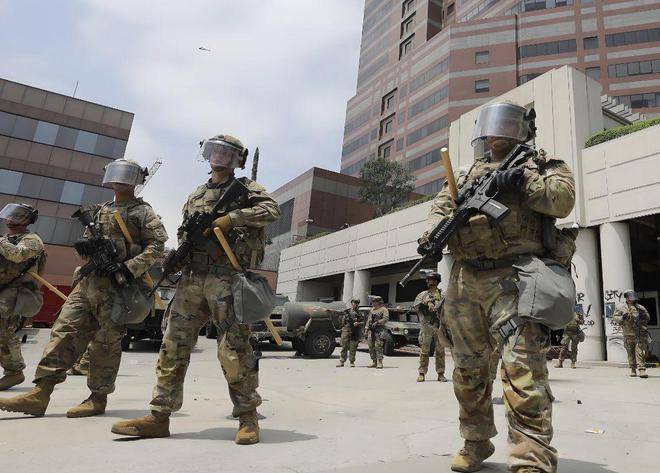
世人恐要失望了,这次洛杉矶之乱,美国内战3个大要素还没凑齐
Sou Hu Cai Jing· 2025-06-12 23:26
Core Viewpoint - The recent unrest in Los Angeles is being interpreted by many as the beginning of a civil war in the United States, but key elements necessary for such a conflict are currently absent [1][3][5]. Group 1: Conditions for Civil War - A significant factor for the outbreak of war is the availability of weapons and ammunition, which is lacking as the current economic system remains stable and production continues [3][5]. - Financial support is crucial for warfare, yet the unrest in Los Angeles is not directly linked to financial capital, which remains unaffected and may even subtly support protestors for political gain [5][7]. - The scale of participation in the unrest is limited, with only a few thousand involved, primarily from marginalized immigrant communities, lacking the organization or resources to form a substantial resistance [5][7]. Group 2: Political Dynamics - The unrest has devolved into a spectacle of mutual accusations between the two major political parties, with Democratic governors criticizing Trump's deployment of the National Guard without consent [7]. - This political division is deepening, shifting from broader national strategies to localized confrontations, which may not escalate to a civil war unless there is a significant shift in control over production resources [7].