财政失衡

Search documents
川普税收法案闯关成功,将影响未来美国三十年
Sou Hu Cai Jing· 2025-05-21 13:36
Group 1 - The core point of the news is the passage of Trump's comprehensive tax reduction bill, known as the "Beautiful Bill," by the U.S. House Budget Committee, marking a significant victory for Trump and House Speaker Johnson [1][3] - The bill aims to significantly reduce taxes, cut government spending, ease regulations, and increase border security funding, with a potential vote in the House expected soon [1][3] - The bill is positioned as a landmark legislative achievement for Trump's second term, with Johnson claiming it represents the largest spending cut in over thirty years [3] Group 2 - Trump's tax policies have historically stimulated the economy and employment, but there are concerns about long-term fiscal imbalance and increasing wealth disparity, leading to ongoing debates in both academic and political circles [5] - The bill proposes substantial cuts to the Medicaid program, which could result in over 10 million low-income Americans losing their health insurance coverage [3] - The Senate recently passed a separate bill aimed at eliminating federal taxes on tips for service industry workers, indicating bipartisan support for tax reduction measures [5][7]


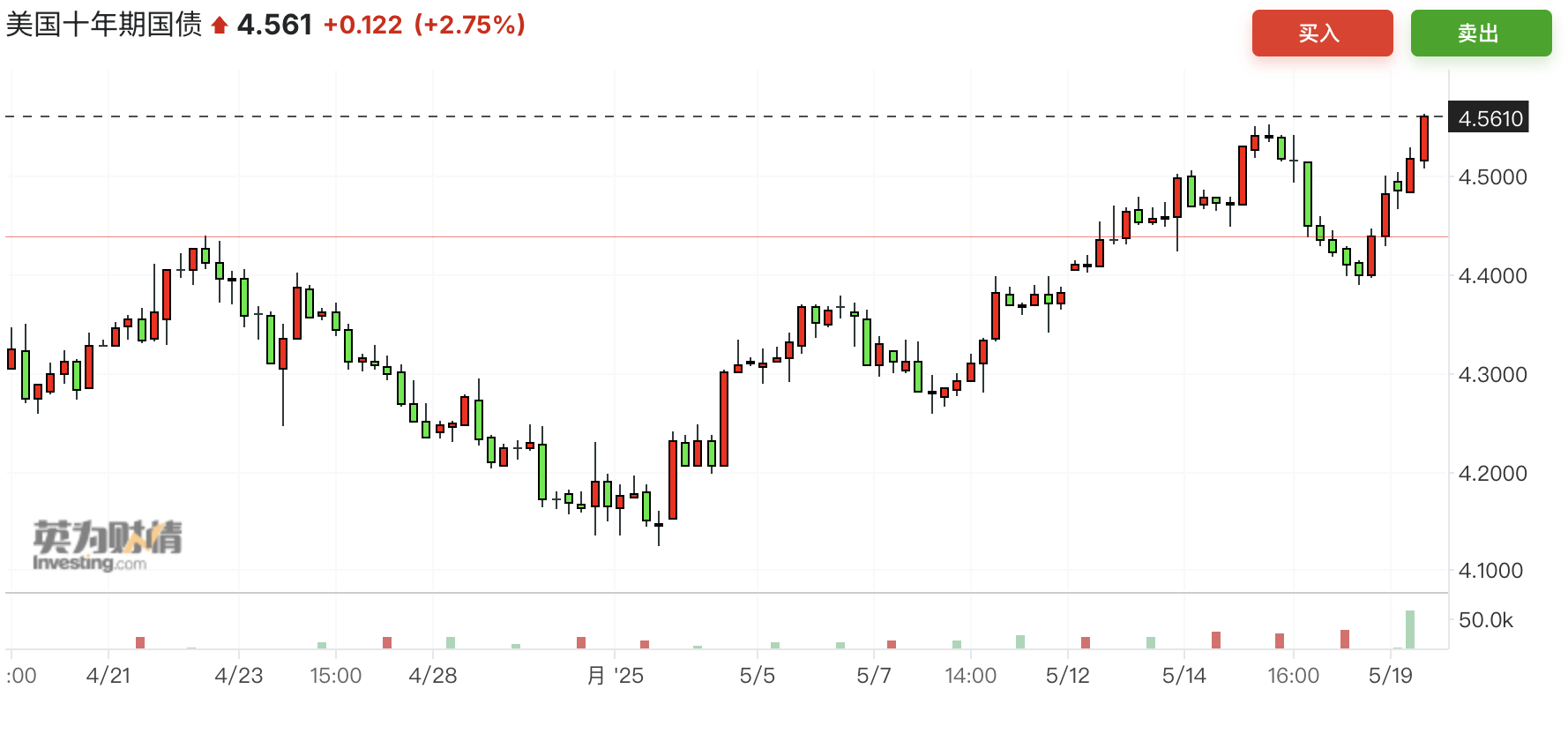
30年期收益率突破5%,美债风暴阴影再度笼罩全球市场
Di Yi Cai Jing· 2025-05-19 12:53
Group 1 - The core issue driving the recent downgrade of the US credit rating is the ongoing fiscal imbalance in the country [1][10] - The 30-year US Treasury yield has surpassed 5%, indicating rising concerns in the market [2][10] - Moody's downgrade of the US credit rating has raised questions about the sustainability of US debt, with foreign investors showing reduced demand for US Treasuries [2][9] Group 2 - As of March, foreign investors held a total of $9.05 trillion in US Treasuries, with Japan as the largest holder at $1.13 trillion, while China's holdings decreased by $18.9 billion to $765 billion [6][7] - The recent TIC data shows a significant increase in foreign holdings of US Treasuries, up over $233 billion from February, but China's position has slipped to third place [6][7] - The market has experienced a notable sell-off in US Treasuries, particularly influenced by concerns over the Trump administration's tariff policies and their impact on fiscal sustainability [9][12] Group 3 - The proposed tax reform plan by the Trump administration has faced significant hurdles, with a recent vote in the House Budget Committee resulting in a defeat, highlighting internal party divisions [11][12] - The potential delay in the tax reform process raises concerns about the future trajectory of US fiscal policy and its implications for the economy [12][13] - Analysts suggest that the focus may shift from tariffs to the progress of tax reform, which could further influence investor sentiment towards US Treasuries [13]