资金盘骗局

Search documents
优哩哩暴雷警示:日流水超300亿,所谓“美金收益”不过是割韭菜手段
Sou Hu Cai Jing· 2025-10-04 23:21
Core Insights - The article discusses the sudden closure of the cash withdrawal feature by a short video cross-border e-commerce platform named "YouliLi," leading to significant financial losses for users who had invested in the platform [2] - The platform, which claimed to be from the United States, rapidly expanded and attracted millions of users within a few months before collapsing [2] Group 1: False Promises and Operations - "YouliLi" marketed itself with enticing slogans like "watch videos to earn dollars" and "zero-cost Amazon store setup, earn millions annually," which drew over a million users by 2025 [3] - The platform's claims of using advanced technologies like "S2K2C" business model and "HERO AI system" were found to be misleading, as the so-called intelligent product selection merely scraped unsold items from Amazon [3] - The digital avatars used for live streaming were generated by free AI tools, resulting in poor user experiences, with some users commenting on the low quality of the AI-generated content [3] Group 2: Warning Signs Before Collapse - The platform promised unrealistic high returns, claiming that C-class stores could earn 10% every 14 to 15 days, resembling traditional mutual fund schemes disguised as a short video e-commerce model [4] - On September 21, 2025, "YouliLi" announced a system upgrade without prior notice, halting all withdrawal functions indefinitely [5] - The operational team became unreachable by August 14, 2025, and the company was listed as operating abnormally, indicating potential issues with management [6] Group 3: Characteristics of a Ponzi Scheme - The operational model of "YouliLi" exhibited classic Ponzi scheme traits, such as enticing users with registration bonuses while imposing complex conditions for withdrawals [9] - High-interest rates were used as bait to attract investments, with a focus on recruiting new members to generate returns for earlier investors [11][12] - Once the influx of new funds slowed, the platform would use excuses like "upgrades" to shut down operations, leading to the disappearance of the controlling parties [14] Group 4: Identifying Similar Scams - The article emphasizes the need to be cautious of platforms promising returns significantly higher than market norms, as they are likely fraudulent [20] - A reliance on recruiting new members for income rather than actual business operations is a red flag [20] - Frequent use of buzzwords like blockchain and AI for marketing purposes, along with withdrawal restrictions, are indicators of potential scams [20]


“抢名酒”稳赚不赔?一市民投资十万后平台停摆
Qi Lu Wan Bao Wang· 2025-09-29 10:03
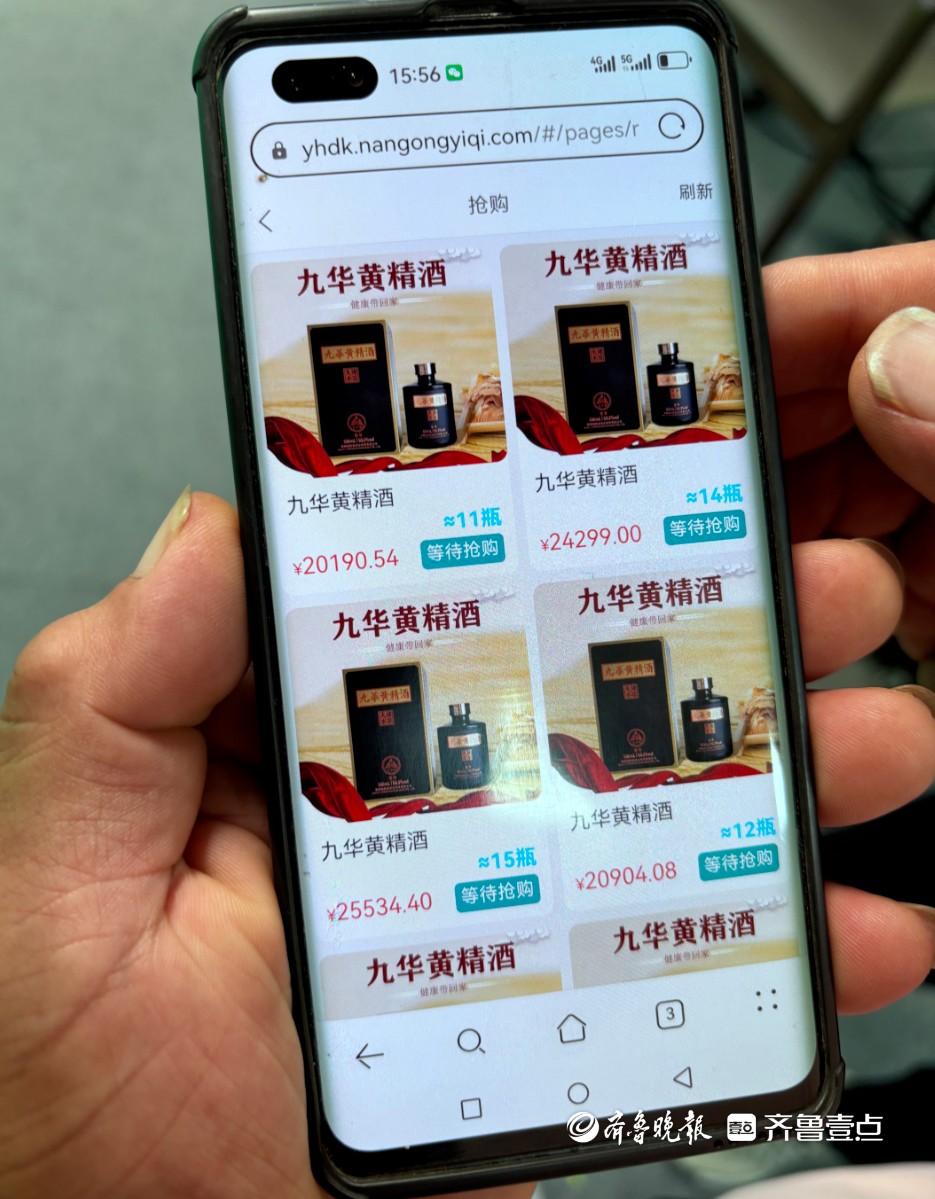
Core Points - The article discusses a Ponzi scheme involving a platform called "Jiuhua Huangjing Wine," where investors were promised high returns but ultimately lost their money when the platform shut down [1][3][5] Group 1: Investment Scheme Details - The platform attracted investors by promising a daily return of 1.5% on investments, which was a key factor in luring participants [1][5] - The scheme involved purchasing a product, "Jiuhua Huangjing Wine," with the promise of reselling it at a markup, but no actual products were delivered [1][3] - The operation relied on a network of referrals, where existing investors were encouraged to recruit new participants to sustain the funding [3][5] Group 2: Impact on Investors - Victims reported significant financial losses, with one investor, Zhang, losing a total of 100,000 yuan, and many others in the region of Hebei also affected [1][4] - The scheme reportedly involved thousands of investors, particularly in Hebei's Xingtai city, with estimates of the total amount involved reaching several million yuan [4][5] - The emotional toll on victims was highlighted, as many were introduced to the scheme through friends and family, leading to strained personal relationships [3][4] Group 3: Legal and Regulatory Response - Law enforcement has begun to investigate the scheme, with several individuals associated with the platform being detained [4][5] - The police have been tight-lipped about the progress of the investigation, leaving victims uncertain about the recovery of their funds [5] - Financial experts have warned that the platform exhibited classic characteristics of a Ponzi scheme, emphasizing the need for caution among investors regarding high-return promises [5]
警惕这13个项目项目正在掏空你的钱包!涉嫌传销、虚假理财诈骗!
Sou Hu Cai Jing· 2025-07-14 10:51
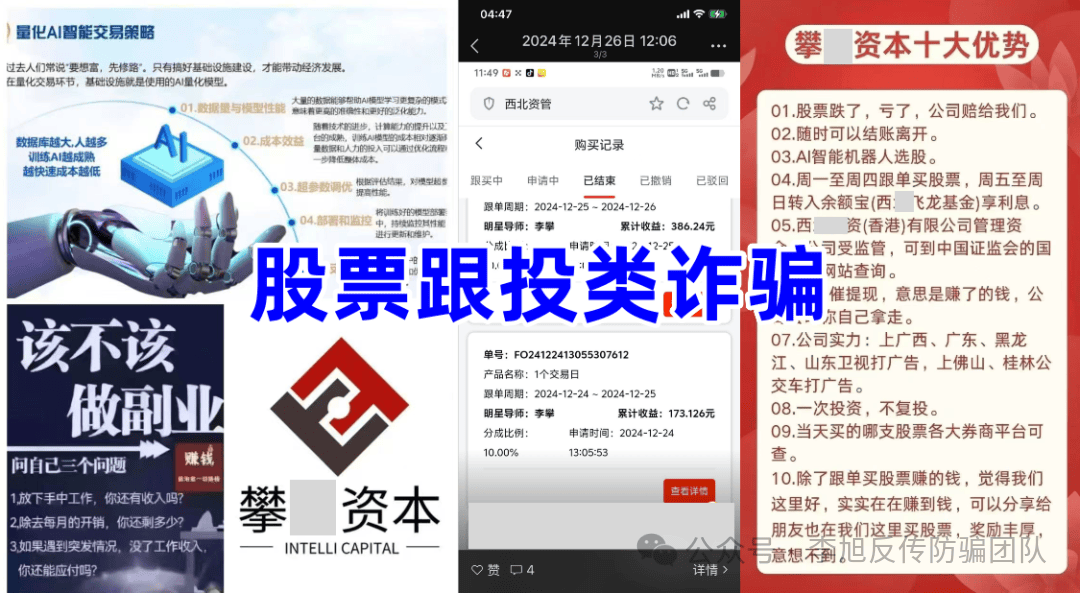
Group 1 - The rise of virtual currencies has led to financial innovation but also created a breeding ground for scams, with Ponzi schemes and fraudulent investment projects disguised as blockchain and decentralized high-yield investments [1] - Recent scams include "Xinkangjia DGCX" virtual currency fraud, "Xinlizhong" stock-following fraud, and "Blu Trading" virtual currency fraud [1] - The "Xinlizhong" stock-following project has collapsed, similar to the previous "Lianmou Investment" stock-following scam [6][2] Group 2 - Fraudulent apps like "Panmou Capital" and "Shengshu" have been reported, promoting high returns and requiring participants to download unregistered applications [2][4] - The "AIFEEX" virtual currency staking project claims to offer static returns on investments in AFM coins, promoting a multi-level dynamic return structure [14][16] - The "AAVE" blockchain bank project promotes high returns and uses a referral system, exhibiting characteristics typical of pyramid schemes [19][20] Group 3 - Various fraudulent apps, such as "Renmin Zhishang" and "Zhonghua Minsheng," have been reported, promoting fictitious high-yield investment projects and requiring participants to pay fees to withdraw funds [23][29] - The "STA" cross-border e-commerce project has been flagged for requiring participants to pay deposits and promising returns through a multi-level sales structure, indicating potential fraud [36][38] - The "Jinduan Club" and "Guangzhou Certain Cosmetics" scams involve participants paying large sums to join and promising high returns, showcasing the prevalence of pyramid schemes [42][43]