资金盘骗局

Search documents
【调查披露】从“迪维交易”到“时空量化期货”:换壳不换套路,资金盘骗局风险集中暴露
Sou Hu Cai Jing· 2026-01-06 20:13
Core Viewpoint - The "Time-Space Quantitative Futures" platform is under scrutiny due to reports from multiple investors about withdrawal issues, account anomalies, and unresponsive customer service, indicating a potential Ponzi scheme with high risks of collapse [1] Group 1: Platform Characteristics - "Time-Space Quantitative Futures" claims to engage in quantitative trading with promises of "intelligent models," "professional teams," and "stable returns," suggesting that its trading team is from a well-known overseas institution [3] - The platform's revenue structure, trading mechanism, and deposit methods closely resemble those of the previously problematic DV Trading projects, indicating a continuity of the same operational team [3][4] Group 2: Investor Experiences - Investors, such as Mr. Zhou from Fujian, reported investing approximately 50,000 yuan through USDT, initially seeing profits on their accounts [5] - However, when attempting to withdraw funds, Mr. Zhou faced delays and unresponsive customer service, with many in his group experiencing similar issues, yet some continued to invest under the guidance of their "mentors" [6] Group 3: Financial Operations - Industry observers suggest that such platforms do not genuinely invest funds in the futures market, and the displayed profits may be fabricated data from the backend [7] - As new investments slow down, platforms often restrict withdrawals and impose additional conditions, leading to eventual system shutdowns [7] Group 4: Signs of Impending Collapse - Recent abnormal signals from the platform include prolonged withdrawal review periods, frequent changes in customer service responses, and the expulsion of dissenting voices from group chats [8][10] - These behaviors are indicative of a Ponzi scheme entering its later stages [9]


多元书咖被指资金盘:多元文娱模式与实体经营严重脱节
Sou Hu Cai Jing· 2026-01-05 15:58
Core Viewpoint - The "Diverse Book Cafe" project, marketed as an innovative model combining "content economy + offline consumption," has deviated from the basic operational logic of traditional bookstores and resembles a typical Ponzi scheme [1][3]. Group 1: Project Overview - The "Diverse Book Cafe" is part of the "Diverse Cultural Entertainment" system, claiming to build a cultural consumption loop based on industries such as film, publishing, and animation [1]. - On-site investigations reveal that physical locations of the Diverse Book Cafe suffer from low foot traffic, limited consumption scenarios, and superficial book displays, contradicting its promotion as a "high-frequency cultural consumption space" [1]. Group 2: Operational Concerns - A bookstore operator noted that the core of a legitimate bookstore lies in its single-store profit and loss model, which includes metrics like daily customer flow, gross profit per coffee cup, book turnover rate, and member repurchase rate [3]. - Promotional materials for the Diverse Book Cafe lack any operational data, instead focusing on "participation qualifications," "system benefits," and "structural returns" [3]. Group 3: Investor Experiences - An investor, referred to as Wang, participated in the Diverse Book Cafe project in 2024 and initially received several "system dividends." However, when he requested to see real operational data, he was denied access under the pretext of "business confidentiality" [3]. - After several months, his earnings were interrupted, and exit channels were restricted, indicating characteristics typical of a Ponzi scheme [3]. Group 4: Risk Assessment - Industry analysis suggests that when a project consistently avoids operational data while emphasizing "model," "ecosystem," and "diverse cultural entertainment layout," its risk level is significantly higher than that of ordinary physical projects [3]. - Despite its cultural facade, the operational logic of the Diverse Book Cafe has clearly shifted towards a Ponzi scheme [3].

揭秘日利率1%资金盘陷阱:超出常识的收益诱惑
经济观察报· 2025-12-13 04:40
Core Viewpoint - The article highlights the ongoing prevalence of fraudulent financial schemes, particularly focusing on the pyramid scheme operated by Yuzhi Financial, which promises high returns and employs aggressive recruitment tactics to expand its investor base [2][6][25]. Summary by Sections Fraudulent Operations - Yuzhi Financial presents itself as a virtual currency trading platform, claiming a cumulative return of up to 370.6% over thirty days, enticing investors with high returns while requiring them to recruit others to earn commissions [2][6]. - The scheme requires investors to pay a "self-certification deposit" of 20% of their total account balance to withdraw earnings, with withdrawal fees increasing from 10% to 30% [2][14]. - The company claims to have 3 million members, suggesting a potential scale of over 20 billion yuan, although actual figures are difficult to verify due to possible false advertising [2][3]. Regulatory Warnings - The Guangdong provincial government issued a warning about Yuzhi Financial, stating that it operates without the necessary licenses and that its app, HSEX, is unauthorized [3][4]. - The Hong Kong Stock Exchange has flagged Yuzhi Financial and its associated apps as suspicious, confirming multiple complaints regarding illegal financing activities [14][17]. Investor Experiences - Investors like Wang Qin have reported being unable to withdraw funds, realizing too late that they were part of a scam designed to extract more money from them [9][16]. - The scheme's structure relies heavily on continuous recruitment, with participants needing to bring in new investors to recoup their initial investments [12][30]. Characteristics of the Scheme - The operation is characterized by a lack of tangible projects, with promises of high monthly returns that attract new investors while paying older ones with their own funds [25][36]. - The article notes that these schemes often utilize social media and community networks to spread, making them difficult to regulate and monitor [27][36]. Broader Implications - The rise of such schemes is linked to the increasing use of virtual currencies and the lack of understanding among the public regarding investment risks [29][37]. - Legal experts emphasize the need for both regulatory action and public awareness to combat the allure of high-return investments that often lead to financial loss [37].

“星辉资产”瑞像基金股票跟单资金盘骗局,已经单割,随时崩盘!
Sou Hu Cai Jing· 2025-11-30 16:59
Group 1 - The article discusses a fraudulent investment platform called "Xinghui Asset - Ruixiang Fund," which is reported to have a scheme where investors can only withdraw funds by recruiting others, indicating a Ponzi-like structure [1][3][4] - The platform is linked to a previous entity named "Yameng Lianying," suggesting a history of similar fraudulent activities targeting investors [3][4] - Victims report that the platform's customer service implies that withdrawals are contingent upon bringing in new investors or achieving certain performance metrics, highlighting a predatory business model [4][10][12] Group 2 - The article mentions that many victims are unable to withdraw their investments, with some claiming they have not been able to withdraw any funds despite others reportedly being able to do so [6][9][11] - There is a broader context of similar fraudulent schemes in the market, with references to other recent scams like "Saibo Venture," which reportedly defrauded investors of billions [12][15] - The nature of these schemes is characterized as a cycle where early investors profit at the expense of later ones, emphasizing the unsustainable and exploitative nature of such investment platforms [15]

斯享汇跨境电商垫资,是资金盘骗局,看见远离
Sou Hu Cai Jing· 2025-11-15 14:35
Core Insights - The cross-border e-commerce project by Sxianghui is identified as a scam that has defrauded over ten thousand individuals [2] Group 1: Scam Characteristics - The most apparent feature of the scam is the mismatch between the receiving accounts and the platform's main entity, with funds directed to unrelated companies [7] - The scheme promotes recruitment for rebates, resembling a pyramid scheme model [7] Group 2: User Guidance - Users who have invested money are advised to save all evidence, including order screenshots, chat records, and payment receipts, and to file complaints with payment platforms and report to the police [9] - It is emphasized that legitimate businesses do not require upfront capital to earn profits and do not rely on recruitment for income [9] Group 3: Market Behavior - The dynamics of the scheme suggest that early participants profit while later entrants risk becoming "greater fools" as the scheme collapses [10] - There is a psychological tendency among participants to ignore warnings due to the allure of potential profits, leading to regret only after the scheme fails [10]

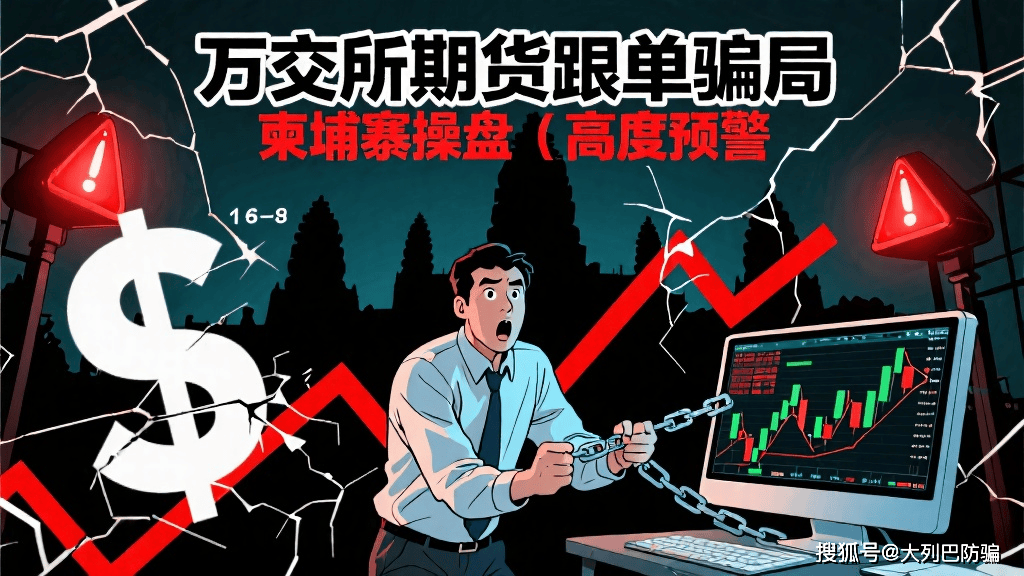
万交所期货跟单资金盘骗局,柬埔寨操盘,高度预警
Sou Hu Cai Jing· 2025-10-26 02:25
Group 1 - The article discusses a Ponzi scheme in Cambodia, referred to as a "killing pig" scheme, which promises high returns of 1% to 4% daily and over 50% monthly [2] - The scheme is operated by a mentor named "Old Chen," who is attracting participants with the promise of professional management and capital protection [2][5] - The structure of the scheme includes an eight-level reward system for recruiting new participants, with rewards ranging from 588 to over 120,000 [3][5] Group 2 - The system used in this scheme is identical to that of a previous scheme called "Yameng Alliance," indicating a pattern of fraudulent operations [5] - Participants are warned against using retirement funds or borrowed money to invest, as early participants profit while latecomers become "bag holders" [5] - The article emphasizes the psychological aspect of greed, where individuals ignore warnings due to the allure of quick profits, leading to regret once the scheme collapses [5][6]
宏创国际资金盘骗局已经单割,高度预警,尽快撤离
Sou Hu Cai Jing· 2025-10-22 16:40
Group 1 - The article discusses the fraudulent practices of a lottery scheme, indicating that it has begun to exploit participants by "killing pigs" through financial manipulation [2] - It highlights the deceptive tactics used, such as promising guaranteed profits and requiring additional payments for account recovery after freezing [6] - The text warns that participants who join early may profit, but those who join later risk becoming "bag holders" as the scheme collapses [9] Group 2 - The narrative suggests that individuals are often blinded by greed, leading them to ignore warnings about the impending collapse of such schemes [9] - It emphasizes the notion that all participants are essentially "chives" being harvested by capitalists, with the underlying message that ignorance poses the greatest risk in investments [10] - The article advocates for a critical approach to financial markets, suggesting that understanding and mitigating risks is essential for success [10]

Avira娱乐保险彩票资金盘,已经单割,高度警惕骗局!
Sou Hu Cai Jing· 2025-10-13 20:27
Core Viewpoint - The "Avira Entertainment Insurance" lottery fund scheme is being exposed as a potential scam, with internal team members quietly withdrawing and signs of imminent collapse [2][4]. Group 1: Scheme Characteristics - The project claims to be the world's first online insurance platform, utilizing blockchain technology and a public welfare fund, but these are merely marketing tactics [2]. - The scheme requires participants to enter specific rooms to place bets, with complex rules that are designed to confuse users [4]. Group 2: Warning and Advice - Online gambling and lottery schemes are often scams that lure individuals with promises of high returns, ultimately leading to financial loss [4]. - The company does not promote any projects and advises against investing money, especially retirement funds or borrowed money, in such schemes [4].

别被蒙骗!ARK 方舟之境内部传出:资金转移接近尾声,跑路不远了!
Sou Hu Cai Jing· 2025-10-11 11:46
Core Insights - The recent exposure of insider chat records reveals a planned exit strategy by the ARK project team, indicating a fraudulent scheme disguised as a legitimate cryptocurrency project [1][3]. Group 1: Scheme Details - The internal chat records show the core team discussing a "final harvest" plan, with the project leader openly stating that "the last harvested investors are the most profitable," highlighting the deceptive nature of the project [3]. - The scheme is structured in three phases: first, the operators will buy in to create a false sense of short-term price increase; second, they will release "major positive news" through partner media to lure investors; finally, they will sell off at the peak to drain the funds [3]. Group 2: Blockchain Evidence - Blockchain monitoring data indicates unusual activity from large wallet addresses associated with the ARK project, including frequent small test transfers, which are often precursors to a scam exit [4]. - There has been a notable increase in the use of special administrative functions within the ARK smart contract, which allow for the direct transfer of fund pool assets, raising concerns about potential misuse [4]. Group 3: Market Manipulation - The current market downturn has led to a significant drop in ARK's price, with the project team likely aiming to exploit investors' desire to "buy the dip" by creating a false rebound as bait [6]. - Industry experts warn that any claims of "the bottom has been reached" could be smoke screens released by the project team, as such scenarios often precede a scam exit [6].

聚富通资金盘骗局,震哥提醒高度预警即将崩盘!
Sou Hu Cai Jing· 2025-10-07 14:51
Group 1 - The article discusses a fraudulent investment scheme called "聚富通," which is characterized as a "killing pig" scam that is on the verge of collapse [3][5] - The scheme falsely claims to be a Hong Kong company and uses a fake app named "富达," promoting a one-click investment strategy that promises daily returns of 2% [5] - The operation is linked to a scam group from Northern Myanmar, with a figure named "老邓" acting as a mentor, and it primarily targets new investors [5][8] Group 2 - The current state of the scheme relies on a few unscrupulous leaders to recruit new participants, as the market has already deteriorated, indicating an imminent collapse [8] - The article warns against investing retirement funds or borrowed money in such schemes, emphasizing the importance of financial prudence [8]