传销诈骗

Search documents
或永久限制登录!微信发布最新公告
新华网财经· 2025-11-20 09:33
Core Viewpoint - The WeChat Security Center has issued a warning against illegal activities such as pyramid schemes and fraud organized through WeChat groups, emphasizing the potential for permanent account restrictions for participants involved in such activities [1][4]. Summary by Sections Recent Complaints and Actions - WeChat has received complaints regarding accounts involved in organizing pyramid schemes and fraud within groups, using deceptive tactics like claiming to unfreeze national assets or promoting blockchain-related investments with high returns [1][4]. Consequences for Violators - Accounts found to be violating regulations will face tiered penalties based on the severity of the violations, including potential permanent login restrictions and disabling group functionalities for confirmed violators [4]. Common Fraud Techniques - Fraudsters often disguise themselves as official entities, using fake documents and claims of government support to lure users into investing in fictitious projects, such as "historical national assets" or "blockchain virtual currencies" [10][13]. Warning Signs and Precautions - Users are advised to be cautious of promises of high returns with low investment, especially those claiming to be secret government projects. Participation in "referral" activities or downloading unknown apps is also discouraged [13][14][15]. Target Demographics - Scammers frequently exploit the trust of elderly individuals in official institutions, urging them to join pyramid schemes and recruit others, which is illegal [17].


虚拟币梦醒之后,留下的是真实的家庭悲剧
Guan Cha Zhe Wang· 2025-11-11 09:47
Core Insights - The article highlights the alarming trend of middle-aged and elderly individuals becoming addicted to virtual currencies like "Pi Coin," leading to financial ruin and family breakdowns [1][3][5] Group 1: Case Studies - A 56-year-old woman, originally a store owner, became deeply involved in "Pi Coin," neglecting her business and accumulating debt, ultimately severing ties with her daughter [3][5] - A 60-year-old retired judge invested heavily in "Pi Coin," purchasing multiple computers and joining secretive clubs, resulting in a drastic change in his financial situation [3][5] Group 2: Nature of the Scam - The so-called "Pi Coin" is identified as a pyramid scheme disguised as a blockchain project, with low entry barriers and a multi-level marketing structure designed to attract investors [5][7] - The Chinese government has explicitly banned all virtual currency transactions, categorizing them as illegal financial activities, which includes trading, exchanges, and token issuance [5][7] Group 3: Prevention Strategies - It is crucial for middle-aged and elderly individuals to learn how to discern the authenticity of information, while younger family members should engage in regular communication to identify early signs of such scams [7][8] - Authorities are urged to maintain stringent monitoring and enforcement against illegal virtual currency activities, utilizing data-sharing mechanisms across financial and law enforcement sectors [7][8] Group 4: Psychological Factors - Many elderly individuals fall victim to scams not out of greed, but due to a desire to grasp new opportunities in a rapidly changing world, highlighting the need for basic security in the digital age [8]

全球最大比特币洗钱案: 涉案430亿,13万人受害,主谋竟是中国大妈
Sou Hu Cai Jing· 2025-10-15 06:57
Core Points - A 47-year-old Chinese woman, Qian Zhimin, pleaded guilty in a UK court for being the mastermind behind a massive fraud scheme that lasted 13 years and involved over 43 billion yuan globally [2][12] - The fraud scheme included significant investments in Bitcoin, which appreciated to nearly 50 billion yuan by the time of her arrest [2][25] Group 1: Fraud Scheme Details - Qian Zhimin was involved in a Ponzi scheme that defrauded investors of 402 billion yuan from 2014 to 2017, with total fraudulent amounts exceeding 430 billion yuan [18][20] - She used 11.4 billion yuan of the defrauded funds to purchase Bitcoin, which remained untouched and appreciated significantly over the years [20][25] - The scheme was characterized by high promised returns, with some projects claiming returns of 100% to 300% [16][18] Group 2: Legal Proceedings and Consequences - In 2021, Qian Zhimin fled to the UK, where she later employed a Chinese assistant, Wen Jian, to help manage her affairs and launder money [23][25] - Wen Jian was arrested for laundering 150 Bitcoins, leading to the discovery of 61,000 Bitcoins valued at hundreds of billions [4][10][25] - The UK authorities have frozen the assets, and victims are allowed to initiate recovery processes, but the appreciation of the assets complicates the restitution [25][27][29] Group 3: Broader Implications - The case highlights the risks associated with high-return investment schemes, emphasizing the need for vigilance among investors [32] - The potential for the UK to benefit financially from the situation raises questions about international cooperation in asset recovery [29][31]

警惕这13个项目项目正在掏空你的钱包!涉嫌传销、虚假理财诈骗!
Sou Hu Cai Jing· 2025-07-14 10:51
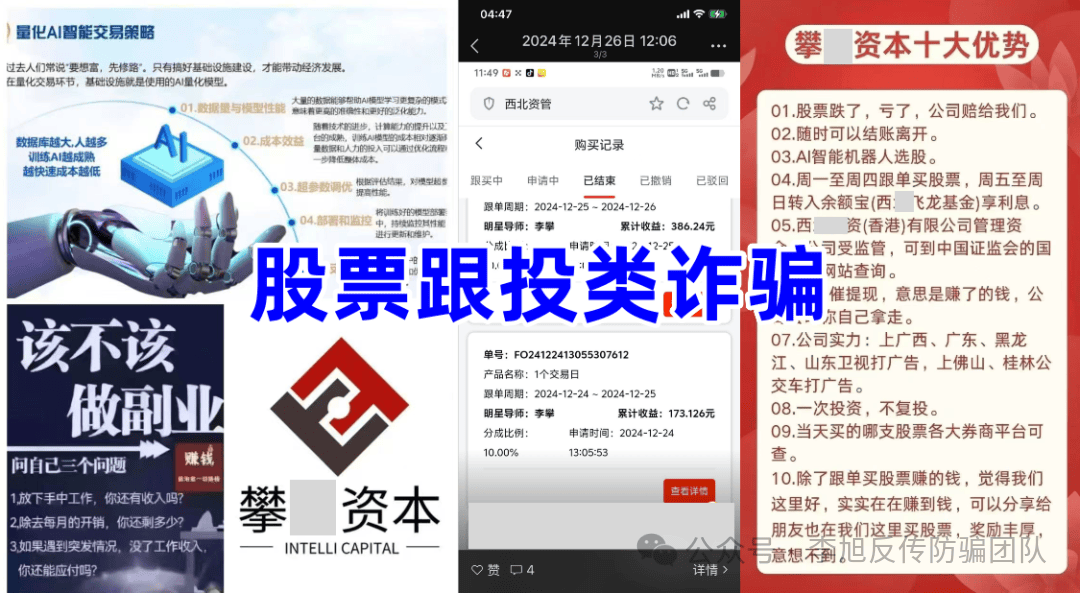
Group 1 - The rise of virtual currencies has led to financial innovation but also created a breeding ground for scams, with Ponzi schemes and fraudulent investment projects disguised as blockchain and decentralized high-yield investments [1] - Recent scams include "Xinkangjia DGCX" virtual currency fraud, "Xinlizhong" stock-following fraud, and "Blu Trading" virtual currency fraud [1] - The "Xinlizhong" stock-following project has collapsed, similar to the previous "Lianmou Investment" stock-following scam [6][2] Group 2 - Fraudulent apps like "Panmou Capital" and "Shengshu" have been reported, promoting high returns and requiring participants to download unregistered applications [2][4] - The "AIFEEX" virtual currency staking project claims to offer static returns on investments in AFM coins, promoting a multi-level dynamic return structure [14][16] - The "AAVE" blockchain bank project promotes high returns and uses a referral system, exhibiting characteristics typical of pyramid schemes [19][20] Group 3 - Various fraudulent apps, such as "Renmin Zhishang" and "Zhonghua Minsheng," have been reported, promoting fictitious high-yield investment projects and requiring participants to pay fees to withdraw funds [23][29] - The "STA" cross-border e-commerce project has been flagged for requiring participants to pay deposits and promising returns through a multi-level sales structure, indicating potential fraud [36][38] - The "Jinduan Club" and "Guangzhou Certain Cosmetics" scams involve participants paying large sums to join and promising high returns, showcasing the prevalence of pyramid schemes [42][43]