通用模型

Search documents
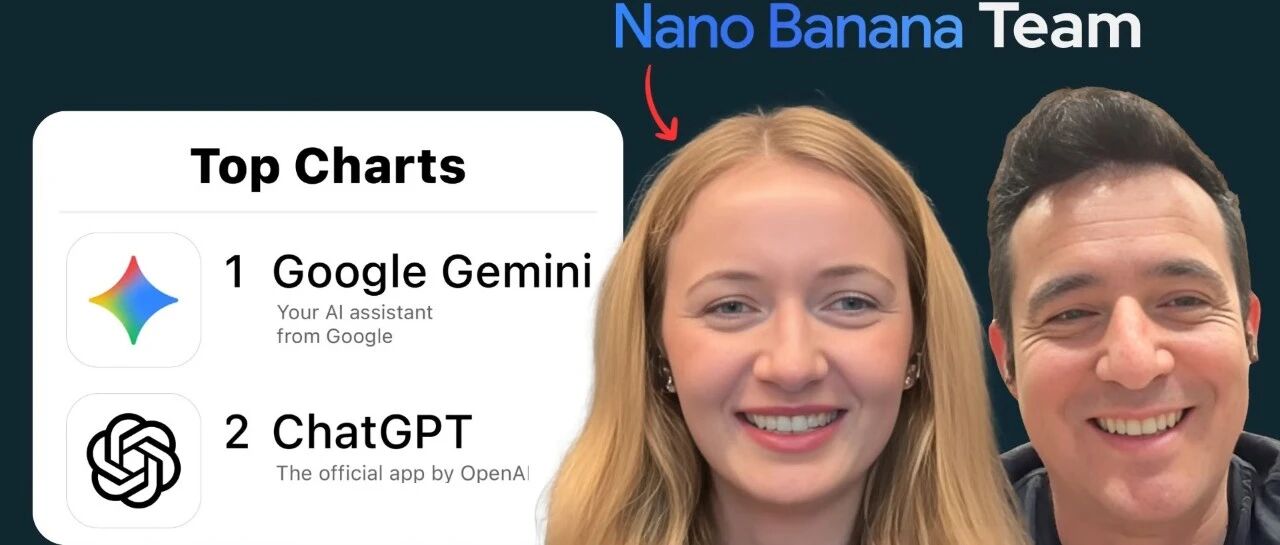
Nano Banana核心团队:图像生成质量几乎到顶了,下一步是让模型读懂用户的intention
Founder Park· 2025-09-22 11:39
Core Insights - The future of image models is expected to evolve similarly to LLMs, transitioning from creative tools to information retrieval tools [4] - Multi-modal interaction will be crucial, focusing on understanding user intent and adapting to various interaction modes [4][20] - The integration of "world knowledge" from LLMs into image models is a significant application direction for enhancing user assistance [14] Group 1: Trends and Developments - Image models are anticipated to become more proactive and intelligent, capable of using text and images flexibly based on user queries [4][14] - Users' expectations for instant, high-quality outputs from models are often unrealistic, highlighting the need for iterative processes [18] - The design of user interfaces (UI) for model products is currently undervalued, with a need for better integration of various modalities to enhance usability [4][18] Group 2: User Interaction and Experience - The "blank canvas dilemma" is a significant challenge, necessitating clear communication of what actions are possible within the interface [5][20] - Simplifying operations for ordinary users is essential, with a focus on visual guidance and examples to facilitate understanding [17] - Social sharing plays a key role in overcoming the "blank canvas dilemma," as users are inspired by others' creations [17] Group 3: Model Evaluation and Aesthetics - User feedback is critical for evaluating model performance, with a focus on aesthetic quality and meeting user needs [21][22] - Meeting aesthetic demands is challenging and requires deep personalization to provide useful suggestions [26] - The future may see a shift towards more personalized models, but current expectations are likely to remain at the prompt level [27] Group 4: Future Directions and Integration - The development of "Omni Models" that can handle multiple tasks is a likely trend, with shared technologies between image and video models [40] - Traditional tools and AI models are expected to coexist, with each serving different user needs based on the complexity of tasks [35][37] - The integration of AI into existing workflows, such as enhancing presentation tools, is a promising area for future development [38]

六大主流Agent横向测评,能打的只有两个半
Hu Xiu· 2025-06-02 09:45
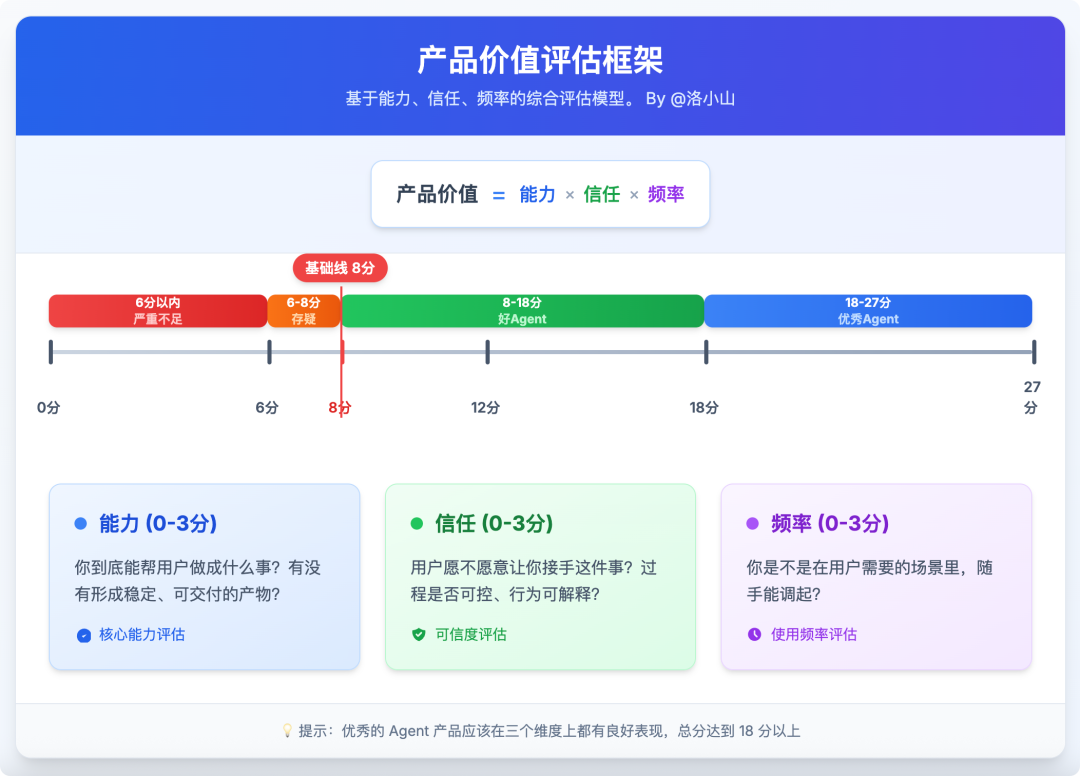
Group 1 - The future of AI Agents is anticipated to be significant over the next decade, with increasing acceptance from users for longer AI processes and cheaper tokens [1][4]. - Various Agent products have transitioned from demos to business/consumer applications, indicating a growing market [5]. - The evaluation of Agent products can be framed using the formula: Product Value = Capability × Trust × Frequency, with a baseline score of 8 indicating a good Agent [7][8]. Group 2 - The evaluation criteria for Agents include their ability to complete tasks, the trust users have in them, and how frequently they can be utilized in daily scenarios [9][11]. - Not all Agents will survive; those that can effectively balance these three dimensions will have a better chance of remaining relevant [13][14]. - The analysis of specific Agents reveals varying levels of capability, trust, and frequency, impacting their overall value [15][16]. Group 3 - Manus is noted for its rapid rise and fall, demonstrating the importance of user confidence in repeated usage [18][26]. - The product's ability to execute tasks was rated low due to its limited integration into daily workflows and inconsistent results [28][30]. - Despite its shortcomings, Manus highlighted a new paradigm for Agents, emphasizing the need for complete action chains rather than just conversational capabilities [30][32]. Group 4 - Douzi Space is recognized for its comprehensive task execution but struggles with user retention [35][37]. - It has a clear path for improvement and a solid framework, scoring 12 points in the evaluation [38][40]. - The potential for Douzi Space to become a leading Agent application is noted, contingent on its ability to integrate into user workflows effectively [41][44]. Group 5 - Lovart stands out as a productivity tool that effectively delivers results, scoring 18 points in the evaluation [45][54]. - It simplifies the design process by autonomously managing tasks, showcasing a high level of capability and trust [51][55]. - The product's reliance on user input for frequency remains a limitation, but its overall performance is highly regarded [58]. Group 6 - Flowith Neo offers a unique interaction model, allowing users to visualize processes, but may not be suitable for all users [60][68]. - Its ability to handle concurrent tasks and maintain context is a significant strength, scoring 9 points overall [73][66]. - The product's complexity may deter less experienced users, limiting its frequency of use [70]. Group 7 - Skywork is identified as a strong contender in the office application space, outperforming Manus in user experience [77][78]. - It effectively integrates user needs into its task execution, providing a structured approach to generating reports and presentations [82][89]. - Skywork's ability to deliver reliable outputs and maintain user trust positions it as a valuable tool in the market, scoring 18 points [101][100]. Group 8 - Super Magi represents a different category of Agents, focusing on operational efficiency within business systems [103][104]. - Its ability to automate routine tasks and integrate seamlessly into existing workflows enhances its utility [126][127]. - The product's performance in executing specific tasks reliably contributes to its high trust score, also rated at 18 points [128]. Group 9 - The overall analysis indicates that the sustainability of Agents in the market will depend on their ability to deliver consistent, reliable results while maintaining user trust [139][140]. - The distinction between generalist and specialist Agents is emphasized, with specialist Agents likely to have a competitive edge due to their focused capabilities [171][172]. - The evolving landscape of AI models raises questions about the future relevance of specialized Agents as general models become more capable [141][142].