高周转

Search documents
中国恒大8月25日港交所摘牌,16年上市历程正式终结
Sou Hu Cai Jing· 2025-08-15 00:40
Group 1: Delisting Core Facts - The official delisting date for China Evergrande Group from the Hong Kong Stock Exchange is set for August 25, 2025, marking the end of its 16-year listing history [1] - The last trading day will be August 22, 2025, and the delisting is due to failure to meet the resumption guidelines after being suspended for over 18 months [3] - Evergrande has stated it has "no intention to apply for a review" and accepts the delisting decision [3] Group 2: Underlying Reasons for Delisting - The company engaged in financial fraud, inflating revenues and profits by 213.9 billion yuan and 350.1 billion yuan in 2019 and 2020, respectively, which accounted for 50%-78% of the reported revenue during those periods [4] - Evergrande issued 20.8 billion yuan in corporate bonds based on false financial statements, resulting in a penalty of 4.175 billion yuan from the regulatory authority [4] - The total liabilities exceed 2.4 trillion yuan, with creditors claiming approximately 350 billion HKD (45 billion USD) by 2025, while asset realization is only 2 billion HKD [5] Group 3: Operational Paralysis - Real estate sales plummeted by 95%, with only 32.97 billion yuan in sales recorded in 2023, leading to numerous project suspensions and failed asset disposals [6] - Key executives, including Xu Jiayin and Xia Haijun, are under investigation for alleged illegal activities, indicating a failure in corporate governance [6] Group 4: Audit Failures - PwC faced penalties due to audit procedural lapses, including a fine of 297 million yuan and a revenue forfeiture of 27.74 million yuan, along with a six-month business suspension [7] Group 5: Impact Scope and Losses - The delisting signifies the end of the "high leverage, high turnover, high growth" real estate expansion model, shifting the industry towards more prudent management and compliance [13] - The Hong Kong Stock Exchange has enforced a "fast-track delisting mechanism" since 2018, resulting in 167 companies being forcibly delisted, demonstrating the rigidity of the rules [14] - The case highlights the potential for cross-border asset recovery, breaking through the "limited liability" barrier of companies [15] Group 6: Affected Parties - The market value for minority shareholders has drastically decreased from 400 billion HKD at its peak to 2.152 billion HKD before delisting, indicating near-total loss of investment [17] - Homeowners face risks of unfinished projects across 1,300 developments, increasing pressure on local governments to ensure project completion [17] - Suppliers and contractors are owed approximately 1 trillion yuan, impacting the stability of the industry supply chain [17] Group 7: Remaining Issues - The ability to continue ensuring project completion remains uncertain, as Evergrande claims "most houses have been delivered," but the future of 280 city projects depends on local government support [18] - Legal avenues for small investors to recover losses appear limited, as the liquidation process prioritizes statutory creditors over shareholders [18] - The conclusion drawn is that Evergrande's delisting is a necessary outcome of capital market rule enforcement and signifies the end of aggressive expansion models in the real estate sector, with ongoing challenges in debt resolution and asset recovery posing long-term tests for regulatory and judicial systems [18]

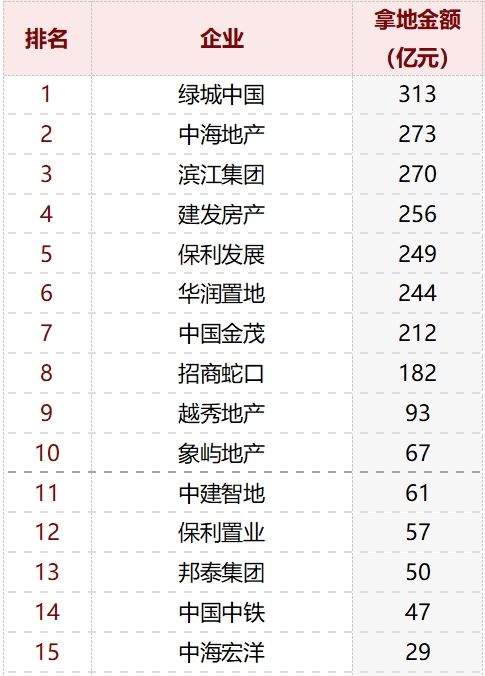
“出奇招”还是“走钢丝”?邦泰集团今年权益拿地面积居全国第二
Xin Jing Bao· 2025-05-31 01:52
Core Insights - Bangtai Group has emerged as a significant player in the real estate market, ranking second in land acquisition area among private enterprises in China for the first four months of 2025, with an area of 1.24 million square meters and a land acquisition amount of 5 billion yuan, ranking 13th overall [1][2][3] Group 1: Company Overview - Bangtai Group, founded in March 2007 and headquartered in Chengdu, has expanded its operations to 36 cities across various provinces, generating an annual output value exceeding 20 billion yuan and developing over 32 million square meters [2][3] - The company has adopted a strategy of aggressive land acquisition, particularly in non-first-tier cities, with 70% of its new land acquisitions located in the central and western regions of China, where land premium rates are generally below 15% [4][6] Group 2: Market Position and Strategy - In 2024, Bangtai Group's land acquisition amount reached 11.7 billion yuan, ranking second among private enterprises, indicating its strong market presence despite a challenging environment for private developers [3][4] - The company has focused on smaller land parcels in third and fourth-tier cities, employing a "small-scale, fast turnover" strategy to capitalize on opportunities in less competitive markets [6][7] Group 3: Financial Insights - Bangtai Group's land acquisition strategy has raised questions about its funding sources, as it has not yet gone public. The company has engaged in frequent equity pledges to secure financing, primarily from banks and trust institutions [8] - The company's land acquisition-to-sales ratio has raised concerns, with a ratio of 0.7 in the first four months of 2025, significantly higher than the industry average, indicating potential cash flow risks [9]