AI思维

Search documents
AI转型的认知跃迁
Jing Ji Guan Cha Wang· 2025-06-08 03:42
Group 1 - The rapid rise of artificial intelligence (AI) is reshaping the global business landscape, becoming a strategic issue that no company can ignore [2][3] - Companies must actively embrace AI to gain a competitive edge and transition from passive adaptation to leading transformation [2] - Chinese companies have shown early advantages in AI practices across various sectors, including smart manufacturing and digital marketing [3] Group 2 - The leading position of Chinese companies is rooted in a complex market environment and a highly digitalized user behavior [3] - As AI moves to the core of business operations, companies face structural challenges that require strategic responses rather than tactical fixes [3][4] - A systematic and structured information perception mechanism is essential for companies to respond to AI transformations [4] Group 3 - Companies should establish an open external knowledge network that includes academia, industry, and venture capital to better capture trends and understand emerging technologies [5] - Successful companies are leveraging corporate venture capital (CVC) to observe innovation mechanisms and adapt to the AI ecosystem [5][6] - The return on investment (ROI) for AI initiatives is crucial, and companies must evaluate the reasonableness of their AI investments [6][7] Group 4 - AI is not a one-time project but a strategic asset that evolves and adds value over time [7][8] - Companies need to adopt a multi-dimensional ROI assessment framework that allows for continuous validation and dynamic adjustments [9] - AI-related strategic decisions should involve cross-departmental collaboration rather than relying on a few individuals [10][11] Group 5 - High-level management must actively participate in AI strategy and foster a culture of shared understanding and capability [11][12] - Companies should create a culture that allows for "smart trial and error," accepting small, manageable failures as part of the learning process [12][13] - The future organization will require a talent pool that integrates data understanding, AI application, and business innovation [13][14] Group 6 - A new breed of AI-native companies will emerge, redefining industry logic and challenging traditional enterprises [14][15] - Companies need the courage and capability for self-disruption to adapt to the changing landscape [15][16] - The core of AI transformation lies in the synchronization of strategic recognition and organizational capability [16][17] Group 7 - The competition in the AI era will focus on systematic learning and adaptability rather than just tool usage [18] - Companies must embrace "AI thinking," which involves a comprehensive restructuring of strategy, organization, processes, and culture [18]


DeepSeek与ChatGPT:免费与付费背后的选择逻辑
Sou Hu Cai Jing· 2025-06-04 06:29
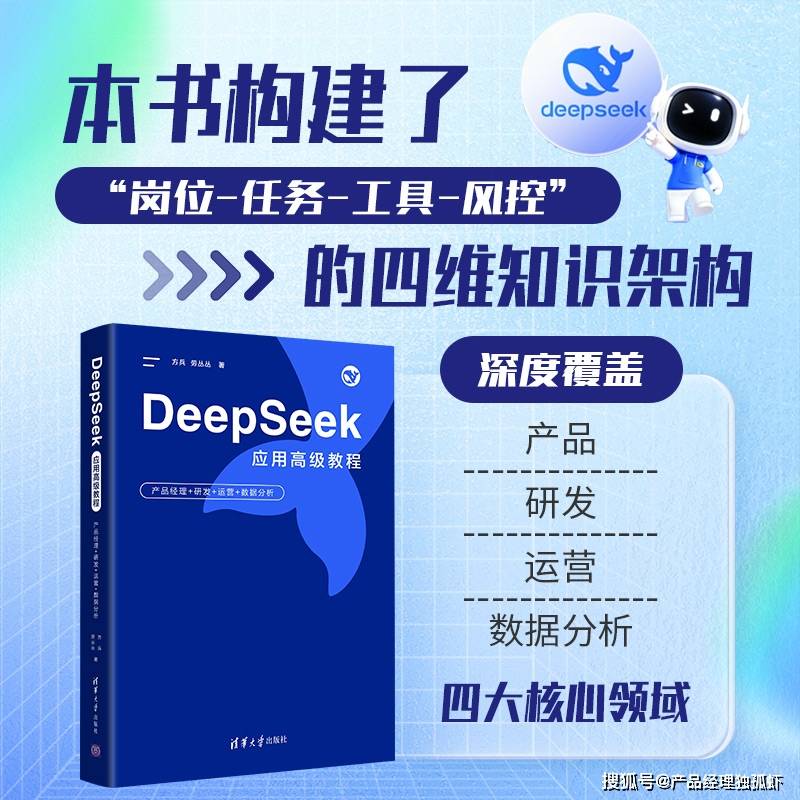
Core Insights - The emergence of DeepSeek, a domestic open-source AI model, has sparked discussions due to its free advantages, yet many still prefer to pay for ChatGPT, raising questions about user preferences and the quality of AI outputs [1][60]. - The output quality of AI tools is significantly influenced by user interaction, with 70% of the output quality depending on how users design their prompts [4][25]. Technical Differences - DeepSeek utilizes a mixed expert model with a training cost of $5.5 million, making it a cost-effective alternative compared to ChatGPT, which has training costs in the hundreds of millions [2]. - In the Chatbot Arena test, DeepSeek ranked third, demonstrating competitive performance, particularly excelling in mathematical reasoning with a 97.3% accuracy rate in the MATH-500 test [2]. Performance in Specific Scenarios - DeepSeek has shown superior performance in detailed analyses and creative writing tasks, providing comprehensive insights and deep thinking capabilities [3][17]. - The model's reasoning process is more transparent but requires structured prompts for optimal use, indicating that user guidance is crucial for maximizing its potential [7][12]. Cost and Efficiency - DeepSeek's pricing is 30% lower than ChatGPT, with a processing efficiency that is 20% higher and energy consumption reduced by 25% [8][9]. - For enterprises, private deployment of DeepSeek can be cost-effective in the long run, with a one-time server investment of around $200,000, avoiding ongoing API fees [9][10]. Deployment Flexibility - DeepSeek offers flexibility in deployment, allowing individual developers to run the 7B model on standard hardware, while enterprise setups can support high concurrency [11][10]. - The model's ability to run on lightweight devices significantly lowers the barrier for AI application [11]. Advanced Prompting Techniques - Mastery of advanced prompting techniques, such as "prompt chaining" and "reverse thinking," can significantly enhance the effectiveness of DeepSeek [13][14]. - The model's performance can be optimized by using multi-role prompts, allowing it to balance professionalism and readability [15][16]. Language Processing Capabilities - DeepSeek demonstrates a 92.7% accuracy rate in Chinese semantic understanding, surpassing ChatGPT's 89.3%, and supports classical literature analysis and dialect recognition [17]. Industry Applications - In finance, DeepSeek has improved investment decision efficiency by 40% for a securities company [18]. - In the medical field, it has achieved an 85% accuracy rate in disease diagnosis, nearing the level of professional doctors [19]. - For programming assistance, DeepSeek's error rate is 23% lower than GPT-4.5, with a 40% faster response time [20]. Complementary Nature of AI Tools - DeepSeek and ChatGPT are not mutually exclusive but serve as complementary tools, each suited for different tasks based on user needs [21][22]. - DeepSeek is preferable for deep reasoning, specialized knowledge, and data privacy, while ChatGPT excels in multi-modal interaction and creative content generation [24][22]. Importance of Prompting Skills - The ability to design effective prompts is becoming a core competency in the AI era, influencing the quality of AI outputs [54][55]. - The book "DeepSeek Application Advanced Tutorial" aims to enhance users' prompting skills and unlock the model's full potential [61].