Asset Tokenization

Search documents
VCI Global Unveils 2026 “Sovereign RWA Ecosystem” Roadmap: Proprietary Exchange to Anchor Multi-Sector Asset Tokenization
Globenewswire· 2025-12-26 12:59
Core Insights - VCI Global Limited is launching a proprietary Real-World Asset (RWA) Exchange in 2026 to facilitate the tokenization and secondary trading of real-world assets across various sectors, including precious metals, ESG projects, real estate, and infrastructure [1][2] Group 1: RWA Exchange Overview - The RWA Exchange will be a regulated, blockchain-verified marketplace aimed at enhancing transparency, liquidity, and governance for tokenized assets, addressing increasing investor demand [2] - The exchange will utilize the Oobit digital payment infrastructure, in collaboration with Tether (USDT), to ensure instant global settlement and institutional-grade liquidity [3] Group 2: Strategic Vision - The company views tokenization as a long-term evolution of capital markets, focusing on building a robust operating layer for institutional-grade real-world assets that emphasizes governance, transparency, and scalability [4] - VCI Global aims to integrate technology innovation with financial ecosystems to capture opportunities in the digital economy, developing scalable platforms that provide resilience and long-term value [6] Group 3: Asset Classes and Initiatives - The exchange will support the tokenization of various asset classes, including a US$200 million Bridge Gold mandate for a stablecoin backed by physical gold [7] - It will also facilitate the tokenization of carbon credits and renewable energy projects, enabling traceable ownership and improved price discovery for sustainability-linked investments [7] - The platform is designed to allow fractional ownership of income-generating real estate portfolios and utility-scale infrastructure assets, unlocking liquidity in traditionally illiquid markets [7] - Additionally, the RWA Exchange will serve as a liquidity venue for the XVIQ utility token, which supports VCI Global's AI compute and GPU cloud ecosystem [7]

Predictions Markets and Tokenization are 2 Massive Growth Drivers for Coinbase Stock. Why It’s Time to Buy.
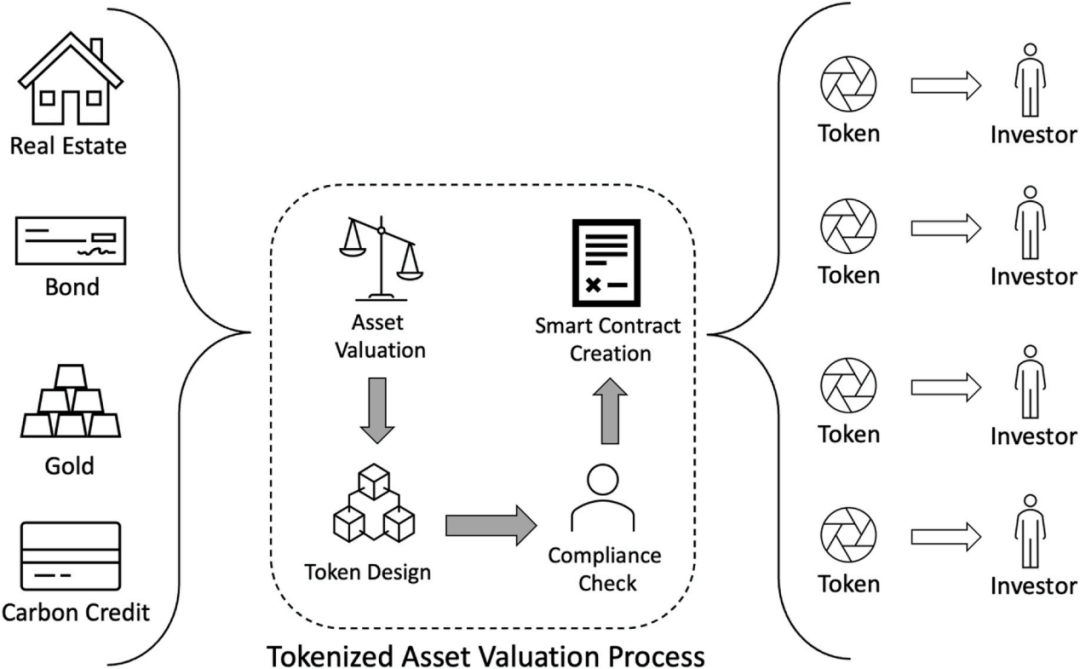
Yahoo Finance· 2025-12-24 16:04
Core Viewpoint - Coinbase is positioned to benefit from emerging growth drivers such as prediction markets and asset tokenization, which could lead to a significant recovery in its stock despite current weaknesses in the crypto market [1][3]. Group 1: Market Conditions - Bitcoin prices have retreated, marking a relatively uneventful year, suggesting it may be premature to invest in crypto-related stocks at this time [2]. - Coinbase's stock has declined over 40% from its all-time highs, indicating a fragile position in the market [3]. Group 2: Strategic Initiatives - Coinbase's expansion into prediction markets, particularly through the acquisition of The Clearing Company, aims to diversify revenue streams beyond the volatility of crypto trading [6]. - The prediction markets represent a significant opportunity for Coinbase, potentially adding substantial value to its shares if the company captures a meaningful market share [4]. Group 3: Financial Metrics - Coinbase shares currently trade at a trailing P/E ratio of 21.4, reflecting the impact of the recent decline in stock price [6].

Predictions Markets and Tokenization are 2 Massive Growth Drivers for Coinbase Stock. Why It's Time to Buy.
247Wallst· 2025-12-24 16:04
Core Viewpoint - Coinbase is positioned to benefit from the growth of prediction markets and asset tokenization, which could lead to a significant recovery in its stock price despite current weaknesses in the crypto market [1] Group 1: Emerging Growth Drivers - The rise of prediction markets is identified as a key growth driver for Coinbase [1] - Asset tokenization is also highlighted as a significant factor that could enhance Coinbase's market position [1]
Anthony Scaramucci Says The World Spends $4 Trillion A Year Verifying Transactions And Solana Could Slash That Cost By 75%
Yahoo Finance· 2025-12-18 17:01
Anthony Scaramucci, CEO of investment firm SkyBridge Capital, said at a recent event that Solana (CRYPTO: SOL)-powered asset tokenization has the potential to reduce transaction verification costs by up to 75% annually. Scaramucci Builds Case For Solana-Enabled Tokenization Speaking at the LONGITIDE event in Abu Dhabi on Dec. 11, Scaramucci estimated that global transaction verification costs $4 trillion a year, including credit card fees and wire fees. “If we were able to adopt Solana and use it in the ...
X @Wu Blockchain
Wu Blockchain· 2025-12-16 05:55
Sberbank, Russia’s largest bank, said it is testing multiple DeFi products as client demand for crypto trading and holdings continues to grow rapidly. Management Board Vice Chairman Anatoly Popov added that Sberbank is tracking asset tokenization and connectivity with DeFi platforms, and has shown interest in public-chain solutions such as Ethereum that offer mature infrastructure and smart-contract capabilities. https://t.co/NhOVkrjbZW ...
BlackRock continues its aggressive push into crypto with seven new global job openings
Yahoo Finance· 2025-12-15 18:03
BlackRock is ramping up its digital asset strategy with a wave of new hires aimed at expanding its crypto and blockchain-related products globally, amid growing institutional interest in tokenized and onchain assets. In a job posting board, the $10 trillion asset manager said it is hiring for seven digital asset positions, six based in the United States and one in Singapore. The move follows BlackRock's head of digital assets, Robert Mitchnick, posting about the open roles on LinkedIn last week. One of ...

What the End of the SEC’s Ondo Finance Investigation Means for Tokenized Assets
Yahoo Finance· 2025-12-08 16:43
Core Viewpoint - The SEC has closed its investigation into Ondo Finance without recommending any charges, allowing the company to expand its operations in the U.S. as interest in asset tokenization grows [1][2]. Group 1: SEC Investigation Closure - The SEC's investigation into Ondo Finance began in October 2023 to assess compliance with securities laws under former Chair Gary Gensler [2]. - The closure of the investigation reflects a shift in the SEC's enforcement posture under current Chair Paul Atkins, moving towards a more pro-crypto direction [3]. - Ondo Finance is now added to a list of closed cases by the SEC, which includes other notable firms like Coinbase, Ripple, and Kraken [3]. Group 2: Institutional Interest and Market Trends - There is heightened institutional interest in asset tokenization, with the SEC's recent activities indicating a shift in regulatory attitudes towards equity tokenization [4][5]. - Tokenized US Treasuries are emerging as one of the fastest-growing on-chain asset categories, attracting global investor interest [6]. - The SEC's Investor Advisory Committee recently held a panel discussing the modernization of public equity issuance and trading through distributed ledgers, marking a departure from previous enforcement-focused strategies [5]. Group 3: Ondo Finance's Future Plans - The closure of the SEC investigation allows Ondo Finance to proceed with its plans to expand U.S. operations, supported by its acquisition of Oasis Pro, a broker-dealer and ATS operator [7]. - Ondo Finance is set to host its annual Ondo Summit in New York in February, where it will outline new tools and products focused on real-world asset tokenization [7].
Philippines Could Unlock $60B Through Asset Tokenization by 2030: Report
Yahoo Finance· 2025-11-28 09:18
Core Insights - The Philippines has the potential to develop a $60 billion tokenized-asset market by 2030, driven by the country's strong engagement with digital wallets and cryptocurrencies [1][6] - There is a significant disparity in investment participation, with 14% of Filipinos owning cryptocurrencies compared to fewer than 5% owning traditional financial instruments like stocks and bonds [2][6] Group 1: Market Potential - The report highlights that equities are expected to dominate the tokenized market, projected to reach $26 billion, followed by $24 billion in government bonds, $6 billion in mutual funds, and $4 billion in other assets [3] - The existing infrastructure for blockchain wallets positions the Philippines uniquely to facilitate the delivery of tokenized assets to a large population [3] Group 2: Accessibility and Financial Inclusion - Tokenized government bonds are now accessible through platforms like PDAX and GCash, with minimum investments reduced to P500, making it easier for smaller savers to participate [4][6] - The partnership between the Bureau of the Treasury, PDAX, and GCash exemplifies the growing momentum towards democratizing access to financial instruments [4][5] - Major consumer apps are already functioning as distribution channels for digital assets, allowing users to hold these assets without the need for extensive infrastructure redevelopment [5]
资产代币化:除了效率提升,投资者还需关注什么?
Sou Hu Cai Jing· 2025-11-28 06:04
Core Insights - The article discusses how blockchain technology is reshaping traditional asset management through asset tokenization, highlighting its potential to enhance transaction efficiency and create value while also presenting new challenges in governance, risk distribution, and market trust [1][2]. Group 1: Asset Tokenization Overview - Asset tokenization refers to converting physical or digital assets into blockchain-based tokens, enabling trading and management on decentralized platforms, which alters liquidity structures and significantly reduces costs and time delays associated with traditional transactions [2][3]. - The motivation behind tokenization is to enhance asset liquidity, lower investment barriers, and promote more effective resource allocation [3]. Group 2: Transaction Cost Theory (TCT) and Tokenization - Transaction Cost Theory (TCT) provides a framework for analyzing cost structures in economic exchanges, indicating that traditional markets often have high transaction costs due to information asymmetry and imperfect contract enforcement [5]. - Tokenization reduces these costs through automation via blockchain and smart contracts, enhancing market efficiency, but it also raises concerns about governance and regulatory challenges in decentralized environments [5]. Group 3: Methodology - The research involved four case studies representing different asset classes: real estate, gold, bonds, and carbon credits, utilizing semi-structured interviews with 30 participants from various roles to gather data on transaction efficiency, value creation, governance, and market trust [6]. Group 4: Findings on Transaction Mechanisms - Tokenization significantly impacts transaction mechanisms by eliminating intermediaries and reducing costs, as seen in real estate where smart contracts facilitate direct ownership transfers, cutting down on time and fees [8]. - However, the removal of intermediaries introduces challenges in dispute resolution and error handling, potentially undermining investor confidence [8]. Group 5: Access and Ownership - Tokenization lowers investment barriers for high-value assets through fractional ownership, allowing smaller investors to participate in markets previously inaccessible, thus democratizing investment opportunities [9]. - It also enhances trading flexibility for traditionally illiquid assets, as demonstrated in the carbon credit market, where real-time trading is made possible [9]. Group 6: Governance and Oversight - Tokenization promotes decentralized governance, allowing token holders to participate in key decisions, which theoretically reduces agency costs and single points of failure [10]. - However, decentralized governance faces challenges in coordination efficiency and compliance, particularly across different regulatory jurisdictions [10]. Group 7: Compliance and Trust - The immutability and transparency of blockchain are seen as tools to enhance market trust, providing reliable transaction records and preventing fraud [12]. - Nonetheless, the rigidity of blockchain can limit the system's ability to respond to errors or market manipulation, potentially harming long-term trust [12]. Group 8: Discussion on Efficiency and Value Creation - Tokenization enhances transaction efficiency by eliminating intermediaries and lowering costs, with significant implications for various asset classes, particularly in real estate [15]. - It creates value by enabling broader access to previously inaccessible asset classes, although market volatility and security vulnerabilities may offset theoretical benefits [15]. Group 9: Decentralization and Risk Distribution - While decentralization improves efficiency and inclusivity, it complicates risk distribution and trust mechanisms, as the absence of intermediaries can increase system vulnerability to errors and fraud [16]. - Decentralized governance may be less efficient due to participant interest divergence and high coordination costs, while blockchain's transparency can limit flexibility in addressing market manipulation [16].