Integrity

Search documents
Rising Again: The Quiet Power of Resilience | Gigi Ng | TEDxUTAR Kampar
TEDx Talks· 2025-09-29 16:13
Business Challenges & Resilience - The company started with limited capital, facing initial hardships and self-doubt [1][2][3] - The company faced judgment as a woman in business, external doubts, and moments of wanting to give up [6][7] - The business experienced significant setbacks, including brand partnerships being abruptly terminated, resulting in questioning of reputation and contract losses worth hundreds of thousands of Singapore dollars [8][9] - The company encountered betrayal and breach of trust from a close friend and employee, which was more painful than business losses [12][13] - A strategic investor created pressure and uncertainty, leading the company to return the investment to uphold integrity [14][15] - The company lost more than half a million Singapore dollars after the pandemic, almost leading to closure [24] Key Turning Points & Opportunities - In 2012, an unexpected investment of 130,000 Singapore dollars from a stranger helped the company stay afloat [17][18] - In 2013, an invitation to Korea as a tea judge and participant in a competition and conference led to the establishment of own businesses and brand [19][22] - Despite considering closing the business, orders surged, leading to the appointment of distributors [24][25] Business Growth & Strategy - The company transforms tea into innovative beverages and products, becoming a tea partner of choice in the HoReCa (hotel, restaurant, cafe) and retail industry across Asia [27] - The company currently has a presence in more than eight countries and aims to expand to 35 countries in five years [29] - The company emphasizes the importance of resilience paired with agility to create opportunities, and faith paired with action to bring miracles [28]


Scaling Mountains, Inspiring Ripples of Change | S. Jaahnavi | TEDxSIS Ajmer Youth
TEDx Talks· 2025-09-29 15:54
Personal Development & Goal Achievement - The core message revolves around the importance of embracing change, consistency, and adaptability to achieve personal goals, drawing parallels from mountaineering experiences [1][25][26][27] - Overcoming challenges and failures is presented as a crucial part of personal transformation, emphasizing resilience and continuous learning [23][24][28][30][31] - The speaker advocates for starting small, being consistent, and adapting to failures as key elements in achieving any goal, whether it's in music, sports, or public speaking [26][27][28] Lessons from Mountaineering - Scaling mountains is used as a metaphor for overcoming life's challenges, highlighting the significance of each small step towards reaching the summit [1][2] - The speaker's experiences on various peaks, including Mount Kilimanjaro (Africa), Mount Elbrus (Europe), Mount Kosciuszko (Australia), and Mount Denali (North America), illustrate the diverse challenges and adaptations required in different environments [3][11][15][19] - Mental strength is emphasized as being more critical than physical strength in mountaineering, particularly in situations where exhaustion and the urge to give up are overwhelming [22][23] Overcoming Adversity - The speaker's personal story includes her father's diagnosis with terminal lung cancer, which served as a motivation to push her limits and achieve more [15] - The experience of being denied a permit to climb Mount Everest due to age restrictions led to a change in plans and the successful climb of Mount Denali, demonstrating adaptability [18][19] - The speaker shares instances of having to turn back from summits due to illness or bad weather, emphasizing the importance of making smart decisions to preserve life and try again later [29][30] Importance of Continuous Learning - The speaker emphasizes the importance of remaining a learner throughout life, regardless of age or expertise, and being open to gaining knowledge from others [31][32] - The speaker's father, a mental health doctor, is presented as a role model for staying grounded and always being willing to learn from others [33]

X @Litecoin
Litecoin· 2025-09-27 15:34
Your foundation becomes compromised when your plumb line isn't straight. ...
Charlie Munger's Top 3 Success Tips: 'Never Sell Anything You Wouldn't Buy, Work For Those You Respect, And Work With People You Enjoy'
Yahoo Finance· 2025-09-21 19:59
Core Insights - The late Charlie Munger is revered in the investment world for his wisdom and principles regarding career satisfaction and success [1][2] - Munger's journey included significant achievements in law and investments, leading to the establishment of his own law firm [2] Summary of Munger's Rules - Munger's three fundamental rules for career satisfaction are: strive to deserve what you want, work under individuals you admire, and maintain a deep interest in your work [3][4] - The first rule emphasizes the importance of ethical practices, advising against selling anything one wouldn't buy for oneself [4] - The second rule highlights the value of working for respected individuals, suggesting that outcomes in life improve when working under those one admires [5] - The third rule encourages aligning work with personal interests and enjoying collaboration with colleagues [5] Legacy and Influence - Munger's emphasis on integrity, reputation, and passion for work has significantly influenced the investment industry [6] - His successful partnership with Warren Buffett and his teachings will continue to inspire future generations of investors [6]
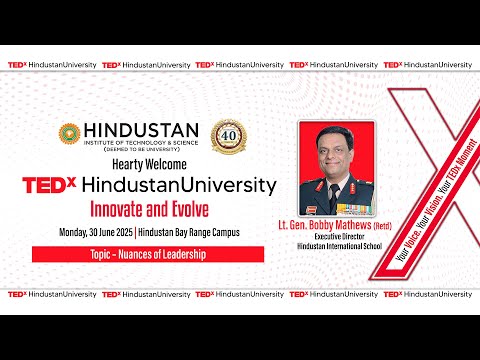
Nuances of Leadership | Lt. Gen. Bobby Mathews | TEDxHindustan University
TEDx Talks· 2025-09-11 15:52
Leadership Fundamentals - Leadership is defined as the ability to make others do what you want happily and efficiently [2][3] - Understanding fundamental truths such as life being intrinsically unfair is crucial for self-peace and effective leadership [4][5] - Good deeds are primarily for self-satisfaction, indirectly benefiting others [9][10] - Each individual is unique, and contentment comes from embracing this uniqueness rather than copying others [10][11] - Life is a game of cards; success lies in making the best of the hand one is dealt [11][12] Pillars of Leadership - Competence is the first pillar of leadership, requiring mastery of one's craft through hard work [14][15] - Integrity is the second pillar, essential for being a respected leader [16][17] - Passion is the third pillar, amplifying the impact of other qualities [17][18] - Empathy, the ability to understand the impact of decisions on others, is a crucial pillar [19][20] - Courage, encompassing spiritual, emotional, and conviction-based courage, is vital for leadership [20][21] Developing Leadership - Studying superiors, peers, and subordinates are free "universities" for leadership development [22][23][24] - The people below you are the biggest university of life [24][25] - Listening to understand, not just to respond, is a key leadership essential [26][27] - The power of observation enables leaders to quickly assess situations and people [27][28] Magical Powers of Leadership - Simple actions like a pat on the back (power of touch) and appreciation can be highly effective [30][31] - Timing is crucial; actions should be taken at the right moment [31] - Good leaders give credit to their subordinates and take responsibility for their team's mistakes [32] - Gratitude and humility are essential hallmarks of a leader [33][34] - Admitting "I was wrong" is a magical power that can resolve issues [34] - Humor is important; leaders should not take themselves too seriously [35]
Insight to Impact | Dr. Prashant Khankhoje | TEDxVIIT
TEDx Talks· 2025-09-11 15:21
Core Message - The speech explores the concept of ODC (a life journey with transformative and diversified experiences) through the lens of Indian mythology and philosophy [1] - It suggests that ancient wisdom can provide guidance and inspiration for personal and professional growth [9][22] Leadership and Management Lessons - The speaker draws parallels between various incarnations of Vishnu (Matsya, Kurma, Varaha, Narasimha, Parashurama, Rama, Krishna) and different leadership styles (leader, protector, supporter, coach, strategist) [7][8] - The story of Ram Setu illustrates the importance of teamwork, trust, and acknowledging contributions from all members, regardless of size [14][15] - The analysis of Hanuman's leap across the sea is presented as an analogy to SWOT (Strengths, Weaknesses, Opportunities, Threats) or NOISE (Needs, Opportunities, Improvement areas, Strengths, Exceptions) analysis in the corporate world [15][16][17] Personal Transformation - The journey of Arjuna in the Bhagavad Gita, guided by Krishna, represents a transformative shift from "why me" to "why not me" [17][18] - Krishna's teachings of Jnana Yoga (knowledge), Bhakti Yoga (devotion), and Karma Yoga (duty with integrity) are presented as principles for navigating life's challenges [19][20] - The speech advocates for a shift in perspective from "them" to "me," then "me" to "we," and finally "we" to "us" to achieve a happier life [22] Ethical and Environmental Considerations - The speaker uses the example of plastic waste to illustrate how inspiration from mythology (Lord Narasimha) can drive innovative solutions (converting plastic to fuel or using it in road construction) [5][6] - The concept of different Yugas (Satya Yuga, Treta Yuga, Dvapara Yuga, Kali Yuga) is used to highlight the ongoing battle between good and evil within individuals [11][12]

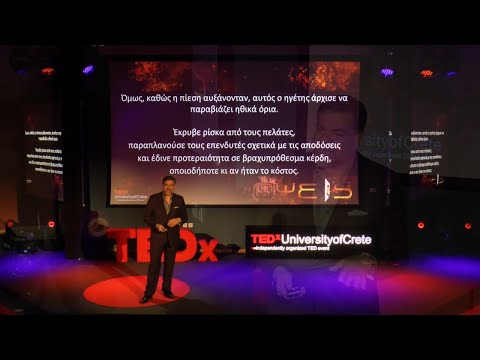
Ability Takes You to the Top, Character Keeps You There | Demetrios Mallios | TEDxUniversityofCrete
TEDx Talks· 2025-09-05 15:37
Core Argument - Ability can propel individuals to the top, but character is essential for sustained success and lasting influence [3] - Character is defined by actions taken when no one is watching, reflecting integrity, humility, resilience, and empathy [6][7][9][10] Character Dimensions - Integrity involves aligning words and actions, maintaining consistency between public and private life [9] - Humility is recognizing dependence on others and the continuous need for learning, focusing less on oneself [9] - Resilience is the capacity to withstand setbacks without compromising values, revealing character during struggles [10] - Empathy is the ability to understand others' perspectives and treat everyone with dignity, regardless of status [10] Financial Industry Examples - Leaders who prioritize short-term gains and cut ethical corners face eventual disgrace, despite initial success [11][12] - Leaders with integrity, transparency, and mutual respect build trust and navigate difficulties successfully [12][13] - Radical transparency and intellectual honesty, as exemplified by Ray Dalio, contribute to sustainable achievement [14] - Prioritizing clients over personal gain, as demonstrated by John Bogle, builds trusted brands [15][16] - Character flaws can lead to significant financial fraud, destroying lives, as seen with Bernie Madoff [16] Importance of Trust - Trust is a valuable asset that sustains relationships and provides support during challenging times [17] - Strong character provides clarity, consistency, and resilience, acting as a foundation during crises [18][19] Cultivating Character - Invest in character development through ethical leadership resources and mentorship [20] - Build accountability structures with individuals who provide honest feedback [21] - Practice making character-based decisions consistently in small moments [21]
X @Starknet
Starknet 🐺🐱· 2025-09-03 07:13
RT Julien Niset (@jniset)Integrity is doing the right thing when no-one is watching.@Starknet is not only building the integrity web with ZK, they are the embodiment of integrity: doing the right thing even if many in crypto are not watching.Congrats! ...
5 choices that shape our future | Prashant Mohan | TEDxMall Road
TEDx Talks· 2025-08-27 16:31
Marketing Principles - The power of consistency: Brands should strive to be consistently present in customers' lives, like Amul with its "utterly butterly" girl, to become a part of their daily routine [7][8][9][10] - Adaptability is key for survival: Companies must adapt to new market trends and evolve to survive for the long term, as exemplified by Tata (existing for 150 years) and Bunge (existing for 200 years) [14][15][16][17][18] - The power of networking: Networking can lead to new opportunities and collaborations, as demonstrated by the story of Paytm founder Vijay Shekhar Sharma [22][23][24][25] - Ethical leadership is crucial: Companies should prioritize ethics over profit to build trust with stakeholders and maintain a positive reputation, as exemplified by Tata and Infosys [26][27][28][29][30] - Giving back to society is important: Individuals and companies should find ways to contribute to society and make a positive impact [32][33][34][35][36] Implications for Different Groups - For students: Consistency means creating the right digital footprints on social media [10][11], adaptability means preparing for jobs that may not exist in the future [19], networking means building the right connections [24], and ethical leadership means developing integrity [30][31] - For working professionals: Consistency means maintaining integrity in their work [12][13], adaptability means adapting to new technologies like AI and machine learning [19][20], networking means career growth [25], and ethical leadership means maintaining integrity [31] - For business leaders: Consistency means consistent positive customer feedback [13], adaptability means adapting to market disruption from new companies [20][21][22], networking means new collaborations and business expansion [25], and ethical leadership means prioritizing ethics over profit [31][32] The Echo of Tomorrow - The future is shaped by today's actions: Positive outcomes in the future are a result of positive actions taken today [6][36][37]