Technological Innovation

Search documents
威海临港税务:诚信赋能创新,光纤“拉”出全球竞争力
Qi Lu Wan Bao· 2026-01-16 15:39
Core Viewpoint - Weishin Fiber Optics has successfully enhanced its production capabilities and reduced costs through significant technological upgrades, positioning itself as a key player in the domestic fiber optic market while also aiming for global expansion [1][2]. Group 1: Technological Advancements - Weishin Fiber Optics has improved its fiber drawing speed from 2,200 meters per minute to 2,800 meters per minute by restructuring its drawing tower, achieving a 50% increase in production capacity and a 40% reduction in production costs without expanding its production area [1][2]. - The company invested 30 million yuan in a three-year "technology expedition," leading to breakthroughs in core processes such as drawing tower structure and winding equipment, which significantly lowered procurement and maintenance costs [2]. Group 2: R&D Investment and Support - Over the past three years, Weishin Fiber Optics has maintained a research and development investment ratio of over 9.63% of its sales revenue, demonstrating a commitment to continuous innovation [2]. - The company benefited from approximately 4.71 million yuan in R&D expense deductions by the end of the third quarter of 2025, alleviating financial pressure on its R&D efforts and enhancing its technological upgrade capabilities [2]. Group 3: Market Position and Future Outlook - As a core supplier in the domestic fiber optic cable sector, Weishin Fiber Optics has shifted from reliance on foreign imports to self-sufficiency in key technologies, thereby strengthening its market position [1][2]. - The company is now able to flexibly adjust production based on international market demands, with its high-quality fiber optic products gaining increasing influence in global markets [2].
实干开新局
Jing Ji Wang· 2026-01-15 08:41
Group 1 - The article highlights the diverse efforts of individuals across various sectors in China as they embark on a practical and action-oriented start to 2026, showcasing a collective spirit of hard work and innovation [2] - It emphasizes advancements in cutting-edge technologies such as brain-computer interface research, which explores the potential for human-machine integration [2] - The role of engineers in optimizing power supply through artificial intelligence in electrical grid systems is noted, indicating a trend towards more stable and efficient energy management [2] Group 2 - The narrative includes the emergence of new farmers, represented by university students returning to rural areas to establish pig farms, which signifies a shift towards modern agricultural practices [2] - The article reflects on the resilience and dedication of individuals who are integrating personal efforts into broader developmental trends, contributing to a dynamic and upward-moving era in China [2]


LPL Financial Welcomes Oak Bridge Financial, LLC
Globenewswire· 2026-01-14 13:55
Core Insights - LPL Financial has welcomed the financial advisors of Oak Bridge Financial, which manages approximately $230 million in advisory, brokerage, and retirement plan assets, transitioning from Ameriprise [1] Company Overview - Oak Bridge Financial, based in Houston, was founded in 2007 by Peter Goudeau Jr. and Larry Boyd, who collectively have 45 years of industry experience [2] - The firm serves a nationwide clientele, focusing on high-net-worth professionals, including physicians, attorneys, Olympic athletes, entrepreneurs, and business owners [2] Team Expertise - Oak Bridge's team comprises advisors with diverse backgrounds in real estate, computer science, banking, and engineering, allowing for a broader perspective in crafting client strategies [3] Client Experience - The firm emphasizes an end-to-end client experience, managing portfolios in-house and conducting all research, modeling, and trading [4] - Oak Bridge aims to provide immediate and transparent access to client information, facilitated by LPL's robust infrastructure and technology tools [5] Strategic Decision - The transition to LPL was driven by a desire for operational flexibility and technological innovation, allowing Oak Bridge to maintain full ownership of client relationships and business processes [4][5] - LPL Financial is committed to supporting Oak Bridge with innovative technology and comprehensive business solutions [5] LPL Financial Overview - LPL Financial Holdings Inc. is one of the fastest-growing wealth management firms in the U.S., supporting over 32,000 financial advisors and managing approximately $2.3 trillion in brokerage and advisory assets [7]


光谷商学院院长马新强: 打造“光谷引擎” 迈向世界舞台
Chang Jiang Ri Bao· 2026-01-14 00:50
Core Insights - The article emphasizes the need for a business school in the Optics Valley to cultivate technology entrepreneurs who can navigate markets and lead industries, addressing a gap between scientific and entrepreneurial thinking [1] Group 1: Business School Objectives - The Optics Valley Business School aims to serve as a powerful "empowerment accelerator" to train technology entrepreneurs with a global perspective, helping local companies reach the world stage [1] - The school will focus on practical, open, and win-win dimensions, integrating cutting-edge business ideas with real challenges faced by local enterprises [2] Group 2: Educational Approach - The curriculum will emphasize "extreme precision and practical application," combining theoretical knowledge with real-time decision-making scenarios [2] - The resource ecosystem will aim for "seamless connection and open integration," breaking down barriers between technology and industry, and creating a high-energy platform for dialogue between scientific insights and business wisdom [2] Group 3: Community and Culture - The school will foster a culture of "value co-existence and mutual achievement," establishing new partnerships through deep trust and collaborative discussions [2] - The vision is for the business school to become a source of innovative thought and a nurturing ground for great enterprises, contributing to Hubei's goal of becoming a national technology innovation hub [2]
深圳“十五五”规划建议:加强高端仪器等领域关键核心技术攻关
仪器信息网· 2026-01-04 09:27
Core Viewpoint - The article emphasizes the importance of promoting original innovation and tackling key core technologies, particularly in fields such as integrated circuits, industrial mother machines, high-end instruments, basic software, advanced materials, and biomanufacturing, to create disruptive and asymmetric technologies with first-mover advantages [1][2][6]. Group 1: Innovation and Technology Development - The Shenzhen Municipal Government's proposal for the 15th Five-Year Plan highlights the need for organized innovation, focusing on the world's technological frontiers and major national needs, while implementing various management mechanisms to enhance innovation [2][3]. - There is a strong emphasis on strengthening the role of enterprises in innovation, directing resources towards them, and fostering collaboration among leading enterprises, universities, and research institutions to create a robust innovation ecosystem [3][4]. Group 2: Research and Development Investment - The article discusses the necessity of increasing R&D investment from multiple sources, including government, enterprises, and society, to maintain leading levels in both scale and efficiency of output [4][10]. - It suggests reforms in government funding policies and encourages enterprises to increase their R&D spending through supportive measures like tax deductions [4][10]. Group 3: Educational and Talent Development - The plan calls for a comprehensive approach to integrate education, technology, and talent development, aiming to create a globally influential education and scientific center [7][9]. - It emphasizes the importance of cultivating high-level talent and fostering a collaborative environment between industry and academia to drive innovation [7][9]. Group 4: Innovation Ecosystem - The article advocates for building a first-class innovation ecosystem by enhancing financial services for startups and ensuring a supportive environment for new technologies and products [10]. - It highlights the need for improved intellectual property protection and the establishment of platforms for technology transfer and financing [10].

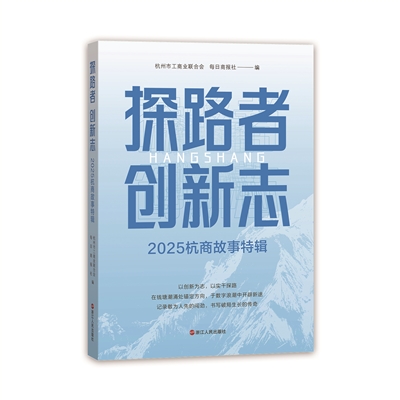
《探路者 创新志》正式出版
Mei Ri Shang Bao· 2025-12-30 22:20
Group 1 - The core viewpoint of the article highlights the emergence of Hangzhou as a significant hub for technological innovation, particularly through the publication of "Explorer: Innovation Chronicle," which focuses on private enterprises in the region [2][4] - The book is divided into six chapters, with the first chapter providing a comprehensive overview of the deep-rooted factors driving innovation in Hangzhou, including thriving innovation clusters, a unique innovation ecosystem, unwavering ideals, an optimized business environment, and a continuous supply of innovative talent [2] - The subsequent chapters feature 25 private enterprises excelling in advanced manufacturing, artificial intelligence, biomedicine, synthetic biology, and new materials, showcasing their journeys of innovation and practical efforts in line with national reforms [2] Group 2 - The chapter titled "National Heavy Equipment - Tacklers of 'Choke Point' Technologies" presents five companies, including KunTai Magnetic Suspension, that have successfully broken through core technological barriers and filled domestic gaps, thereby supporting supply chain security in critical fields like semiconductors [2][3] - The "Digital Awakening - Breakthroughs in the AI Industry" chapter focuses on five companies, such as West Lake Robotics, demonstrating how AI technology empowers various industries, with applications ranging from intelligent short video creation to augmented reality [3] - The "Life Reshaping - Innovators in Healthcare" chapter documents five healthcare companies, showcasing advancements like the first tumor origin gene testing kit in China and high-precision orthopedic surgical robots, contributing significantly to human health [3] - The "Green Leap - Leaders in the Zero Carbon Era" chapter illustrates how companies like Hangzhou Forklift Group integrate green concepts into technology development, while the "'New' Towards the Future - Disruptors of Industrial Reconstruction" chapter highlights how enterprises are competing for influence in the global supply chain through cross-industry integration and technological restructuring [3]

城记 | 从错位竞争到协同创新突围 上海如何下好产业发展“一盘棋”
Xin Hua Cai Jing· 2025-12-28 17:49
Core Viewpoint - Shanghai is focusing on enhancing its urban capabilities and core competitiveness during the "14th Five-Year Plan" period, with a strategic emphasis on regional coordination and the integration of innovation, industry, finance, and talent [1][7]. Group 1: Regional Industrial Development - Shanghai's 16 districts are leveraging their resource endowments to develop distinctive industrial brands, such as "Mosu Space" in Xuhui and "G60 Sci-Tech Corridor" in Songjiang, establishing a foundation for differentiated competition [1][2]. - New industrial labels have emerged in various districts, indicating a shift towards more focused and upgraded industrial development, such as Pudong's emphasis on being a "leading area" and Yangpu's focus on digital economy [2][3]. Group 2: Innovation and Collaboration - The trend of innovation is increasingly concentrated in urban centers, with characteristics such as lightweight transformation and high-frequency interactions among scientists, entrepreneurs, and investors [3]. - Districts are forming collaborative networks to enhance the flow of resources and innovation, exemplified by initiatives like the G60 Sci-Tech Corridor and cross-regional cooperation [4][5]. Group 3: Talent and Funding Initiatives - Districts are establishing partnerships with universities and research institutions, implementing new mechanisms for market-oriented collaboration, and focusing on the commercialization of scientific achievements [5][6]. - Talent attraction policies and district-level industrial funds are being introduced to support startups and reduce operational costs, with several districts launching funds exceeding 10 billion [6]. Group 4: Strategic Planning for Future Development - The "first-mover" strategy is emphasized for Shanghai's industrial development, with districts acting as distinct "pieces" on a chessboard, focusing on sectors like integrated circuits and artificial intelligence [7]. - The collaborative experiences and differentiated positioning developed during the "14th Five-Year Plan" are expected to provide a foundation for avoiding homogenization in the upcoming "15th Five-Year Plan" [7][8].
科技创新+产业升级双联动 解读北京人形机器人故事
Xin Jing Bao· 2025-12-27 02:17
Core Insights - The "14th Five-Year Plan" is unfolding, with technological innovation and industrial upgrading as core driving forces [1] - The humanoid robot industry is experiencing a critical leap from technological breakthroughs to commercial implementation [1] Industry Overview - In 2024, the revenue of Beijing's robot industry is expected to exceed 30 billion yuan, representing a nearly 50% year-on-year growth [1] - The growth rate for the first half of 2025 is projected to remain at 40% [1] Market Transition - The focus of humanoid robots is shifting from "competing for medals" to "serving daily life" [1]

Petrobras Grants Final Investment for Sergipe Deepwater Project Module 2
ZACKS· 2025-12-26 13:21
Core Insights - Petrobras has approved the final investment decision for the Sergipe Deepwater Project Module 2 (SEAP II), which is crucial for expanding Brazil's domestic energy production and enhancing energy security [1][14] Overview of the SEAP II Project - The SEAP II project targets high-quality light oil reserves in the Sergipe-Alagoas Basin, specifically in the Budião, Budião Northwest, and Budião Southeast fields, located approximately 80 kilometers from the coast [2] - Petrobras operates the BM-SEAL-4 concession with a 75% stake, in partnership with ONGC Campos Limitada, which holds 25%, and has 100% control over the BM-SEAL-4A and BM-SEAL-10 concessions [2] Oil Quality and Production Capacity - The oil in these fields has an API gravity ranging from 38 to 41 degrees, classifying it as light crude oil, which is desirable due to its low density and ease of refining [3] - The FPSO unit for the SEAP II project will have a production capacity of 120,000 barrels of oil per day and a gas processing capacity of 12 million cubic meters per day [4] Project Timeline and Business Plan - Negotiations for the FPSO contract are expected to conclude in the first half of 2026, with first oil production anticipated in 2030, aligning with Petrobras' 2026-2030 Business Plan [5] Strategic Importance - The SEAP II project is strategically significant for Brazil's energy landscape, particularly for the Northeast region, as it opens new production frontiers and enhances domestic gas reserves [6] - The project is expected to generate economic benefits, including job creation and infrastructure development in Sergipe and Alagoas [7] Technological Innovation - The SEAP II project aims to push technological boundaries with operations planned at depths exceeding 2,500 meters, reaching up to 3,000 meters, which presents engineering challenges and opportunities for innovation [9] - Petrobras plans to integrate advanced drilling techniques, subsea production systems, and efficient gas processing technologies into the project [10] Previous Projects - The SEAP I project has established a proven track record in the region, covering fields such as Agulhinha and Palombeta, and has laid the groundwork for SEAP II [11][12] Gas Production Capacity - SEAP II has the potential to produce up to 18 million cubic meters of gas per day, contributing to Brazil's domestic gas supply and diversifying the energy matrix [13]


4.22%、2308.7亿元、1.6万件,产出丰硕!“数”说科技创新“含金量”
Yang Shi Wang· 2025-12-26 04:22
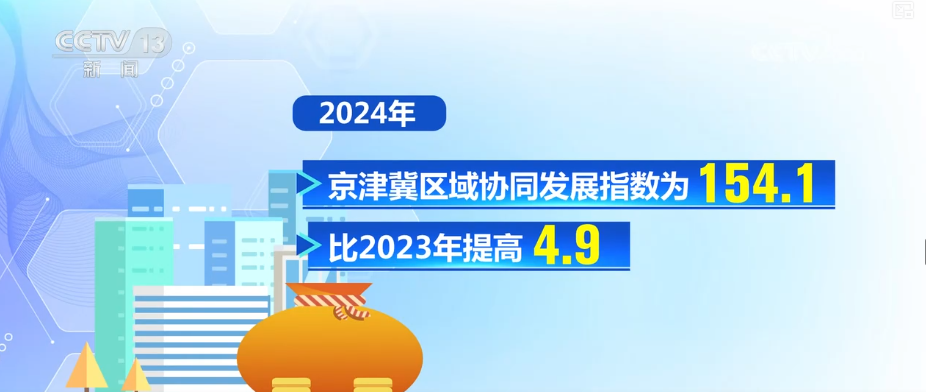
Group 1 - The core viewpoint of the news is that the Beijing-Tianjin-Hebei region has shown significant innovation development results in 2024, leading to new collaborative development momentum, with the regional collaborative development index reaching 154.1, an increase of 4.9 from 2023 [1] Group 2 - The R&D expenditure intensity for the entire society in the Beijing-Tianjin-Hebei region is 4.22% in 2024, with the technical contract transaction volume reaching 1.3 trillion yuan, accounting for nearly 20% of the national total [4] - Beijing's R&D expenditure intensity is 6.58%, maintaining the top position among provinces and globally in innovation clusters [4] Group 3 - From 2021 to 2024, the technical contract transaction volume from Beijing to Tianjin and Hebei reached 230.87 billion yuan, nearly doubling compared to the "13th Five-Year Plan" period [7] - The number of branches established by Zhongguancun enterprises in Tianjin and Hebei increased from over 3,500 in 2013 to over 10,000 in 2024 [7] Group 4 - The Beijing urban sub-center has over 1,200 national high-tech enterprises, and the Xiong'an New Area has attracted 17 academician teams, with over 15,000 people obtaining the "Xiong'an Talent Card" [10] Group 5 - The Yangtze River Delta region's development index for 2024 is 135.0, an increase of 2.6 from 2023, with an average annual increase of 3.3 since 2018 [11] Group 6 - R&D expenditure in the Yangtze River Delta region increased by 10.5% in 2024, accounting for 30.9% of the national total [13] Group 7 - The region has seen a significant increase in innovation output, with over 12 new invention patents per 10,000 people, which is 1.6 times that of 2018, and over 16,000 patent transfers, a 19.9% increase from 2023 [15] Group 8 - The innovation capability in the Yangtze River Delta region continues to strengthen, with five national laboratories playing a crucial role in undertaking major national science and technology projects [18]