
中华民族伟大复兴

Search documents
《求是》杂志发表习近平总书记重要文章《弘扬伟大抗战精神,向着中华民族伟大复兴的光辉彼岸奋勇前进》
中国基金报· 2025-08-31 07:58
Core Viewpoint - The article emphasizes the significance of the Chinese People's War of Resistance against Japanese Aggression as a pivotal struggle for national liberation, marking the first complete victory in modern history, which contributed to the great rejuvenation of the Chinese nation and the global anti-fascist victory [1][44][46]. Group 1 - The Chinese People's War of Resistance was the longest, largest-scale, and most sacrificial national liberation struggle in modern times, successfully thwarting Japanese militarism's colonial ambitions and safeguarding national sovereignty [1][46]. - The victory in the war reestablished China's status as a major power in the world and earned the respect of peace-loving people globally, marking a historical turning point for the Chinese nation [1][46]. - The article highlights the role of the Chinese Communist Party as the backbone of the resistance, leading the fight against invasion and uniting various patriotic factions to maintain a cohesive anti-war effort [2][12][13]. Group 2 - The article discusses the great spirit of resistance formed during the war, showcasing patriotism, heroism, and an unwavering belief in victory, which continues to inspire the Chinese people in their pursuit of national rejuvenation [3][15][26]. - It stresses the importance of remembering the sacrifices made during the war and the contributions of the Chinese people to the global anti-fascist cause, urging the promotion of a correct historical perspective on World War II [2][20][38]. Group 3 - The article calls for the protection and development of war memorials and educational activities to ensure that the history of the resistance is remembered and honored, fostering a sense of national pride and unity [22][24]. - It emphasizes the need for international academic exchanges to promote a correct understanding of the Chinese People's War of Resistance and its significance in the global context of World War II [22][24].


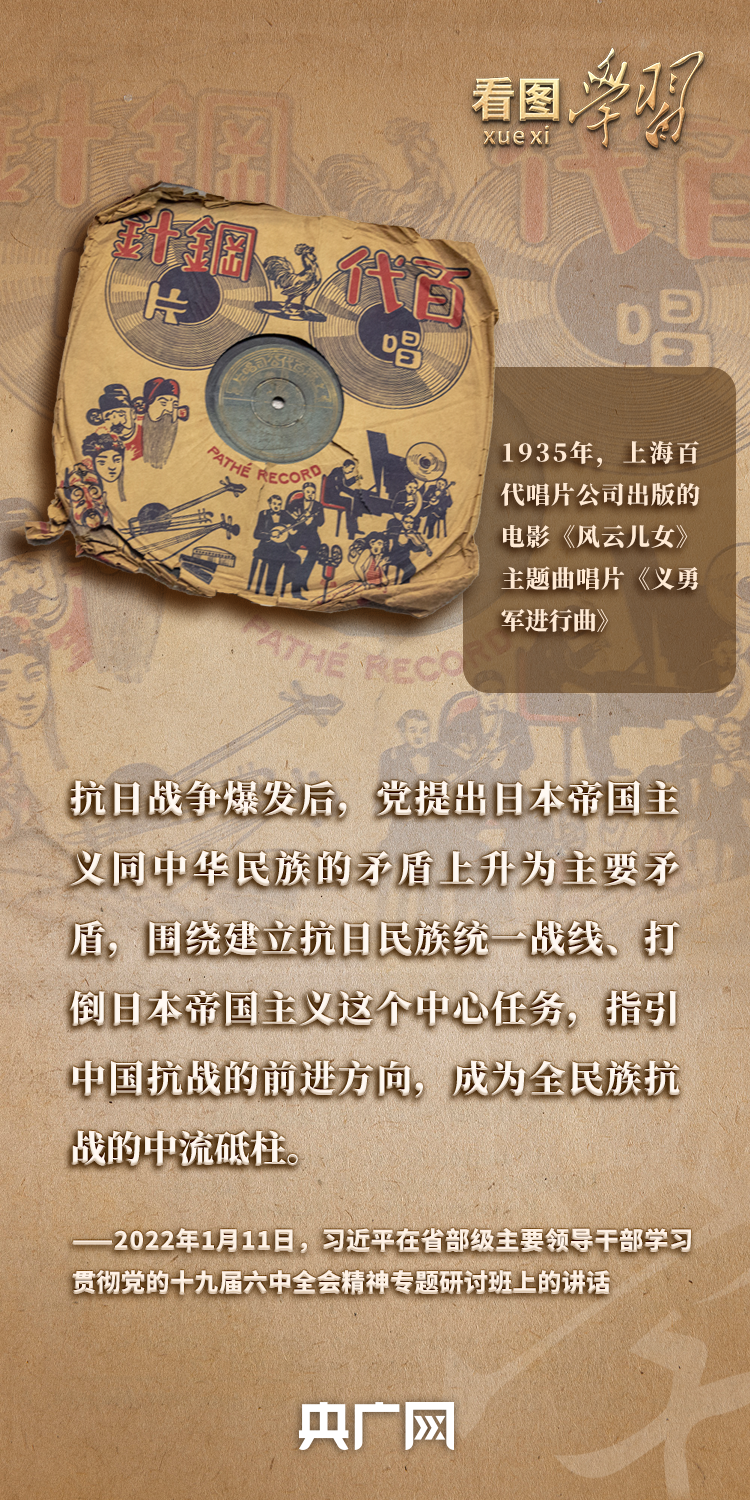
看图学习丨从抗战文物中感悟伟大抗战精神
Yang Guang Wang· 2025-08-31 04:41
Core Viewpoint - The article emphasizes the importance of the great spirit of resistance during the Anti-Japanese War as a valuable spiritual asset for the Chinese people, inspiring them to overcome difficulties and strive for national rejuvenation [1][10]. Group 1: Historical Context - The Anti-Japanese War united various political parties, ethnic groups, and social classes in China, marking the beginning of a nationwide resistance against Japanese imperialism [6]. - The historical significance of the "Hundred Regiments Offensive" is highlighted as a demonstration of the Communist Party's pivotal role in the national resistance and the power of the people's war [7]. Group 2: Leadership and Unity - Xi Jinping's speeches underscore the necessity for all Chinese people, both domestically and abroad, to unite and promote the great spirit of resistance as they advance towards national rejuvenation [17]. - The article references Xi Jinping's remarks on the contributions of international anti-fascist forces to China's war efforts, acknowledging the global support received during the conflict [15].
好评中国|赓续伟大抗战精神,书写民族复兴新的荣光
Huan Qiu Wang· 2025-08-31 02:31
今年是中国人民抗日战争暨世界反法西斯战争胜利80周年。这一伟大胜利,彻底粉碎了日本军国主义殖 民奴役中国的图谋,有力捍卫了国家主权和领土完整,洗刷了近代以来中国抗击外来侵略屡战屡败的民 族耻辱。站在这一重要历史节点,我们回望峥嵘岁月,缅怀革命先烈,更加深刻认识到抗日战争胜利的 伟大历史意义,更加坚定走中国特色社会主义道路的信心和决心。 历史因铭记而永恒,精神因传承而不灭。中国人民抗日战争是一部波澜壮阔的英雄史诗,是中华民族从 深重危机走向伟大复兴的重要转折。在这场艰苦卓绝的斗争中,中国共产党以卓越的政治领导力和坚定 的理想信念,推动建立抗日民族统一战线,凝聚起全民族抗战的磅礴力量。从九一八事变后率先发出抗 日宣言,到制定全面抗战路线;从平型关大捷打破日军不可战胜的神话,到开辟广阔的敌后战场,中国 共产党始终站在斗争最前线,成为全民族抗战的中流砥柱。杨靖宇、赵尚志、左权等抗日英雄,用生命 诠释了天下兴亡、匹夫有责的爱国情怀;狼牙山五壮士、东北抗联八位女战士等英雄群体,以鲜血展现 了视死如归、宁死不屈的民族气节。这种在血与火中淬炼形成的伟大抗战精神,是中国人民弥足珍贵的 精神财富,永远激励着我们克服一切艰难险阻, ...
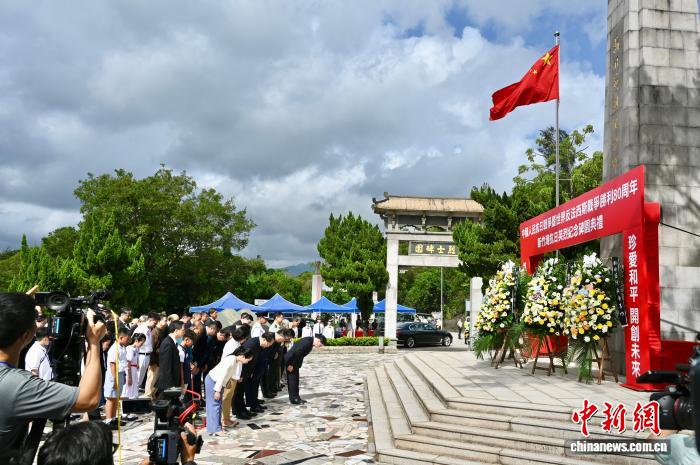
(抗战胜利80周年)香港特区政府举行典礼纪念抗战胜利80周年
Zhong Guo Xin Wen Wang· 2025-08-30 06:59
Core Viewpoint - The Hong Kong Special Administrative Region (HKSAR) government held a ceremony on August 30 to commemorate the 80th anniversary of the victory in the Chinese People's War of Resistance Against Japanese Aggression and the World Anti-Fascist War [1][3][5] Group 1: Ceremony Details - The ceremony took place at the Anti-Japanese Heroes Monument Park in Saikung, where HKSAR Chief Executive John Lee led guests in paying respects to the monument [3][5] - A flag-raising ceremony was conducted, followed by a moment of silence and a bow to the monument by Chief Executive Lee and other guests [3][5] - The unveiling of a couplet at the memorial pavilion was performed, which reflects the patriotic sentiments of Hong Kong citizens [5] Group 2: Historical Context and Significance - Chief Executive Lee emphasized the connection between Hong Kong and the nation, highlighting the support of Hong Kong residents during the war, particularly the involvement of local residents in the anti-Japanese struggle [5] - He mentioned that the HKSAR government plans to install commemorative plaques at various historical sites related to the war to enhance public understanding of the significance of the anti-Japanese war and its victory [5] - Lee called for unity and the inheritance of the spirit of the heroes, urging citizens to contribute to the great rejuvenation of the Chinese nation and the building of a community with a shared future for mankind [5]
民进党当局扬言查办参加九三活动的国民党曾任政务官者,国台办回应
Bei Jing Ri Bao Ke Hu Duan· 2025-08-30 02:03
Core Viewpoint - The 80th anniversary of the victory in the Anti-Japanese War is a significant event for the entire Chinese nation, emphasizing the contributions of all Chinese, including Taiwanese, in the fight against Japanese fascism [2] Group 1 - The spokesperson highlighted that the participation of representatives from Taiwan in the commemorative event reflects a commitment to national unity and justice, which is beneficial for the peaceful development of cross-strait relations [2] - The Democratic Progressive Party (DPP) is criticized for its hostile stance towards the event, which is seen as a betrayal of national interests and a disregard for the sentiments of people on both sides of the strait [2] - The DPP's actions are described as exposing its "Taiwan independence" nature, which is viewed negatively and as a threat to cross-strait relations [2]
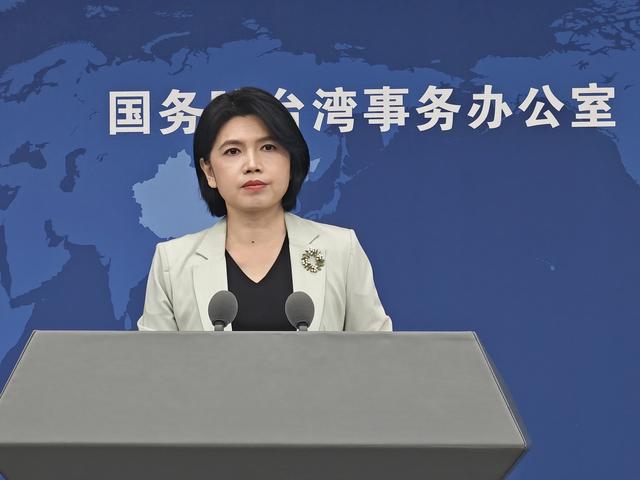
国台办:台湾各界代表人士来京参加抗战胜利80周年纪念活动堂堂正正、无可非议
Xin Hua She· 2025-08-29 15:16
Core Viewpoint - The victory in the Anti-Japanese War is emphasized as a collective achievement of the entire nation and a significant part of the global anti-fascist struggle, highlighting the sacrifices made by all Chinese, including those from Taiwan [1] Group 1 - The spokesperson from the Taiwan Affairs Office stated that the participation of representatives from Taiwan in the 80th anniversary of the Anti-Japanese War victory in Beijing reflects a commitment to national unity and justice [1] - The upcoming commemorative event on September 3 is described as a grand occasion, with the spokesperson addressing concerns regarding threats from the Democratic Progressive Party (DPP) towards individuals attending [1] - The DPP's actions are criticized for undermining national sentiment and harming cross-strait relations, revealing their "Taiwan independence" nature [1]
保持战略定力 坚定必胜信念——中国人民抗日战争胜利80周年的时代启示之三
Xin Hua She· 2025-08-28 14:33
Core Viewpoint - The article emphasizes the importance of maintaining strategic determination and unwavering belief in victory, drawing lessons from the Chinese People's War of Resistance Against Japanese Aggression, which lasted from September 18, 1931, to September 2, 1945, highlighting the contributions of the Chinese Communist Party and the Chinese people in achieving this victory [1][2][3]. Group 1: Historical Context and Lessons - The article reflects on the historical significance of the War of Resistance, noting that it lasted for 5,098 days and was characterized by the Chinese Communist Party's leadership and the collective efforts of the Chinese people [1]. - It cites Mao Zedong's "On Protracted War," which outlined the strategic phases of the war and emphasized the importance of the people's support for victory [3]. - The narrative includes personal stories of individuals like Li Deyue, who exemplified the spirit of determination and belief in victory during the war [3]. Group 2: Ideological Foundations - The article discusses the concept of "Marxism Sinicization," introduced by Mao Zedong, which provided a strategic framework for the Communist Party's leadership during the war [4]. - It highlights the importance of continuous practical and theoretical innovation as a key to the Party's resilience and success [4]. Group 3: People's Power and Collective Efforts - The article illustrates the sacrifices made by soldiers and civilians, such as the 82 soldiers from the New Fourth Army who died in battle, and the villagers who honored their memory by continuing the fight [6]. - It emphasizes the collective strength of the Chinese people, showcasing various instances of bravery and unity against the Japanese invasion [6]. Group 4: Strategic Determination in Modern Context - The article draws parallels between historical struggles and contemporary challenges, emphasizing the need for strategic determination in addressing modern issues such as poverty alleviation and external pressures [9][10]. - It underscores the importance of self-reliance and innovation in achieving national goals, as demonstrated by the achievements in various sectors over the years [11][12]. Group 5: Future Aspirations - The article concludes with a call to remember the past while striving towards future goals, reinforcing the commitment to the great rejuvenation of the Chinese nation [18].
微视频|伟大胜利
Xin Hua She· 2025-08-28 07:04
穿越历史烟云,那段浴血奋战、救亡图存的不屈岁月,依然震撼人心…… 配音:王帅龙 这一伟大胜利,开辟了中华民族伟大复兴的光明前景,开启了古老中国凤凰涅槃、浴火重生的新征程。 统筹:杨咏、杨云燕 编导:王洪流 记者:崔师豪、刘宇轩、梁爱平、宿传义、金剑、彭菁、王君璐 中华儿女冒着敌人的炮火共赴国难,奋起抗争14载,取得了近代以来抗击外敌入侵的第一次完全胜利。 这是正义和邪恶、光明和黑暗、进步和反动的大决战,更是中华民族近代史上的重大转折点。 这一伟大胜利,彻底粉碎了日本军国主义殖民奴役中国的图谋,洗刷了近代以来中国抗击外来侵略屡战 屡败的民族耻辱。 这一伟大胜利,重新确立了中国在世界上的大国地位,使中国人民赢得了世界爱好和平人民的尊敬。 新华社音视频部制作 [ 责编:丛芳瑶 ] ...
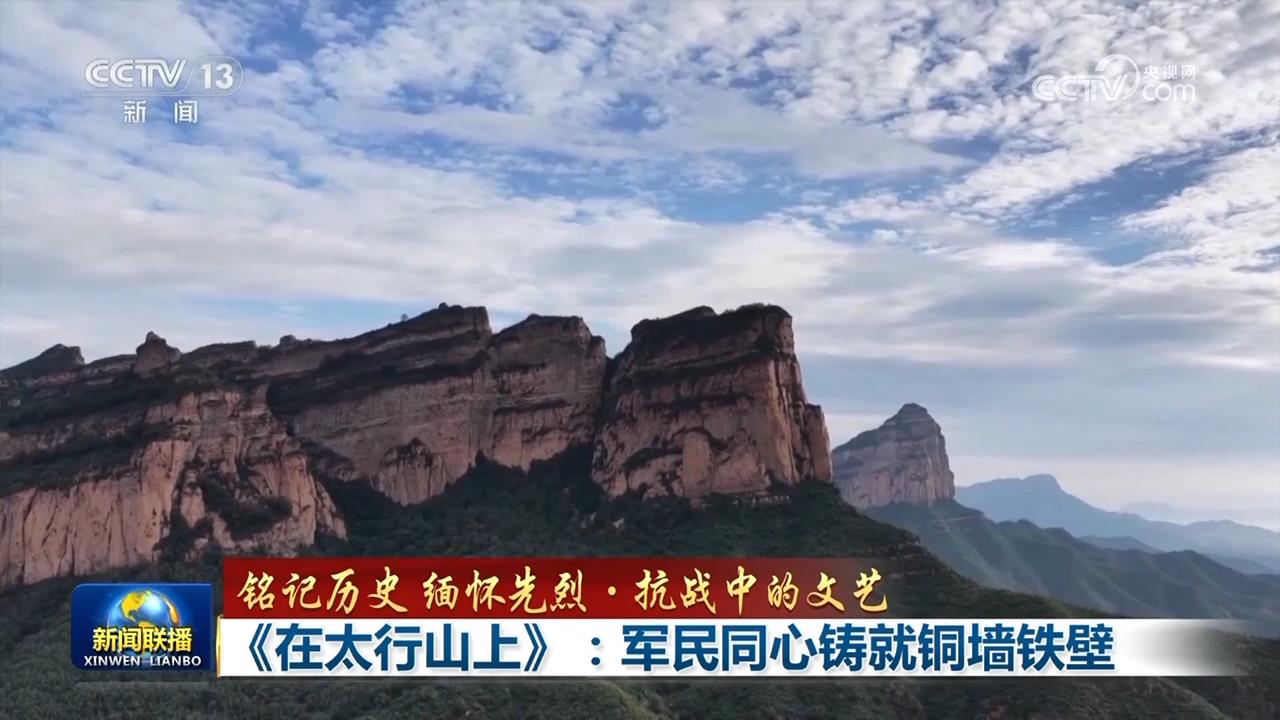
【铭记历史 缅怀先烈·抗战中的文艺】《在太行山上》:军民同心铸就铜墙铁壁
Yang Shi Wang· 2025-08-27 12:13
Core Viewpoint - The news highlights the significance of the 80th anniversary of the victory in the Chinese People's War of Resistance Against Japanese Aggression and the global anti-fascist war, emphasizing the resilience and spirit of the Chinese people during this historical period [1]. Group 1 - The Taihang Mountains are depicted as a symbol of heroism, with every valley marking the footprints of heroes during the War of Resistance that began in 1937 [3]. - The Wuxiang County, with a population of only 140,000, became a crucial base for the Eighth Route Army, where over 90,000 people participated in various anti-Japanese groups, and 14,600 joined the Eighth Route Army, with more than 20,000 sacrificing their lives [5]. - The song "On the Taihang Mountains," composed by musician Xian Xinghai, encapsulates the determination and unyielding spirit of the Taihang people, reflecting the growth of the Eighth Route Army from 30,000 soldiers in 1937 to 200,000 by 1940, demonstrating their significant impact on the war against Japanese invaders [7].
铸就不屈脊梁 激扬爱国情怀——中国人民抗日战争胜利80周年的时代启示之二
Xin Hua She· 2025-08-27 05:49
Core Viewpoint - The victory of the Chinese People's Anti-Japanese War is a great victory of national spirit centered on patriotism, achieved through the sacrifices of over 35 million people [1][2][3]. Group 1: Historical Context - The Anti-Japanese War lasted 14 years, during which the Chinese people demonstrated unwavering determination and courage, ultimately leading to a significant victory against evil forces [3][6]. - The war saw the emergence of numerous heroes and groups, such as Yang Jingyu and the "Wolf Tooth Mountain Five Heroes," who exemplified the spirit of unity and resistance [6][8]. Group 2: Patriotism as a Driving Force - Patriotism is described as the backbone of the nation, inspiring generations of Chinese to strive for national development [2][10]. - The spirit of patriotism is emphasized as a powerful motivator for overcoming challenges and achieving the great rejuvenation of the Chinese nation [3][11]. Group 3: Education and Legacy - The importance of instilling patriotism in future generations is highlighted, with calls for continuous education on national spirit and history [26][28]. - The legacy of the Anti-Japanese War and its heroes serves as a source of inspiration for contemporary Chinese society, reinforcing the need for unity and resilience [10][29]. Group 4: Modern Implications - The article discusses the transformation of China from a war-torn nation to the world's second-largest economy, attributing this progress to the enduring spirit of patriotism [16][29]. - The current generation is urged to carry forward the patriotic spirit, contributing to the realization of the Chinese Dream and national rejuvenation [28][29].