Autonomous Driving

Search documents
快讯 | 申万投资公司助力西井科技打造欧洲首个常态化运营自动驾驶港口项目
申万宏源证券上海北京西路营业部· 2025-12-15 02:16
Core Viewpoint - The successful delivery of the second batch of Q-Truck autonomous trucks by Shanghai Xijing Technology Co., Ltd. at Felixstowe Port marks a significant breakthrough for Chinese smart logistics technology in the high-end European market [2] Group 1: Project Overview - Felixstowe Port becomes the first port in Europe to implement mixed operations of autonomous and manual driving, showcasing the adaptability and replicability of Xijing Technology's "SMART" full-link solution in global port scenarios [2] - Q-Truck features pure electric drive and an automatic battery swapping system, capable of reducing approximately 50 tons of carbon dioxide emissions per vehicle annually, providing a scalable zero-carbon solution for overseas ports [2] Group 2: Investment and Strategic Implications - The investment by Shenwan Investment Company in Xijing Technology aligns with the central financial work conference's spirit and is a concrete measure to implement the financial "five major articles" [2] - By innovatively utilizing SPV structures and connecting with the new policies of the Sci-Tech Innovation Board, Shenwan Investment Company aids the company in achieving critical transitions from technology research and development to international expansion, promoting a virtuous cycle of "technology-industry-finance" [2] Group 3: Future Outlook - The company will continue to support Xijing Technology in deepening its global layout and promoting Chinese smart logistics technology along the "Belt and Road" initiative, contributing to national strategies and high-level opening-up [2]


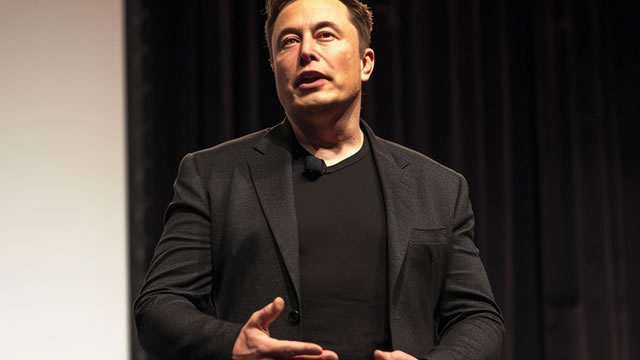
Elon Musk says Tesla is now testing driverless robotaxis, without a human safety monitor, on Austin's streets
Business Insider· 2025-12-15 00:12
Core Insights - Tesla is testing driverless robotaxis in Austin without human safety operators, marking a significant step in its autonomous vehicle program [2][4] - The company aims to expand its robotaxi fleet in Austin from 29 to 500 vehicles by the end of the year [3] - Recent observations show that there are currently 31 active robotaxis in Austin, indicating growth in the fleet [3] Group 1: Testing and Development - Tesla CEO Elon Musk confirmed that testing of driverless taxis without human occupants is underway, although not yet for paying customers [2] - Musk indicated that fully autonomous robotaxis would be operational in Austin within three weeks [4] - Previous tests of robotaxis required multiple interventions from safety monitors, highlighting the challenges faced in achieving full autonomy [5] Group 2: Public Reaction and Engagement - A video of a driverless Tesla Model Y in Austin generated excitement among Tesla enthusiasts, prompting them to test the service [1] - Tesla's AI chief expressed enthusiasm on social media about the commencement of driverless operations [2]

X @Tesla Owners Silicon Valley
Tesla Owners Silicon Valley· 2025-12-14 22:44
The future is autonomous.Super exciting to see testing happening in Austin. I wonder when the Silicon Valley will happen. https://t.co/eItwlwSEMg ...
Rivian doubles down on new plan to beat Tesla
Yahoo Finance· 2025-12-14 16:33
Core Insights - The Biden administration's pro-EV stance contrasts sharply with the Trump administration's policies, which have negatively impacted EV sales through the elimination of the $7,500 tax credit [1] - Rivian is adapting its compensation structure to align with long-term performance goals, similar to Tesla, with a new pay plan potentially worth $4.6 billion over the next decade [3] - Rivian is intensifying its focus on autonomous driving technology to compete with Tesla, aiming to develop a comprehensive AI autonomy system [5][6] Industry Performance - EV sales surged in Q3 as consumers rushed to take advantage of the expiring tax credit, but this is expected to lead to a decline in long-term demand [2] - Major automakers reported significant EV sales: Ford with 85,789 units (+20%), General Motors with 66,501 units in Q3 and 144,668 year-to-date (+105%), and Tesla with 497,099 deliveries (+7.3%) [7] Technological Advancements - Rivian introduced its Gen 3 Autonomy Computer, claiming it has the best combination of vehicle sensors and inference capabilities in North America, processing 5 billion pixels per second [8] - The company plans to integrate LiDAR technology into its future R2 models, differentiating itself from Tesla, which has criticized LiDAR as costly and unnecessary [9]

2025科技与资本报告|人工智能赶考
Bei Jing Shang Bao· 2025-12-14 07:47
Core Insights - By 2025, China's AI industry is at a historical turning point, with generative AI user base reaching 515 million, an increase of 266 million from December 2024 [1] - The Chinese government has outlined a clear direction for AI development through the "AI+" action plan, emphasizing six key actions and eight foundational capabilities [1] - The capital market has responded positively, with 709 investment events in the AI sector in 2025, amounting to approximately 59.145 billion yuan, which is 94.5% of the total investment in 2024 [1] Group 1: Industry Trends - The AI industry is witnessing a shift from a focus on technology narratives to practical applications, with a brutal elimination process for startups lacking financial viability [2] - Major companies are leveraging their technological advantages to attract capital and accelerate their market presence, while startups face existential challenges [2] - The AI sector is experiencing deep penetration into various industries, indicating a transition from speculative investments to more grounded business models [2] Group 2: Market Developments - New companies like Xiaoma Zhixing and Wenyan Zhixing have recently listed on the Hong Kong Stock Exchange, marking significant milestones in the autonomous driving sector [6] - Xiaoma Zhixing operates a fleet of over 720 Robotaxi vehicles, providing 24/7 service in major cities, while Wenyan Zhixing has over 1,500 autonomous vehicles licensed across eight countries [6] - The AI sector saw 435 new financing events in Q3 2025, a 99% year-on-year increase, with total financing around 37 billion yuan [7] Group 3: Competitive Landscape - The competition in the AI industry is intensifying, with both tech giants and startups vying for market share, leading to a complex competitive environment [8] - The launch of DeepSeek's app has significantly increased user engagement, with active users surpassing 240 million within a month of its release [8] - The AI app user base reached 287 million by September 2025, indicating a growing trend towards multi-model integration in applications [9] Group 4: Investment Dynamics - The investment landscape is evolving, with a focus on AI hardware and applications, as evidenced by significant funding rounds for companies like Ling Yuzhou [13] - The return cycle for AI hardware investments is shorter compared to traditional internet investments, necessitating careful selection of investment targets [14] - The relationship between technology breakthroughs, industry application, and capital investment is forming a virtuous cycle, enhancing the potential for future advancements [14] Group 5: Future Outlook - The AI industry is expected to continue its growth trajectory, with a focus on achieving a balance between technological, industrial, and commercial value [16] - Major companies like Alibaba and Tencent are significantly increasing their investments in AI infrastructure, indicating a long-term commitment to the sector [15] - The Chinese AI patent application volume reached 1.576 million, accounting for 38.58% of the global total, positioning China as a leader in AI innovation [16]
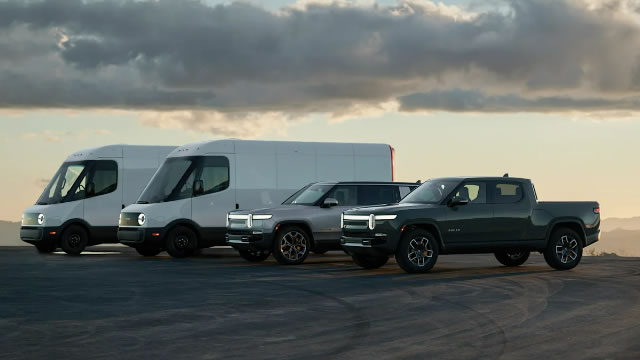
Tesla vs. Rivian: Which EV Stock Will Outperform in 2026?
Yahoo Finance· 2025-12-13 22:05
Group 1: Tesla's Performance and Prospects - Tesla remains the top electric vehicle maker globally, but faced operational challenges in 2025 with revenue drops in Q1 and Q2 due to decreased automotive deliveries [3] - A recovery was noted in Q3 with a bounce-back in revenue and auto deliveries, although adjusted earnings per share (EPS) fell by 31% and gross margin pressure was felt due to the decline in regulatory credit sales [3] - The future stock performance in 2026 will likely depend on the progress of Tesla's robotaxi business, with current testing in Austin, Texas, and plans for full autonomy by year-end [4][5] Group 2: Rivian's Growth and Strategy - Rivian achieved significant milestones in 2025, including two consecutive quarters of positive gross margins, which unlocked a $1 billion equity investment from Volkswagen [6] - The company successfully mitigated tariff and supply chain pressures, leading to gross profit in Q3 [6] - Rivian's cost reduction strategies included revamping its SUV design and adopting a zonal architecture system, which minimized the number of electronic control units and wiring, facilitating its partnership with Volkswagen [7] Group 3: Comparative Outlook for 2026 - Tesla's 2026 stock performance is expected to hinge on its robotaxi ambitions, while Rivian's performance will be influenced by the launch of its new R2 SUV [8]
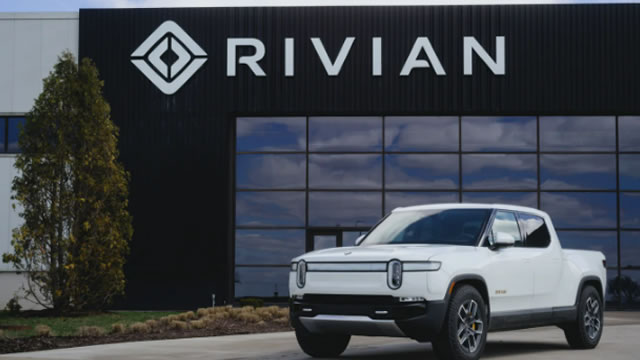
Rivian's AI, autonomy impress Wall Street, but EV and capital concerns remain
CNBC· 2025-12-12 16:31
Core Insights - Rivian Automotive showcased its plans for artificial intelligence, automation, and an internally developed silicon chip during its first "Autonomy and AI Day," which impressed Wall Street but highlighted ongoing challenges related to demand and capital [1][3][5] Stock Performance - Following the event, Rivian's stock fell by 6.1% to close at $16.43 per share, but recovered during intraday trading on Friday, rising more than 15% [2] - Analysts noted that while Rivian's technology announcements were impressive, the stock's decline was justified due to prior gains and the lack of a major AI partnership announcement [5][8] Analyst Ratings and Price Targets - Needham raised its price target for Rivian by 64% to $23 per share, citing tech announcements and higher delivery expectations for the new R2 SUV [3] - Morgan Stanley set a price target of $12, attributing $7 to software and services and $5 to the core automotive business, reflecting concerns about demand and profitability [13][14] Technological Developments - Rivian introduced a proprietary chip, RAP1, designed for autonomous driving, along with an evolved software architecture and a new AI assistant [5] - The company aims to achieve full autonomy with a roadmap that begins with updates to its hands-free driving system [6] Market Challenges - Rivian faces challenges such as slumping EV demand, particularly after the expiration of tax credits, and internal struggles related to product development and capital [9][10] - Analysts highlighted that the adoption of advanced driver assistance systems remains low across the industry, putting Rivian at a competitive disadvantage [10] Financial Position - Rivian ended the third quarter with $7.7 billion in total liquidity, including nearly $7.1 billion in cash, which is seen as a strong position for the upcoming R2 launch [16] - The R2 midsize SUV, priced around $45,000, is crucial for expanding Rivian's customer base and proving its profitability efforts [16][18]
Tesla Stock Teases Early Entry Amid Bets Elon Musk Can Hit This Deadline
Investors· 2025-12-12 15:48
Group 1 - Tesla (TSLA) stock rose 0.8% to 450.63, briefly topping an early entry at 458.87 during trading, ahead of CEO Elon Musk's deadline to remove safety monitors from Model Y robotaxis by year-end [6][9] - Rivian outlined its roadmap for its autonomous driving platform, which has positively impacted its stock performance [7] - Donald Trump's potential loosening of federal restrictions on marijuana stocks has led to a significant increase in stock prices, with reports of a $3.68 billion infusion and 400% earnings growth [8] Group 2 - The Dow Jones futures experienced fluctuations as the Federal Reserve's decisions loom, with notable movements in stocks like Tesla, Nvidia, and Netflix [11] - Oracle's stock faced a decline due to concerns over AI spending, indicating market volatility in tech stocks [11] - Tesla is heavily investing in autonomous driving and AI technologies, positioning itself as a leader in the sector [11]
Rivian Post Autonomy & AI Day: Is the Stock Worth Buying Now?
ZACKS· 2025-12-12 13:51
Core Insights - Rivian Automotive hosted its first Autonomy & AI Day, emphasizing stronger autonomy, improved AI, and a more capable tech platform for future models [1] - The company is facing a slowdown in U.S. EV demand and increased price competition from Chinese automakers [2] - Rivian's stock has risen 24% year-to-date but remains 79% below its IPO price [2] Technology Developments - Rivian introduced its in-house silicon chip, the Rivian Autonomy Processor (RAP1), designed for heavy AI and vision workloads, delivering 205 gigabytes per second bandwidth [4] - The new hardware will support an AI-powered "Rivian Assistant" and near-term software updates for hands-free driving on over 3.5 million miles of North American roads [5] - Integration of LiDAR into future models aims for Level 4 self-driving capabilities, positioning Rivian closer to competitors like Waymo [6] Product and Market Strategy - Rivian plans to launch the affordable R2 model in the first half of 2026, targeting a starting price of around $45,000 [10] - A partnership with Volkswagen involves an investment of up to $5.8 billion by 2027, focusing on developing next-generation electrical architecture and software [11] Financial Overview - Rivian's cash balance decreased to $7.1 billion at the end of Q3 2025, with a high capex forecast of $1.8–$1.9 billion [12] - The company has lowered its 2025 delivery guidance to 41,500-43,500 units, down from previous estimates [13] - Zacks Consensus Estimate projects revenue growth of 8% in 2025 and 36% in 2026, with adjusted EBITDA loss estimates for 2025 narrowing slightly [14][15]