
Consumer Spending

Search documents
High Earners Dominate US Consumption | Presented by CME Group
Bloomberg Television· 2025-09-30 15:03
Consumer spending is a crucial part of the US economy, accounting for about twothirds of its growth. But with inflation still running sticky, can spending power hold up. The latest data appears to be yet another testament to the sheer resilience of the US consumer.However, the solid gains are masking a deepening inequality among US households where a small share of high-wealth Americans is seeing continued gains while a larger share of the middle and lower income households is experiencing increased strain. ...


X @Bloomberg
Bloomberg· 2025-09-30 11:10
Consumer Behavior - Cost-conscious Americans are carefully spending on groceries [1] - Splurging on fancier, fattier butter is an exception to the careful spending habits [1]
Mastercard’s Michelle Meyer on why the job market deserves close attention
CNBC Television· 2025-09-29 16:35
Welcome back. As we continue to monitor uncertainty around tariffs, inflation, the labor market, how's the consumer holding up. Here to discuss is Mastercard Economic Institute's chief economist, Michelle Meyer.Recently releasing a forecast for the holiday season, expecting retail sales to grow by 3.6%. Welcome. It's good to have you.>> Thank you. Good to be here. >> So, how does that compare 3.6%.What does it say about where we are in consumer spending. >> It's pretty a solid growth rate. Um, and actually ...
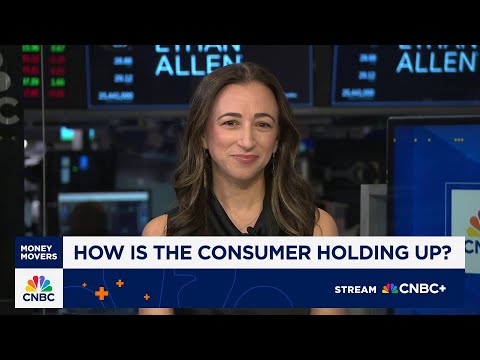
Mastercard's Michelle Meyer on why the job market deserves close attention
Youtube· 2025-09-29 16:35
Consumer Spending Outlook - The Mastercard Economic Institute forecasts a 3.6% growth in retail sales for the holiday season, which is consistent with spending trends observed over the summer months [1][2] - Last year's holiday spending growth was 4.1%, driven by high volumes and disinflation in many categories, while this year presents more pricing challenges for consumers [3][5] E-commerce vs. In-store Spending - E-commerce retail spending is expected to grow by 7.9%, significantly outpacing the just over 2% growth for in-store shopping, indicating a shift in consumer behavior towards online shopping [6][7] Consumer Demographics and Spending Power - Spending is increasingly driven by high-end consumers, supported by wealth gains in markets and real estate, which have created a positive wealth effect for upper-income households [8][9] - The overall household balance sheets are in good shape, with serious delinquency rates trending slightly lower, suggesting consumers are well-equipped to manage spending this season [12] Labor Market Dynamics - Job creation has slowed, but the labor market remains balanced with low firing rates, contributing to a steady unemployment rate [14] - The impact of technological advancements, particularly AI, on the job market is a topic of debate, with potential structural changes expected rather than cyclical dynamics [15][16]

Fed's favored inflation gauge climbs slightly in August
Fastcompany· 2025-09-27 10:11
LOGIN BY Associated Press Listen to this ArticleMore info 0:00 / 0:00 The Federal Reserve's favored inflation gauge accelerated slightly in August from a year earlier. The Commerce Department reported Friday that its personal consumption expenditures (PCE) price index was up 2.7% in August from a year earlier, a tick higher from a 2.6% year-over-year increase in July and the most since February. Prices rose 0.3% from July, compared to a 0.2% increase the month before. Core prices rose 0.2%, the same as ...
Economic Worries Are Rising for Most Americans, But Big Stock Holders Stay Positive
Yahoo Finance· 2025-09-26 19:18
Core Insights - Consumer sentiment declined by approximately 5% in September compared to August, primarily due to concerns about the job market and persistent inflation, although investors with large stock portfolios remained optimistic [2][6]. Consumer Sentiment Index - The University of Michigan's Consumer Sentiment Index fell to 55.1 in September, which is 21% lower than the same month last year, but still above the levels of around 52 recorded in April and May [4][6]. - The decline in sentiment is attributed to rising worries about unemployment, with 65% of respondents expecting job losses, a significant increase from 35% a year ago [5]. Economic Outlook - The sentiment survey indicates a deteriorating financial outlook for consumers, as highlighted by Survey Director Joanne Hsu [5]. - Despite the decline in sentiment, consumer spending remained resilient in August, as indicated by the Personal Consumption Expenditures report [8]. Inflation and Income Growth - Inflation expectations slightly softened, yet 44% of respondents reported that high prices were eroding their personal savings, the highest level since last November [7]. - Slower income growth, combined with high prices, is expected to restrain consumer spending moving forward [8].
People who worried about the tariffs were wrong, says Treasury Secretary counselor Joe LaVorgna
CNBC Television· 2025-09-26 18:47
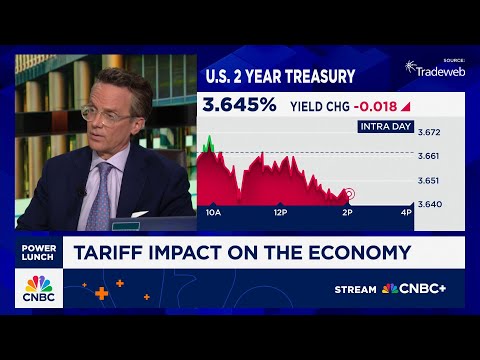
But is the data reflecting the inflationary impact of tariffs. Let's discuss with Joe Leavourne, counselor to Treasury Secretary uh Bessant and here on set with me. It's great to see you, Joe. >> Great to be here.Thank you. >> All right, so inflation data that we got this morning. Core PCE basically in line with the month prior and actually we saw the month before that revised lower as well.What is that telling us. >> Actually, I like to look at the goods piece because that's where the tariffs would show up ...
X @Cointelegraph
Cointelegraph· 2025-09-26 16:30
🇺🇸 UPDATE: US consumer spending rose 0.4% in August despite core inflation holding at 2.9%. https://t.co/32F3nQde0S ...
Persistent Inflation and a Strong Consumer Complicate the Fed’s Interest-Rate Path
Barrons· 2025-09-26 15:54
Core Insights - Inflation has increased for the fourth consecutive month in August, complicating the Federal Reserve's interest-rate decision-making process as economic growth remains strong while the labor market shows signs of weakness [1][2] Economic Indicators - Consumer spending rose by 0.6% in August, surpassing July's growth of 0.4%, indicating that households continue to spend despite persistent inflation [2]
Fed's favored inflation gauge accelerates slightly in August
Yahoo Finance· 2025-09-26 12:39
Core Inflation and Consumer Spending - The PCE price index increased by 2.7% in August year-over-year, up from 2.6% in July, marking the highest increase since February [1] - Core PCE inflation, excluding food and energy, remained at a 2.9% increase from August 2024, consistent with July's figures [2] - Inflation-adjusted consumer spending rose by 0.4% from July, driven by a 0.7% increase in goods spending, while services spending only increased by 0.2% [3] Federal Reserve Actions and Economic Context - The Federal Reserve has raised its benchmark interest rate 11 times in 2022 and 2023 due to rising inflation, which remains above the 2% target [4] - Recently, the Fed reduced rates for the first time this year to support a weakening job market, while being cautious about further cuts due to potential impacts from tariffs [4] - The Fed prefers the PCE inflation gauge over the consumer price index as it accounts for changes in consumer shopping behavior during inflationary periods [6]