中小学生心理健康

Search documents
教育部发布10条措施,进一步加强中小学生心理健康工作
Xin Jing Bao· 2025-10-24 00:48
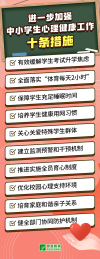
Core Viewpoint - The Ministry of Education has issued a notification outlining ten measures to enhance the mental health of primary and secondary school students, focusing on alleviating academic pressure and promoting overall well-being [1] Group 1: Measures to Alleviate Academic Pressure - Effective measures to reduce students' anxiety related to exams and admissions include limiting homework, prohibiting repetitive and punitive assignments, and encouraging a "no homework day" each week [4][5] - The management of examinations will be standardized, with reduced frequency of tests and appropriate difficulty levels, while maintaining the achievements of off-campus training governance [5] - The implementation of comprehensive health education in school curricula will be mandated, with monthly activities aimed at enhancing students' resilience and coping skills [4][5] Group 2: Physical Health and Well-being - A mandate for students to engage in at least two hours of physical activity daily will be enforced, with schools encouraged to collaborate with local communities to provide facilities for after-school sports [5][6] - Schools will be required to ensure adequate sleep for students by managing school hours and promoting healthy sleep habits among students and parents [6] Group 3: Digital Well-being - Students will receive education on internet literacy and safety, with strict regulations on the use of electronic devices in classrooms to foster healthy online habits [6][7] - Initiatives to reduce dependency on the internet will be promoted, including collaborative "screen-free" activities between students and parents [7] Group 4: Support for Vulnerable Groups - Special attention will be given to vulnerable student groups, including those from single-parent families and orphans, with tailored psychological support and regular communication with their families [7][8] - A national monitoring and early warning system for student mental health will be established, ensuring timely intervention and support [8] Group 5: Comprehensive Mental Health Education - A system for comprehensive mental health education will be implemented, enhancing teachers' capabilities to identify and address students' psychological issues [8][9] - Schools will be encouraged to create a supportive environment through various initiatives aimed at fostering a sense of community and belonging among students [9] Group 6: Family and Community Engagement - Schools will strengthen collaboration with families through regular educational activities focused on mental health, aiming to foster supportive home environments for students [9][10] - A coordinated approach involving various community and governmental organizations will be established to provide psychological support and resources for students [10]

教育部发布10条措施 进一步加强中小学生心理健康工作
Yang Shi Xin Wen· 2025-10-24 00:42
Core Points - The Ministry of Education has issued a notification to enhance mental health work for primary and secondary school students, proposing ten measures to improve their psychological well-being and promote healthy growth [1][2] Group 1: Measures for Mental Health Improvement - Continuous reform in curriculum, homework, and exam management to consolidate the "double reduction" achievements, strictly control the total amount of written homework, and regulate exam management [1] - Ensure that students engage in comprehensive physical activities for no less than 2 hours daily and guarantee sufficient sleep time [1] - Address issues such as insufficient exercise, lack of sleep, and internet addiction among students [1] Group 2: Support Systems and Collaboration - Emphasize the importance of building a protective network for mental health that includes school support, family care, and departmental collaboration [2] - Enhance training for class teachers and mental health educators to improve overall mental health support capabilities [2] - Establish a "teaching alliance" to foster harmonious parent-child relationships and strengthen the collaborative defense mechanism among departments [2]
中小学生常见心理问题的识别与应对方法
Jing Ji Guan Cha Bao· 2025-09-12 01:41
Core Insights - The mental health issues of primary and secondary school students are increasingly becoming a focal point of societal concern, influenced by educational competition and changes in family structure [1] - Common psychological problems include excessive sensitivity, rebelliousness, social anxiety, inferiority and arrogance, learning anxiety, dependency, stubbornness, and loneliness, arising from various social, familial, and personal factors [1] Group 1: Excessive Sensitivity - Excessive sensitivity is characterized by students being easily affected by external stimuli, leading to exaggerated emotional responses [2] - Students may become overly concerned about criticism from teachers and parents, resulting in feelings of depression and self-destructive behavior [2] - This psychological issue can hinder students' ability to focus on learning and build positive relationships with peers and teachers [2] Group 2: Rebelliousness - Rebelliousness is a common psychological issue during the growth phase, marked by suspicion, isolation, and defiance against authority [3] - The emergence of rebelliousness is linked to the developmental stage of students and their family and school environments [3] - Factors such as overly strict or indulgent parenting and inappropriate teaching methods can contribute to the development of rebellious behavior [3] Group 3: Social Anxiety - Social anxiety manifests as a reluctance to engage in group activities, leading to feelings of isolation and exclusion [4] - Students may face peer rejection, bullying, or humiliation, complicating their social interactions [4] - This anxiety can result in confusion, worry, and self-esteem issues, negatively impacting mental health and academic performance [4] Group 4: Inferiority and Arrogance - Inferiority and arrogance stem from students' skewed self-perception, often leading to either an overly negative or positive self-assessment [5] - Inferior students may overlook their strengths, while arrogant students may disregard their weaknesses, both affecting interpersonal relationships and academic performance [5] - Inferior students may avoid new challenges due to fear of failure, while arrogant students may face social backlash for their dismissive attitudes [5] Group 5: Learning Anxiety - Learning anxiety is prevalent among students, often exacerbated by high expectations from schools and parents, leading to significant pressure [7] - This pressure can manifest as exam anxiety, aversion to learning, and even depressive symptoms, undermining students' confidence and interest in education [7] - Strategies to address learning anxiety include implementing mental health education, diverse teaching methods, and fostering open communication between parents and children [7] Group 6: Collaborative Efforts - Addressing common psychological issues among students requires a collective effort from schools, families, and society [8] - Enhancing mental health education, establishing counseling systems, and encouraging parental involvement can support students in overcoming psychological challenges [8]
苏州市政府常务会议部署安全生产工作 压实责任加强协同 筑牢安全生产防线
Su Zhou Ri Bao· 2025-08-05 00:34
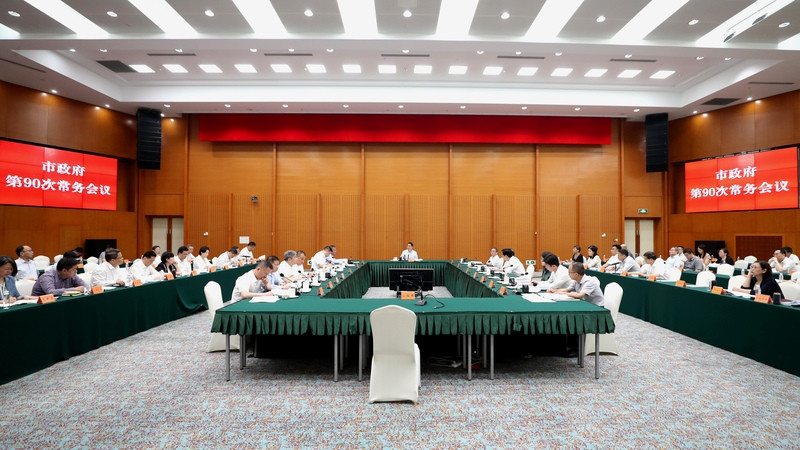
Group 1 - The government meeting emphasized the importance of maintaining a strong sense of responsibility for safety production and implementing the "three managements and three musts" requirements [1][3] - There is a focus on enhancing safety production in new industries such as renewable energy, cultural tourism, and low-altitude flight, with a call for rigorous risk management and accountability [3] - The meeting approved the draft of the "Suzhou City Middle School Student Mental Health Promotion Regulations," which aims to create a comprehensive mental health care system for students [3] Group 2 - The meeting included a collective study of the "Noise Pollution Prevention Law of the People's Republic of China," indicating a commitment to environmental regulations [3] - Other matters were also discussed and reviewed during the meeting, reflecting ongoing governance and regulatory efforts [3]