教育理念

Search documents
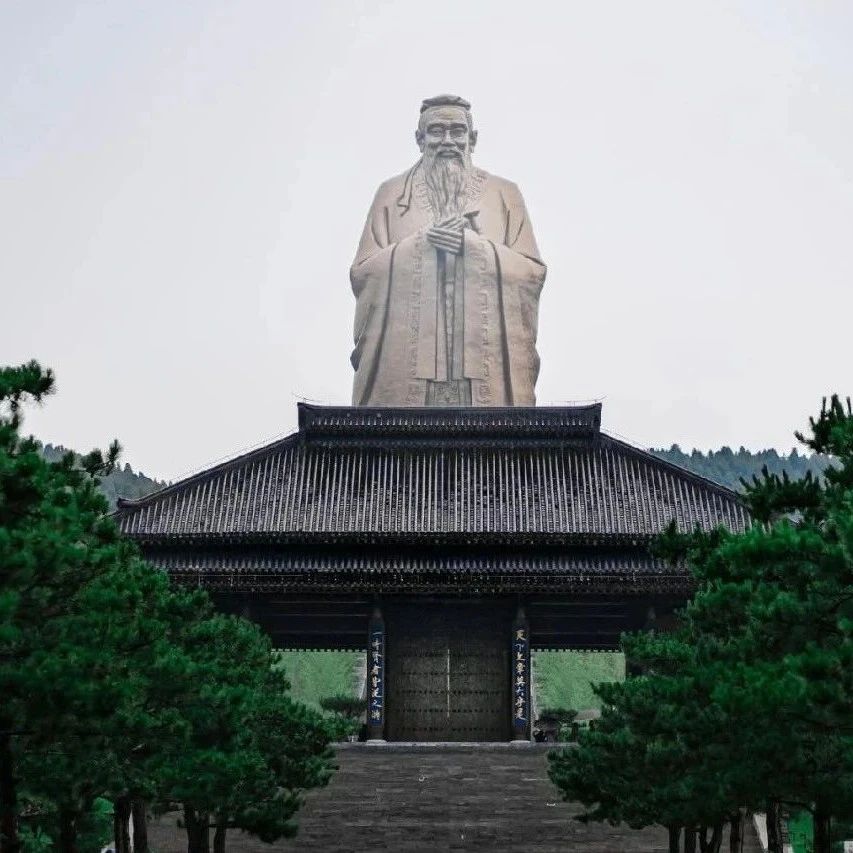
倾听尼山2025|斯特里奥斯·维尔维达基斯:文明的差异并非障碍,而是“美的多样性”
经济观察报· 2025-07-08 11:54
Core Viewpoint - The article emphasizes the importance of cultural exchange and mutual understanding between different civilizations, particularly focusing on the philosophical traditions of China and Greece, and how these can contribute to a new global ethical framework and educational concepts [4][5][6]. Group 1: Event Overview - The 11th Nishan World Civilization Forum will be held in Qufu, Shandong from July 9 to 10, 2025, aiming to gather global experts to address common human issues and promote understanding of Chinese civilization [3]. - The theme of the forum is "Beauty in Diversity: Civilizational Relations and Global Modernization," with subtopics including the origins and future of civilization, the global significance of Confucian culture, and the role of artificial intelligence in human civilization [3]. Group 2: Philosophical Insights - Stelios Virvidakis highlights the philosophical similarities between Chinese and Greek traditions, suggesting that differences in civilization should be viewed as "beauty in diversity" rather than obstacles [4][5]. - He points out that concepts like "harmony" in Chinese philosophy provide valuable references for global ethics, aligning with similar ideas in Greek philosophy [5][6]. Group 3: Global Challenges and Responsibilities - Virvidakis argues that addressing global issues such as climate change and artificial intelligence ethics requires integrating moral resources from different civilizations [6][20]. - He stresses the importance of philosophical education in fostering a sense of global responsibility, advocating for philosophy to be a practical guide in daily life [6][26]. Group 4: Cultural and Ethical Dialogue - The article discusses the need for a shared ethical foundation that transcends cultural differences, with core values like justice and compassion being universally relevant [14][16]. - Virvidakis emphasizes that cultural dialogue can enrich understanding and correct blind spots in one's own tradition, promoting a more harmonious global society [25][26].

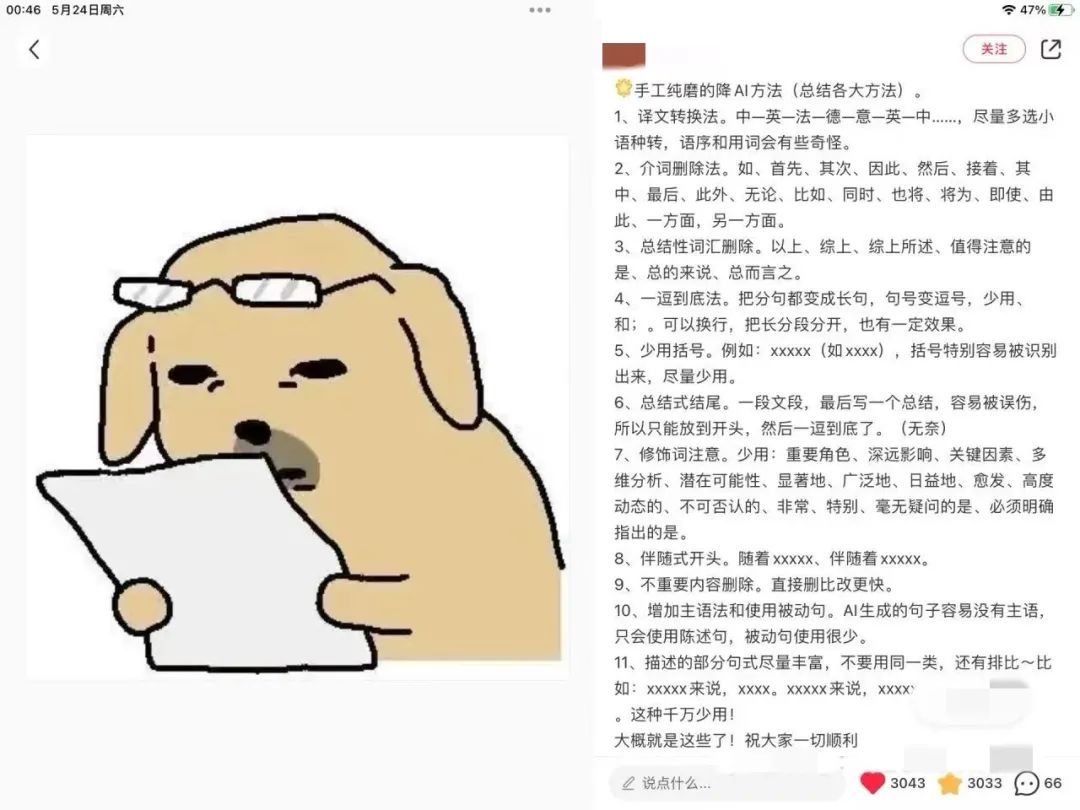
降AI率,咋比写论文还难
Xin Jing Bao· 2025-06-17 00:08
Core Viewpoint - The article discusses the challenges and implications of AI-generated content detection in academic settings, highlighting the confusion and anxiety among students regarding AI detection rates and the impact on their academic integrity and writing processes [1][2][3]. Group 1: AI Detection in Academic Institutions - Several universities in China have incorporated AI detection rates into their graduation thesis defense processes, establishing strict thresholds for acceptable AI content [2][5]. - Students have reported inconsistencies in AI detection results across different platforms, leading to confusion and frustration as they attempt to lower their AI rates to meet graduation requirements [2][4]. - The introduction of AI detection has led to the emergence of a gray market for services aimed at artificially lowering AI detection rates, with prices varying widely [8][10]. Group 2: Teacher Perspectives and Challenges - Educators are grappling with how to address the integration of AI in student work, with no consensus on what constitutes cheating or appropriate use of AI tools [3][10]. - Some teachers have noted a decline in the quality of student writing, attributing it to the over-reliance on AI tools, which can produce text that lacks depth and coherence [11][12]. - There is a growing concern among educators about the potential for AI to reshape students' thinking habits, leading to a reliance on AI for problem-solving rather than independent thought [12][20]. Group 3: The Future of Education and AI - The article suggests that traditional assessment methods may no longer be effective in the age of AI, prompting calls for educational reform to adapt to new technologies [16][18]. - Educators are exploring alternative assignments that cannot be easily completed by AI, encouraging students to engage more deeply with their work [18][19]. - The ongoing evolution of AI in academic contexts raises questions about academic integrity, authorship, and the definition of plagiarism, necessitating a collaborative exploration between the education and academic communities [20].
教师要求学生砸毁手机手表,过度惩戒还是“情有可原”?
Jing Ji Guan Cha Wang· 2025-04-05 03:08
Core Viewpoint - The incident involving a high school student in Sichuan Province highlights a significant conflict between educational authority and student rights, raising questions about the appropriateness of disciplinary measures used by teachers [2][3][4]. Group 1: Incident Overview - A high school student reported that a teacher forced students to destroy personal items, including gifts from parents, which led to an official investigation confirming the student's claims [2]. - The local government responded by stating that the teacher would compensate the affected student, indicating a recognition of the teacher's inappropriate actions [2]. Group 2: Public Reaction - Public opinion is divided, with some condemning the teacher's actions as a violation of student rights, while others support the disciplinary measures as necessary for maintaining classroom order [3]. - Younger individuals tend to oppose the teacher's methods, while older individuals, particularly parents, are more likely to endorse such strict measures [3]. Group 3: Broader Implications - The incident reflects a broader societal debate on educational philosophies, with some parents tacitly supporting extreme disciplinary actions, which may lead to a culture of acceptance for such behavior among educators [3][4]. - There is a call for deeper societal discussions to bridge generational gaps in educational values, ensuring that both teaching quality and student rights are respected [4].