
碳足迹核算

Search documents
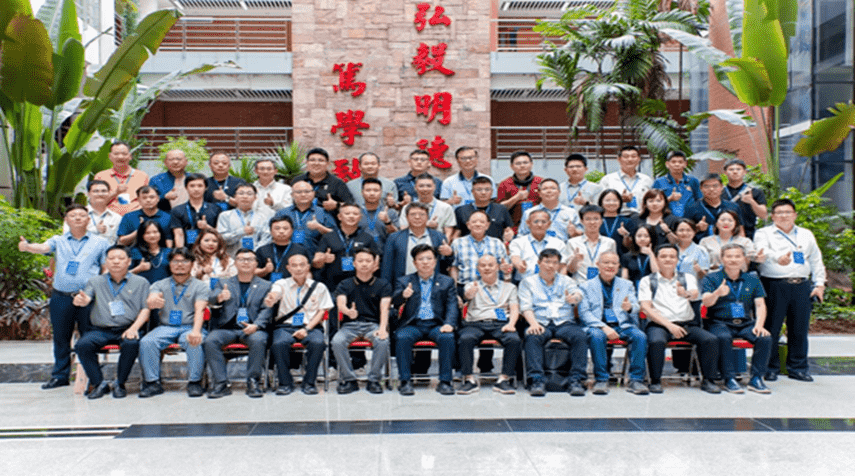
零碳(近零碳)餐饮业厨房供应链双碳人才专项培训广州试点圆满收官
Zhong Guo Jin Rong Xin Xi Wang· 2025-05-26 12:51
Core Viewpoint - The training program focused on low-carbon management in the restaurant supply chain, aiming to provide new momentum for the industry's low-carbon transformation under China's "dual carbon" goals [1][17]. Group 1: Training Program Overview - The first session of the training program was successfully held in Guangzhou, attracting nearly a hundred executives and technical personnel from various sectors including the restaurant and hotel industries, kitchen engineering equipment companies, research institutions, and carbon consulting services [1]. - The program is recognized as the first authoritative training project in China that focuses on the low-carbonization of the restaurant supply chain [1]. Group 2: Key Insights from Experts - The Secretary-General of the China Electronic Energy Conservation Technology Association emphasized the need for a comprehensive low-carbon management system from farm to table in the restaurant industry [3]. - The Vice Dean of Jinan University Management School highlighted the role of universities in providing professional talent and innovative solutions for the industry [5]. Group 3: Policy and Technology Insights - A detailed analysis of the "dual carbon" strategic framework was presented, discussing the impact of carbon market mechanisms and international carbon tariffs on the restaurant supply chain [7]. - The need for China's carbon labeling system to accelerate mutual recognition with international standards was emphasized to integrate domestic low-carbon practices into the global market [8]. Group 4: Innovations in Low-Carbon Kitchen Supply Chain - Experts discussed innovations in zero-carbon (near-zero carbon) kitchen supply chain management, focusing on the latest developments in technical standards for kitchen design and product energy efficiency [10]. - A methodology for low-carbon transformation was proposed, integrating supply chain management theory with practical applications in procurement, production, and logistics [11]. Group 5: Industry Collaboration and Solutions - A seminar on carbon footprint and labeling was held, where representatives from the restaurant industry, kitchen equipment manufacturers, and carbon service organizations explored low-carbon technology applications [14]. - The sharing of carbon labeling practices from the home appliance industry provided insights into how carbon footprint accounting can address challenges posed by international carbon tariffs [14]. Group 6: Future Directions and National Promotion - The training program aims to promote zero-carbon design standards and low-carbon technologies nationwide, transitioning the industry from "single energy saving" to "full-chain decarbonization" [17]. - The establishment of a "zero-carbon supply chain guesthouse" and the awarding of certificates to participants signify a commitment to fostering a sustainable restaurant industry [17].

胜利油田国内率先实现油气产品碳足迹核算全覆盖
Sou Hu Cai Jing· 2025-05-20 10:13
Core Viewpoint - The development of carbon footprint accounting guidelines and practical manuals for upstream oil and gas products by Shengli Oilfield aims to standardize carbon footprint calculations and promote carbon emission reduction across the industry [1][2]. Group 1: Carbon Footprint Accounting - Shengli Oilfield has established comprehensive carbon footprint accounting for all 17 oil and gas development units, achieving full coverage in the domestic oil and gas industry [1]. - The carbon footprint of oil and gas products refers to the carbon emissions generated per ton of crude oil or per cubic meter of natural gas produced, encompassing emissions from exploration, extraction, transportation, and production services [1][2]. - The carbon footprint accounting process helps identify sources and total amounts of carbon emissions, enabling companies to find opportunities to reduce emissions during product design, production, and supply [1][2]. Group 2: Carbon Reduction Initiatives - Shengli Oilfield has set a "dual carbon" target and developed a comprehensive action plan with four work paths and 17 key measures to enhance carbon footprint management and reduce energy consumption [2]. - In 2023, Shengli Oilfield established the first energy and carbon emission control center in the domestic oil and gas industry, enabling online monitoring of energy use and carbon emissions across various operational systems [2]. - Key carbon emission sources identified include injection, oil extraction, and transportation, which account for 35.4%, 22.6%, and 8% of total emissions, respectively [2]. Group 3: Achievements in Carbon Reduction - Through technological advancements, Shengli Oilfield has reduced electricity consumption by 110 million kWh and natural gas consumption by 22 million cubic meters annually, achieving a total carbon reduction capacity of over 150,000 tons [3]. - Since 2022, Shengli Oilfield has established several industry demonstration projects, including the first million-ton CCUS demonstration base and the first "carbon neutral" crude oil storage facility in the country [3]. - During the 14th Five-Year Plan period, the total carbon emissions and intensity from Shengli Oilfield have continued to decrease, with a trend of increasing production without increasing carbon emissions [3].
荣耀终端申请电子设备碳足迹核算专利,能够实现电子设备碳足迹统一标准地核算
Sou Hu Cai Jing· 2025-04-02 13:25
Group 1 - Glory Terminal Co., Ltd. has applied for a patent for a method to calculate the carbon footprint of electronic devices, indicating a focus on sustainability and carbon emission reduction [1] - The patent application was filed on February 2025, and the publication number is CN 119740754 A, highlighting the company's ongoing innovation efforts [1] - The method involves determining the carbon footprint based on the entire lifecycle of electronic devices, including stages such as raw material production, assembly, transportation, usage, and disposal [1] Group 2 - Glory Terminal Co., Ltd. was established in 2020 and is located in Shenzhen, primarily engaged in the manufacturing of computers, communications, and other electronic devices [2] - The company has a registered capital of approximately 3.22 billion RMB and has made investments in 9 other enterprises, showcasing its active role in the industry [2] - Glory Terminal has participated in 236 bidding projects and holds a significant number of intellectual property assets, including 3,003 trademarks and 5,000 patents [2]