
Belt and Road Initiative

Search documents
US is biggest recipient of Chinese loans, study shows
Yahoo Finance· 2025-11-19 10:30
Core Insights - The United States is the largest recipient of China's lending activities, receiving over $200 billion for nearly 2,500 projects from 2000 to 2023 [4][6] - China's total lending and grant giving reached $2.2 trillion across 200 countries, with a significant shift towards lending to higher-income countries rather than developing nations [1][2] - The share of lending to low and lower-middle-income countries has drastically decreased from 88% in 2000 to 12% in 2023 [6] Lending Trends - China is increasingly focusing its lending on advanced economies, particularly in sectors like critical infrastructure, high-tech supply chains, semiconductors, artificial intelligence, and clean energy [2][4] - More than three-quarters of China's overseas lending now supports projects in upper-middle-income and high-income countries [3] U.S. Investment Landscape - Chinese state-owned entities are heavily involved in various sectors across the U.S., financing projects such as LNG facilities, data centers, and major airport terminals [5] - Chinese creditors have provided credit facilities to numerous Fortune 500 companies, including Amazon, AT&T, and Tesla [6]
金属观察:“十五五” 期间政策指向结构性趋紧市场,中国铝需求仍具韧性-Metal Matters_ China’s aluminium demand still resilient as policy points to a structurally tighter market during 15th FYP_
2025-11-18 09:41
Summary of Key Points from the Conference Call Industry Overview - The focus is on the **aluminum industry** in China, particularly in the context of the **15th Five-Year Plan** and its implications for supply-demand dynamics in metals [1][6][50]. Core Insights and Arguments - **Price Forecast**: Aluminum price is upgraded to **$2,950/ton** for the next 0-3 months, with a target of **$3,000/ton** in 6-12 months, reflecting a bullish market sentiment ahead of expected physical deficits [1][12]. - **Demand Resilience**: China's aluminum demand remains resilient, with a **5% year-to-date growth** and a **2.8% year-on-year increase** in September 2025, despite uneven demand across sectors [3][17]. - **Sectoral Performance**: Construction demand is declining (-2.8% year-on-year), while energy transition sectors like transportation and power are driving growth, with decarbonization-related demand increasing by approximately **20% year-on-year** in September [3][19]. - **Solar Sector Contribution**: The solar sector is projected to contribute **0.2-0.3%** to aluminum demand growth from 2025-2026, with exports to Belt and Road economies being a significant factor [4][24][30]. - **Tolling Trade Dynamics**: Rising aluminum tolling activities indicate a structural shift in trade patterns, allowing China to absorb external surpluses through its downstream processing system [5][39][45]. Additional Important Insights - **15th Five-Year Plan Implications**: The plan emphasizes a more demand-intensive yet supply-disciplined cycle, with expectations of capacity ceilings in copper smelting and alumina refining [6][55]. - **Investor Sentiment**: Recent price rallies are attributed to stronger investor interest and macroeconomic catalysts, despite a broadly balanced physical market until 2027 [2][12][13]. - **Policy Support for Exports**: China's policy framework supports solar manufacturing and aims to expand international markets, reinforcing aluminum and copper consumption in renewable energy sectors [34][61]. - **Long-term Outlook**: The aluminum market is expected to remain balanced until real physical deficits emerge later in the decade, with potential for price increases driven by macroeconomic factors and structural demand growth [12][13][45]. This summary encapsulates the key points discussed in the conference call, highlighting the current state and future outlook of the aluminum industry in China.
Sinopec Hosts "In Search of China-Algeria Youth Cultural Ambassadors" Final Selection and Awards Ceremony in Algiers
Prnewswire· 2025-11-12 10:39
Core Viewpoint - Sinopec's initiative "In Search of China-Algeria Youth Cultural Ambassadors" aims to strengthen cultural ties and cooperation between China and Algeria through youth engagement and storytelling [1][2]. Group 1: Event Overview - The final selection and awards ceremony for the cultural ambassador initiative took place in Algiers, recognizing five young participants for their contributions to bilateral cooperation [1]. - The event is part of the "Youth Development" initiative under the China-Arab States Cooperation Forum, promoting long-term growth in China-Algeria relations [2]. Group 2: Company Commitment - Yongsheng Yu, Managing Director of Sinopec Group Branding Department, highlighted the company's dedication to energy and cultural collaboration in Africa, emphasizing the role of youth in fostering mutual understanding [3]. - The initiative is seen as a way to invigorate civilizational exchange among the younger generation [3]. Group 3: Cultural Significance - Smail Debbache, President of the Algeria-China Friendship Association, praised the program for enhancing communication and understanding between the youth of both nations [4]. - Algerian Minister of Culture and Arts, Malika Bendouda, encouraged young people to act as cultural ambassadors, promoting lasting bonds through exchange [5]. Group 4: Historical Context - Guo Jianjun, Economic and Commercial Counselor at the Chinese Embassy in Algeria, noted the historical friendship between the two countries, tracing back to the Silk Road and flourishing under the Belt and Road Initiative [6]. Group 5: Participation and Engagement - The program attracted significant participation from Algerian youth, with 165 entries submitted, including short videos and vlogs that showcased Belt and Road stories [7]. - After several review rounds, 30 works advanced to the semi-finals, culminating in five finalists being selected as ambassadors [7].


X @The Economist
The Economist· 2025-11-07 23:40
In a Trump-troubled world, Xi Jinping still sees opportunities. The Belt and Road Initiative is a fillip for Chinese firms facing turbulence from American tariffs https://t.co/TPFydmkUpO ...
X @The Economist
The Economist· 2025-11-05 00:20
In response to widespread misgivings about the Belt and Road Initiative, Xi Jinping declared that China would shift to a new “small but beautiful” approach.Yet in the past couple of years some deals have been anything but https://t.co/8r3mgFwzH9 ...
X @The Economist
The Economist· 2025-11-04 02:00
Geopolitical Strategy - China aims to establish an alternative world order to counter perceived instability [1] - The Belt and Road Initiative is a key component of China's strategy to expand its global influence [1]
X @The Economist
The Economist· 2025-11-02 23:20
In the eyes of China’s leader, the cure for Trumpian instability is an alternative order that draws the rest of the world closer into China’s orbit. Enter the Belt and Road Initiative https://t.co/G7R3if2N5R ...
X @The Economist
The Economist· 2025-11-02 19:10
Geopolitical Strategy - The Belt and Road Initiative presents opportunities for Chinese firms amidst challenges posed by American tariffs [1] - Xi Jinping perceives opportunities despite a world troubled by Trump's policies [1]
China Daily︱China's tech cutting cost of renewables
国家能源局· 2025-10-26 10:53
Core Viewpoint - China has significantly reduced global renewable energy costs through technological advancements and manufacturing capabilities, establishing itself as a leader in the green energy transition [4][5]. Group 1: Cost Reduction and Global Impact - Over the past decade, China has decreased the average cost of global wind power projects by 60% and solar photovoltaic projects by 80% [5]. - Wind and solar products produced in China have contributed to a reduction of approximately 2.65 billion metric tons of carbon dioxide emissions globally in the past year [6][7]. - China's expansion in renewable energy capacity has made clean energy more affordable worldwide, according to the International Renewable Energy Agency [7]. Group 2: Renewable Energy Capacity and Leadership - China's combined installed capacity for wind and solar power accounts for nearly half of the global total, with new installations representing 60% of worldwide additions [8][9]. - The share of renewable energy in China's total power generation capacity has reached approximately 60% [9]. - China has built the world's largest and fastest-growing renewable energy system, positioning itself as a leader in energy technology innovation [9]. Group 3: R&D and International Cooperation - China's comprehensive R&D and manufacturing system for wind and solar energy provides high-quality products and solutions for both domestic and international markets [10]. - The country is enhancing global green and low-carbon development through extensive international energy cooperation and participation in global energy governance [11]. - Future initiatives will focus on institutional reforms and innovative business models, such as advanced energy storage and virtual power plants [11][12].
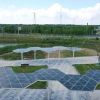
Maldives has benefitted much from BRI, looks forward to long-term partnership with China: envoy
Globenewswire· 2025-10-21 23:59
Core Insights - The Maldives has been a partner in the Belt and Road Initiative (BRI) since 2017, contributing to a comprehensive strategic cooperative partnership with China [1][2] - The BRI has facilitated significant development assistance in housing and infrastructure for the Maldives, including roads, bridges, and highways [2] - The China-Maldives Friendship Bridge is a landmark project that enhances connectivity and economic activities between the capital Male and Hulhule Island, reflecting strong bilateral collaboration [3][4] Infrastructure Development - The China-Maldives Friendship Bridge significantly improves travel time between Male and Hulhule Island, allowing a five-minute journey [3] - The bridge project also includes a highway connecting Male, Velana International Airport, and Hulhumale, which has been widely utilized since its opening [4] - Ongoing projects include urban roadworks in the capital city, Male, as both countries accelerate efforts to implement key agreements [5] Future Cooperation - There is optimism regarding collaboration in renewable energy and the digital economy, with potential integration of Chinese renewable energy solutions into the Maldives' energy sector [6][7] - The Maldives aims to deepen its partnership with China through non-fossil energy projects, coastal protection initiatives, and green technology [8] - Both countries are committed to expediting planned and ongoing projects while exploring further technological collaboration [9]