Dividends

Search documents
Sun Life declares dividends on Common and Preferred Shares payable in Q1 2026
Prnewswire· 2026-02-11 22:02
Core Viewpoint - Sun Life Financial Inc. has declared dividends for both common and preferred shares, maintaining the same dividend amount as the previous quarter, indicating stability in its financial performance [1]. Dividend Declaration - A dividend of $0.92 per common share has been declared, payable on March 31, 2026, to shareholders of record as of February 25, 2026, which is unchanged from the previous quarter [1]. - Dividends for Class A Non-Cumulative Preferred Shares include: - Series 3: $0.278125 per share - Series 4: $0.278125 per share - Series 5: $0.281250 per share - Series 8R: $0.264375 per share - Series 9QR: $0.223644 per share - Series 10R: $0.185438 per share - Series 11QR: $0.270493 per share All preferred share dividends are also payable on March 31, 2026, to shareholders of record as of February 25, 2026 [1]. Company Overview - Sun Life Financial Inc. is a leading international financial services organization that provides asset management, wealth, insurance, and health solutions to both individual and institutional clients [1]. - The company operates in various global markets, including Canada, the U.S., the U.K., Ireland, Hong Kong, the Philippines, Japan, Indonesia, India, China, Australia, Singapore, Vietnam, Malaysia, and Bermuda [1]. - As of December 31, 2025, Sun Life had total assets under management amounting to $1.60 trillion [1].



Group 1 Automotive Board Approves Increase to 2026 Dividend Rate and Declares Quarterly Dividend
Prnewswire· 2026-02-11 21:16
Core Viewpoint - Group 1 Automotive has announced an increase in its annual dividend rate for 2026 to $2.20 per share, reflecting a 10% increase from the previous year's rate of $2.00 per share [1]. Group 1 Automotive Overview - Group 1 Automotive operates 257 dealerships and 318 franchises across the U.S. and U.K., offering 36 brands of automobiles [1]. - The company provides a range of services including the sale of new and used cars, vehicle financing, service and insurance contracts, automotive maintenance and repair, and vehicle parts [1]. Dividend Declaration - The board of directors has declared a quarterly dividend of $0.55 per share, which will be payable on March 16, 2026, to stockholders of record as of March 2, 2026 [1].


AGNC Investment Corp. Declares Monthly Common Stock Dividend of $0.12 per Common Share for February 2026
Prnewswire· 2026-02-11 21:01
Core Viewpoint - AGNC Investment Corp. has declared a cash dividend of $0.12 per share for February 2026, payable on March 10, 2026, to stockholders of record as of February 27, 2026 [1]. Company Overview - AGNC Investment Corp. is a leading investor in Agency residential mortgage-backed securities (Agency MBS), benefiting from guarantees against credit losses by Fannie Mae, Freddie Mac, or Ginnie Mae [1]. - The company employs a leveraged investment strategy, primarily financing its Agency MBS assets through repurchase agreements, and utilizes dynamic risk management strategies to protect portfolio value from interest rate and market risks [1]. - Since its inception in 2008, AGNC has paid over $15 billion in common stock dividends, demonstrating a track record of providing favorable long-term returns through substantial monthly dividend income [1]. Market Position - AGNC serves as a significant source of private capital for the U.S. residential housing market, with a team experienced in managing mortgage assets across various market cycles [1].


Dingdong Announces Intention to Utilize Substantial Majority of Proceeds from Sale of China Operations for Share Repurchase Plans and/or Dividends upon Closing of Transaction
Prnewswire· 2026-02-10 13:00
Core Viewpoint - Dingdong (Cayman) Limited plans to use a substantial majority of the proceeds from the sale of its China operations for share repurchases and/or dividends to shareholders upon closing the transaction with Meituan [1][2] Group 1: Transaction Details - Dingdong has entered into a definitive Share Purchase Agreement with Two Hearts Investments Limited, a subsidiary of Meituan, to sell all issued and outstanding shares of Dingdong Fresh Holding Limited for a cash consideration of US$717 million [1] - The company expects to receive up to US$997 million in cash proceeds from the transaction, subject to adjustments based on net cash and working capital thresholds [1] - The final adjusted consideration will be paid in two installments: 90% at closing and the remaining 10% after tax settlements related to the transaction [1] Group 2: Conditions for Closing - The transaction is subject to various conditions, including shareholder approval, anti-monopoly clearance from the State Administration for Market Regulation of China, and completion of necessary tax filings [1][2] - Specific conditions include the completion of a pre-closing inventory check, obtaining consents from loan institutions, and passing resolutions by the boards and shareholders of Dingdong BVI and Dingdong Cayman [2] Group 3: Future Plans - Upon successful closing of the transaction, the company intends to utilize not less than 90% of its cash balance for share repurchase plans and/or dividends, with terms to be determined post-closing and subject to board approval [1] - There is no assurance that the transaction will close or that any share repurchase plans or dividends will be executed [1]


Dividends vs. Share Buybacks: Which Is Better for Your Wallet?
The Motley Fool· 2026-02-07 15:10
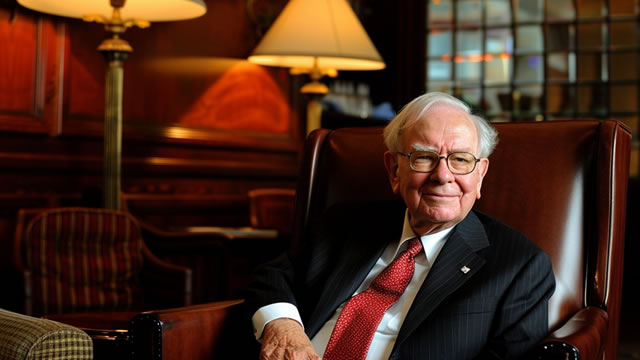
Core Viewpoint - Warren Buffett prefers share buybacks over dividends under specific conditions, particularly when shares are undervalued relative to their book value [5][11]. Group 1: Historical Context - In 1967, Warren Buffett regretted agreeing to pay a dividend, which cost the company $101,733, a sum he believed could have been better reinvested [2]. - Following this, Buffett offered a 7.5% debenture to shareholders in exchange for their stock, which 32,000 investors accepted, effectively filtering out those seeking immediate income [4]. Group 2: Preference for Dividends - Despite his reluctance to issue dividends from Berkshire Hathaway, Buffett values dividends from companies in which Berkshire invests, referring to consistent dividend growth as "the secret sauce" for substantial returns [5]. Group 3: Tax Implications and Buybacks - Taxation laws favor long-term holding periods, with both dividends and capital gains taxed at a rate of 0% to 20% for long-term investors, making share buybacks more advantageous in the long run [6]. - Shareholders only incur tax upon selling for a capital gain, with rates capped at 20%, and potentially lower for certain income brackets [6]. Group 4: Buybacks as a Strategy - Buffett has stated that share buybacks are "probably the best use of cash" when shares are repurchased below the company's value, as seen in Apple's $100 billion buyback program in 2018 [8]. - Conversely, poorly executed buybacks can lead to significant losses for investors, as illustrated by Sears' $6 billion share repurchase in 2005, which resulted in a 99% decline in share value [9][10]. Group 5: Criteria for Buybacks - Buybacks are considered shareholder-friendly if shares are repurchased below book value, with Buffett's guideline being to buy back shares when trading below 1.2 times book value [11].
First Negative S&P 500 Signals As Mega Tech Breaks Down From October Highs
Seeking Alpha· 2026-02-04 17:03
Core Insights - The article provides a recap of January's financial market performance and forecasts for February, highlighting significant records that may be unprecedented in the author's lifetime [1]. Group 1: Financial Models and Strategies - The company offers a community platform called Value & Momentum Breakouts, which utilizes proven financial models including Dividends, Breakout picks, ETFs, and Long Term Value strategies that consistently outperform the market with double-digit returns [1]. - JD Henning, a finance expert with over 30 years of experience, leads the initiative, employing technical and fundamental analysis to identify breakout signals and breakdown warnings across 11 different sectors [1]. - The proprietary Momentum Gauges® provide alerts on market changes and the strength of markets for short-term trading opportunities [1]. Group 2: Community and Features - Value & Momentum Breakouts includes features such as a Premium Portfolio, a bull/bear ETF strategy, morning updates, and an active chat room for members to engage and share insights [1].

X @The Motley Fool
The Motley Fool· 2026-02-01 22:37
Home Depot is up 1,100,000% since 1981.23% per year.For 45 years.And that doesn’t include dividends. ...

X @Bloomberg
Bloomberg· 2026-02-01 08:46
India expects to receive a record 3.16 trillion rupees ($34.4 billion) in dividends from its central bank and state-owned financial institutions in the fiscal year starting in April, according to budget documents https://t.co/PirHdZPzII ...
2 Financial Stocks Poised for a Comeback in 2026
The Motley Fool· 2026-02-01 03:05
Core Viewpoint - The recent sell-off in Mastercard and Visa stocks presents a significant buying opportunity for long-term investors despite concerns over consumer spending and proposed interest rate caps [1]. Financial Performance - Mastercard's revenue increased by 18%, while Visa's revenue rose by 15% [4]. - Mastercard's operating income grew by 25%, with operating margins reaching 55.8% and diluted EPS increasing by 24% [4]. - Visa's operating margin was 61.8%, with non-GAAP EPS rising by 15% [4]. Market Dynamics - Both companies reported high-single-digit to low-double-digit increases in payment volume and frequency, indicating resilience in their business models [5]. - The fee structure of Mastercard and Visa is based on transaction frequency and total sales, making them somewhat recession-resistant [5]. Shareholder Returns - In 2025, Mastercard returned $11.73 billion through stock buybacks and $2.76 billion in dividends, while Visa's latest quarter saw $3.73 billion in buybacks and $1.29 billion in dividends [8]. - Both companies yield less than 1% due to a preference for buybacks over dividends, but if funds were reallocated, Mastercard could yield about 3% and Visa about 3.1% [9]. Valuation and Investment Thesis - Both stocks are considered reasonably valued based on price-to-free cash flow and forward earnings expectations [10]. - Mastercard and Visa are viewed as foundational stocks for long-term portfolios due to their strong business models and global network effects [12]. Regulatory Environment - Concerns about capping credit card interest rates at 10% may persist, but it is believed that such a low cap would lead financial institutions to restrict credit access, ultimately harming consumers [13].



G-III Apparel Turns to Dividends as Portfolio Strength Shows Through
Yahoo Finance· 2026-01-31 21:13
Core Viewpoint - G-III Apparel Group, Ltd. has initiated a quarterly dividend of $0.10 per share, indicating a strategic shift towards returning capital to shareholders while maintaining a strong brand portfolio and financial position [2][5]. Group 1: Financial Performance - G-III reported a strong third quarter with gross margins and earnings exceeding expectations, driven by a higher mix of full-price sales and effective tariff management [3]. - The company has raised its fiscal 2026 earnings guidance due to better-than-expected third-quarter performance, while remaining cautious about consumer spending and potential margin pressures from tariffs [4]. Group 2: Strategic Initiatives - G-III's management believes that its brand portfolio and operating model position the company well to achieve its fiscal 2026 goals, allowing for capital returns through dividends while retaining flexibility for strategic investments [5]. - The company’s brands have shown strong consumer connection, with steady demand expected to continue into the holiday season [3]. Group 3: Company Overview - G-III Apparel Group is a global fashion company involved in design, sourcing, distribution, and marketing, owning and licensing over 30 brands, each with distinct positioning and consumer reach [6].