
Turnaround Plan

Search documents
Macy’s Lifts Outlook as Turnaround Takes Hold
Yahoo Finance· 2025-12-03 15:54
Core Insights - Macy's has raised its full-year sales guidance and reported its highest comparable sales growth in 13 quarters, indicating positive results from its turnaround plan [1][7] Group 1: Financial Performance - The company increased its sales guidance for the full year to a range of $21.48 billion to $21.63 billion, up from a previous range of $21.15 billion to $21.45 billion [7] - Adjusted per-share earnings are expected to be between $2.00 and $2.20, an increase from the prior estimate of $1.70 to $2.05 [7] - Macy's reported a 31% increase in stock price this year, despite a recent decline of 0.79% to $22.53 [4] Group 2: Strategic Initiatives - The company has implemented a plan to close underperforming locations, enhance the shopping experience, simplify operations, and capture a larger share of the luxury market [2] - Macy's has introduced newer and more fashionable products from brands like Rodd & Gun, Reiss, and Prada Beauty, aiming to leverage new trends [4] - Investments in employee education have led to a record high in the third-quarter net promoter score, reflecting improved customer feedback [4] Group 3: Consumer Behavior - The company anticipates a "more choiceful" consumer during the fourth quarter, which includes the holiday season [3] - Despite expectations of choosiness among consumers, Macy's has observed continued spending from its predominantly middle to upper-income customer base [5] Group 4: Cost Management - To mitigate extra costs from tariffs, Macy's has been raising prices, collaborating with suppliers to share costs, and relocating production to countries with lower duties [6] - The impact of tariffs in the third quarter was less than expected, reducing the gross margin rate by 50 basis points [6]

Macy's Lifts View After Sales Hit Highest Level in More Than Three Years
WSJ· 2025-12-03 12:09
Core Insights - Macy's has raised its full-year outlook for the second consecutive quarter, indicating positive momentum in its turnaround strategy [1] - The company reported its highest quarterly sales in over three years, suggesting that the turnaround plan is beginning to show early signs of effectiveness [1] Company Summary - Macy's has experienced a significant increase in quarterly sales, marking the highest performance in more than three years [1] - The positive sales performance has led to an upward revision of the company's full-year outlook, reflecting confidence in its ongoing recovery efforts [1]


Newell Brands to close Yankee Candle stores, cut jobs
Fox Business· 2025-12-01 19:56
Core Insights - Newell Brands is closing 20 Yankee Candle stores in North America starting January, representing about 1% of brand sales, as part of a strategy to optimize its retail presence and align with modern consumer shopping behaviors [1][4] - The company is also reducing its global workforce by over 900 employees, approximately 10% of its professional and clerical staff, with most cuts occurring in December in the U.S. and continuing internationally through 2026 [4][5] - Newell Brands aims to enhance efficiency and performance through a turnaround plan initiated in 2023, focusing on higher performance expectations and value-driven spending [7][10] Company Strategy - Newell Brands is implementing a global strategy to create a more agile and high-performing organization to better compete in the market [3] - The CEO emphasized the importance of the productivity plan in enhancing efficiency and delivering consistent performance, ultimately aiming to provide greater value for consumers and long-term value for shareholders [9][11]

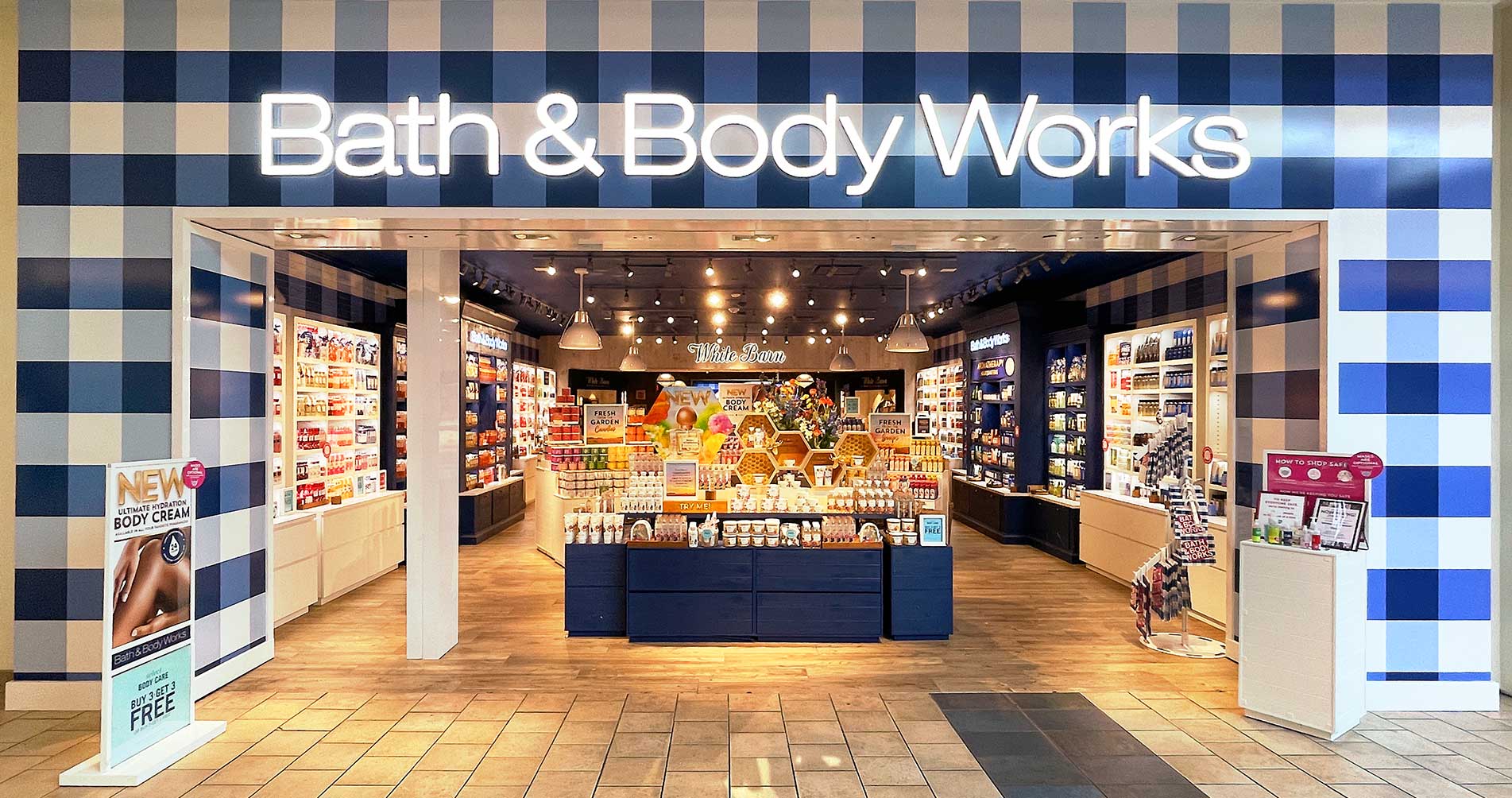
Bath & Body Works (NYSE:BBWI) Faces Challenges Amid Declining Sales
Financial Modeling Prep· 2025-11-21 05:11
Core Insights - Bath & Body Works (BBWI) is facing significant challenges, with a sharp decline in stock price and a new 52-week low reached [1][3][5] - The company announced declining sales and earnings, leading to a 25% drop in stock price on the same day [2][5] - CEO Daniel Heaf has initiated a turnaround plan focusing on core products and aims for $250 million in cost savings by 2027 [3][5] Stock Performance - BBWI's stock is currently priced at $15.82, reflecting a decrease of 24.81% with a change of $5.22 [4] - The stock has fluctuated between a low of $15.43 and a high of $16.53 during the day [4] - Over the past year, the stock reached a high of $41.87 and a low of $15.43, with a market capitalization of approximately $3.39 billion [4] Analyst Insights - Robert W. Baird has set a price target of $19 for BBWI, indicating a potential increase of approximately 20.1% from its current price [1][5]

Why Bath & Body Works Stock Cratered Today
Yahoo Finance· 2025-11-20 15:35
Core Insights - Bath & Body Works shares fell by as much as 25.7% following disappointing third-quarter results and a reduced full-year outlook [1] - The company introduced a transformation plan aimed at revitalizing growth in its fragrance and personal-care segments [1] Financial Performance - In Q3 2025, net sales were $1.59 billion, a decrease of 1% year-over-year, while adjusted earnings per share dropped to $0.35 from $0.49, missing both management and consensus expectations [3] - This performance contrasts with Q2 2025, where net sales grew by 1.5% year-over-year and adjusted earnings per share remained flat [3] Management Commentary - Management attributed the weaker performance to reduced discretionary spending and increased promotional activities, which negatively impacted demand and profitability [4] - CEO Daniel Heaf acknowledged the below-expectation performance and ongoing macroeconomic pressures affecting core shoppers [4] Revised Guidance - The revised forecast indicates a shift from an expected full-year 2025 net sales growth of 1.5% to 2.7% to a low single-digit decline [5] - Adjusted earnings per share is now projected to be at least $2.87, down from a previous range of $3.35 to $3.60, and below last year's figure of $3.29 [5] Valuation and Market Reaction - Following the stock's decline, it now trades at less than six times the low end of the adjusted earnings outlook, representing a modest valuation for a cash-generating retailer [6] - The new turnaround plan will require time to demonstrate effectiveness, and the guidance cut indicates challenging near-term trends [6]
Fossil Group, Inc. Reports Third Quarter 2025 Financial Results
Globenewswire· 2025-11-13 21:01
Core Insights - Fossil Group, Inc. reported a third quarter 2025 net sales of $270 million, reflecting a decrease of 6.1% year-over-year on a reported basis and 7.1% in constant currency [1][5] - The company experienced an operating loss of $22 million with an operating margin of (8)%, while the constant currency adjusted operating loss was $15 million with a margin of (6)% [2][5] - The CEO highlighted the successful transformation of the balance sheet as a pivotal milestone in the company's turnaround strategy, aiming for long-term profitable growth [4] Financial Performance - Net sales for Q3 2025 were $270.2 million, down from $287.8 million in Q3 2024, with a notable decline in direct-to-consumer sales by 27% [5][6] - Gross profit was $132.4 million, a decline of 6.9% from $142.2 million in the previous year, with a gross margin of 49.0% [5][6] - Operating expenses totaled $154.1 million, down 7.5% from $166.7 million a year ago, with SG&A expenses decreasing by 8.8% [5][6] Balance Sheet and Liquidity - As of October 4, 2025, the company had total liquidity of $101.9 million, including $79.2 million in cash and cash equivalents [6][8] - The company completed a balance sheet transformation, extending the maturity of its debt by three years and securing $32.5 million in new financing [7][8] Market and Sales Trends - The sales decline was primarily driven by direct-to-consumer channels, with comparable retail sales down 22% [5][6] - In terms of geographical performance, net sales in constant currency declined by 9% in the Americas and 10% in Europe, while Asia saw a 2% increase [5][6] - Major product categories saw significant declines, with traditional watch sales down 1%, leathers down 37%, and jewelry down 23% in constant currency [5][6] Future Outlook - The company reiterated its financial guidance for the full year 2025, expecting worldwide net sales to decline in the mid-teens [9][14] - Adjusted operating margin guidance is projected to be break-even to slightly positive [14]


DNUT Q3 Deep Dive: Turnaround Plan Drives Margin Expansion Amid U.S. Store Optimization
Yahoo Finance· 2025-11-07 05:31
Core Insights - Krispy Kreme reported Q3 CY2025 revenue of $375.3 million, missing analyst expectations of $378.2 million, reflecting a 1.2% year-on-year decline [6] - The company achieved a non-GAAP profit of $0.01 per share, significantly exceeding analysts' consensus estimates of -$0.05 [6] - Adjusted EBITDA was $40.6 million, beating estimates of $28.33 million, with a margin of 10.8% [6] Financial Performance - Revenue: $375.3 million vs analyst estimates of $378.2 million (1.2% year-on-year decline, 0.8% miss) [6] - Adjusted EPS: $0.01 vs analyst estimates of -$0.05 (significant beat) [6] - Adjusted EBITDA: $40.6 million vs analyst estimates of $28.33 million (10.8% margin, 43.3% beat) [6] - Operating Margin: -1.9%, improved from -4.2% in the same quarter last year [6] - Market Capitalization: $669.6 million [6] Strategic Initiatives - The company exited around 600 unprofitable U.S. locations and ended its partnership with McDonald's, focusing on high-traffic, high-margin locations [7] - Average weekly sales per door increased by 18% sequentially due to these strategic changes [7] - Management is pursuing a refranchising strategy in select international markets to accelerate unit growth and reduce capital intensity [7] Operational Efficiency - Over half of U.S. logistics are now managed by third-party partners, expected to fully roll out in 2026, leading to more predictable and potentially lower delivery costs [7] - Operational changes included optimizing production processes and improving labor management [7] International Expansion - Markets like Japan and Mexico showed organic growth, with new openings in Spain and upcoming entries into Uzbekistan and Brazil [8] - Collaboration with KFC in the UAE has expanded to over 200 outlets, demonstrating the scalability of the hub-and-spoke delivery model [8] Digital and Product Innovation - Limited-time offerings and a refreshed core doughnut menu contributed to higher-margin growth, alongside a 17% increase in U.S. digital sales [8] - Digital sales now account for over 20% of U.S. retail sales, highlighting its strategic importance [8]
Krispy Kreme(DNUT) - 2025 Q3 - Earnings Call Presentation
2025-11-06 13:30
Financial Performance - Net revenue was $3753 million[7] - Organic revenue growth was 06%[7] - Adjusted EBITDA reached $406 million, a 17% increase[7] - Free cash flow amounted to $155 million[7] Strategic Initiatives - The company is implementing a turnaround plan focused on profitable U S expansion and international franchise growth[6] - The company aims to improve financial flexibility through refranchising international markets and restructuring the joint venture in the Western U S[8] - The company plans to expand margins through greater operational efficiency, including outsourcing U S logistics, with 54% already outsourced and 100% expected in 2026[9, 13] - The company added approximately 1,000 profitable doors YTD by expanding with high-return, national U S customers[13] Global Reach - Global points of access totaled 14,851[7] - International segment Adjusted EBITDA was $23157 million[18] Additional Information - The third quarter of 2025 includes $93 million of business interruption insurance recoveries related to the 2024 cybersecurity incident[7]
Krispy Kreme Reports Third Quarter 2025 Financial Results Demonstrating Progress on Turnaround
Businesswire· 2025-11-06 11:45
Core Insights - Krispy Kreme's third quarter 2025 results indicate progress in its turnaround strategy, focusing on profitable U.S. expansion and capital-light international franchise growth [3][4]. Financial Highlights - Net revenue for Q3 2025 was $375.3 million, a decrease of 1.2% compared to $379.9 million in Q3 2024 [5][6]. - The company reported a GAAP net loss of $20.1 million, compared to a net income of $37.6 million in the same quarter last year [10][8]. - Adjusted EBITDA increased by 17% to $40.6 million, with an adjusted EBITDA margin of 10.8%, up from 9.1% [11][8]. Operational Performance - Organic revenue grew by 0.6%, primarily driven by the international segment, despite a decline in Global Points of Access by 6.1% [9][6]. - U.S. segment net revenue decreased by approximately 5.3% to $216.2 million, largely due to the previous year's sale of a majority stake in Insomnia Cookies [13][8]. - International segment net revenue increased by 7.3% to $138.8 million, with organic revenue growth of 6.2% [16][17]. Turnaround Strategy - The turnaround plan includes refranchising international markets, improving return on invested capital, expanding margins, and driving sustainable growth [7][4]. - The company aims to reduce capital spending while paying down debt and expects further improvement in adjusted EBITDA and positive free cash flow [3][4]. Balance Sheet and Liquidity - As of September 28, 2025, Krispy Kreme had total available liquidity of $215.2 million, including $30.7 million in cash and cash equivalents [20][19]. - The company invested $80.8 million in capital expenditures year-to-date, focusing on initiatives to enhance consumer access to products [19][20]. Market Development - The Market Development segment saw a decline in net revenue by 9.2% to $18.9 million, with organic revenue down approximately 5.3% [18][8]. - Adjusted EBITDA for this segment increased by 6.4% to $12 million, reflecting a margin improvement due to changes in revenue mix [18][8].

Monro (NasdaqGS:MNRO) FY Conference Transcript
2025-11-04 23:00
Summary of Monro's Conference Call Company Overview - Monro is a national chain of auto aftermarket service businesses, primarily serving the do-it-for-me segment, which constitutes about 50% of its business [1][2] - The company has been operational for approximately 60 years and has been publicly traded since 1991 [3] Strategic Review and Turnaround Plan - A strategic review was conducted shortly after the new CEO, Peter Fitzsimmons, joined in March, aiming to increase operating income regardless of economic conditions [4][5] - Key hypotheses identified during the review included: 1. Evaluating the store portfolio to determine which stores should remain [5] 2. Addressing traffic issues through enhanced marketing efforts [6] 3. Improving performance across all stores due to previously uneven performance [7] 4. Strengthening the merchandising team to better align with customer demand [8] Merchandising Strategy - The company recognized it was over-inventoried and needed to refine its tire assortment to better meet customer needs [9] - A new Senior Vice President of Merchandising, Katie Chang, was hired to lead these efforts [10] - Monro aims to offer a narrower assortment of tires while ensuring quick access to any tire the customer desires [11] Tire Market Insights - Monro has reportedly gained market share in the first two quarters of the fiscal year, particularly in tiers one through three of tires [12] - The company is optimistic about selling more tires in the upcoming quarters despite rising costs affecting some customer segments [13] Store Closures and Real Estate Monetization - Monro closed 145 underperforming stores, with 100 identified as clear closures and an additional 45 decided upon after further analysis [14][15] - The company successfully monetized 24 of the closed store locations, generating approximately $5.5 million in proceeds and nearly $7 million in gains from lease terminations [18] Financial Performance and Margin Improvement - The company aims to achieve a gross margin in the mid-30s% range, which is essential for improving operating performance [24] - Recent efforts have led to a 50 basis points expansion in material margins, indicating positive trends in variable costs [26] Marketing Initiatives - Monro has underinvested in marketing in recent years and is now implementing digital tools to drive incremental traffic [39] - A customer segmentation strategy is being deployed to target high-value repeat customers through tailored digital marketing efforts [41] - The introduction of a call center is expected to enhance customer engagement and improve service experiences [43] Store Performance Enhancements - The ConfiDrive digital inspection tool has been effective in increasing unit sales in high-margin service categories [44] - A district manager toolkit has been introduced to provide store managers with actionable insights to improve performance [46] Future Outlook - The company is focused on improving operating performance and increasing adjusted diluted EPS, with a foundation laid for better results in FY27 [32] - Monro's leadership is committed to the turnaround process and is optimistic about the potential for improved financial performance [37] Conclusion - Monro is actively working on a comprehensive turnaround plan that includes strategic store closures, enhanced merchandising, targeted marketing initiatives, and improved store performance metrics, all aimed at driving revenue growth and profitability in the coming quarters [48]
