Generative AI

Search documents
ServiceNow, Inc. (NOW) Presents at Morgan Stanley Technology, Media & Telecom Conference 2026 Transcript
Seeking Alpha· 2026-03-04 22:22
Core Insights - There is significant uncertainty among investors regarding the software industry, particularly concerning the long-term viability of SaaS vendors [1] - The discussion highlights the importance of understanding the positioning of ServiceNow as a trusted vendor and the potential opportunities presented by AI innovations [2] Group 1 - Investors are currently facing high levels of uncertainty about the software market [1] - Concerns exist regarding the sustainability of SaaS vendors over time [1] Group 2 - ServiceNow is positioned as a leading software vendor, with a strong emphasis on its sales capabilities [2] - The company views Generative AI as an opportunity rather than a risk, indicating a proactive approach to leveraging AI for customer benefits [2]



ServiceNow (NYSE:NOW) 2026 Conference Transcript
2026-03-04 21:22
Summary of ServiceNow Conference Call Company Overview - **Company**: ServiceNow (NYSE: NOW) - **Industry**: Software, specifically focusing on workflow automation and enterprise solutions Key Points and Arguments Positioning in the Software Industry - ServiceNow is positioned as a trusted vendor amidst investor uncertainty regarding the viability of SaaS vendors [9][10] - The company emphasizes its unique competitive advantage as the "AI Control Tower" for business reinvention, integrating with every node in the Fortune 2000 [10][11] Generative AI and Workflow Automation - ServiceNow has integrated various language models and AI technologies to enhance workflow automation, allowing for seamless operations across industries [11][12] - The company highlights its ability to automate workflows in critical sectors like healthcare, improving efficiency by integrating AI directly into existing systems [14][15] Now Assist Product - The Now Assist product has gained traction with nearly 3,000 customers, simplifying work processes and integrating human and AI agents [28][29] - Active user growth for ServiceNow's seats is reported at 25% year-over-year, indicating strong demand for its solutions [28][41] M&A Strategy - ServiceNow has shifted its strategy to include M&A to accelerate growth, acquiring companies like Moveworks and Armis to enhance its capabilities in identity management and operating technology [38][76] - The total addressable market (TAM) has expanded significantly from $90 billion to $600 billion, reflecting the company's ambition to build a trillion-dollar enterprise [77] Customer Engagement and Revenue Model - The company is moving towards a hybrid pricing model, allowing for flexibility in how customers are charged, which includes pricing based on the use of AI agents and other assets [36][46] - ServiceNow aims to create business cases that generate unique economic value for customers, potentially moving away from traditional seat-based pricing [48][49] Future Outlook - The company anticipates a "hockey stick" growth in consumption patterns as assist packs gain traction, with expectations for significant revenue increases in the second half of the year [60][61] - ServiceNow is focused on becoming the leading enterprise software company, leveraging AI to drive innovation and customer satisfaction [76][77] Additional Important Insights - ServiceNow's unique advantage lies in its ability to operate across multiple industries and functions, providing a comprehensive platform for enterprise solutions [42][68] - The company emphasizes the importance of understanding customer needs and aligning its offerings to deliver value, which is crucial for long-term success [46][47] - The integration of IT and operational technology (OT) is highlighted as a key area for growth, with the potential to address significant market challenges [66][67]
Analysts Positive on AppLovin Corporation (APP) After Q4 Results
Insider Monkey· 2026-03-04 19:00
Core Insights - Generative AI is viewed as a transformative technology by Amazon's CEO Andy Jassy, indicating its potential to significantly enhance customer experiences across the company [1] - Elon Musk predicts that by 2040, humanoid robots could create a market worth $250 trillion, representing a major shift in the global economy driven by AI innovation [2][3] - Major firms like PwC and McKinsey acknowledge the multi-trillion-dollar potential of AI, suggesting a broad consensus on its economic impact [3] Company and Industry Analysis - A breakthrough in AI technology is redefining work, learning, and creativity, leading to increased interest from hedge funds and top investors [4] - There is speculation about an under-owned company that may play a crucial role in the AI revolution, with its technology posing a threat to competitors [4][6] - Prominent figures in technology and investment, including Bill Gates and Warren Buffett, recognize AI as a significant advancement with the potential for substantial social benefits [8] - The article suggests that investors may regret not owning shares in a specific AI company in the near future, highlighting its groundbreaking technology and growth potential [9]


Hedge Fund and Insider Trading News: Divya Nettimi, Ray Dalio, Warren Buffett, Leopold Aschenbrenner, Squarepoint Capital, Brevan Howard, Millennium Management, SoFi Technologies Inc (SOFI), CF Indust
Insider Monkey· 2026-03-04 18:38
Core Insights - Generative AI is viewed as a transformative technology by Amazon's CEO Andy Jassy, indicating its potential to significantly enhance customer experiences across the company [1] - Elon Musk predicts that by 2040, humanoid robots could create a market worth $250 trillion, representing a major shift in the global economy driven by AI innovation [2][3] - Major firms like PwC and McKinsey acknowledge the multi-trillion-dollar potential of AI, suggesting a broad consensus on its economic impact [3] Company and Industry Analysis - A breakthrough in AI technology is redefining work, learning, and creativity, leading to increased interest from hedge funds and top investors [4] - There is speculation about an under-owned company that may play a crucial role in the AI revolution, with its technology posing a threat to competitors [4][6] - Prominent figures in technology and investment, including Bill Gates and Warren Buffett, recognize AI as a significant advancement with the potential for substantial social benefits [8] - The article suggests that investors may regret not owning shares in a specific AI company that is positioned to capitalize on this technological wave [9]





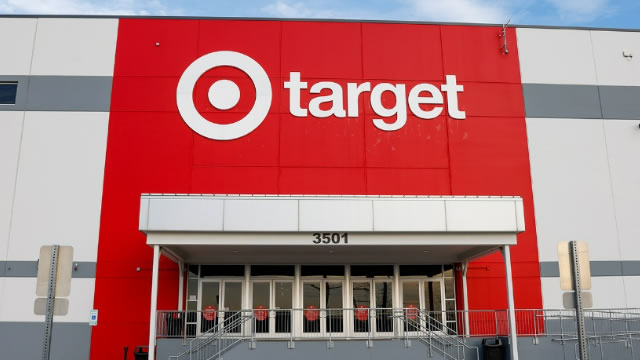
Target's turnaround faces execution risks, says Bank of America
Proactiveinvestors NA· 2026-03-04 17:24
Company Overview - Proactive is a financial news publisher that provides fast, accessible, informative, and actionable business and finance news content to a global investment audience [2] - The company operates with a team of experienced and qualified news journalists across key finance and investing hubs including London, New York, Toronto, Vancouver, Sydney, and Perth [2] Market Focus - Proactive specializes in medium and small-cap markets while also covering blue-chip companies, commodities, and broader investment stories [3] - The content delivered by the team includes insights across various sectors such as biotech and pharma, mining and natural resources, battery metals, oil and gas, crypto, and emerging digital and EV technologies [3] Technology Utilization - Proactive is recognized for its forward-looking approach and enthusiastic adoption of technology to enhance workflows [4] - The company employs automation and software tools, including generative AI, while ensuring that all content is edited and authored by humans to maintain best practices in content production and search engine optimization [5]

Create with Flow | How to use Google’s AI Creative Studio
Google· 2026-03-04 17:16
Built with and for creatives, Flow is your AI creative studio powered by Google DeepMind’s most advanced models: Veo, Nano Banana, and Gemini. In this tutorial, you will learn to seamlessly create, refine, and compose your stories. With Flow, you can generate and edit images and videos in a single workflow, allowing you to build cohesive narratives with consistency. #Flow #AIFilmmaking #GenerativeAI We are so excited to see what you create. Create with Flow at https://flow.google/ See our Flow playlist on Y ...

The Billionaire Investor Who Bet Against Nvidia and Palantir Is Buying Adobe
247Wallst· 2026-03-04 16:30
Group 1 - Michael Burry, a renowned contrarian investor, has reportedly purchased shares of Adobe, which have fallen nearly 40% over the past year despite the company posting $23.77 billion in revenue, an 11% year-over-year increase [1] - Burry previously made significant bets against Nvidia and Palantir, totaling approximately $1.1 billion, as the AI boom drove those stocks to new highs [1] - The skepticism surrounding Adobe stems from concerns that generative AI tools could diminish demand for its Creative Cloud suite, leading to a significant stock decline [1] Group 2 - Adobe's stock has seen a 22% drop year-to-date, reflecting broader market anxiety about AI disruption in creative software, despite the company's strong fundamentals [1] - If Burry's investment in Adobe is confirmed, it could be seen as a classic contrarian move, as the stock is currently trading at deeply discounted valuations, including a trailing P/E of approximately 16x and around 11x free cash flow [1] - The market appears to be pricing in a dire future for Adobe, suggesting that the current valuation may not reflect the company's actual growth potential and resilience [1]


NYSE Content Update: Alysa Liu Rings NYSE Bell After Winning Two Gold Medals
Prnewswire· 2026-03-04 13:55
Market Insights - The New York Stock Exchange (NYSE) provides a daily pre-market update to offer market insights before trading begins [1] - Equities are experiencing volatility due to ongoing conflicts in the Middle East, with President Trump announcing that the U.S. will provide risk insurance for all maritime trade in the Persian Gulf [3] Events and Activities - Ronald McDonald House New York, in collaboration with RBC Capital Markets and the New York Rangers, is celebrating the 32nd Annual Skate with the Greats [2][3] - Pfizer (NYSE: PFE) participated in ringing the NYSE Closing Bell, indicating its active role in the market [3] - Baruch Toledano from Similarweb (NYSE: SMWB) will discuss the results of the Generative AI Brand Visibility Index Report on NYSE Live [3]


Dow Jones set for cautious open as Middle East conflict continues
Proactiveinvestors NA· 2026-03-04 13:30
About this content About Oliver Haill Oliver has been writing about companies and markets since the early 2000s, cutting his teeth as a financial journalist at Growth Company Investor with a focusing on AIM companies and small caps, before a few years later becoming a section editor and then head of research. He joined Proactive after a couple of years freelancing, where he worked for the Financial Times Group, ITV, Press Association, Reuters sports desk, the London Olympic News Service, Rugby World Cup ...

Physical AI Is Less Than 3% of Nvidia's Revenue. Here's How It Could Transform Nvidia By 2035.
The Motley Fool· 2026-03-04 07:45
Core Insights - Nvidia reported record fiscal 2026 revenue of $215.9 billion, net income of $120.1 billion, and free cash flow of $96.6 billion, with data centers accounting for 89.7% of total revenue [1] Group 1: Data Center Dominance - Data centers are the primary revenue driver for Nvidia, contributing significantly to its fiscal 2026 results [1] - Other segments such as gaming, AI personal computing, professional visualization, and automotive and robotics have a relatively minor impact on overall revenue [1] Group 2: AI Opportunities - Nvidia is positioned as a leader in generative AI, with its new Rubin architecture featuring advanced chips designed for large-scale AI applications [4] - The transition to agentic AI is highlighted as a key growth area, with enterprise adoption expected to increase [5][6] Group 3: Product Development and Future Growth - Nvidia's product roadmap includes advancements in generative AI, agentic AI, and future developments in physical AI [7] - Physical AI has already generated over $6 billion in revenue for Nvidia in fiscal 2026, indicating a growing market potential [7] - The expansion of robotaxi services is projected to create a substantial revenue opportunity, with expectations of scaling from thousands to millions of vehicles [7][8] Group 4: Financial Metrics and Market Position - Nvidia's current market capitalization stands at $4.4 trillion, with a gross margin of 71.07% and a dividend yield of 0.02% [9] - The company is seen as having significant growth potential, especially as it diversifies its revenue streams beyond data centers [9][10]