个性化服务

Search documents
互联网企业如何利用AI知识库提升用户体验
Sou Hu Cai Jing· 2025-05-20 03:50
Core Insights - The rise of intelligent knowledge bases is crucial for internet companies to enhance user experience and meet diverse user demands through effective information management [5][6][18]. Group 1: Importance of Intelligent Knowledge Bases - Intelligent knowledge bases are essential tools for improving information flow efficiency and addressing the challenges of knowledge management in the digital age [5][6]. - The integration of AI technology in knowledge bases significantly enhances information retrieval capabilities, leading to improved user satisfaction and engagement [6][8][20]. - Companies are increasingly recognizing the importance of personalized services, which are facilitated by intelligent knowledge bases that analyze user behavior and preferences [11][12][18]. Group 2: Features and Benefits - Intelligent knowledge bases utilize advanced algorithms and machine learning to provide precise search results and intelligent recommendations based on user history [20]. - The ability to support multiple languages allows companies to cater to a global audience, enhancing their market reach and user accessibility [12][20]. - Automated data updating mechanisms ensure that information remains current and accurate, which is vital for maintaining user trust and satisfaction [20][21]. Group 3: Implementation Strategies - Companies should conduct thorough needs analysis to understand user requirements and define the content and functionalities of the knowledge base [14]. - Selecting appropriate technologies, such as natural language processing and machine learning, is critical for optimizing information retrieval and enhancing user experience [14][15]. - Establishing a regular evaluation mechanism based on user feedback is necessary for continuous improvement of the knowledge management process [14][15].

2025年中国医药B2B电商行业发展历程、产业链、销售额、竞争格局及未来趋势研判:数字化转型和个性化服务融合,医药B2B电商将引领未来健康新趋势[图]
Chan Ye Xin Xi Wang· 2025-04-25 01:25
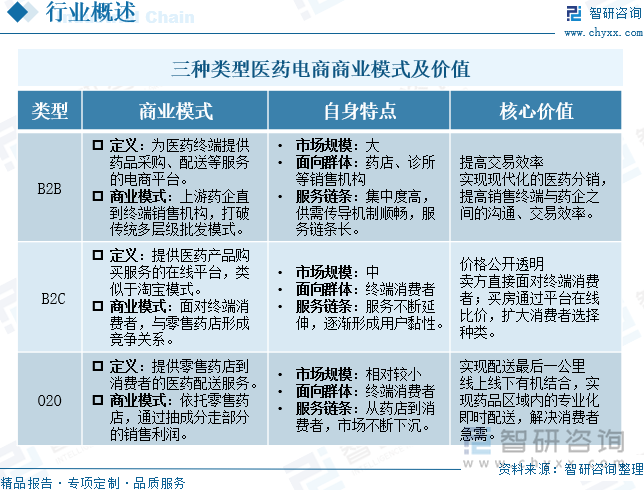
Core Viewpoint - The Chinese pharmaceutical B2B e-commerce market has experienced rapid growth from 2015 to 2019, with sales exceeding 100 billion yuan in 2019. However, sales declined in 2020 due to the pandemic, and in 2023, sales reached 125.3 billion yuan, a year-on-year decrease of 18.16%. Future growth is expected as policies improve and the outpatient market develops [1][18]. Industry Overview - Pharmaceutical e-commerce, defined as the online trading of medical products, can be categorized into B2B, B2C, and O2O models, each serving different market segments and enhancing efficiency in the pharmaceutical distribution industry [3][4]. - The B2B model primarily serves medical institutions and pharmacies, focusing on drug procurement and distribution, while the B2C model targets end consumers [4][9]. Industry Development History - The development of pharmaceutical B2B e-commerce in China has been influenced by government policies, transitioning from a phase of prohibition to encouragement. Significant milestones include the establishment of pilot programs in 2000 and the lifting of bans in 2005, leading to a market that reached over 100 billion yuan in 2019 [6][9]. Market Size and Growth - In 2023, the total sales of the pharmaceutical distribution market reached 29.304 billion yuan, with a year-on-year growth of 7.5%. B2B sales accounted for over 70% of this market, indicating a strong demand for B2B services [14][15]. - The B2B e-commerce segment specifically generated 125.3 billion yuan in sales in 2023, representing 50.3% of the total pharmaceutical e-commerce sales [15][18]. Order and User Engagement - The number of orders in the pharmaceutical B2B e-commerce sector reached 81.68 million in 2023, a year-on-year increase of 13.49%, with a conversion rate of 97.3%. Active users on B2B platforms grew by 30.77% to 1.36 million [20][21]. Sales Structure - The sales structure of B2B e-commerce is predominantly focused on Western medicine, which accounts for 71.7% of sales, followed by traditional Chinese medicine at 21.9%. There is potential for growth in other categories as the market expands [21][24]. Key Companies - Major players in the pharmaceutical B2B e-commerce market include Jiuzhoutong, Yaoshibang, and others, which have established strong service and logistics capabilities, leading to significant customer retention [24][26][28]. Future Trends - The industry is expected to see a trend towards personalized and vertical development, with smaller companies focusing on niche markets. Additionally, B2B platforms will likely expand their service offerings to include diverse solutions for both upstream and downstream partners in the supply chain [30][31].


飞鹤20250401
2025-04-01 07:43
Summary of the Conference Call for Feihe Company Overview - **Company**: Feihe - **Industry**: Infant Formula Milk Powder Key Points and Arguments Industry and Policy Impact - The Chinese government has introduced a series of child-rearing policies, including birth subsidies in cities like Hohhot, which are expected to stimulate market demand in the infant formula industry. An estimated population increase of approximately 500,000 is anticipated as a positive incentive for the industry [3][4] Financial Strategies and Subsidies - Feihe plans to implement a subsidy of 1.2 billion yuan starting from April 2025, targeting pregnant women, expectant mothers, and babies. This initiative aims to serve consumers while controlling the impact on company profits through adjustments in the cost structure [4][5] - The sales expense ratio for 2024 is expected to remain around 34%, influenced by low-end adult milk powder and promotional activities. The company aims to maintain this ratio at approximately 30% in the future [4][6] Product Performance and Growth - The flagship product, Zhuorui, generated 6.688 billion yuan in revenue in 2024, accounting for 32% of total revenue. It is expected to achieve single-digit growth in 2025, while the new product, Xinfeifan, is projected to grow by 57-58%, contributing around 900 million yuan in revenue [4][7] - Zhuorui's gross margin for the second half of 2024 is approximately 73%, with expectations to maintain this level in 2025 [4][9] Research and Development - Feihe's R&D investment reached 580 million yuan in 2024, focusing on breast milk and infant nutrition in collaboration with renowned institutions. The slogan for 2025 has shifted to "Smart Babies and Feihe," emphasizing brain development research [4][16] Market Position and Digital Strategy - Feihe's market share has shown steady growth, with a total market share of 20.5% and an offline market share of about 23% as of December last year. Digital channels are contributing significantly to sales, with monthly sales exceeding 100 million yuan [19] Future Directions and Challenges - The company aims to expand its product offerings in the infant formula sector, explore overseas markets, and develop health foods for children and adults. However, the reduction in government subsidies is expected to negatively impact net profit by approximately 200 million yuan in 2025 [12][11][26] - Feihe has not provided specific profit guidance for 2025, citing the influence of various factors on profitability, including the performance of new business segments [24][25] Capital Expenditure and Dividend Policy - Feihe's capital expenditure is expected to remain stable, with no significant growth anticipated. The company commits to a dividend payout of no less than 30% of net profit, with historical payout rates typically between 40% and 56% [20][21] Upcoming Events - Feihe plans to organize a reverse roadshow in mid-June 2025, inviting investors to visit its factories and farms, including the newly launched Harbin factory [28]
县城大酒店的诱惑:200一晚,服务吊打希尔顿?
虎嗅APP· 2025-03-13 10:07
Core Viewpoint - The article discusses the rising popularity of county-level hotels that offer extensive services at low prices, challenging traditional hotel chains like Hilton and Marriott. These hotels are characterized by their unique service offerings and affordability, appealing to budget-conscious travelers [2][30]. Group 1: Hotel Services and Offerings - County-level hotels, such as the Jin Cheng Lakeside Garden Hotel, provide numerous services for a low price of around 200 yuan per night, which includes amenities typically found in higher-end hotels [4][10]. - The hotel has received high ratings, such as a 4.89 on travel platforms, and has been recognized for its exceptional service, which includes unique offerings like free laundry and personalized care items [8][30]. - The hotel features a nostalgic decor style reminiscent of older establishments, with redwood furniture and crystal chandeliers, creating a sense of comfort and familiarity for guests [9][24]. Group 2: Market Trends and Competition - The hotel industry in China is experiencing a decline in key performance indicators such as RevPAR, ADR, and occupancy rates, with a reported drop of 6%, 4%, and 2% respectively as of September 2024 [30][31]. - In response to declining revenues, county-level hotels are focusing on enhancing service quality rather than investing in physical upgrades, as this approach is seen as more cost-effective and beneficial for attracting repeat customers [31][32]. - The trend of "reverse tourism" is emerging, where travelers seek experiences in less urbanized areas, further benefiting county-level hotels that offer unique and affordable stays [32].