
毒品恐怖主义

Search documents
美媒:美军“福特”号航母将于11月中旬抵达加勒比海
Xin Hua She· 2025-11-05 07:06
Core Viewpoint - The deployment of the USS Gerald R. Ford aircraft carrier to the Caribbean is aimed at enhancing the U.S. military's capabilities to combat drug trafficking and transnational crime organizations in the region [1] Summary by Relevant Sections Military Deployment - The USS Gerald R. Ford aircraft carrier will arrive in the Caribbean in mid-November, carrying approximately 5,000 personnel and 75 aircraft, including F/A-18 fighter jets [1] - This deployment is part of a broader strategy by the U.S. military to strengthen its presence in the Southern Command area, particularly around Latin America [1] Regional Reactions - Several countries in the region have condemned the U.S. military presence, with the Venezuelan government accusing the U.S. of attempting to instigate regime change through military threats [1] - The U.S. has faced criticism for its military expansion in Latin America under the guise of anti-drug operations [1] Strategic Intent - The U.S. government has reportedly developed a series of military action plans targeting Venezuela under the pretext of combating "drug terrorism," although President Trump has not yet made a decision on potential actions against targets within Venezuela [1] - Historical context indicates that the U.S. has a history of intervening in Latin American politics, with at least 18 covert regime change operations planned during the Cold War, often resulting in chaos and violence [1]
记者观察:美国“出兵”拉美的四大疑问
Xin Hua Wang· 2025-11-03 08:15
Core Viewpoint - The U.S. government has significantly escalated its military presence in the Caribbean under the pretext of combating drug trafficking, raising concerns about the legality and intentions behind these actions [1][2][3] Group 1: Military Actions and Implications - Since September, the U.S. military has reportedly sunk 16 "drug boats" in international waters, resulting in at least 64 deaths [1] - The Pentagon's deployment of a carrier strike group to the Caribbean is seen as a strong signal of an escalation in military operations, potentially extending from international waters to ground targets [1] - There are growing doubts regarding the legality of these military actions, with bipartisan concerns in Congress about compliance with both domestic and international law [2][3] Group 2: Legality and International Response - Critics argue that the U.S. has not provided sufficient evidence to justify the military actions, leading to accusations of extrajudicial killings [2][3] - An independent expert group from the UN Human Rights Council condemned the U.S. actions as violations of international law, emphasizing the lack of legal basis for using lethal force in international waters [2][3] Group 3: Strategic Objectives and Regional Impact - The U.S. claims to be waging a war against "drug terrorism," but analysts question the coherence of this characterization and its alignment with actual drug trafficking patterns [6][7] - The military approach is seen as a significant shift in U.S. drug policy, with concerns that it may not effectively deter drug trafficking organizations [7] - The financial burden of maintaining military operations in the Caribbean is substantial, with daily costs estimated at around $7 million [7] Group 4: Broader Geopolitical Context - Reports suggest that the U.S. military buildup may be aimed at pressuring Venezuelan President Maduro to step down, with concerns about a potential invasion [10][11] - The U.S. is perceived to be reasserting its influence in Latin America, reminiscent of the Monroe Doctrine, with a focus on military deterrence and economic pressure [13][14] - Recent diplomatic tensions with Colombia highlight the potential for backlash against U.S. military actions in the region [11][14]

列国鉴丨记者观察:美国“出兵”拉美的四大疑问
Xin Hua Wang· 2025-11-03 05:49
Core Points - The U.S. government has claimed to have sunk 16 "drug trafficking boats" in the Caribbean and East Pacific since September, resulting in at least 64 deaths [1] - The military deployment in the Caribbean is described as the largest in 30 years, with President Trump authorizing CIA operations in Venezuela [1] - There are growing concerns and skepticism regarding the true intentions behind these military actions [1] Legal Concerns - Questions have arisen about the legality of these military actions under both U.S. domestic law and international law, as Congress has not formally authorized military action [2][3] - Critics, including members of Congress, have expressed concerns over the lack of transparency and evidence regarding the targets of these military operations [2][3] - An independent expert group from the UN Human Rights Council condemned the U.S. actions as violations of international law, equating them to extrajudicial killings [3] Drug Trafficking Justification - Trump's assertion of a "war on drug terrorism" has been met with skepticism, as the motivations for drug trafficking do not align with traditional definitions of terrorism [4] - The focus of U.S. military actions appears misaligned with actual drug trafficking routes, as most cocaine is trafficked through the Pacific rather than from Venezuela [4] - The effectiveness and sustainability of military actions against drug trafficking are questioned, with high operational costs and potential negative impacts on covert operations [4][5] Potential Invasion of Venezuela - Reports suggest that the U.S. military buildup may be aimed at pressuring Venezuelan President Maduro to step down, with concerns about a possible ground invasion [6][7] - Analysts believe that while the current military presence could conduct strikes, it is insufficient for a full-scale invasion [7] - The U.S. aims to leverage military threats to influence Venezuelan elites, rather than seeking a direct invasion [7][8] Shift in U.S. Foreign Policy - There is a noticeable shift in U.S. foreign policy focus towards the Western Hemisphere, with a revival of the Monroe Doctrine [9] - The Pentagon is expected to prioritize homeland and Western Hemisphere defense in its upcoming defense strategy [9] - Recent agreements, such as a $20 billion currency swap with Argentina, reflect a return to economic Monroeism, emphasizing U.S. influence in Latin America [9] Regional Reactions - The U.S. military actions may provoke strong backlash in Latin America, given the historical sensitivity to U.S. interventions [10] - Colombian President Petro criticized U.S. actions as "murder," highlighting the deteriorating relations between Colombia and the U.S. under the current administration [10]
突然!美国,发动袭击!
券商中国· 2025-10-25 09:43
Core Viewpoint - The article discusses the recent military actions taken by the United States against drug trafficking in the Caribbean, highlighting tensions with Venezuela and Colombia, as well as the implications of U.S. sanctions on Colombian President Petro [1][2][4][5]. Group 1: U.S. Military Actions - On October 24, the U.S. Defense Secretary announced the sinking of a drug trafficking boat in international waters, resulting in six deaths, marking the tenth military strike against suspected drug vessels since September, which has led to at least 43 fatalities [2][3]. - The U.S. military presence in the Caribbean is being enhanced with the deployment of the USS Ford aircraft carrier strike group to combat drug trafficking and transnational criminal organizations as per President Trump's directive [2][3]. Group 2: U.S.-Venezuela Relations - The U.S. has been conducting military operations near Venezuela, including the deployment of B-1B bombers, which has raised concerns about potential ground military actions in the region [3]. - Venezuelan President Maduro has condemned U.S. actions as fabrications aimed at justifying military aggression, asserting that Venezuela will resist any attempts to instigate war [3]. Group 3: U.S.-Colombia Relations - The U.S. Treasury imposed sanctions on Colombian President Petro and his family, accusing him of allowing drug trafficking to flourish, which has led to increased cocaine production in Colombia [4][5]. - President Petro criticized the sanctions as hypocritical, stating that Colombia has been actively combating drug trafficking for decades and has sought to assist the U.S. in reducing cocaine consumption [4][5].

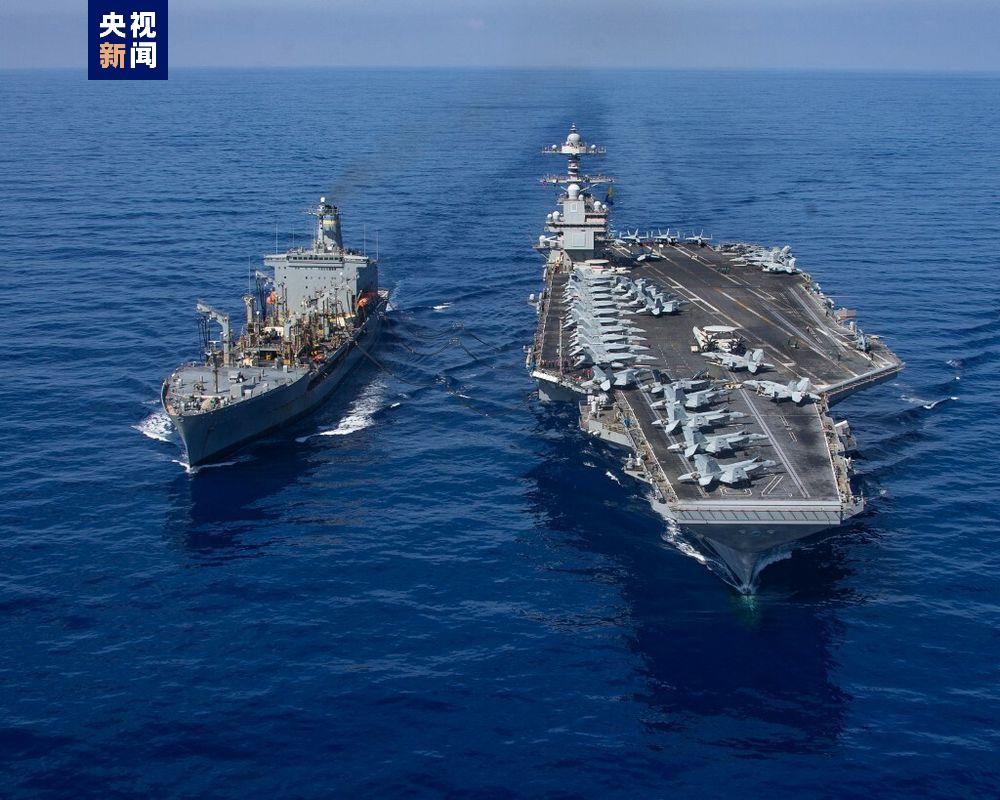
为“打击拉丁美洲贩毒活动” 美防长调派“福特”号航母战斗群
Yang Shi Xin Wen· 2025-10-24 16:56
Core Points - The U.S. Department of Defense has announced the deployment of the USS Ford carrier strike group to enhance military presence in the Southern Command area in response to President Trump's directive to dismantle transnational criminal organizations and combat drug terrorism [2] - This military presence aims to improve the U.S. capabilities in reconnaissance, surveillance, and countering illegal activities that threaten national security and prosperity in the Western Hemisphere [2] - The Trump administration has characterized the situation as a non-international armed conflict with drug trafficking groups designated as terrorist organizations [2] Summary by Sections - **Military Deployment** - The USS Ford carrier strike group and its air wing are being deployed to the Southern Command area to bolster U.S. military presence [2] - This move is part of a broader strategy to combat drug trafficking and weaken transnational criminal organizations [2] - **Government Actions** - The Trump administration submitted a memorandum to Congress indicating the ongoing conflict with drug trafficking organizations [2] - Recent military actions include the sinking of several alleged drug trafficking vessels off the coast of Venezuela [2] - **Regional Implications** - Reports from the U.S. Drug Enforcement Administration indicate that Venezuela is not a primary source of drugs entering the U.S. [2] - The Venezuelan government has accused the U.S. of using military threats to instigate regime change and expand military presence in Latin America [2]
五角大楼语焉不详,美委局势日趋紧张,美海军上将敏感时刻提前卸任
Huan Qiu Shi Bao· 2025-10-17 22:38
Core Points - The unexpected retirement of Admiral Halsey, commander of the U.S. Southern Command, occurs amid escalating tensions between the U.S. and Venezuela, raising concerns about U.S. military strategy in the region [1][2] - The U.S. military has increased its presence in the Caribbean, with over 10,000 troops deployed near Venezuela, purportedly to combat "drug terrorism" [2] - Recent military actions by the U.S. against suspected drug trafficking vessels have led to legal and ethical debates regarding their compliance with international law [3][4] Group 1 - Admiral Halsey announced his retirement effective December 12, without providing specific reasons, amidst reported disagreements with Defense Secretary Austin regarding military actions in the Caribbean [1] - The U.S. Senate Military Committee expressed concerns that Halsey's departure reflects a disregard for military experience and advice, potentially politicizing military operations [2] - The U.S. has deployed military assets, including missile destroyers and F-35 fighter jets, in the Caribbean, indicating a significant military buildup in response to the situation in Venezuela [2] Group 2 - The U.S. military has conducted strikes against suspected drug trafficking vessels, resulting in casualties among alleged traffickers, which has raised alarms among legal experts and some lawmakers regarding the legality of these actions [3] - Venezuela's government has condemned U.S. military actions, asserting that they threaten regional peace and sovereignty, and has called for an investigation into the legality of these operations [4] - The U.S. maintains that its actions are justified under the right to self-defense as outlined in the UN Charter, despite Venezuela's protests and calls for international scrutiny [4]