水资源配置

Search documents
我省推介超千亿元水利建设项目
Liao Ning Ri Bao· 2025-10-14 00:58
Core Insights - The article highlights the promotion of 102 water conservancy projects in Northeast China, with a total investment of 107 billion yuan, aimed at enhancing water resource management and supporting sustainable economic development [1] Group 1: Investment and Project Overview - A total of 1,067 billion yuan is expected to be invested in water conservancy projects by the end of the "14th Five-Year Plan," which is 2.2 times that of the "13th Five-Year Plan" [1] - The plan includes the construction of 6 large and medium-sized reservoirs, with significant investments in the Yongping and Shengjin reservoirs, which have designed capacities of 194 million cubic meters and 124 million cubic meters, respectively, totaling an investment of 11.664 billion yuan [1] - The Liaodong Peninsula water resource allocation project, a key initiative, involves an investment of over 20 billion yuan and has passed feasibility studies [1] Group 2: Irrigation and Flood Control Projects - During the "14th Five-Year Plan," 34 new and renovated large and medium-sized irrigation projects have been implemented, with a total investment of 4.4 billion yuan, alongside 17 flood control projects with an investment of 1.1 billion yuan [2] - The promotion includes 18 projects such as the Hunpuh and Panshan irrigation area renovations, with an estimated total investment of 21.2 billion yuan [2] - The province aims to implement 1,608 water conservancy projects during the "15th Five-Year Plan," with a total investment of 166.9 billion yuan, which is 1.4 times that of the "14th Five-Year Plan" [2]
构筑青岛未来发展的“水长城”
Qi Lu Wan Bao· 2025-09-25 22:16
Core Insights - The construction of the "super reservoir" in Qingdao, with a total investment of 9.145 billion yuan and a total capacity of 211 million cubic meters, is crucial for the city's future development and water security [2][3][6]. Group 1: Project Overview - The project, known as the Guanlu Reservoir, commenced full construction in December 2022 and is currently in the final stages of development [2]. - The reservoir's design capacity is classified as large (Type II), with a total capacity of 211 million cubic meters, equivalent to four Laoshan Reservoirs [4]. - The construction includes various components such as embankments, pumping stations, and river channel diversions, with innovative technologies employed to enhance durability and adaptability [4]. Group 2: Water Resource Challenges - Qingdao faces significant water resource shortages, with per capita water availability at only 186 cubic meters, far below the national average [3]. - The city's current annual water supply capacity is 670 million cubic meters, but projected demand by 2035 is expected to reach 1.6 billion cubic meters, resulting in a shortfall of 930 million cubic meters [3]. Group 3: Benefits and Impact - Once completed, the Guanlu Reservoir will provide an annual water storage capacity of 600 million cubic meters, serving as a vital water source for Qingdao and surrounding areas [6]. - The reservoir will enhance regional water supply security, supporting urban and industrial water needs while addressing the water demands of neighboring cities [6]. - The project aims to transform Qingdao's water supply system from a single-channel approach to a dual-insurance model, significantly improving strategic water reserve capabilities [6][7]. Group 4: Construction Progress - As of now, the project has completed an investment of 6.417 billion yuan, with major construction milestones nearing completion: embankment filling at 99%, pumping station at 93%, and the connecting line at 97% [7]. - The main construction is scheduled for completion by the end of 2025, with full project completion expected in 2026, marking a significant advancement for Qingdao's high-quality development [7].

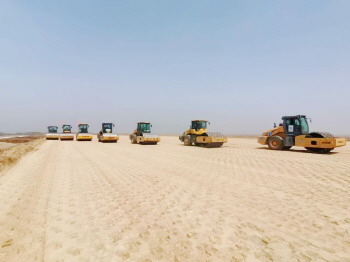
韩江榕江练江水系连通后续优化工程全线隧洞贯通 建成后将惠及850万人
Nan Fang Ri Bao Wang Luo Ban· 2025-09-15 07:44
Core Viewpoint - The completion of the shield tunnel for the Hanjiang, Rongjiang, and Lianjiang water system connectivity project marks a significant milestone in addressing water scarcity issues in the eastern Guangdong region, with a total investment of 10.119 billion yuan [1][2]. Group 1: Project Overview - The project involves a total water conveyance pipeline length of approximately 72 kilometers, with a total estimated investment of 10.119 billion yuan [1]. - The project is a major water resource allocation initiative planned by the Guangdong provincial government, aimed at solving resource and engineering-related water shortages in the eastern Guangdong region [1]. - The project will facilitate the transfer of Hanjiang water resources to various districts, including Chaoyang, Chaoshan, and Puning, benefiting a population of 8.5 million [2]. Group 2: Engineering Challenges - The construction faced challenges, particularly with the "Yuedong 2" shield machine, which encountered a "solitary stone group" during excavation, leading to innovative modifications to the machine [2]. - The project includes approximately 34 kilometers of shield tunnels, TBM tunnels, and drill-blast tunnels, all of which have now been completed [1][2]. - Following the completion of the shield tunnel, construction efforts are now focused on lining the tunnels and building associated pumping stations [2].
公清水库项目刷新进度条
Shen Zhen Shang Bao· 2025-09-03 23:08
Core Insights - The Shenzhen Gongqing Project has made significant progress with the successful sealing of the South Pit Pump Station shaft, which is the first of 18 large working shafts to complete underground structural construction [1] - This project is a key component of Shenzhen's water resource allocation strategy, facilitating the interconnection of water sources from the Dongjiang and Xijiang rivers and providing emergency water supply support to Hong Kong [1] - The project employs a deep-buried tunnel water conveyance method, with a total length of 41.28 kilometers, aimed at enhancing water supply security and resource allocation capabilities in Shenzhen [1] Project Details - The South Pit Pump Station shaft has a depth of 56.15 meters and a diameter of 37 meters, and will be used to pressurize and transport raw water to the South Pit Water Plant [1] - The construction site covers an area of 16,100 square meters and includes four shafts with different functions such as inflow, diversion, and pressurized water transport, operating simultaneously with 23 large pieces of equipment [1] - The project faces complex geological conditions, including soft soil, coal seams, and fractured structures, which increase construction risks [1] Future Outlook - The Gongqing Project is currently focused on advancing the excavation of all shafts, with the first Tunnel Boring Machine (TBM) expected to commence by the end of this year [1]
公清水库项目刷新进度条 首座深大竖井实现封底
Shen Zhen Shang Bao· 2025-09-03 17:03
Group 1 - The Shenzhen Gongqing Project has made significant progress with the successful sealing of the South Pit Pump Station shaft, which is 56.15 meters deep and 37 meters in diameter, marking the first completion of underground structural work among the 18 large working shafts in the project [1] - The Gongqing Project is a key infrastructure initiative in Shenzhen's water resource allocation strategy, featuring a 41.28-kilometer long water conveyance tunnel that will facilitate mutual water source allocation between the Dongjiang and Xijiang rivers, and provide emergency water supply support to Hong Kong [1] - The construction site of the South Pit Pump Station covers an area of 16,100 square meters and includes four shafts with different functions such as water intake, distribution, and pressurized water conveyance, all operating simultaneously with 23 large pieces of equipment [1] Group 2 - The project is currently advancing the excavation of all shafts, with the first Tunnel Boring Machine (TBM) expected to commence by the end of this year [1] - The project faces complex geological conditions, including soft soil, coal seams, and fault structures, which increase the construction risks [1]
储水量增加8.6亿立方米,昌平区地下水位连续九年回升
Xin Jing Bao· 2025-08-27 08:42
Core Insights - The groundwater level in Changping District has shown continuous improvement, with a rise of 3.92 meters compared to the same period last year, reaching 12.29 meters as of late August this year, marking nine consecutive years of increase [1] - The total groundwater storage has increased by 860 million cubic meters since 2015, with the Machikou water source seeing an average rise of 5.36 meters, setting a new historical high [1] Group 1: Water Resource Management - Changping District has achieved ecological replenishment exceeding 156 million cubic meters this year, optimizing water resource allocation with a coordinated replenishment plan [1] - The plan includes integrating Bai Fuquan ecological replenishment into the city's scheduling, establishing multiple water supply paths, and deploying monitoring equipment for precise management [1] Group 2: Reduction of Groundwater Extraction - The district is actively replacing groundwater sources with surface water, with the newly built Changping New Town surface water plant gradually replacing groundwater extraction from older plants [2] - Since 2021, 10 well replacements have been completed, reducing groundwater extraction by approximately 440,000 cubic meters annually [2] Group 3: Water Conservation Efforts - Changping District has implemented rainwater collection systems in new projects, increasing rainwater collection capacity by 310,000 cubic meters since 2021, and has developed 47.8 square kilometers of sponge city areas [2] - The district has also enhanced the utilization of recycled water, producing 11.8 million cubic meters last year, which serves as a significant supplementary source for ecological replenishment [2] - Efforts to improve water-saving hardware have led to the replacement of over 55,000 water-saving devices, achieving a 99.6% penetration rate of water-saving fixtures in urban areas [2]
环北广西工程加快攻坚六万大山最长隧洞
Guang Xi Ri Bao· 2025-07-06 01:59
Group 1 - The "Huanbei Guangxi Project" has achieved a significant milestone with the successful launch of the "Huanbei Guangxi No. 7 TBM" in the Liuwanda Mountain tunnel, with two other TBMs expected to start by August, enhancing project efficiency [1] - The Liuwanda Mountain tunnel, which is 25 kilometers long and has complex geological conditions, will see the TBM undertake 11.427 kilometers of tunneling, advancing over 500 meters per month [1] - The project is a key component of the national water network and aims to improve water supply security for major cities in Guangxi, benefiting nearly 14 million people upon completion [1] Group 2 - The Huanbei Guangxi Project is equipped with a total of 7 TBMs, with 3 expected to start this year, creating a multi-point construction strategy that significantly enhances excavation efficiency [2] - The simultaneous operation of the 3 TBMs establishes a solid foundation for subsequent tunneling work [2]
平陆运河风物志㉜丨灵东浴日万物兴
Guang Xi Ri Bao· 2025-06-22 01:50
Core Viewpoint - The Lingdong Reservoir, also known as Dong Lake, plays a crucial role in water resource management, irrigation, and ecological protection for the local population and agriculture in Lingshan County, despite facing challenges such as drought and water level fluctuations [2][3][6]. Group 1: Reservoir Management and Operations - The Lingdong Reservoir has a total dam length of 1,824 meters and a total capacity of 169 million cubic meters, with an effective capacity of 79 million cubic meters [2]. - The reservoir is currently under strict management to protect water sources, prohibiting feeding fish and fishing without approval, ensuring sustainable aquatic life [2]. - Despite recent drought conditions leading to the lowest water level in 60 years, the reservoir continues to supply between 100,000 to 500,000 cubic meters of water daily for irrigation, flood control, and drinking water for over 500,000 residents and 180,000 acres of farmland [2]. Group 2: Historical Significance and Development - The Lingdong Reservoir has been a vital resource for the local community for over 60 years, addressing historical issues of flooding and drought that have affected the region [3][5]. - The construction of the reservoir began in 1958, following significant government support, and was completed after five years of hard work by local residents, marking a significant achievement in water management [5]. - The reservoir has since contributed to local economic development, particularly in aquaculture, with the local fish seedling industry producing over 10 billion fry annually and generating an annual output value of 300 million yuan [6]. Group 3: Future Prospects and Regional Impact - The Lingdong Reservoir is an integral part of the Beibu Gulf water resource allocation project, which aims to provide reliable water supply for nearly 14 million people in regions including Nanning, Qinzhou, Beihai, and Yulin [6]. - The reservoir is expected to continue playing a significant role in regional development and ecological protection, enhancing water resource management in conjunction with other infrastructure projects [6].