降温

Search documents
冷空气来袭!内蒙古黑龙江有明显降雪 东北华北降温显著
Yang Shi Wang· 2025-10-26 00:46
Core Viewpoint - The upcoming weather changes in China will bring significant snowfall and temperature drops, particularly in the northern regions, affecting daily life and agricultural activities [1][2][5]. Weather Forecast - Strong snowfall is expected in Inner Mongolia's northeastern region and Heilongjiang, with the cold air moving southward [1][2]. - The Central Meteorological Observatory predicts small to moderate snow or sleet in various areas, with some regions experiencing heavy to blizzard conditions [2][4]. - Rainy weather will persist in southwestern regions, while the rain and snow will gradually shift southward [2]. Temperature Changes - A notable drop in temperatures is anticipated across North China and Northeast China, with decreases of 4 to 8 degrees Celsius, and in some areas, over 10 degrees Celsius [5]. - Specific cities like Taiyuan will experience their first 0°C temperature since autumn, while Shijiazhuang's minimum temperature will drop to 3°C, setting a new low [5]. - In contrast, the southeastern regions will see a quick rebound in temperatures after the rain, with increases of 4 to 8 degrees Celsius [5]. Public Advisory - Meteorological departments advise the public to be cautious of the impacts of snow on agriculture, livestock, and transportation safety, urging people to take precautions against cold weather [6].

新一轮冷空气将至,北方局地降温8℃!全国加被子地图请收好
Yang Shi Wang· 2025-10-23 03:53
Group 1 - The strongest cold air mass of the year has swept across most parts of China since October 15, causing temperatures to drop significantly, with many regions experiencing weather typical of November or even December [1][5] - The cold air's influence is expected to end around October 22, with temperatures gradually rising, although the warming effect will be weak [1] - A new round of cold air is forecasted to impact northern regions from October 25 to 26, bringing temperature drops of 4°C to 6°C, with some areas experiencing drops of around 8°C [3] Group 2 - A national "blanket map" has been released, indicating that northern regions require thicker blankets, while southern regions may use thinner blankets or throws depending on the situation [4] - The cold air has led to a seasonal temperature drop, prompting many people to express surprise at the sudden cold and the need for thicker bedding [5] - The blanket map suggests that most of northern China will experience single-digit minimum temperatures, while southern regions will still have nighttime temperatures above 20°C, indicating a need for appropriate bedding to prevent cold [7]

暴雨大暴雨,要来了!
新华网财经· 2025-10-16 12:56
Core Points - A strong cold air mass is currently affecting most parts of China, leading to significant temperature drops and increased precipitation [10][11] - The most intense rainfall is expected from the night of October 16 to October 17, particularly in the Huaxi to Huanghuai regions [3][5] - The cold air will also bring snowfall to areas such as the northeastern Inner Mongolia and the western Sichuan Plateau [3][7] Summary by Sections - **Cold Air Impact**: The cold air mass is expected to lower average temperatures by 4 to 8 degrees Celsius across most regions, with some areas experiencing drops exceeding 10 degrees Celsius [10][11] - **Rainfall Forecast**: Rainfall will intensify in the Huaxi to Huanghuai regions, with heavy rain and potential for localized severe weather events such as flash floods and landslides [9][3] - **Temperature Records**: Following the cold front, many areas will see their lowest temperatures in the past six months, with northern regions experiencing maximum temperatures below 10 degrees Celsius [11][10] - **Weather Warnings**: Residents are advised to prepare for significant temperature changes and potential health risks associated with the cold weather [11][10]

冷空气已启程!下周降温可直达南方,这些地方多雨状态或持续一周
Yang Shi Wang· 2025-09-14 10:30
Group 1 - A strong cold air mass is affecting China, leading to significant temperature drops in the northern regions, with temperatures expected to fall by 4 to 8 degrees Celsius, and in some areas by more than 10 degrees Celsius [2][4] - The highest temperatures in northern regions will drop below 20 degrees Celsius for the first time since the beginning of autumn, particularly in cities like Changchun, Hohhot, and Zhengzhou [2][4] - The cold air will also push the autumn process forward in the North China Plain, with cities like Beijing, Tianjin, and Shijiazhuang likely to officially enter autumn next week [4] Group 2 - The southern regions, particularly southern Jiangnan and South China, will experience limited effects from the cold air, with maximum temperatures remaining around 32 degrees Celsius, indicating persistent heat [6] - Heavy rainfall is expected in the southwestern to Huanghuai regions, particularly in areas like the Sichuan Basin and the Shaanxi-Sichuan border, where extreme rainfall may occur [7][9] - The rainfall will be continuous, with significant precipitation expected from the 15th to the 21st, leading to potential secondary disasters such as flash floods and landslides [9][10]

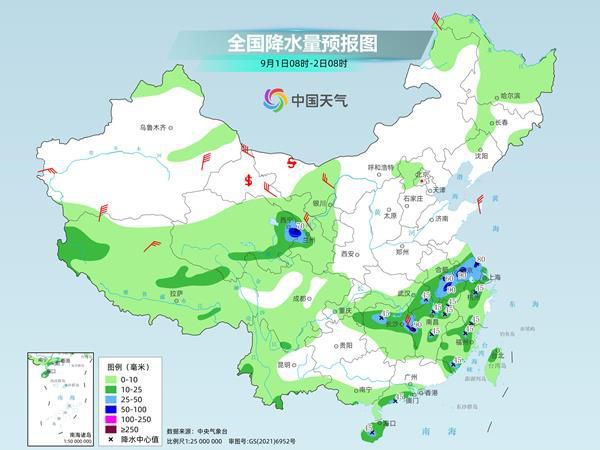
江淮等地强对流天气多发 南方高温减少但依然闷热
Yang Shi Xin Wen Ke Hu Duan· 2025-09-01 08:20
Summary of Key Points Core Viewpoint - The weather forecast indicates significant rainfall and temperature drops in the northwest region due to cold air, while the southern regions will experience continued heat and humidity, with high temperatures expected to return shortly after a brief respite [1][6]. Group 1: Weather Conditions - The northwest region will see increased rainfall from September 1 to 3, with heavy rain expected in areas like Qinghai, Gansu, and Shaanxi [1][5]. - Strong convective weather is prevalent in the Jianghuai region, with scattered heavy rain reported in various areas including Anhui and Hubei [1][2]. - The central meteorological station predicts medium to heavy rain in several regions including eastern Qinghai and southern Gansu, with localized heavy rain expected [2][3]. Group 2: Temperature Changes - Southern regions are experiencing a reduction in high temperatures, but humidity remains high, leading to a continued feeling of heat [6]. - The temperature in the northwest is expected to drop significantly, with some areas experiencing a decrease of over 6°C, and localized drops exceeding 10°C [6]. - The subtropical high pressure will shift northward, causing a resurgence of high temperatures in the Yangtze River basin starting September 4 [6].
室温立降2℃,空调省电10%,这一招能帮你撑过夏季暴晒天
3 6 Ke· 2025-08-01 09:50
Core Viewpoint - Effective shading methods can significantly reduce indoor temperatures and energy consumption during hot summer months, with external shading options generally providing better results than internal ones [3][4]. Group 1: External Shading Benefits - External shading devices, such as awnings and roller shades, can reflect sunlight before it reaches the window, leading to a temperature reduction of 1-2°C indoors and a decrease in air conditioning energy consumption by approximately 10% [4]. - The effectiveness of external shading is influenced by various factors, including the material of the shading device, weather conditions, and window size [4]. Group 2: Internal Shading Optimization - Optimizing internal shading devices can help achieve results similar to external options by increasing reflectivity and reducing light transmittance [5]. - High-reflectivity internal shades can reduce cooling energy consumption by up to 56.2% during peak sunlight hours compared to no shading [5]. Group 3: Improving Insulation - To enhance insulation, internal shades should be positioned close to the window to minimize air gaps that allow heat transfer [6][9]. - Adding side tracks to roller shades or using Velcro can improve sealing and reduce heat transfer through gaps [9]. Group 4: Innovative Shading Solutions - Honeycomb shades, designed with air pockets, provide superior insulation by slowing down heat transfer and minimizing air convection [10][13]. - When combined with side tracks, honeycomb shades can achieve optimal insulation performance [13]. Group 5: Energy Efficiency and Climate Impact - As global temperatures rise, the demand for air conditioning will increase, leading to higher carbon emissions from electricity generation [15]. - Improving window shading design is a cost-effective method to reduce energy consumption and enhance comfort in both summer and winter, with honeycomb shades potentially reducing heat loss through windows by 40% or more [16].

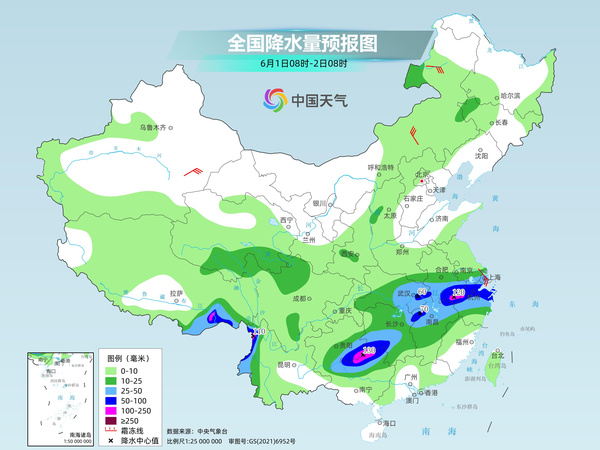
长江中下游今天仍为降雨核心区 华南天气闷热多地体感或超40℃
Yang Shi Wang· 2025-06-01 01:20
Group 1 - The central region of China, particularly the Yangtze River middle and lower reaches, is experiencing significant rainfall, with heavy rain expected to continue over the holiday period [1][2][5] - The rain is forecasted to shift southward, affecting regions in South China, with warnings for potential severe weather including thunderstorms and strong winds [2][5] - The northeastern region is experiencing a cooling trend due to the movement of cold air, contrasting with the hot and humid conditions in South China, where temperatures may feel above 40°C [6] Group 2 - Specific areas such as Anhui, Zhejiang, and Jiangxi are currently facing heavy rain and localized flooding, with some regions reporting extreme weather conditions [2][5] - The forecast indicates that the heavy rainfall will persist in the central and southern parts of China, with warnings for potential flash floods and landslides in vulnerable areas [3][4] - The temperature fluctuations in northern regions are notable, with cities like Harbin and Changchun experiencing much cooler weather compared to the high temperatures in southern cities like Nanning and Haikou [6]
大暴雨、大降温,要来了!端午出行警惕→
新华网财经· 2025-05-30 07:33
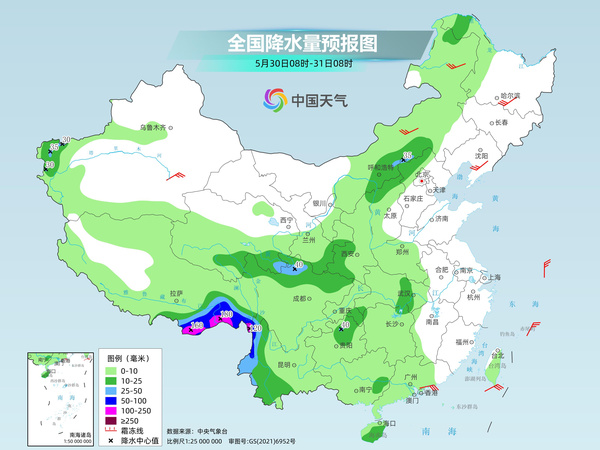
Summary of Key Points Core Viewpoint - A new round of widespread rainfall is expected in the central and eastern regions, with the strongest rainfall coinciding with the Dragon Boat Festival holiday, particularly affecting the Yangtze River basin [1][2][4]. Weather Forecast - From today until June 3, a significant rainfall event will occur across various regions, including parts of Inner Mongolia, Heilongjiang, Xinjiang, Tibet, and others, with some areas experiencing heavy rain or even torrential rain [3][4]. - The Central Meteorological Observatory predicts that the strongest rainfall will occur in the Yangtze River basin during the first two days of the Dragon Boat Festival holiday, with many areas experiencing heavy to torrential rain [6][7]. Temperature Changes - Cold air will impact the eastern Northwest and areas north of the Yangtze River, with temperature drops exceeding 10°C in some regions. For instance, Xi'an's temperature is expected to drop from 35.3°C to around 24°C [5][6]. - In contrast, southern regions will see temperature increases correlated with reduced rainfall, with many areas in Jiangnan and South China expected to exceed 30°C before the new round of rainfall begins [6]. Public Advisory - The public is advised to take precautions against rain and slippery conditions, especially during the holiday period. There is a heightened risk of secondary disasters such as flash floods and mudslides in areas with prolonged rainfall [4][6].

今起中东部大范围降雨来袭 端午假期长江中下游雨势强劲
Yang Shi Wang· 2025-05-30 00:33
Group 1 - A new round of widespread rainfall is expected in eastern and southern China starting from May 30, with the heaviest rain occurring just before the Dragon Boat Festival [1][2] - The rainfall will significantly lower temperatures in the Yangtze River basin, with some areas experiencing maximum temperatures dropping to just above 20°C [1][8] - The Central Meteorological Observatory predicts that from May 30 to June 3, regions from the northwest to most of the south will experience a new round of precipitation, with heavy rain expected in the Yangtze River basin [2][4] Group 2 - The recent strong rainfall in southern China has begun to recede, with heavy rain recorded in parts of Guangdong and Guangxi, including a local downpour of 270.9 mm in Zhanjiang [2][4] - The upcoming rainfall will affect various regions, including Inner Mongolia, Heilongjiang, Xinjiang, Tibet, and parts of southern China, with some areas expecting heavy rain or even torrential rain [4][6] - The public is advised to take precautions against potential secondary disasters such as mountain floods and mudslides due to the prolonged rainfall in certain areas [7]
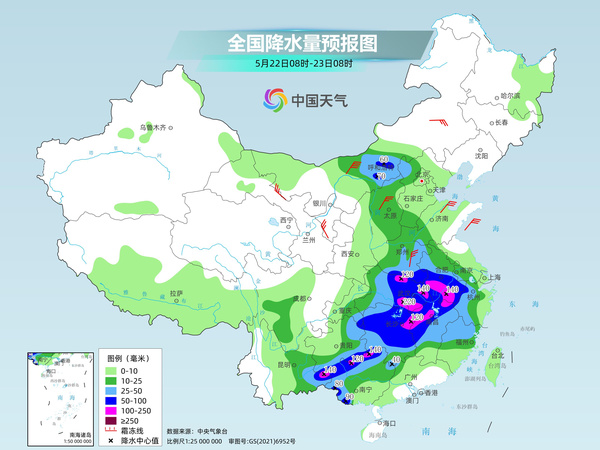
冷空气来袭中东部高温退场 南方降雨进入最强时段
Yang Shi Wang· 2025-05-22 01:13
Core Points - Southern China is experiencing the strongest period of rainfall, with heavy rain and severe storms expected in several provinces [1][2] - The central and northern regions are also forecasted to receive increased rainfall, with specific areas experiencing moderate to heavy rain [2][3] - A significant drop in temperatures is anticipated in the central and northern regions due to the arrival of cold air and precipitation, with temperature decreases of over 10°C in some areas [6] Summary by Sections Rainfall and Weather Conditions - Southern China has entered the strongest phase of a new round of heavy rainfall, affecting regions such as Anhui, Hubei, Hunan, Jiangxi, and parts of Guangxi [1][2] - The Central Meteorological Observatory predicts moderate to heavy rain in various regions, including the Yellow River basin and southern Jiangsu, with some areas experiencing heavy rain or severe storms [2][3] Temperature Changes - Following a period of high temperatures across northern and central China, a significant cooling trend is expected, with temperature drops of 10°C to 16°C in affected areas [6] - Specific cities like Xi'an and Zhengzhou are forecasted to see their maximum temperatures drop from over 37°C to around 27°C and 25°C, respectively [6] Future Weather Outlook - Rainfall intensity in southern China is expected to decrease in the coming days, with some regions still experiencing moderate to heavy rain [4] - The temperature in northern regions is projected to rise again after a brief cooling period, while southern areas will see slower temperature increases due to ongoing rainfall [6]