气候变暖

Search documents
气候变暖推动基孔肯雅热北移,欧洲大部分地区已具传播条件
Xin Lang Cai Jing· 2026-02-19 03:31
Core Insights - A recent study indicates that climate change and the spread of invasive mosquito species have created conditions for Chikungunya virus to spread across much of Europe, with researchers warning that further northward expansion is "only a matter of time" [1][2] Group 1: Climate Impact on Disease Spread - The study published in the Journal of the Royal Society Interface systematically assessed the impact of temperature on the incubation time of the virus within the Asian tiger mosquito, finding that the minimum temperature threshold for virus transmission is now estimated to be 13°C to 14°C, approximately 2.5°C lower than previous estimates [1] - In southern European countries like Spain, Portugal, Italy, and Greece, the annual transmission window for Chikungunya has exceeded six months, while in Belgium, France, Germany, and Switzerland, it ranges from three to five months [2] Group 2: Public Health Implications - The World Health Organization experts emphasize that climate factors significantly influence mosquito-borne virus transmission, but there remains an opportunity for Europe to curb the spread through mosquito control, enhanced monitoring systems, and public education [2] - The UK has not yet reported local transmission cases, but record-high imported cases were noted in the first half of 2025, indicating a rising risk if the Asian tiger mosquito successfully establishes itself [2] - Researchers highlight that as Europe warms at nearly twice the global average rate, diseases like Chikungunya and dengue are gradually altering their geographical boundaries, with signs of year-round mosquito activity observed in some southern regions [2]
欧盟机构:多地寒潮,但气候变暖趋势并未改变
中国能源报· 2026-02-10 08:18
Core Viewpoint - The extreme cold weather in January does not indicate a change in the overall trend of global climate warming, as stated by the Copernicus Climate Change Service of the EU [1][2]. Group 1: Climate Data - January 2026 was recorded as the fifth warmest January globally, with an average surface temperature of 12.95 degrees Celsius, which is 0.51 degrees Celsius higher than the average from 1991 to 2020 and approximately 1.47 degrees Celsius above pre-industrial levels (1850-1900) [1]. - The average sea surface temperature between latitudes 60 degrees North and South in January was 20.68 degrees Celsius, marking the fourth highest for that month on record [1]. Group 2: Weather Patterns - The severe cold weather in the Northern Hemisphere in January was primarily caused by short-term large-scale atmospheric circulation anomalies, with the polar jet stream becoming more variable, allowing Arctic cold air to spill into mid-latitudes [2]. - The report emphasizes that the strong cold waves observed in January are a result of regional temperature fluctuations due to short-term circulation changes, which may temporarily overshadow the long-term warming trend but do not contradict the scientific understanding of global warming [2]. Group 3: Climate Change Implications - The situation in January 2026 illustrates that the climate system can simultaneously bring both severe cold and extreme heat to different regions [2]. - The ongoing human activities that contribute to climate warming highlight the importance of enhancing resilience and adaptability to address the increasing risks of extreme weather events [2].


格陵兰岛经历有史以来最暖1月份
Xin Hua Wang· 2026-02-05 10:54
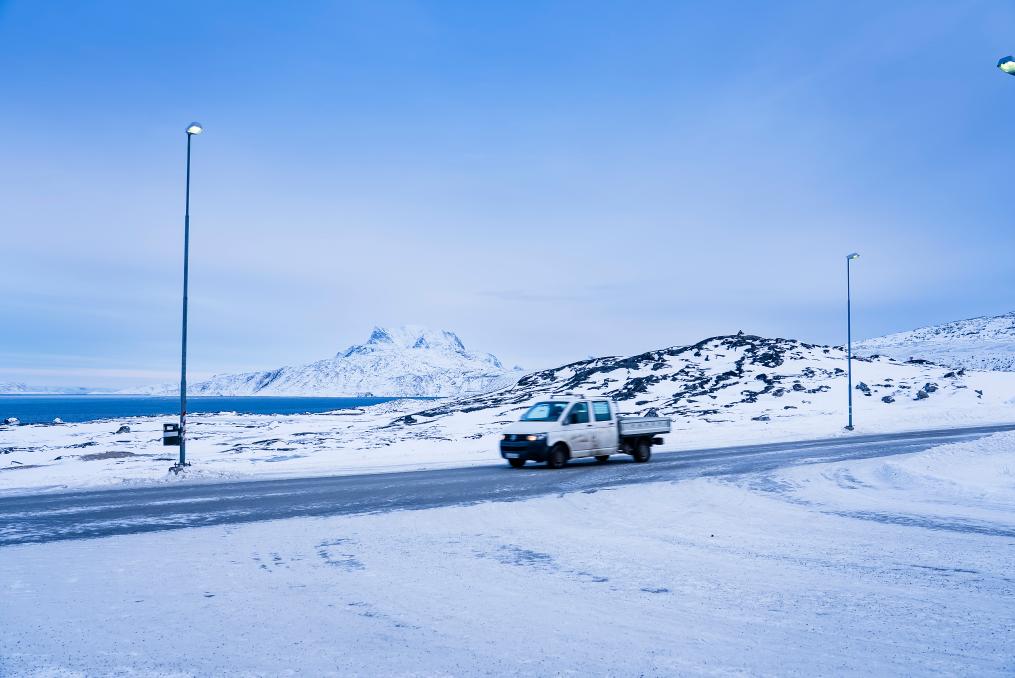
Group 1 - Greenland experienced its highest recorded average temperature for January at 0.2 degrees Celsius, compared to the historical average of -7.7 degrees Celsius from 1991 to 2020 [1] - Climate change is evident in Greenland, with the temperature rising at a rate four times faster than the global average [2] - The reduction in winter sea ice coverage and thinning ice layers due to warming impacts traditional transportation and threatens local ecosystems, particularly the fishing industry [2] Group 2 - The fishing industry accounts for 23% of Greenland's GDP in 2023 and creates 15% of employment [2] - The exact impact of climate change on the fishing industry is still uncertain [2] - Greenland is rich in mineral resources, with a significant portion of its area located within the Arctic Circle [2]
气候越暖,南极冰间湖越“吸碳”?
Ren Min Wang· 2026-01-30 22:23
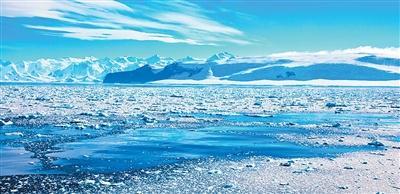
Core Insights - Antarctic ice lakes have significant carbon sequestration capabilities, contributing approximately 42% of the total organic carbon burial in the Southern Ocean despite occupying only about 3% of its area [2][3] - The carbon absorption capacity of these ice lakes has increased ninefold over the past 12,000 years due to climate warming [2] Group 1: Research Findings - A research team from Peking University and various institutions analyzed 86 sediment core samples from multiple Antarctic regions, creating a high-resolution carbon burial record from 12,000 years ago to the present [2] - The study published in the Proceedings of the National Academy of Sciences reveals that warming climate leads to reduced sea ice cover, which in turn expands the area and duration of open water in ice lakes, enhancing phytoplankton growth and carbon absorption [2] Group 2: Implications of Climate Change - The research indicates that under current warming rates, which are approximately twice the global average in Antarctica, the carbon burial rate in ice lakes could reach nearly three times the current level by the end of the century [3] - The findings suggest that the Antarctic ice lake system may act as a natural "buffer" for the Earth's climate system, potentially offsetting some of the increases in atmospheric CO2 due to human activities [3] Group 3: Future Considerations - It is essential to incorporate changes in ice lake area, biogeochemical processes, and their feedback on warming into next-generation Earth system models to accurately predict ocean carbon absorption capacity and climate change trajectories [3] - Understanding the regulatory capacity of natural systems like Antarctic ice lakes is crucial for a comprehensive understanding of Earth's system complexity and for promoting sustainable development [3]
马克龙:格陵兰岛局势为整个欧洲敲响战略警钟
Xin Hua She· 2026-01-28 16:03
Core Viewpoint - The recent events in Greenland have raised strategic alarms for Europe, emphasizing the need for European sovereignty and security in the Arctic region [1] Group 1 - French President Macron met with Danish Prime Minister Frederiksen and Greenland's Prime Minister Jens-Frederik Nielsen to discuss the situation in Greenland [1] - Macron highlighted the importance of addressing foreign interference and misinformation, responding to climate change, and establishing partnerships that promote sustainable development and reduce strategic dependencies [1] - Macron reaffirmed France's support for Denmark and Greenland's sovereignty and territorial integrity [1]
法国、丹麦及格陵兰岛领导人举行会见 讨论欧洲防务
Yang Shi Xin Wen· 2026-01-28 13:14
Core Viewpoint - The meeting between French President Macron, Danish Prime Minister Frederiksen, and Greenland's Prime Minister Nielsen highlights the strategic importance of Greenland and the Arctic region for Europe, emphasizing the need for vigilance and enhanced defense posture in response to geopolitical challenges [1][2] Group 1: Strategic Importance of Greenland - Macron views the situation in Greenland as a strategic warning for all of Europe, calling for heightened awareness and defense measures in the Arctic [1] - The emphasis on maintaining "European sovereignty" and contributing to Arctic security reflects a broader geopolitical concern regarding foreign interference and misinformation [1] Group 2: Cooperation and Unity - Prime Minister Frederiksen expressed gratitude for France's support and highlighted the need for NATO to play a larger role in the Arctic region [1] - Nielsen stressed the importance of unity over division, indicating that the cooperation extends beyond Greenland and is tied to global values, democracy, and respect for law and order [2]
气候变暖使不同种群企鹅陷入资源争夺战
Huan Qiu Shi Bao· 2026-01-25 01:54
Core Insights - Climate change is causing different penguin populations in Antarctica to compete for resources due to overlapping breeding seasons [1][2] - The average breeding time for three penguin species has advanced by about two weeks compared to ten years ago, with the Gentoo penguin experiencing the most significant shift [1] - The Adelie and Chinstrap penguins, which have a more specialized diet, are less adaptable to environmental changes, leading to habitat loss to the Gentoo penguin [1] Group 1 - The temperature in parts of Antarctica has increased by 3 degrees Celsius over the past decade, resulting in overlapping breeding seasons for Adelie, Chinstrap, and Gentoo penguins [1] - Gentoo penguins are more adaptable and less picky about food, giving them an advantage in resource competition [1] - The study suggests that if global warming continues, Adelie and Chinstrap penguins may face extinction by the end of the century [1] Group 2 - Climate change is leading to reduced sea ice in spring and earlier increases in plankton, disrupting the ecological chain and diminishing food supply for penguins [2] - Changes in the distribution of krill and other organisms due to climate change are further impacting penguin habitats and food availability [2]
最新研究:气候变暖,南极不同种群企鹅陷入资源争夺战
Huan Qiu Shi Bao· 2026-01-21 22:43
Core Insights - Climate change is causing different penguin populations in Antarctica to compete for resources due to overlapping breeding seasons [1][2] - The average breeding time for three penguin species has advanced by about two weeks compared to ten years ago, with the Gentoo penguin experiencing the most significant shift [1] - The Adelie and Chinstrap penguins, which have specific dietary needs, are less adaptable to environmental changes and may face extinction by the end of the century if global warming continues [1] Group 1 - The temperature in parts of Antarctica has increased by 3 degrees Celsius over the past decade, leading to resource competition among penguin species [1] - Gentoo penguins have a competitive advantage due to their less selective diet and stronger fighting ability for nesting sites [1] - The habitats of Adelie penguins are being occupied by Gentoo penguins, while the population of Chinstrap penguins is declining [1] Group 2 - Climate change is reducing sea ice in spring and causing an earlier increase in phytoplankton, which disrupts the food supply for penguins [2] - Changes in the ecological chain are not only affecting penguin food availability but also altering the distribution of krill and impacting commercial fishing activities [2]
今冬是暖还是冷?寒潮还会不会来?
Xin Lang Cai Jing· 2026-01-18 01:57
Core Insights - The winter of 2025 in Guangxi is experiencing significantly higher temperatures, leading to a perception of an early spring among residents [2][3] - The average annual temperature in Guangxi for 2025 is recorded at 21.4°C, which is 0.5°C above the normal and ranks as the sixth highest since 1961 [3] - The current winter season (December 2025 to February 2026) is expected to maintain a warm trend, with average temperatures already 1.9°C higher than the historical average for the same period [3][4] Temperature Trends - The national average temperature for 2025 is projected to be 11.0°C, surpassing the previous record of 10.9°C set in 2024, indicating a broader trend of rising temperatures across the country [3] - Guangxi's average temperature for December 2025 reached 14.6°C, which is 2.4°C higher than the same month in previous years, marking it as the second highest on record [3] Warm Winter Classification - The classification of this winter as "warm" or "cold" is based on the average temperature from December to February compared to the last 30 years; a deviation of more than 0.5°C indicates a warm winter [4] - The meteorological department uses a specific threshold based on the average temperatures from 1991 to 2020 to determine the classification of winter temperatures [4]

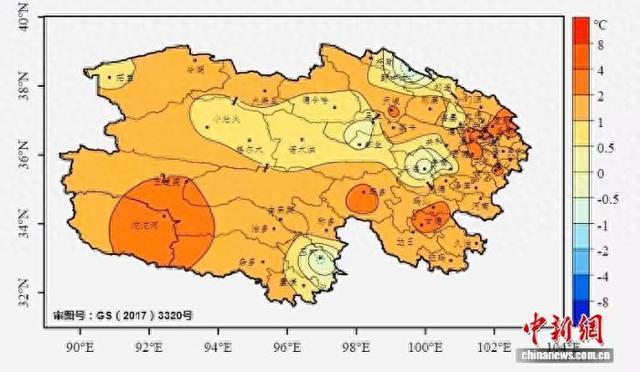
数据显示:1961年以来青海冬季平均气温每十年上升0.46℃
Xin Lang Cai Jing· 2026-01-16 13:54
Group 1 - The average winter temperature in Qinghai has increased by 0.46°C every decade since 1961, indicating a significant warming trend [1] - The period from December 1, 2025, to January 15, 2026, recorded an average temperature of -8.2°C, which is 1.4°C higher than the historical average for the same period, marking it as the third highest since 1961 [2] - Most regions in Qinghai experienced temperature increases of over 1.0°C, with areas like Xining, Huangyuan, and Huzhu exceeding 2.5°C [2] Group 2 - The overall intensity of cold air affecting China has been weaker since December 2025, with its path shifting north and east, contributing to higher temperatures across the country [2] - The weakened subtropical high pressure over the western Pacific and the Indian-Burma trough has led to reduced precipitation in Qinghai, facilitating a rapid temperature rise after cold air influences diminish [2] - Higher temperatures are beneficial for the safe overwintering of winter wheat and may lead to earlier greening of crops, but they also increase soil moisture evaporation, raising the risk of spring drought in areas with insufficient irrigation [2]