AI disruption

Search documents
Why Shopify Popped And Then Dropped Today
Yahoo Finance· 2026-02-11 18:52
Core Insights - Shopify reported strong revenue growth, with revenue rising 31% to $3.67 billion, surpassing the consensus estimate of $3.59 billion [3] - Despite the positive earnings report, the stock experienced a significant decline due to broader fears about AI disruption in the software sector [4] Financial Performance - Revenue increased by 31% to $3.67 billion, and gross merchandise volume (GMV) also rose by 31% to $123.8 billion, marking the fastest GMV growth since 2021 [3] - Adjusted earnings per share were reported at $0.48, slightly below the consensus estimate of $0.51 [3] Market Reaction - Initially, Shopify's stock gained in pre-market trading but fell by 12.1% during regular trading hours due to market sentiment regarding the software sector [1][4] - The stock's reversal from gains to losses is noted as a rare occurrence, with little in the earnings numbers justifying the decline [4] Strategic Outlook - Shopify's President emphasized the company's AI strategy, highlighting partnerships with OpenAI and Google Gemini to enhance AI capabilities for merchants [5] - The company anticipates continued strong growth, targeting low-thirties revenue growth for the first quarter [5] Competitive Position - Shopify is viewed as well-positioned within the e-commerce sector, potentially more insulated from AI disruption compared to other software stocks [6] - Despite the stock's recent decline, the business fundamentals remain strong, and the company is actively pursuing growth through AI initiatives [6]

Lyft: Buy The Dip As Bookings Growth Firms Up
Seeking Alpha· 2026-02-11 16:03
Core Viewpoint - Investors are currently seeking reasons to trigger a selloff despite favorable earnings reports in the Q4 earnings season, indicating a demand for perfection in performance [1]. Group 1: Market Sentiment - The market is characterized by a cautious sentiment where investors are looking for any signs of macroeconomic decline or disruption from AI [1]. - Companies are reporting strong earnings, showing resilience against potential economic downturns [1]. Group 2: Analyst Background - Gary Alexander has extensive experience in covering technology companies and has worked in Silicon Valley, providing insights into current industry themes [1]. - He has been a contributor to Seeking Alpha since 2017 and has been featured in various web publications, indicating a recognized authority in the field [1].



美国股票策略:软件的 “终局” 何在-US Equity Strategy_ How “Terminal” Is Software__ How _Terminal_ Is Software_
2026-02-11 15:40
Summary of Key Points from the Conference Call Industry Overview - The focus of the analysis is on the **Software & Services** industry, particularly in the context of **AI disruption** and its impact on terminal values and market valuations [1][2][3][4]. Core Insights - **Terminal Multiple Compression**: The recent selloff in the Software & Services sector is attributed to concerns over AI-related disruptions, leading to a compression of terminal multiples. A -10% terminal multiple compression is largely priced in, with potential for further cuts of -20% to -30% if market conditions worsen [1][2][3][4]. - **Margin Trends**: Current pretax margins in the Software & Services sector have reached historic highs. However, a reversion to trend margins could result in a -10% to -30% compression in terminal P/E multiples, indicating significant valuation risks [3][15][17]. - **Valuation Metrics**: Relative valuation metrics for the Software & Services industry have reverted to early 2023 levels, suggesting a significant correction. However, caution is advised as these levels may represent valuation traps [4][34]. Trading Activity - **ETF Trading Volumes**: There have been spikes in trading volumes and implied volatility for software ETFs, indicating a potential selling crescendo. This suggests that a period of more stable price action may follow [5][39][40][41]. - **Idiosyncratic Performance**: The lack of stock-specific dispersion in ETF trading implies that future performance may be more idiosyncratic, with varying impacts from AI disruption across different companies [5][12]. Market Sentiment - **Short-term Outlook**: While the near-term fundamentals remain robust, the market is rapidly adjusting expectations for future margins and growth prospects. A short-term reprieve from selling pressure is anticipated, but the underlying concerns regarding terminal values will persist [2][13][43]. - **Microsoft's Influence**: Microsoft (MSFT) has a significant weight in the Software & Services sector, and its performance directly impacts the broader industry. The stock has experienced an -18% drawdown since its earnings report, which correlates with the industry's performance [10][44]. Conclusion - The Software & Services sector is currently facing significant challenges due to AI disruption concerns, leading to terminal multiple compression and valuation corrections. While some stabilization is expected, the risk of business model disruption remains a critical factor for investors to consider moving forward [43][31].
Regions Financial (NYSE:RF) 2026 Conference Transcript
2026-02-11 14:02
Summary of Regions Financial Conference Call Company Overview - **Company**: Regions Financial - **Event**: Bank of America's 34th Annual Financial Services Conference Key Points Industry and Market Context - The financial services sector is experiencing constructive updates from banks across lending and capital markets despite market noise [1] - Regulatory clarity is a significant topic, with discussions around Basel endgame proposals and options for regional banks [1] Company Evolution and Strategy - Regions Financial has evolved significantly since the merger with AmSouth in 2006, which was a pivotal moment leading into the financial crisis [6][7] - The bank has developed a strong deposit franchise, which is a competitive advantage, particularly in low-interest-rate environments [9][10] - Regions has improved its interest rate risk management and credit risk management, learning from past challenges [10][11] Financial Performance and Projections - The bank's net interest margin is projected to be between 360-390 basis points, with a focus on maintaining stability across interest rate environments [10][43] - Loan growth is expected to improve, with indications of green shoots in the current quarter [20][22] - The bank has reduced its leveraged lending book by approximately 20% last year, which is expected to support future loan growth [19] Investment and Growth Strategy - Regions is investing in hiring more bankers and enhancing technology to support growth in priority markets [23][24] - The bank is focused on small business deposits, with a significant opportunity to grow from the 400,000 small businesses currently banked [42] - Investments in technology are aimed at improving efficiency and customer experience, including core system transformations [24][28] Risk Management and Credit Quality - The bank reports that upgrades in risk ratings are outpacing downgrades, indicating a healthy credit quality outlook [63] - Regions has a diversified portfolio with a focus on maintaining low credit risk, particularly in sectors previously identified as vulnerable [62][65] Regulatory Environment - The bank benefits from regulatory stability, with no new significant regulations expected to disrupt operations [50] - Capital deployment priorities include dividends, organic loan growth, and potential non-bank acquisitions to enhance revenue sources [52][58] M&A Considerations - Regions is cautious about pursuing M&A due to the disruptive nature of such transactions and prefers to focus on organic growth [59][61] - The bank is open to strategic acquisitions that align with its existing operations and enhance market density [60] Future Outlook - The financial services industry is expected to perform well in 2026, with anticipated loan growth and advancements in technology [68] - Regions Financial is committed to protecting its dividend and maintaining a strong operational focus moving forward [68] Additional Insights - The competitive landscape for deposits remains intense, with a need for continuous investment in capabilities to attract and retain customers [37][39] - The bank's approach to managing deposit costs has been effective, with a reduction of 37 basis points last year [41]

Brokerage stocks are the latest corner of the market getting slammed by AI disruption fears
Business Insider· 2026-02-10 20:17
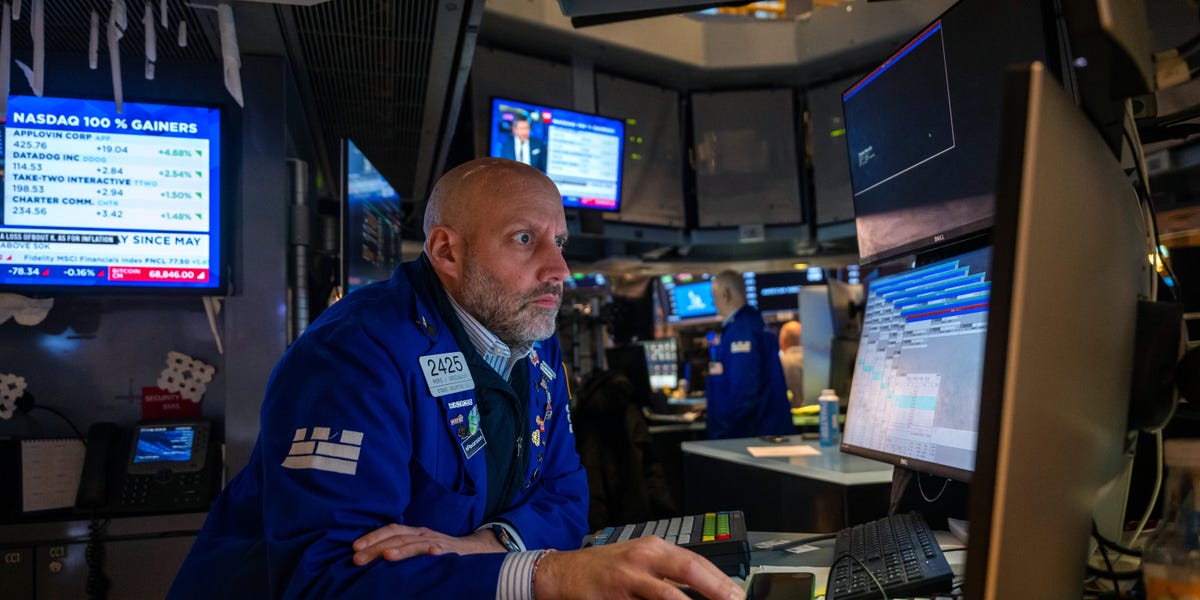
Core Insights - Financial firms and brokerages experienced a decline in share prices due to concerns over AI disruption, particularly following Altruist's announcement of its Hazel AI tool for tax planning [1][5] - The iShares U.S. Broker-Dealers & Securities Exchanges ETF dropped by 4%, indicating market anxiety [1] - The fear stems from the potential for inexpensive AI tools to impact profit margins across various financial services, similar to recent disruptions in the software sector [5] Company Performance - Interactive Brokers and Morgan Stanley showed slightly better performance on the same day, suggesting that Wall Street's concerns are more focused on retail-facing brokerage stocks [6] - Companies in the accounting sector, such as Intuit, saw a decline of about 3%, while accounting software firms like SAP SE and Xero experienced slight increases of 1% and 2% respectively [6] Market Trends - OpenAI's integration of an AI application on ChatGPT for direct insurance quotes highlights the ongoing trend of AI's encroachment into financial services [7] - Despite a recovery from the previous week's tech plunge, markets remain cautious as new disruptive tools continue to emerge [8]
GCM Grosvenor(GCMG) - 2025 Q4 - Earnings Call Transcript
2026-02-10 16:02
Financial Data and Key Metrics Changes - In 2025, GCM Grosvenor achieved a record fundraising year, raising $10.7 billion, with $3.5 billion raised in Q4 alone [4][5] - Fee-Related Earnings, Adjusted EBITDA, and Adjusted Net Income increased by 11%, 15%, and 18% respectively compared to 2024 [5][24] - The Fee-Related Earnings margin for the year was 44%, an increase of 200 basis points from 2024 [5][24] - The company ended 2025 with $91 billion in assets under management, a 14% increase from the end of 2024 [7] Business Line Data and Key Metrics Changes - Absolute Return Strategies (ARS) performance was strong, with a Multi-Strategy Composite generating a 15% gross rate of return in 2025 [4] - Infrastructure, the fastest-growing strategy, returned approximately 11% for the year [4] - Fee-Paying AUM increased by 12% year-over-year to $72 billion, while Contracted Not Yet Fee-Paying AUM rose by 27% to $10 billion [8] Market Data and Key Metrics Changes - The individual investor channel saw AUM increase by 18% year-over-year, indicating strong growth potential [8] - The company has less exposure to SaaS businesses, with only 4% of total AUM and less than 6% of credit AUM [10] Company Strategy and Development Direction - GCM Grosvenor is focused on diversifying its investment strategies and enhancing its wealth management distribution through initiatives like Grove Lane Partners [8] - The company aims to double its 2023 Fee-Related Earnings to over $280 million and grow adjusted net income per share to more than $1.20 by 2028 [12] Management's Comments on Operating Environment and Future Outlook - Management expressed confidence in the investment opportunity set and noted that the recent market stress has created potential opportunities [9][10] - The company believes it has more exposure to disruptors and beneficiaries of disruption than to businesses at risk from disruption [11] Other Important Information - The company has increased its share buyback authorization by $35 million, totaling $91 million available for repurchase [12][24] - GCM Grosvenor is prepaying $65 million of its term loan, which will reduce leverage and save over $3 million annually in interest expenses [24] Q&A Session Summary Question: Discussion on capital allocation plans - Management indicated a focus on remaining a capital-light business, with plans for share buybacks and debt paydowns [27][28] Question: Operating leverage and margin expansion - Management believes they can continue to drive margin expansion through 2028 [29][30] Question: Outlook for absolute return business and organic growth - Management is cautious about budgeting for organic growth but acknowledges positive performance trends [34][36] Question: Fundraising dynamics for 2026 - Management has a strong pipeline and expects fundraising in 2026 to potentially exceed 2025, but is not officially budgeting for it yet [57] Question: Performance fees and carried interest - Management noted that carried interest realizations were lower than expected but expressed confidence in future increases [58][59]

GCM Grosvenor(GCMG) - 2025 Q4 - Earnings Call Transcript
2026-02-10 16:00
Financial Data and Key Metrics Changes - In 2025, GCM Grosvenor achieved a record fundraising year, raising $10.7 billion, with $3.5 billion raised in Q4 alone [5][6] - Fee-Related Earnings, Adjusted EBITDA, and Adjusted Net Income increased by 11%, 15%, and 18% respectively compared to 2024 [6][24] - The company ended 2025 with $91 billion in assets under management, a 14% increase from the end of 2024 [7][24] - Fee-Paying AUM grew 12% year-over-year to $72 billion, while Contracted Not Yet Fee-Paying AUM increased 27% year-over-year to $10 billion [8][24] Business Line Data and Key Metrics Changes - Absolute Return Strategies (ARS) performance was strong, with a Multi-Strategy Composite generating a 15% gross rate of return in 2025 [5] - Infrastructure, the fastest-growing strategy, returned approximately 11% for the year [5] - ARS fee-paying AUM and management fees grew 15% and 5% year-over-year respectively [21] Market Data and Key Metrics Changes - The individual investor channel saw AUM increase by 18% year-over-year, reflecting strong demand for customized solutions [9][18] - The company has less exposure to SaaS businesses, with only 4% of total AUM and less than 6% of credit AUM [11] Company Strategy and Development Direction - GCM Grosvenor is focused on maintaining a capital-light business model while increasing shareholder returns through share buybacks and debt repayment [27][13] - The company launched Grove Lane Partners, a new wealth management distribution joint venture, and an infrastructure interval fund [9][10] - The firm aims to double its 2023 Fee-Related Earnings to over $280 million and grow adjusted net income per share to more than $1.20 by 2028 [13] Management's Comments on Operating Environment and Future Outlook - Management expressed confidence in the investment opportunity set and the strength of their fundraising pipeline entering 2026 [5][6] - The company remains optimistic about the future despite recent market volatility, emphasizing the importance of diversification in their investment strategy [10][12] - Management noted that while carry realizations were light in Q4, the gross unrealized carried interest balance reached an all-time high of $949 million, indicating potential for future revenue growth [7][24] Other Important Information - The company repurchased 2.8 million shares in Q4 at an average price of $11.11 per share, totaling $31 million [24] - An additional $35 million was authorized for share buybacks, bringing the total available for repurchase to $91 million [13][24] Q&A Session Summary Question: Discussion on capital allocation plans - Management indicated a focus on remaining a capital-light business, with plans for share buybacks and debt repayment [27][28] Question: Operating leverage and margin expansion - Management expressed confidence in continuing to drive margin expansion through 2028 [29][31] Question: Outlook for absolute return business and organic growth - Management maintained a cautious stance on budgeting for flows but acknowledged recent successes in the absolute return business [35][36] Question: Fundraising outlook for 2026 - Management noted a strong pipeline for 2026 but did not commit to exceeding 2025 fundraising levels [58][59] Question: Performance fees and carried interest - Management acknowledged lower-than-expected carry realizations in Q4 but expressed optimism about future revenue from carried interest [60][61]
策略速览_科技股回调_板块剧烈轮动与当前定价逻辑-Strategy Espresso_ Tech wreck_ Sharp rotations and what is now priced
2026-02-10 03:24
Portfolio Strategy Research 6 February 2026 | 5:01AM GMT Strategy Espresso: Tech wreck: Sharp rotations and what is now priced Sharon Bell +44(20)7552-1341 | sharon.bell@gs.com Goldman Sachs International Guillaume Jaisson +44(20)7552-3000 | guillaume.jaisson@gs.com Goldman Sachs International Peter Oppenheimer +44(20)7552-5782 | peter.oppenheimer@gs.com Goldman Sachs International Giovanni Ferrannini +44(20)7051-2589 | giovanni.ferrannini@gs.com Goldman Sachs International Investors should consider this re ...
U.S. Stock Market: Futures Signal Cautious Open Amid Key Economic Data Anticipation and Corporate Moves
Stock Market News· 2026-02-09 14:07
Market Overview - U.S. stock futures indicate a mixed to slightly lower open as investors digest a volatile end to the previous week and anticipate crucial economic data releases [1] - Major U.S. index futures show slight downward pressure, with Nasdaq 100 futures down approximately 0.5%, S&P 500 futures down around 0.3%, and Dow Jones Industrial Average futures indicating a 0.1% decline [2] - The broader market sentiment is influenced by a rotation out of technology and software stocks into more cyclical and "old economy" sectors due to concerns over AI disruption [3] Upcoming Economic Data - The delayed January jobs report is expected to show a gain of approximately 55,000 jobs, while the January Consumer Price Index (CPI) report will provide crucial information regarding inflation trends [4] Corporate Earnings Reports - Major companies set to release earnings reports include Coca-Cola, Datadog, Ford Motor, Robinhood, Lyft, McDonald's, CVS Health, Shopify, Coinbase, Rivian, and Pinterest [5] Individual Stock Movements - Eli Lilly shares surged over 2% following the announcement of a definitive agreement to acquire Orna Therapeutics for up to $2.4 billion [6] - Kroger stock advanced around 5% after reports of naming former Walmart executive Greg Foran as its new CEO [6] - Novo Nordisk shares rose over 7% after Hims & Hers Health announced it would stop offering a copycat version of Wegovy, leading to a significant drop in Hims & Hers stock [6] - Transocean announced it will acquire Valaris in an all-stock deal valued at $5.8 billion, with Transocean shares down 4% and Valaris shares up 14.6% in premarket trading [6] Commodities and Bonds - Gold futures are slightly higher, trading just above $5,000 an ounce, while Silver futures are up 3% to about $79.50 an ounce [7] - West Texas Intermediate (WTI) crude futures increased to $63.65 a barrel, and the yield on the 10-year Treasury note rose to nearly 4.24% [7] Notable Stock News - Nvidia and Caterpillar saw significant gains of 8% and 7% respectively on Friday, but both are pointing lower in premarket trading [10] - Amazon stock declined over 5.5% on Friday and is down another 0.4% in premarket [10] - Dynatrace surged over 13% in premarket trading ahead of its earnings report [10] - U.S.-listed shares of STMicroelectronics jumped 6.5% on news of an expanded partnership with Amazon Web Services [10] - Cryptocurrency-tied stocks such as MARA Holdings, MicroStrategy, and Coinbase are down between 2.5% and 5% in premarket after a volatile weekend for Bitcoin [10]


AI and The Software Rout: Lessons From the Handset Industry and Why Indian IT is Still Not Cheap
BusinessLine· 2026-02-07 16:28
Core Insights - The recent volatility in global enterprise software stocks has been unprecedented, with significant underperformance over the past year, raising concerns about the impact of AI on the software industry [1][2] - The introduction of a new AI plug-in by Claude has sparked fears regarding AI's potential to disrupt the software sector, leading to a broader discussion among industry experts [2] Historical Context - The launch of the iPhone in January 2007 marked a significant turning point in the mobile industry, surprising competitors and leading to a shift in market dynamics [3][4] - Following the iPhone's unveiling, Google pivoted its strategy towards developing a sophisticated operating system, resulting in the creation of Android, which now holds a 70% market share [4] - The iPhone's introduction also contributed to the decline of major players like Nokia and BlackBerry, who failed to recognize the disruptive potential of the new technology [5][8] Market Performance - By the end of 2007, Nokia and BlackBerry had market capitalizations of $150 billion and $100 billion respectively, but these figures would drastically decline in the following years due to the iPhone's impact [7][9] - By 2012, Apple captured approximately 70% of global mobile handset industry profits, despite holding only a 10% unit share, illustrating the profound effect of the iPhone on competitors [9] Current Industry Dynamics - Recent concerns about AI disruption have led to a significant decline in the stock prices of SaaS companies, despite their strong business performance in recent years [15] - For instance, Adobe, which reported 11% revenue growth and 15% net profit growth, is currently trading at a trailing PE of 15.5 times, indicating a disconnect between performance and market valuation [15] Investment Considerations - Investors are advised to approach the current market with caution, considering multiple potential outcomes rather than adopting a "buy the dip" mentality [13][16] - The Indian IT services sector is currently not priced for disruption, trading at high PE multiples despite lower revenue and profit growth compared to SaaS companies [19][21] - Historical data shows that during previous disruptions, leading IT services companies traded at lower PE multiples, suggesting that current valuations may not reflect the risks posed by ongoing technological changes [21][22]