
Financial Crisis

Search documents
Dave Ramsey Co-Hosts Stunned After Caller Making $130,000 Considers Bankruptcy Over $25,000 Debt: 'America Just Lost All Empathy'
Yahoo Finance· 2025-11-20 22:31
Core Insights - A high-income individual, Peter, is considering bankruptcy despite earning $130,000 annually, primarily due to disorganized finances and hidden debts [2][3] - The total debt disclosed by Peter amounts to approximately $56,000, which includes various loans and a credit card balance [2] - The hosts of The Ramsey Show emphasized that overspending, rather than insufficient income, is the root cause of Peter's financial distress [3][4] Financial Responsibility and Overspending - The hosts criticized Peter for lacking a budget and for forgetting significant expenses, indicating that financial management is crucial [3][4] - Kamel urged Peter to take responsibility for his financial situation, warning that bankruptcy would have long-lasting negative effects [4] - Dave Ramsey highlighted the importance of personal responsibility in financial matters, using examples from other callers to illustrate the dangers of co-signing loans and the underlying personal issues that can lead to financial crises [5][6][7]
X @The Economist
The Economist· 2025-11-20 12:45
Some rules introduced after the financial crisis have gone too far https://t.co/nsQOthUZ6n ...
‘Bond King’ Jeffrey Gundlach warns of the next financial crisis: ‘It has the same trappings as subprime mortgage repackaging in 2006’
Yahoo Finance· 2025-11-18 20:18
Investment Strategy - Investors are advised to allocate a maximum of 40% in equities (largely non-U.S.) and 25% in fixed income, favoring short-term Treasuries and non-dollar fixed income, with the remainder in cash and real assets like gold [1] Private Credit Concerns - The private credit market is highlighted as a potential crisis area, with Gundlach comparing it to the subprime mortgage crisis of 2006, indicating severe underlying issues [5] - Private assets are noted to have only two prices: 100 or zero, illustrated by the bankruptcy of Renovo, which had liabilities between $100 million and $500 million but assets listed as less than $50,000 [2] - Gundlach argues that the perceived stability of private credit returns is an illusion, as firms often fail to accurately mark assets to market, leading to underreported volatility [3] Market Dynamics - The private credit sector has grown significantly, estimated at $22 trillion by late 2024, more than doubling since 2012, while the number of public companies has halved [8] - The S&P 500 is highly concentrated, with 40% of its market cap in just 10 companies, raising concerns about the stability of equity markets if the AI narrative turns negative [8] National Debt and Economic Outlook - Gundlach warns of a mathematical impossibility regarding U.S. national debt and interest expenses, predicting that by 2030, 60% of tax receipts could be allocated to interest expense under current policies [12] - The current official deficit is approximately 6% of GDP, with interest expenses consuming about 30% of federal tax receipts, a figure expected to rise as new debt is issued at higher rates [12] - A pessimistic scenario suggests that if Treasury rates hit 9% and the deficit reaches 12% of GDP, tax receipts could be entirely consumed by interest expenses, necessitating a radical change in the economic rule system [13]
The Man Known as 'Bond King' Says Private Credit Could Cause 'The Next Big Crisis'
Yahoo Finance· 2025-11-17 19:54
Core Insights - The private credit market is facing scrutiny due to concerns over its opaque pricing and lending standards, with warnings from industry veterans about potential risks to financial stability [1][4][6] Market Overview - The U.S. private credit market has grown significantly, from $46 billion in 2000 to approximately $1 trillion in 2023, with projections of reaching about $3 trillion by early 2025 according to Morgan Stanley [3] - Over the past decade, private credit has delivered risk-adjusted returns that have outperformed the broader bond market [3] Industry Concerns - Financial insiders have raised alarms about private credit's opaque lending standards, illiquidity, and excessive leverage, especially in light of recent corporate bankruptcies [4][5] - JPMorgan Chase's CEO, Jamie Dimon, highlighted that private credit's risks could lead to a financial crisis, noting that the current market conditions resemble those preceding the subprime mortgage crisis [5][6] Risk Assessment - Despite concerns, JPMorgan estimates that private credit constitutes less than 10% of corporate debt, suggesting that its impact on the broader economy may be limited [5] - The banking system's direct exposure to private credit is considered small enough to prevent systemic risk from emerging in the event of market distress [5]

Could private credit become the next big financial crisis? | Odd Lots #podcast
Bloomberg Television· 2025-11-17 16:11
Market Quality & Lending Practices - Public corporate credit market quality is currently better than pre-global financial crisis due to less "garbage lending" [1] - "Garbage lending" has shifted from public to private markets in recent years [1] Private Credit Concerns - Private credit is becoming overallocated by large asset pools [2] - Executives at large private credit firms express concerns like "tension" and "lack of runway," indicating potential issues [2][3] - The industry anticipates defaults in private credit [3] - Private credit is compared to subprime mortgage repackaging in 2006, suggesting a potential future crisis [3] - The unraveling of private credit issues may take time, potentially years [3][4] Negative Outlook - The industry holds a negative view on private credit [4]


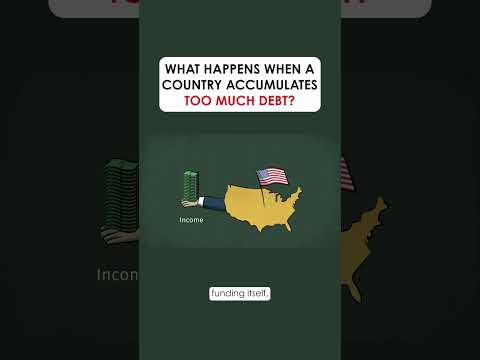
What Happens When a Country Accumulates Too Much Debt?
Principles by Ray Dalio· 2025-11-06 16:22
Economic Cycles & Debt - Excessive debt coupled with economic downturns can lead to financial bubbles bursting, forcing countries to choose between defaulting or printing money [1] - Historically, financial crises have been triggered by financial excesses and the costs of wars, as seen with the Dutch, British, and the US [2] - Governments often resort to printing money to manage debt, which devalues the currency and raises inflation [1] Internal Conflict & Political Extremism - Economic hardship, declining living standards, and wealth inequality exacerbate internal conflicts among different groups [3] - Political extremism arises as populism of the left seeks wealth redistribution, while populism of the right aims to preserve wealth [3] - Rising taxes on the wealthy during turbulent times can lead to capital flight, reducing tax revenue and hollowing out the economy [4] Societal Instability & Leadership - Capital flight and turbulent conditions undermine productivity, shrinking the economic pie and intensifying conflicts [5] - Populist leaders emerge, promising order and control, challenging democracy and potentially leading to strong, authoritarian leadership [5]
X @Bloomberg
Bloomberg· 2025-10-21 16:20
Shares are holding near record highs across much of the world - but could a repeat of the financial crisis be lurking in private markets? Get the Readout with Julian Harris. https://t.co/GvsBNEW7cd ...
X @Investopedia
Investopedia· 2025-10-21 14:30
Most Americans fear a financial crisis could upend their retirement—but still haven’t planned for it. Here’s how to build a resilient, crisis-ready plan. https://t.co/DB7oDfbZ74 ...
The Weakness in US Regional Banking Now May Be Another Silicon Valley Bank Opportunity
Investment Moats· 2025-10-17 23:02
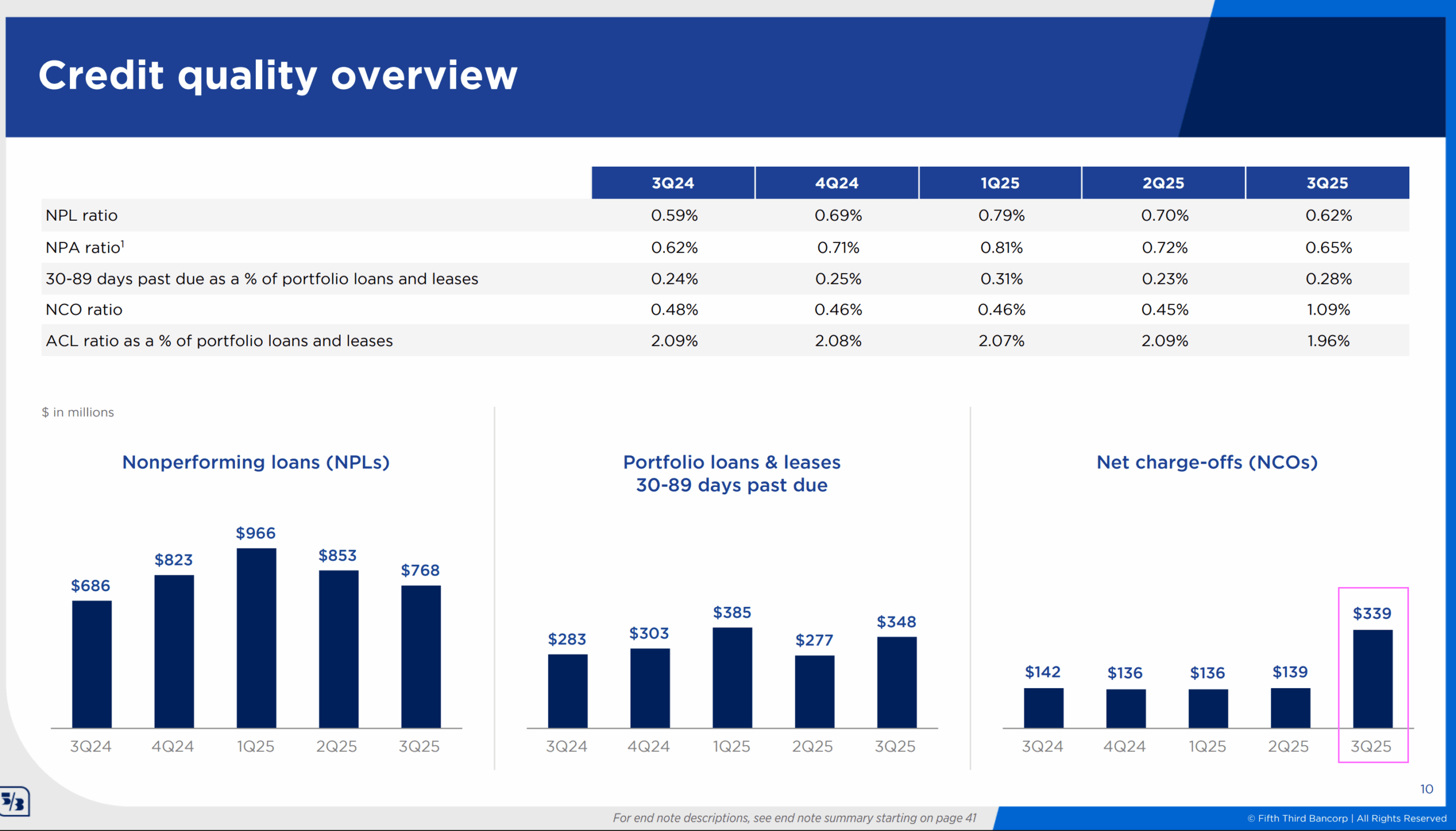
Group 1: Portfolio Performance - The portfolio did not benefit from the small-cap run due to a lack of companies with earnings, particularly in sectors like uranium and quantum computing, and was negatively impacted by the bankruptcies of First Brands and Tricolor [1][2] - The portfolio experienced a positive shift when Fed Chair Jerome Powell indicated a likely path towards lower interest rates [1] Group 2: Bankruptcy Impact - First Brands, an auto-parts company, filed for bankruptcy protection, while Tricolor opted for Chapter 7 liquidation, revealing issues with collateral that may have been fraudulently double-pledged [2] - The bankruptcies have adversely affected the banking sector, especially small regional banks, as the weak economy has led consumers to be more selective in their spending, impacting the auto sector [2] Group 3: Financial Sector Analysis - Fifth Third Bancorp had to write off 100% of a $200 million asset-backed loan to Tricolor, yet reported strong third-quarter results despite this write-off [5] - Concerns exist regarding potential systemic issues in the banking sector, with fears of fraud and lax underwriting standards being highlighted [6][18] Group 4: Credit Cycle and Economic Outlook - The current situation is not expected to lead to a financial crisis similar to 2008, as the banking system is fundamentally sound, and the issues are seen as isolated rather than systemic [10][13] - The performance of major banks has been strong, with robust investment banking and trading results, indicating a potential M&A boom [12] Group 5: Fiscal Stability and Interest Rates - Recent data suggests an improvement in U.S. government finances, with a budget surplus of $198 billion in September 2025, indicating a more sustainable financial path [19] - This fiscal improvement is expected to exert downward pressure on U.S. Treasury rates, potentially lowering the 10-year Treasury rate to around 3.5% by the end of 2026 [19]

X @mert | helius.dev
mert | helius.dev· 2025-10-17 13:31
Market Trends & Risks - Banks are wary of crypto primitives like stablecoins due to potential impact on their business [1] - Stablecoin issuers are restricted from paying interest due to lobbying efforts, impacting market dynamics [1] - A potential financial crisis could drive individuals to self-custody solutions to limit counterparty risk against banks [1] - Banks may impose restrictions on withdrawals and CEXes to limit consumer deposit flight during a financial crisis [1] Regulatory Landscape - The new GENIUS Act bars stablecoin issuers from paying interest or yield to holders [1] - Regulatory actions and political figures could exacerbate the impact of a financial crisis on the crypto market [1] Investment Opportunities & Strategies - Increased demand for self-custodied and private money is anticipated in a financial crisis scenario [1] - Hardening private money systems in crypto is crucial to prepare for potential financial instability [1]