
Inflation

Search documents
Best money market account rates today, February 9, 2026 (Earn up to 4.1% APY)
Yahoo Finance· 2026-02-09 11:00
Core Insights - Money market accounts (MMAs) are highlighted as a favorable option for storing cash due to their relatively high interest rates, liquidity, and flexibility [1] - MMAs typically offer better returns than traditional savings accounts and may include check-writing privileges and debit card access, making them suitable for long-term savings with easy access [2] Interest Rates Overview - Despite a general decline in rates over recent months, some MMAs still offer rates exceeding 4% APY [3] - Historical fluctuations in MMA rates are largely attributed to changes in the Federal Reserve's target interest rate [4] - Following the 2008 financial crisis, MMA rates were low, averaging between 0.10% to 0.50% due to the Fed's near-zero federal funds rate [5] - The COVID-19 pandemic prompted another drop in MMA rates as the Fed cut rates to combat economic fallout [6] - Starting in 2022, aggressive interest rate hikes by the Fed led to historically high deposit rates, with many MMAs offering rates of 4% or higher by late 2023 [7] - As of 2026, MMA rates remain high by historical standards but are on a downward trend following recent Fed rate cuts [8] Considerations for Choosing MMAs - When selecting a money market account, factors beyond interest rates, such as minimum balance requirements, fees, and withdrawal limits, should be considered [9] - Some MMAs may require a minimum balance of $5,000 or more to earn the highest advertised rates, and monthly maintenance fees can reduce interest earnings [10] - There are competitive MMAs available without balance requirements or fees, emphasizing the importance of comparing options [10] - It is crucial to ensure that the chosen account is insured by the FDIC or NCUA, which guarantees deposits up to $250,000 per institution, per depositor [11] Current Market Rates - The national average interest rate for money market accounts is currently 0.56%, while the best rates can reach around 4% APY, comparable to high-yield savings accounts [12] - For example, depositing $50,000 in a money market account with a 4.5% APY would yield approximately $2,303 in interest over one year [13] - Currently, no money market accounts offer 5% APY, but some high-yield savings accounts from online banks can exceed 4% [14]
Best CD rates today, February 9, 2026 (Lock in up to 4.05% APY)
Yahoo Finance· 2026-02-09 11:00
Core Insights - Today's CD rates are significantly higher than the national average, with the Federal Reserve reducing its target interest rate three times in 2025, indicating a potential last opportunity to secure high rates with certificates of deposit [1] Group 1: Best CD Rates - As of February 9, 2026, the highest CD rate available is 4% APY, offered by Marcus by Goldman Sachs for a 1-year CD [2] - The article provides a comparison of the best CD rates from verified partners, highlighting competitive offers in the market [2] Group 2: National Average CD Rates - The national average CD rate for a 1-year term is 1.61% as of January 2026, which is significantly lower than the best available rates [3] - Current average CD rates are among the highest seen in nearly two decades, primarily due to the Federal Reserve's strategy to combat inflation by maintaining elevated interest rates [3] Group 3: Finding the Best CD Rates - To find the best CD rates, it is advisable to shop around and compare rates from various financial institutions, especially online banks that typically offer more competitive rates due to lower overhead costs [4] - It is important to check minimum deposit requirements, as higher rates may necessitate larger initial deposits [4] - Reviewing account terms and conditions is crucial, including early withdrawal penalties and auto-renewal policies, with some CDs offering no-penalty options for greater flexibility [4]
Stock Market Today: Dow Jones Futures Drop After Friday's Record Close—STMicroelectronics, Kroger, FedEx In Focus - State Street SPDR S&P 500 ETF Trust (ARCA:SPY)
Benzinga· 2026-02-09 10:57
Market Overview - U.S. stock futures declined on Monday after a significant rebound on Friday, with major benchmark indices showing lower futures [1] - The 10-year Treasury bond yielded 4.22%, while the two-year bond was at 3.50%, indicating market expectations for interest rates [2] - The Dow Jones, S&P 500, Nasdaq 100, and Russell 2000 experienced slight declines of -0.12%, -0.37%, -0.63%, and -0.33% respectively [2] Company Insights - FedEx Corp. rose by 0.47% following a consortium's announcement to acquire InPost for €7.8 billion ($9.254 billion), maintaining a strong price trend and value ranking [6] - ON Semiconductor Corp. fell by 1.38% as analysts anticipate quarterly earnings of 62 cents per share on revenue of $1.54 billion, while maintaining a moderate value ranking [7] - STMicroelectronics is noted to have a stronger price trend but a poor quality ranking according to Benzinga's Edge Stock Rankings [3] - Kroger maintains a strong price trend and solid quality ranking across all time frames [4] Sector Performance - The S&P 500's gains on Friday were led by industrials, energy, and information technology sectors, while consumer discretionary and communication services sectors closed lower [8] Economic Insights - Financial experts attribute the recent rally in the Dow Jones Industrial Average, which closed above 50,000 for the first time, to cooling inflation and technical rebounds [9] - Analysts suggest that the S&P 500 may struggle to surpass the 7,000-point milestone without stronger contributions from the tech sector, particularly software [11] - Upcoming CPI data and labor market conditions are critical factors to watch for the year ahead, as noted by Allianz's Chief Economic Adviser [11]


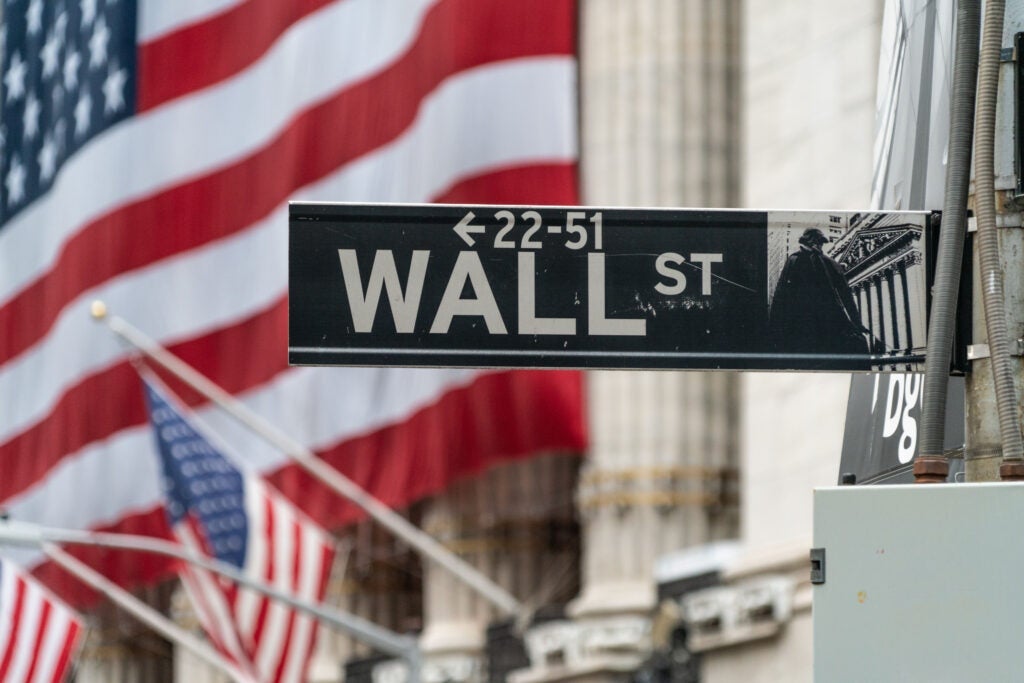
Stock Market Today: Dow Jones Futures Drop After Friday's Record Close—STMicroelectronics, Kroger, FedEx In Focus
Benzinga· 2026-02-09 10:57
Market Overview - U.S. stock futures declined on Monday after a significant rebound on Friday, with major benchmark indices showing lower futures [1] - The 10-year Treasury bond yielded 4.22%, while the two-year bond was at 3.50%, indicating market expectations for interest rates [2] - The Dow Jones, S&P 500, Nasdaq 100, and Russell 2000 experienced slight declines of -0.12%, -0.37%, -0.63%, and -0.33% respectively [2] Company Insights - FedEx Corp. rose by 0.47% following a consortium's announcement to acquire InPost for €7.8 billion ($9.254 billion), maintaining a strong price trend and value ranking [6] - ON Semiconductor Corp. fell by 1.38% as analysts anticipate quarterly earnings of 62 cents per share on revenue of $1.54 billion, while maintaining a moderate value ranking [7] - STMicroelectronics is noted for a stronger price trend but has a poor quality ranking according to Benzinga's Edge Stock Rankings [3] - Kroger maintains a strong price trend and solid quality ranking across all time frames [4] Sector Performance - The S&P 500's gains on Friday were led by industrials, energy, and information technology sectors, while consumer discretionary and communication services sectors closed lower [8] Economic Insights - Financial experts attribute the recent rally in the Dow Jones Industrial Average, which closed above 50,000 for the first time, to cooling inflation and technical rebounds [9] - Analysts suggest that the S&P 500 may struggle to surpass the 7,000-point milestone without stronger contributions from the tech sector, particularly software [11] - Upcoming CPI data and labor market conditions are critical factors to watch for the year ahead, as noted by Allianz's Chief Economic Adviser [11]


January's inflation numbers land on Friday and many on Wall Street are bracing for an unpleasant surprise
WSJ· 2026-02-09 10:30
Group 1 - Prices tend to spike in January, with tariffs being a potential reason, but a more likely cause is suggested to be more esoteric factors [1]

Trump Says He 'Was Right About Everything,' Credits Tariffs For Dow Jones At 50,000, Predicts It Will Reach 100,000 By This Time - SPDR Dow Jones Industrial Average ETF (ARCA:DIA)
Benzinga· 2026-02-09 09:36
Core Insights - The Dow Jones Industrial Average closed above 50,000 for the first time, attributed to the administration's trade policies [1][2] - President Trump predicts the Dow will reach 100,000 by the end of his term, emphasizing his confidence in the market [3] Market Performance - The Dow Jones index rose 3.58% year-to-date, while the S&P 500 increased by 1.97% and the Nasdaq Composite index was up by 0.88% [8] - The ETF tracking the Dow Jones, SPDR Dow Jones Industrial Average ETF Trust, closed 2.48% higher at $501.03 [8] Economic Factors - Analysts noted that cooling inflation and technical rebounds were significant drivers of the recent market rally [3] - Median 1-year inflation expectations reached their lowest levels since early 2025, with expectations of potential Federal Reserve rate cuts later this year [4] - The rally is seen as a reaction to corporate strength rather than political factors, with large tech firms contributing positively to the economy [5] Technical Analysis - Achieving the 100,000 target for the Dow would require a sustained breakout from the technology sector, with the broader market facing resistance [6] - The S&P 500 may struggle to clear the 7,000-point milestone without stronger contributions from the tech sector, particularly software [6] Market Sentiment - The "Buy the Dip" mentality has helped avert a disorderly market process, but upcoming CPI data and labor market conditions remain critical for future performance [7]

UK political uncertainty raises questions for investors: Barclays
Youtube· 2026-02-09 09:05
Economic Outlook - The UK has underlying fundamentals that could make it an attractive investment destination, but political uncertainty raises questions about its medium-term sustainability [1] - The current political climate is affecting investor confidence and spending decisions, which could slow economic growth [2] Bank of England's Monetary Policy - The recent split vote within the Bank of England's committee indicates a divide on future policy direction, with some members leaning towards rate cuts sooner than expected [3][4] - The analysis from the Bank of England staff suggests that the supply side of the UK economy is performing better than anticipated, influencing the committee's decision-making [4] Wage Growth and Inflation - Wage growth is projected to decrease sustainably, with expectations of it reaching 3.2% by year-end, which aligns with the Bank of England's forecasts [8][11] - Inflation is expected to decline to the target of 2% by April, but the labor market's performance will be crucial in determining future monetary policy [8][9] Labor Market Dynamics - The unemployment rate is anticipated to rise to around 5.2% to 5.3%, and any significant increase beyond this could signal concerns for the Monetary Policy Committee (MPC) [9] - The labor market's stability is critical, as any aggressive rise in redundancies could prompt a reassessment of the current economic outlook [9][10] GDP Expectations - The company forecasts GDP growth to be on the higher side, suggesting stronger underlying economic signals than previously thought [13]


Inflation, Earnings and Other Key Things to Watch this Week
Yahoo Finance· 2026-02-08 18:00
Economic Data Insights - The January employment report on Wednesday at 8:30am will analyze nonfarm payrolls, unemployment rate, and average hourly earnings to assess labor market conditions and their impact on Fed policy [1][3] - The mid-week timing of the employment report creates unique dynamics, compressing the time for market adjustments before Friday's CPI release [3] Retail Sales and Consumer Spending - December retail sales data on Tuesday at 8:30am will provide insights into holiday shopping performance and consumer spending trends as 2026 begins [2][4] - The report will help determine if strong labor markets are translating into sustained consumer spending or if households are retrenching due to inflation pressures [4] Technology Sector Analysis - Earnings from Cisco (CSCO) on Wednesday and Arista Networks (ANET) on Thursday will provide insights into enterprise networking demand and data center investment amid questions about AI spending sustainability [5] - Cisco's results will focus on corporate IT budgets and cybersecurity product adoption, while Arista's earnings will assess trends in hyperscaler capital expenditures [5] Digital Platforms and Financial Technology - Earnings from Robinhood (HOOD) on Tuesday will provide insights into retail trading activity and cryptocurrency transaction volumes [6] - Results from Shopify (SHOP) and AppLovin (APP) will test the health of e-commerce platforms and mobile gaming advertising, respectively [7] Inflation and Market Reactions - The January CPI report on Friday at 8:30am will be critical for assessing inflation trends, particularly in energy prices, housing costs, and services inflation [8] - The timing of the CPI report following the employment data could lead to significant market volatility, especially in rate-sensitive sectors [8]
Inflation, AI, Geopolitics to Impact Australian Economy : Analysis
Crowdfund Insider· 2026-02-08 15:42
Core Insights - The Commonwealth Bank of Australia (CommBank) projects a cautiously optimistic global economy entering 2026, building on the unexpected strength of 2025, driven by investments in AI and easing monetary policies [1][2] Global Economic Landscape - The United States is expected to lead global growth through AI-driven innovation and lower borrowing costs, amidst persistent inflation, transformative AI potential, and geopolitical uncertainties [2] - Bond markets are experiencing rising yields due to expectations of increased government borrowing and a shift towards higher long-term interest rates, rather than inflation spikes [3] - Commodities like oil and gold remain volatile, influenced by supply disruptions and geopolitical tensions, particularly between the US and China [3] AI Sector and Economic Impact - The AI sector is identified as a bright spot, driving capital expenditures in data infrastructure and energy systems, with early signs of productivity gains in advanced economies [4] - In Australia, the economy exceeded forecasts in 2025, leading to both renewed vigor and inflationary risks [4] Domestic Economic Conditions in Australia - Strong consumer demand and rising household incomes are pushing the Australian economy closer to capacity limits, tightening the labor market and increasing investments in AI and renewable energy [5] - National property values in Australia are projected to grow by approximately 5% in 2026, driven by population growth, income gains, and constrained supply [5] Monetary Policy and Inflation - The Reserve Bank of Australia (RBA) raised its cash rate to 3.85% in February 2026, with expectations for further increases, reflecting a reduced tolerance for inflation exceeding targets [6][7] - Economic expansion in Australia is expected to moderate throughout the year due to higher borrowing costs, which may dampen household spending and overall GDP growth [7] Strategic Focus for Policymakers - CommBank's Chief Economist describes 2026 as a "year of boundaries" for Australia, emphasizing the need for policymakers to balance growth without overheating while leveraging AI productivity boosts [8] - The interplay of AI advancements and geopolitical strains is anticipated to continue influencing market volatility, necessitating adaptability in an interconnected environment [9] Long-term Economic Outlook - Economic progress in 2026 will depend on addressing immediate pressures while investing in long-term resilience [10]

Dow 50,000 sets table for inflation data, delayed January jobs report: What to watch this week
Yahoo Finance· 2026-02-08 12:38
Wall Street will look to build on a dramatic Friday turnaround that saw the Dow Jones Industrial (^DJI) close above 50,000 for the first time, while a 2% daily rally in the S&P 500 (^GSPC) and Nasdaq Composite (^IXIC) indexes wiped away some of the pain felt earlier in the week. When the closing bell rang on Friday, the tech-heavy Nasdaq still logged its fourth straight losing week, falling nearly 3%, as investor concerns over AI-related disruption across software names, specifically, predominated across ...