Monetary Policy

Search documents
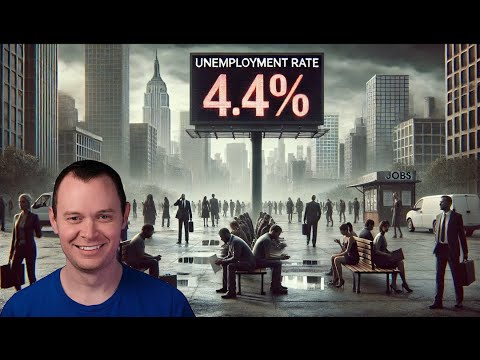
The Unemployment Rate Rises to 4.4%
Benjamin Cowen· 2025-11-23 00:33
Hey everyone and thanks for jumping back into the cryptoverse. Today we're going to talk about the most recent labor market report and how the unemployment rate has now risen to 4.4%. If you guys like the content, make sure you subscribe to the channel, give the video a thumbs up, and check out the sale on into the cryptoverse premium at into the cryptoverse.com. Let's go ahead and jump in. So very expectedly the unemployment rate has risen to 4.4%.I believe that you know a couple of months ago when they di ...

X @Bloomberg
Bloomberg· 2025-11-22 16:04
Federal Reserve Policy - Division at the Federal Reserve has intensified in recent weeks [1] - Officials are staking out disparate positions ahead of the central bank's December policy meeting [1] - Chair Jerome Powell remains silent [1]
2026年全球经济与市场展望报告:重塑(英文)-Mercer
Sou Hu Cai Jing· 2025-11-22 06:34
Economic Growth - The global economy is expected to experience moderate recovery in 2026, driven by policy adjustments, AI technology advancements, and evolving geopolitical dynamics [1][11][13] - The US economy shows resilience, with AI-related capital expenditures projected to approach $500 billion, supported by the OBBBA act and anticipated Federal Reserve interest rate cuts [1][28][31] - The Eurozone is expected to see growth driven by increased infrastructure and defense spending in Germany, although France's economy remains relatively weak [1][29] - Japan is entering a new growth phase, moving away from deflation, with improvements in wages and corporate investment [1][36] - China's economic growth is expected to remain stable, supported by high-tech advantages and localized AI development, despite ongoing real estate challenges [1][38][42] Inflation - US inflation is projected to rise in the short term due to tariffs but is expected to return to target levels by early to mid-2027 [2][20][44] - Eurozone core inflation is anticipated to trend towards the ECB's 2% target, with wage growth expected to decline [2][51] - In the UK, inflation is expected to fall significantly due to one-off factors and slower wage growth [2][50] - Japan's inflation is expected to experience temporary fluctuations but will likely remain close to the BoJ's 2% target [2][54] - China is expected to remain near deflationary levels due to supply-demand imbalances and weak labor market conditions [2][59] Monetary Policy - The Federal Reserve is expected to continue cutting interest rates, with market expectations suggesting rates may approach 3% by the end of 2026 [2][67] - The European Central Bank is likely to maintain interest rates at 2% for an extended period, with minor adjustments expected [2][68] - The Bank of England is anticipated to cut rates more aggressively as inflation returns to target levels [2][69] - The Bank of Japan may implement further rate hikes in response to economic growth and inflationary pressures [2][73] - Emerging market central banks are expected to continue easing monetary policy, albeit at a slower pace [2][73] Markets - Developed market equities are expected to show strong earnings growth driven by the AI boom, although high valuations pose risks [3][90][92] - Emerging market equities present a mixed outlook, with potential upside from AI and USD weakness countered by trade uncertainties [3][95] - Japanese equities are viewed positively due to the end of deflation and corporate governance reforms, which may enhance profitability [3][96] - Global nominal government bonds are seen as neutral, with specific regional views favoring UK long-dated gilts due to expected interest rate cuts [3][101] - Credit markets are neutral on investment-grade credit, with high yield credit spreads remaining tight, indicating limited upside [3][106] Private Markets - Private markets are experiencing a "democratization" trend, attracting retail investments, particularly in AI-related sectors [3][4] - Hedge funds are benefiting from market volatility and structural trends, presenting alpha opportunities [3][4]

No Clear Fed Strategy Going into '26: Ed Al-Hussainy
Yahoo Finance· 2025-11-21 20:33
Core Viewpoint - New York Fed President John Williams indicates potential for interest rate cuts in the near term due to a softening labor market, which has led to increased investor expectations for a rate cut in December [1] Group 1: Interest Rate Expectations - Following Williams' comments, investors raised the likelihood of a rate cut at the Fed's December 9-10 policy meeting to approximately 60-70%, up from around 35% previously [1]
Fed’s Williams Sees Room for a Near-Term Rate Cut
Bloomberg Television· 2025-11-21 16:52
Monetary policy is very focused on balancing the downside risks to our maximum employment goal and the upside risk to price stability. My assessment is that downside risks to employment have increased as the labour market has cooled, while the upside risks to inflation are less than somewhat. Underlying inflation continues to trend downward.Absent any evidence of second round effects emanating from tariffs. But for these reasons, I fully supported the FOMC decisions to reduce the target range for the federa ...
Fed won't get key inflation data before next rate decision as BLS cancels October CPI release
CNBC· 2025-11-21 16:31
Core Insights - The U.S. Bureau of Labor Statistics (BLS) has canceled the release of the October consumer price index (CPI), impacting the Federal Reserve's ability to assess inflation data before its interest rate decision on December 10 [1][2] - The cancellation is due to the government shutdown, which hindered the BLS's ability to retroactively collect necessary survey data [2][3] - The release of November's CPI data has been rescheduled to December 18, after the Fed's decision [2] Data Collection Challenges - BLS data collectors utilize various methods, including personal visits and phone calls, which were not feasible during the shutdown [3] - Online data and household surveys also contributed to the difficulties in retroactively collecting information [3] Impact on Federal Reserve - The Commerce Department's Bureau of Economic Analysis has also indicated that the personal consumption expenditures (PCE) price index, another key inflation measure, will be rescheduled without a firm date [4] - Fed officials have expressed concerns about operating in a "data fog," complicating monetary policy formulation [5] - Fed Chair Jerome Powell emphasized the need for caution in decision-making during this period of uncertainty [6] - Despite the data challenges, some Fed officials believe there is still sufficient information to make informed decisions [7]

December Rate Cut Back On The Radar As Fed Officials Signal Dovish Tilt - Invesco QQQ Trust, Series 1 (NASDAQ:QQQ), ETF (ARCA:VOO)
Benzinga· 2025-11-21 15:49
Core Viewpoint - The Federal Reserve has shifted to a more dovish stance on monetary policy, leading to increased expectations for a rate cut in December, with a 74% chance of a 25-basis-point reduction as per the CME FedWatch tool, up from 25% the previous day [1]. Group 1: Federal Reserve Officials' Comments - New York Fed President John Williams and Governor Stephen Miran have downplayed inflation concerns and highlighted a weakening labor market, suggesting that recent inflationary fears may be overstated [2]. - Williams noted that the risks to employment have increased due to a cooling labor market, while the risks of inflation have lessened, indicating potential for further adjustments to the federal funds rate [3]. - Miran expressed strong support for a 25-basis-point cut in December, citing recent job data as evidence for the need for a reduction and suggesting that much of the inflation data is outdated [5]. Group 2: Market Reactions - Following the dovish comments from Fed officials, Wall Street experienced a slight recovery, with the S&P 500 up 0.2% after a previous decline of 1.6% [6]. - The Nasdaq 100 showed signs of stabilization after a 2.2% drop, while bond and currency markets reacted modestly, with the U.S. dollar slightly lower and Treasury yields declining [7].
Odds Of Interest Rate Cut Double After Fed Official Signals Support
Forbes· 2025-11-21 14:50
Core Viewpoint - The probability of an interest rate cut next month has increased significantly following comments from New York Federal Reserve President John Williams, who indicated potential for a reduction in the near term, which has influenced investor sentiment and stock performance [1][2]. Interest Rate Outlook - Markets are now pricing in a 75.1% chance for a 25-basis-point cut to interest rates, bringing the range to 3.5% to 3.75%, a notable increase from below 40% just a day prior [2]. - The Federal Reserve had previously lowered interest rates by a quarter-point to a range of 3.75% to 4% in October, but further reductions are not guaranteed, as differing opinions among officials persist [3]. Economic Conditions - Williams noted an increase in risks associated with a cooling labor market, while the risks of inflation have somewhat diminished, emphasizing the importance of achieving the Fed's 2% inflation target [2]. - He described the current monetary policy as modestly restrictive, suggesting there is still room for further adjustments to align with a neutral policy stance [4].

Fed's Collins leans against December rate cut in CNBC interview
Reuters· 2025-11-21 14:35
Core Viewpoint - The Federal Reserve Bank of Boston President Susan Collins believes that the current monetary policy is appropriate given the resilience of the economy, indicating skepticism about the necessity of further interest rate cuts in the upcoming monetary policy meeting [1] Summary by Relevant Categories - **Monetary Policy Stance** - Collins suggests that the monetary policy is well-positioned in light of economic resilience [1] - There is skepticism regarding the need for interest rate cuts at the next monetary policy meeting [1]

Miran Says Data Should Push Fed in 'Dovish Direction'
Youtube· 2025-11-21 14:18
Core Viewpoint - The discussion highlights concerns regarding inflation rates, suggesting that the perceived inflation excess is largely a statistical mirage rather than a reflection of real supply-demand imbalances in the economy [1][5]. Inflation Analysis - Current inflation is reported to be around 3%, but the argument is made that this figure does not accurately represent the underlying economic conditions [1]. - Market rents have been stable at approximately 1% for a couple of years, indicating that the measured inflation is artificially high due to the lag in statistical convergence [2][3]. - The supply-demand imbalance that existed from 2020 to 2023 should not dictate current monetary policy, as it does not reflect the present economic landscape [3]. Monetary Policy Considerations - Monetary policy operates with significant lags, necessitating that decisions be based on forecasts rather than past data [6][7]. - The lack of recent data does not invalidate existing forecasts; rather, it provides opportunities to reassess them [8]. - Recent data trends indicate weaker inflation and higher unemployment than previously expected, suggesting a potential shift towards a more dovish monetary stance [9]. Data Dependence vs. Forecast Dependence - There is a debate on the relevance of meeting schedules in relation to data availability, with a suggestion that being excessively data-dependent may lead to backward-looking policies [12][13]. - The emphasis should be on forecast dependence to ensure that monetary policy aligns with future economic conditions rather than past data [13]. Interest Rate Decisions - There is a willingness to support a 25 basis point cut if it aligns with the broader economic needs, emphasizing the importance of not causing harm to the economy for the sake of maintaining a certain policy stance [14][15].