Autonomous Driving

Search documents
X @Tesla Owners Silicon Valley
Tesla Owners Silicon Valley· 2025-11-05 13:00
FSD 14.1.4 can handle rain very well!The first rains hit the Silicon Valley this past week & see how FSD 14.1.4 handled the streets!Let me know what you think! This test was driven in 2024 Dual Motor Long Range Model X. https://t.co/clFhlw5UAJ ...

WeRide Achieves SOP for One-Stage End-to-End ADAS Solution, Setting a New Industry Benchmark
Globenewswire· 2025-11-05 10:31
Core Insights - WeRide has achieved Start of Production (SOP) for its one-stage end-to-end Advanced Driver Assistance System (ADAS) solution in collaboration with Bosch, setting a new industry record of seven months from project launch to SOP [1] - The WePilot 3.0 system enhances vehicle capabilities by enabling simultaneous perception and action, supporting various compute platforms and sensor fusion, which allows for safe navigation in complex traffic scenarios [2][3] - WeRide's self-learning architecture of WePilot 3.0 is adaptable across different regions, ensuring alignment with real-world conditions and user needs, and has received positive feedback globally [3] Product Development and Rollout - The one-stage end-to-end ADAS solution will be integrated into the annual refresh of Chery EXEED ES and ET models, with existing owners receiving upgrades via Over-the-Air (OTA) updates [4] - WeRide aims to drive global adoption of ADAS technologies, enhancing the driving experience by making it safer and more enjoyable [4] Company Overview - WeRide is recognized as a leader in the autonomous driving industry, being the first publicly traded Robotaxi company and having tested or operated vehicles in over 30 cities across 11 countries [5] - The company has received autonomous driving permits in seven markets, including China, the UAE, Singapore, France, Saudi Arabia, Belgium, and the US, showcasing its regulatory compliance and market presence [5] - WeRide provides a range of autonomous driving products and services from Level 2 to Level 4, addressing various transportation needs [7]



XPeng (NYSE:XPEV) 2025 Investor Day Transcript
2025-11-05 08:00
Summary of XPeng 2025 Investor Day Company Overview - **Company**: XPeng (NYSE: XPEV) - **Event**: 2025 Investor Day held on November 5, 2025 - **Location**: XPeng's new headquarters in Guangzhou Key Industry Insights - **Focus on AI and Autonomous Driving**: The event emphasized the integration of AI in automotive technology, showcasing advancements in autonomous driving capabilities and AI-defined applications. - **Emergence of Physical AI**: The concept of "Physical AI" was introduced, highlighting the integration of AI with the physical world to enhance vehicle capabilities and user experience [112][118][127]. Core Product Launches - **New Product Launches**: Four major products were announced, including the new X9 REEV, which achieved CNCAP five-star safety ratings and is set to enter European and other overseas markets [12][12][12]. - **X9 Features**: The X9 includes advanced safety features, such as zero gravity seats that integrate with ADAS signals for enhanced passenger safety during collisions [13][14][15][16]. - **Energy Consumption Innovations**: The new X9 utilizes lightweight materials like aluminum and magnesium alloys, reducing weight by 15% while maintaining safety standards [18][19][20]. Technological Advancements - **AI Computing Power**: XPeng's AI computing cluster has reached 2,250 TOPS, significantly enhancing the vehicle's autonomous driving capabilities [10][161]. - **VLA 2.0 Model**: The introduction of the VLA 2.0 model aims to improve decision-making in autonomous driving, with better performance in complex driving scenarios [27][156][168]. - **Narrow Road Navigation**: A new narrow road navigation feature was highlighted, which aims to improve the vehicle's performance in complex urban environments [162][167]. Market Positioning and Future Outlook - **Global Expansion**: XPeng is preparing to enter international markets, particularly in Europe, with tailored features for different regional requirements [12][12][12]. - **Focus on User Experience**: The company aims to enhance user experience through advanced safety features and AI-driven functionalities, positioning itself as a leader in the smart EV market [16][70][168]. Additional Noteworthy Points - **Flying Cars**: The event also teased the development of flying cars, showcasing XPeng's ambition to innovate beyond traditional automotive solutions [30][38][70]. - **Sustainability Initiatives**: XPeng is committed to reducing energy consumption and improving vehicle efficiency through both hardware and software optimizations [20][21][24]. This summary encapsulates the key points from the XPeng 2025 Investor Day, focusing on the company's advancements in technology, product launches, and strategic direction in the automotive industry.

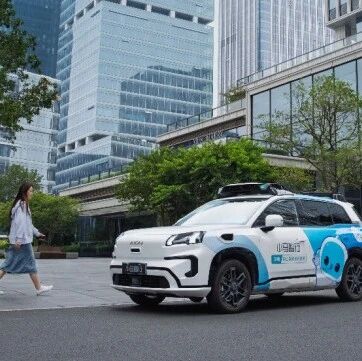
小马智行第七代自动驾驶车辆正式投入运营,为年底实现千辆车队规模奠定基础
IPO早知道· 2025-11-05 06:32
Core Viewpoint - The seventh-generation Robotaxi from Xiaoma Zhixing has officially launched operations, showcasing the company's commitment to scaling up its autonomous taxi services and laying the groundwork for a fleet of 1,000 vehicles by the end of 2025 [3][14]. Group 1: Product Features - The seventh-generation Robotaxi utilizes 100% automotive-grade components, designed for a lifespan of 600,000 kilometers, and has reduced the total cost of the autonomous driving suite by 70% compared to the previous generation, facilitating mass production and operational deployment [4]. - It is the world's first Robotaxi model to achieve L4-level full-scene autonomous driving based on automotive-grade SoC chips [4]. - The vehicle has undergone extensive testing, including over 3.5 million kilometers of public road testing, ensuring its readiness for passenger service [4]. Group 2: User Experience - The Robotaxi features a unique welcoming system that recognizes passengers via Bluetooth, automatically unlocking the doors, and includes customizable LED welcome lights for a personalized experience [6][9]. - Passengers can adjust the air conditioning or open windows via the app before boarding, and initiate the journey using voice commands after securing their seatbelts [9]. - The vehicle's interior is designed for enhanced user interaction, allowing real-time access to trip details, music control, and climate settings, with plans for full voice interaction in the future [9]. Group 3: Safety and Comfort - The seventh-generation Robotaxi is equipped with 34 sensors, including 9 LiDARs and 14 cameras, providing 360-degree coverage and detecting objects up to 650 meters away, ensuring safety across various driving conditions [10][13]. - The vehicle employs a multi-system redundancy architecture with over 20 safety redundancies and more than 1,000 monitoring designs to guarantee operational safety [13]. - An SOS physical button is included for emergency situations, allowing passengers to call for assistance quickly [13][17]. Group 4: Market Position - Xiaoma Zhixing is the only company operating fully autonomous Robotaxis in major cities such as Beijing, Shanghai, Guangzhou, and Shenzhen, with a fleet of over 720 vehicles [14].
Growth is one of the best protections, Uber's growth is accelerating, says Jim Cramer
Youtube· 2025-11-05 03:56
Core Viewpoint - Uber Technologies reported strong growth in key metrics, but the stock price fell over 5% due to market reactions and slight margin misses, presenting a potential buying opportunity for investors [1][2][19]. Financial Performance - Uber's trips, gross bookings, and revenue grew by 22%, 21%, and 20% respectively, exceeding expectations, while monthly active platform customers increased by 17% [3][12]. - The company reported earnings of $311 per share, significantly higher than the expected $0.69, although this included a $4.9 billion benefit from a tax valuation release [4][3]. - Uber Eats showed remarkable performance with 25% gross bookings growth and 29% revenue growth, while the mobility segment grew by 20% in both gross bookings and revenue [4][5]. Market Context - The stock's decline was influenced by a broader market downturn and specific weaknesses in travel stocks, which affected investor sentiment [6][7]. - Increased competition in food delivery from companies like DoorDash and in ride-sharing from Lyft may have contributed to concerns about Uber's margins [8][10]. Strategic Outlook - Uber provided strong guidance for the current quarter, indicating healthy gross bookings outlook, although EBIT forecast was in line with expectations [6]. - The company is focusing on growing market share in both ride-sharing and delivery, enhancing customer engagement, and expanding the Uber One membership program [14][15]. - Customer engagement improved by 4% in the quarter, with users of both services spending three times more and retaining 35% better than single-service users [15][16]. Profitability and Growth - Despite a slight miss in margins, adjusted earnings for interest, taxes, depreciation, and amortization grew by 33% year-over-year, indicating strong profitability [17][19]. - Uber's growth is accelerating, with the mobility business achieving its best gross bookings growth in six quarters and the delivery business its best growth since Q2 2022 [12][19].

Uber Technologies, Inc. (NYSE: UBER) Financial Overview and Future Outlook
Financial Modeling Prep· 2025-11-05 02:04
Core Insights - Uber Technologies, Inc. is a leading player in the ride-sharing and food delivery sectors, leveraging technology-driven solutions to compete with rivals like Lyft and DoorDash [1] Financial Performance - In Q3 2025, Uber reported earnings per share (EPS) of $3.11, significantly surpassing the Zacks Consensus Estimate of 67 cents, marking over 100% year-over-year growth [3][6] - Total revenues for the same quarter reached $13.46 billion, exceeding the consensus estimate of $13.26 billion, reflecting a year-over-year growth of 20.4% [3][6] Stock Performance and Market Outlook - Following the earnings announcement, Uber's stock experienced a decline, attributed to a cautious outlook for Q4, despite the company's strong fundamentals [4] - Mark Kelley from Stifel Nicolaus set a price target of $122 for Uber, indicating a potential increase of approximately 29.87% from its stock price of $93.94 at that time [2] Segment Contributions - The Mobility segment was a significant revenue driver, accounting for 57% of total revenues and showing a 20% increase year-over-year [5] Future Projections - For Q4, Uber forecasts gross bookings to be between $52.25 billion and $53.75 billion, with adjusted EBITDA expected to range from $2.41 billion to $2.51 billion [5]
Rivian Automotive(RIVN) - 2025 Q3 - Earnings Call Transcript
2025-11-04 23:02
Financial Data and Key Metrics Changes - Consolidated revenues for Q3 were approximately $1.6 billion, with a gross profit of $24 million, which included $125 million of depreciation and $24 million of stock-based compensation expense [9][10] - Adjusted EBITDA losses for Q3 were $602 million, with a quarter-over-quarter increase in overall operating expenses driven by elevated R&D investments and SG&A growth [9][10] - The company ended the quarter with approximately $7.1 billion in cash, cash equivalents, and short-term investments, showing improvements in working capital [11][12] Business Line Data and Key Metrics Changes - The automotive segment produced 10,720 vehicles and delivered 13,201 vehicles, generating $1.1 billion in automotive revenue, although automotive gross profit was negative $130 million due to low fixed cost absorption [10][11] - The software and services segment reported $416 million in revenue and $154 million in gross profit, with significant contributions from a joint venture with Volkswagen Group [11] Market Data and Key Metrics Changes - The average new vehicle purchase price in the U.S. is now just over $50,000, with the most popular configuration being a five-seat SUV or crossover, which aligns with the target market for the upcoming R2 model [4][17] Company Strategy and Development Direction - The company is focused on launching the R2 model and developing its technology roadmap, including autonomy and vertically integrated hardware and software [3][7] - The R2 is designed to address a significant market opportunity with a lower cost and improved performance, aiming to capture a wide range of customers [4][17] - The company plans to expand its manufacturing capacity significantly, with an additional 400,000 annual units expected from a new facility in Georgia [6][7] Management's Comments on Operating Environment and Future Outlook - Management acknowledged near-term uncertainties from trade, tariff, and regulatory policies but remains focused on long-term growth and value creation [9] - The CEO expressed confidence in the company's technology and product offerings, positioning Rivian as a potential market share leader in the long term [8] Other Important Information - The company is reaffirming its 2025 delivery guidance range of 41,500-43,500 units and expects a capital expenditure range of $1.8 billion-$1.9 billion for 2025 [12] - The company is also expecting to receive additional capital of up to $2.5 billion from its joint venture with Volkswagen Group [11][12] Q&A Session Summary Question: Demand environment in the U.S. post-removal of consumer tax credit - Management noted a pull forward of demand into September due to the end of the IRA program, leading to a softer demand environment in October, but remains confident in the long-term demand for R2 [15][16] Question: Expectations for regulatory credits - Management does not expect meaningful revenues from regulatory credits and has removed them from forecasts due to uncertainty in policy changes [19] Question: COGS per vehicle - COGS for Q3 was approximately $96,300 per vehicle, with expectations for improvement as R2 ramps up production [22][23] Question: Update on Volkswagen relationship - The relationship remains strong, with ongoing collaboration on multiple programs, including the development of the Volkswagen ID.1 [30][31] Question: Role in the robotaxi market - The company sees potential in the robotaxi market but is currently focused on technology development for personally owned vehicles [33][34] Question: Plans for eRev vehicles - The company is not planning to offer eRev or hybrid vehicles, focusing instead on a fully electric future [39][40] Question: Update on tariffs and battery sourcing - Recent tariff policy changes are expected to reduce tariff costs per vehicle significantly, and the R2 program will utilize a specific battery cell produced in the U.S. [46][49] Question: OpEx trajectory and R2 launch production cadence - Elevated R&D spending is expected leading up to the R2 launch, with limited volumes in the first half of 2026 and increasing production in the second half [60][63] Question: Capacity saturation and market entry - The company is optimistic about the demand for R2 and R3, with plans to enter the European market, although specific timing has not been announced [68][72][98]

Rivian Automotive(RIVN) - 2025 Q3 - Earnings Call Transcript
2025-11-04 23:02
Financial Data and Key Metrics Changes - Consolidated revenues for Q3 were approximately $1.6 billion, with a gross profit of $24 million, which included $125 million of depreciation and $24 million of stock-based compensation expense [9] - Adjusted EBITDA losses for Q3 were $602 million, with a quarter-over-quarter increase in overall operating expenses driven by elevated R&D investments and SG&A growth [9][10] - The company ended the quarter with approximately $7.1 billion in cash, cash equivalents, and short-term investments, showing improvements in working capital [11][12] Business Line Data and Key Metrics Changes - The automotive segment produced 10,720 vehicles and delivered 13,201 vehicles in Q3, generating $1.1 billion in automotive revenue, although automotive gross profit was -$130 million due to low fixed cost absorption [10][11] - The software and services segment reported $416 million in revenue and $154 million in gross profit, with significant contributions from a joint venture with Volkswagen Group [11] Market Data and Key Metrics Changes - The average new vehicle purchase price in the U.S. is now just over $50,000, with the most popular configuration being a five-seat SUV or crossover, which aligns with the target market for the upcoming R2 model [4][17] - The company is optimistic about capturing market share with R2, which is designed to be a cost-effective option starting at $45,000, appealing to a wide range of customers [17][18] Company Strategy and Development Direction - The company is focused on launching the R2 model and developing its technology roadmap, including autonomy and vertically integrated hardware and software [3][7] - A significant investment in Georgia is expected to create 7,500 jobs and provide billions in economic benefits, supporting the expansion of U.S. manufacturing and technology [7] - The company aims to differentiate its autonomous capabilities through an end-to-end AI-centric approach, leveraging data from its growing fleet of vehicles [7][8] Management's Comments on Operating Environment and Future Outlook - Management acknowledged near-term uncertainties from trade, tariff, and regulatory policies but remains focused on long-term growth and value creation [9] - The company reaffirmed its 2025 delivery guidance range of 41,500-43,500 units and adjusted EBITDA loss guidance of $2 billion-$2.25 billion, with expectations for gross profit to be roughly break-even for the full year [12] Other Important Information - The company is not expecting meaningful revenues from the sale of regulatory credits and has removed those from its forecast due to uncertainty in policy changes [19] - The R2 program is set to launch with a 4695 cylindrical cell produced in the U.S. starting in late 2026, with ongoing partnerships to ensure favorable sourcing [49] Q&A Session Summary Question: Demand environment in the U.S. post-consumer tax credit removal - Management noted a pull forward of demand into September due to the end of the IRA program, leading to a softer demand environment in October, but remains confident in the long-term appeal of R2 [16][17] Question: Expectations for regulatory credits - Management does not expect meaningful revenues from regulatory credits and has conservatively removed them from forecasts [19] Question: COGS per vehicle - COGS per vehicle was approximately $96,300 in Q3, with expectations for improvement as R2 ramps up production [22][23] Question: Update on Mind Robotics - The company raised $110 million in seed funding for Mind Robotics, focusing on developing AI-enabled robotic solutions for manufacturing efficiency [25][42] Question: Update on Volkswagen relationship - The relationship remains strong, with ongoing collaboration on multiple programs, including the development of the Volkswagen ID.1 [30][31] Question: Tariff impacts and battery sourcing for R2 - The company expects a reduced tariff impact of a few hundred dollars per vehicle moving forward, with plans to source battery cells domestically [46][49] Question: OpEx trajectory for autonomy training - Elevated R&D spending is expected leading up to the R2 launch, with a normalization of expenses anticipated post-launch [60][61] Question: Production cadence for R2 - Limited volumes are expected in the first half of 2026, with a ramp-up in production in the second half [62] Question: Capacity saturation concerns - The company is optimistic about the demand for R2 and believes it will attract a wide range of customers, addressing a currently underserved market [69][70] Question: European market entry - The company is considering entering the European market sooner due to the removal of export tariffs, although no specific timing has been announced [97] Question: Timing between R2 and R3 launches - R3 will be produced only in the Georgia facility, with no specific timing announced for its launch [99]
Arteris Announces Financial Results for the Third Quarter and Estimated Fourth Quarter and Updated Full Year 2025 Guidance
Globenewswire· 2025-11-04 21:06
Core Insights - Arteris, Inc. reported a record Annual Contract Value (ACV) plus royalties of $74.9 million for Q3 2025, representing a 24% increase year-over-year [2][7] - The company ended the quarter with Remaining Performance Obligations (RPO) of $104.7 million, up 34% year-over-year, marking the first time RPO exceeded $100 million in its history [2][7] - The CEO expressed confidence in long-term growth opportunities driven by expanding product portfolio and increasing demand in high-growth markets such as AI and autonomous driving [2] Financial Highlights - Revenue for Q3 2025 was $17.4 million, an 18% increase from Q3 2024 [7] - Non-GAAP operating loss for Q3 2025 was $3.5 million, compared to a loss of $3.3 million in Q3 2024 [7] - Net loss for Q3 2025 was $9.0 million, or $0.21 per share, compared to a net loss of $7.7 million, or $0.20 per share, in Q3 2024 [7][18] Business Highlights - Altera expanded its use of Arteris' IP products and licensed additional software products [7] - AMD ordered more licenses of Arteris technology following a previous multi-project license [7] - New customers in the automotive and industrial sectors were added, including Dream Chip and a leading automotive OEM [7] Guidance - For Q4 2025, Arteris expects ACV plus royalties to be between $74.0 million and $78.0 million [6] - Revenue guidance for FY 2025 is projected to be between $68.8 million and $69.2 million [6] - Non-GAAP operating loss for FY 2025 is estimated to be between $12.5 million and $13.5 million [6]


Uber's biggest issue is the 'seismic change' with autonomous vehicle uncertainty
Youtube· 2025-11-04 18:08
Core Viewpoint - Uber's stock is declining despite a revenue beat in Q3, primarily due to concerns over future earnings and the impact of autonomous vehicles on the ride-sharing industry [1][2]. Financial Performance - Uber reported third-quarter revenue that exceeded expectations, but operating income fell short of estimates [1]. - Gross bookings are on the rise, with projections for Q4 bookings to increase by 18% to 22% [7]. Industry Dynamics - The introduction of autonomous vehicles poses a significant risk to Uber's business model, potentially leading to a more concentrated supply of ride-sharing services [2][3]. - The ride-sharing market may experience fragmentation similar to human drivers, but advancements in technology from companies like Waymo and Tesla could disrupt this balance [3][9]. Competitive Landscape - Uber's current business performance is strong, but concerns exist regarding the long-term implications of autonomous technology, contrasting with Tesla's perceived future potential despite its current struggles [4][6]. - The risk of supply concentration could diminish Uber's role as a middleman, affecting its revenue model and market position [10][11]. Technological Considerations - The rapid advancement of autonomous vehicle technology could lead to significant changes in the transportation landscape, potentially sidelining traditional ride-sharing models [8][9]. - Companies like Tesla and Waymo are at the forefront of this technology, which may alter the competitive dynamics in the ride-sharing industry [12][13].