
小马智行第七代Robotaxi

Search documents
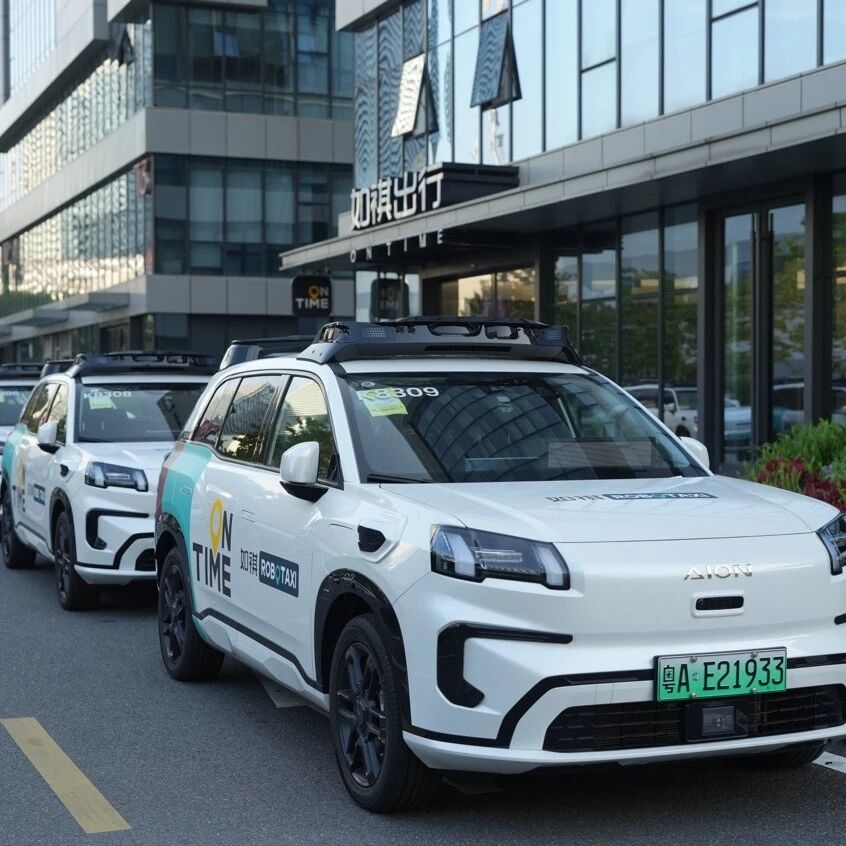
小马智行与如祺出行共建Robotaxi车队,首批交付超百辆第七代无人车
IPO早知道· 2026-03-19 02:18
Core Viewpoint - The collaboration model of "technology + operations" is a significant innovation for the marketization of Robotaxi on a large scale [3]. Group 1: Delivery and Collaboration - On March 19, the company Xiaoma Zhixing delivered over 100 units of the new GAC Aion Robotaxi equipped with its seventh-generation autonomous driving system to Ruqi Mobility, marking a key step towards the marketization of Robotaxi [3]. - Xiaoma Zhixing and Ruqi Mobility will deepen their strategic cooperation to build a larger Robotaxi fleet and efficiently conduct broader operations [3]. - This delivery provides a replicable model for the collaborative development of "technology + operations" in the industry [3]. Group 2: Technological Advancements and User Experience - The seventh-generation Robotaxi features enhanced safety performance, cost control, and user experience, with a total cost reduction of 70% compared to the previous generation [5]. - The vehicle supports various user-friendly features such as Bluetooth unlocking, voice interaction, online music, and pre-conditioning of air conditioning, significantly improving passenger comfort [5]. - The optimized acceleration and deceleration control reduces bumps during travel, lowering the risk of motion sickness for passengers [5]. Group 3: Commercial Viability and Market Expansion - The seventh-generation Robotaxi has achieved profitability in single-vehicle operations in first-tier cities like Guangzhou and Shenzhen, indicating a promising commercial outlook [5]. - The long-standing partnership between Xiaoma Zhixing and Ruqi Mobility, which began in 2022, has led to successful regular operations of Robotaxi in Guangzhou, accumulating valuable collaborative experience [5]. - The upgrade of this cooperation signifies a transition from the technical validation phase to large-scale market operations in the autonomous driving industry, reflecting both parties' confidence and long-term commitment to the future of autonomous driving [5].

对话小马智行王皓俊:Robotaxi正进入1到1000的阶段
Hua Er Jie Jian Wen· 2025-12-20 05:31
Core Insights - The global autonomous driving industry is undergoing a paradigm shift, transitioning from experimental phases to tangible financial performance, with companies like Baidu and Pony.ai achieving operational profitability [2][4][11] - The competitive landscape for Robotaxi has evolved, focusing on profitability and operational efficiency as hardware costs decrease and AI reshapes operational rules [3][11] Commercialization Progress - Pony.ai's Robotaxi achieved unit economic model (UE) profitability in Guangzhou, indicating a successful transition from R&D to commercial viability [4][5] - The average daily revenue for Pony.ai's seventh-generation Robotaxi is approximately 299 RMB, with a target of 24 rides per day to ensure positive cash flow [4][5] - The company aims to scale its fleet to 1,000 vehicles by 2025, 3,000 by 2026, and 100,000 by 2030, integrating Robotaxi into daily life [2][11] Cost Management and Operational Efficiency - Significant cost reductions have been achieved, with the BOM cost of the seventh-generation vehicle dropping by 70% compared to the sixth generation [5][6] - The use of mass-produced components and optimized algorithms has enhanced operational efficiency, allowing for better performance with lower costs [5][6] - Insurance costs for Robotaxi are 50% lower than traditional taxis, reflecting the safety record of AI drivers [6] Industry Competition - The Robotaxi market is becoming increasingly competitive, with major players like Waymo and Tesla entering the fray, each adopting different strategies [8][10] - Waymo's recent funding round has pushed its valuation to nearly $100 billion, while Tesla is focusing on a low-cost, vision-based approach [8][10] - New entrants like XPeng and Hello are also planning to launch their own Robotaxi services, intensifying competition [9][10] Market Potential and Future Outlook - The Robotaxi market could reach $80 billion in major Chinese cities by 2030, with potential global market size reaching $3.94 trillion when including overseas markets [12] - As hardware costs decline, operational expenses will become a larger portion of the cost structure, emphasizing the importance of operational efficiency [12] - The industry is shifting from a focus on technology to one centered on operational capabilities and market presence [11][12] Strategic Shifts - Pony.ai is transitioning to a "light asset" model, partnering with vehicle manufacturers and service platforms to reduce capital expenditure [7][14] - The company is focusing on creating a value chain where it provides AI technology while others handle vehicle production and service distribution [7][14] - The emphasis is on building partnerships and leveraging local resources in international markets, particularly in the Middle East [6][18]
小马智行第七代自动驾驶车辆正式投入运营,为年底实现千辆车队规模奠定基础
IPO早知道· 2025-11-05 06:32
Core Viewpoint - The seventh-generation Robotaxi from Xiaoma Zhixing has officially launched operations, showcasing the company's commitment to scaling up its autonomous taxi services and laying the groundwork for a fleet of 1,000 vehicles by the end of 2025 [3][14]. Group 1: Product Features - The seventh-generation Robotaxi utilizes 100% automotive-grade components, designed for a lifespan of 600,000 kilometers, and has reduced the total cost of the autonomous driving suite by 70% compared to the previous generation, facilitating mass production and operational deployment [4]. - It is the world's first Robotaxi model to achieve L4-level full-scene autonomous driving based on automotive-grade SoC chips [4]. - The vehicle has undergone extensive testing, including over 3.5 million kilometers of public road testing, ensuring its readiness for passenger service [4]. Group 2: User Experience - The Robotaxi features a unique welcoming system that recognizes passengers via Bluetooth, automatically unlocking the doors, and includes customizable LED welcome lights for a personalized experience [6][9]. - Passengers can adjust the air conditioning or open windows via the app before boarding, and initiate the journey using voice commands after securing their seatbelts [9]. - The vehicle's interior is designed for enhanced user interaction, allowing real-time access to trip details, music control, and climate settings, with plans for full voice interaction in the future [9]. Group 3: Safety and Comfort - The seventh-generation Robotaxi is equipped with 34 sensors, including 9 LiDARs and 14 cameras, providing 360-degree coverage and detecting objects up to 650 meters away, ensuring safety across various driving conditions [10][13]. - The vehicle employs a multi-system redundancy architecture with over 20 safety redundancies and more than 1,000 monitoring designs to guarantee operational safety [13]. - An SOS physical button is included for emergency situations, allowing passengers to call for assistance quickly [13][17]. Group 4: Market Position - Xiaoma Zhixing is the only company operating fully autonomous Robotaxis in major cities such as Beijing, Shanghai, Guangzhou, and Shenzhen, with a fleet of over 720 vehicles [14].
十五运会小马智行无人驾驶车参与火炬传递
Zhong Guo Jing Ying Bao· 2025-11-02 09:49
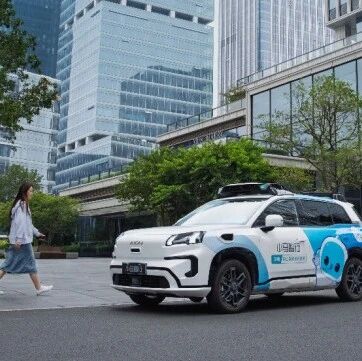
Group 1 - The 15th National Games' torch relay was launched simultaneously in Guangzhou, Shenzhen, Hong Kong, and Macau, marking the first official use of autonomous driving technology in the event [2] - Pony.ai's seventh-generation Robotaxi, equipped with advanced autonomous driving systems, successfully escorted the torch during the relay in Guangzhou [2][3] - Pony.ai has established a regular operation of autonomous Robotaxi services in major cities including Beijing, Shanghai, Guangzhou, and Shenzhen, with over 55 million kilometers of testing mileage and more than 1 million kilometers of fully autonomous driving [2][3] Group 2 - The seventh-generation Robotaxi features 34 sensors for 360° perception and can detect objects up to 650 meters away, showcasing significant advancements in technology [3] - The vehicle is powered by Pony.ai's self-developed L4-level domain controller and is equipped with four Orin-X chips, improving computational efficiency by three times compared to the previous generation [3] - Pony.ai is the only company in China to operate Robotaxi services for a fee in four major cities, providing a model for intelligent urban transportation [3] Group 3 - During the National Games, Pony.ai will offer autonomous driving services in key areas of Guangzhou and Shenzhen, ensuring efficient transportation for attendees and media [4] - The company plans to launch multiple dedicated routes covering essential venues, media centers, hotels, airports, and train stations, promoting a smart and low-carbon travel experience [4]
今年是Robotaxi量产元年 规模化运营能力决定成败
Zhong Guo Zheng Quan Bao· 2025-05-06 20:28
Core Insights - Robotaxi is transitioning from a sci-fi concept to a practical urban transportation solution, with companies like Pony.ai leading the charge in major cities [1] - The industry is expected to see a significant increase in production and operational scale by 2025, marking a pivotal year for Robotaxi commercialization [2] - Key prerequisites for mass production include product, technology, and operational capabilities, which Pony.ai claims to have achieved [2][3] Industry Developments - Robotaxi operations have expanded into busier urban areas, with recent services launched in Beijing and Shenzhen, indicating a growing acceptance and integration of autonomous vehicles in public transport [1][2] - The cumulative operational hours for Pony.ai's fully autonomous Robotaxi have exceeded 500,000, demonstrating its capability for all-weather and all-scenario operations [3] - Strategic partnerships, such as the one with Tencent Cloud, are being formed to enhance the development and deployment of Robotaxi services [3] Market Strategy - The focus is on increasing the density of Robotaxi services in major cities, with a target of having at least 10% of the existing vehicle market to create a network effect [5] - Pony.ai aims to achieve a break-even point by 2028 or 2029, requiring a fleet of approximately 50,000 Robotaxis to reach profitability [5] - The company prioritizes its Robotaxi business in China, particularly in first-tier cities, to refine service experiences before expanding to broader markets [5]