
全球变暖

Search documents
自然资源部任健:北冰洋在发烧,地球怎么办?
Xin Lang Cai Jing· 2025-12-22 07:42
专题:2025年CC讲坛 由北京君和创新公益基金会、中国科学院大学校友会联合主办,主题为"和而不同,思想无界"的CC讲 坛第69期演讲2025年12月20日在中国科学院大学(北京玉泉路校区)礼堂举行。自然资源部第二海洋研 究所副研究员任健出席,并以《北冰洋在发烧,地球怎么办?》为题发表演讲。 演讲实录: 大家好,我是来自自然资源部第二海洋研究所的任健,主要研究的是极地生物地球化学。今天我要和大 家分享我在北极科考的故事和感想。 我曾5次去过北冰洋科考,每次从北冰洋科考回来,周围亲朋好友还有网友们会问我很多问题。其中有 几个问题我想跟大家分享一下。 其中一个就是有没有见到企鹅? 这个问题可能有点好笑,但也是很好的问题。北极曾经有过企鹅,叫大海雀。在19世纪,人类疯狂屠杀 大海雀,这种酷似南极企鹅的鸟类就此灭绝,只留下了penguin这个名字,留给了后来才发现的企鹅。 另外两个常见问题是有没有见到北极熊?海冰有没有减少?这两个问题是内在关联的,所以我放到一起 讲。 2016年我第一次参加北冰洋科学考察,满心期待看到北极熊。那个航次我们在北冰洋呆了差不多两个 月,只见到一次北极熊,还是用望远镜和长焦镜头才能看到的那 ...


全球变暖 亚马孙雨林会进入“超级热带时代”吗
Ke Ji Ri Bao· 2025-12-22 00:57
如果你走进亚马孙雨林,可能会觉得这里永远湿润、阴凉、枝叶繁茂。但科学家最新研究显示,这 片"地球之肺"正在悄悄改变,迈向一种地球在数千万年前才出现过的极端气候:更热、更干、更极端 的"超级热带时代"。 一项由美国加州大学伯克利分校科学家领衔的国际合作研究预测,如果人类继续大量排放温室气体,到 2100年,亚马孙地区每年可能会有150天遭受高温干旱的侵袭,甚至延续到雨季。在这种情况下,树木 的自然死亡率可能从每年约1%额外增加0.55%,与此同时,热带森林吸收CO2的能力也会受影响,全球 碳排放可能进一步失控。 那么,参天大树究竟是如何被"热"和"干"联手击倒的?几十年来,为了追踪细微变化,科学家们在亚马 孙建起两座约50米高的观测塔,并在树干里安装传感器,记录树液流速、叶片温度、蒸散量以及土壤含 水量。他们发现了一个致命的临界点,当土壤水分降至约1/3时,树木的生存系统就会崩溃。此时,树 木被迫关闭气孔以保水,但这就像堵住呼吸通道,同时阻断了光合作用吸收CO2的途径。长期"断粮", 树木便会逐渐"饿死"。与此同时,高温和缺水会导致植物导管中产生气泡,就像血管中的血栓阻塞水 路,使水分无法输送,整棵树因"循环衰 ...
美国西部降雪减少 马拉雪橇经营者被迫改推马车观光项目
Sou Hu Cai Jing· 2025-12-20 15:24
(央视财经《天下财经》)今年冬季,美国西部多州的气温相较往年有所升高,导致降雪减少。一些经营冰雪旅游项目 的商家不得不另谋出路。 这里是位于美国西部科罗拉多州的一处山区,因为背靠落基山脉,每年冬季都有大批民众来这里滑雪、度假,当地许多 民众也以经营冰雪旅游项目为业。今年由于降雪减少,山上的雪场只有依靠人工造雪才能勉强营业,但在山脚下,由于 气温过高,为数不多的降雪很快融化。当地一家马场原本经营马拉雪橇,今年不得不想出其他办法来吸引游客。 妮可表示,12月份本来是他们最忙的时候,也是一年收入最高的时候,但现在由于降雪太少,为了维持生计,他们只能 做出改变,减少损失。当地气象部门表示,今年美国西部的降雨量和往年相比没有太大的变化,但是由于天气正变得越 来越暖和,很难形成降雪。在美国西北部地区还遭遇罕见洪水袭击。气象学家表示,全球变暖导致降雪减少不仅影响眼 下滑雪场的生意,从长远来看,持续高温可能带来又一年的干旱和野火。此外,积雪可以储存水量,从丹佛到洛杉矶, 许多农民和牧场都依赖积雪融水,降雪减少可能影响当地农业生产甚至居民供水。 转载请注明央视财经 编辑:孙艺璇 美国科罗拉多州某马场经营者 妮可·戈德利:在冬季 ...

研究:全球变暖,氢排放“有份”
Xin Hua She· 2025-12-20 05:14
Group 1 - The core finding of the research indicates that hydrogen emissions indirectly contribute to global warming, accounting for a temperature increase of 0.02 degrees Celsius from 1990 to 2020 [1][2] - The increase in hydrogen emissions is primarily due to human activities, particularly the decomposition of methane and other compounds, with annual emissions rising by approximately 4 million tons since 1990, reaching 27 million tons by 2020 [2] - The study highlights a vicious cycle where increased methane leads to more hydrogen emissions, which in turn prolongs methane's atmospheric presence, exacerbating global warming [2][3] Group 2 - Researchers emphasize the need for a deeper understanding of the global hydrogen cycle and its relationship with global warming, as hydrogen emissions may diminish the benefits of using hydrogen energy as a substitute for fossil fuels [3]

最新研究显示氢排放间接加剧全球变暖
Sou Hu Cai Jing· 2025-12-19 08:52
Core Viewpoint - Hydrogen emissions may indirectly exacerbate global warming, necessitating attention to their impact to ensure hydrogen serves as a clean energy source [1][3]. Group 1: Research Findings - A study by the Global Carbon Project indicates that cumulative hydrogen emissions from 1990 to 2020 contributed to a 0.02°C increase in global average temperature [3]. - The primary reason hydrogen exacerbates global warming is its consumption of natural substances in the atmosphere that break down greenhouse gases like methane [3]. - Increased hydrogen in the atmosphere reduces these natural purifiers, extending methane's atmospheric lifetime and contributing to warming [3]. Group 2: Sources of Hydrogen Emissions - The rise in global hydrogen emissions from 1990 to 2020 is primarily attributed to human activities, particularly the decomposition of compounds like methane [5]. - The rapid increase of methane in the atmosphere is linked to fossil fuel use, agricultural production, and landfill activities [5]. - There exists a vicious cycle where methane decomposition produces hydrogen, and increased methane leads to more hydrogen, which in turn prolongs methane's atmospheric presence, causing further harm [5]. Group 3: Implications for Clean Energy - The indirect effects of hydrogen emissions on global warming may diminish the benefits of using hydrogen energy as a substitute for fossil fuels [5].
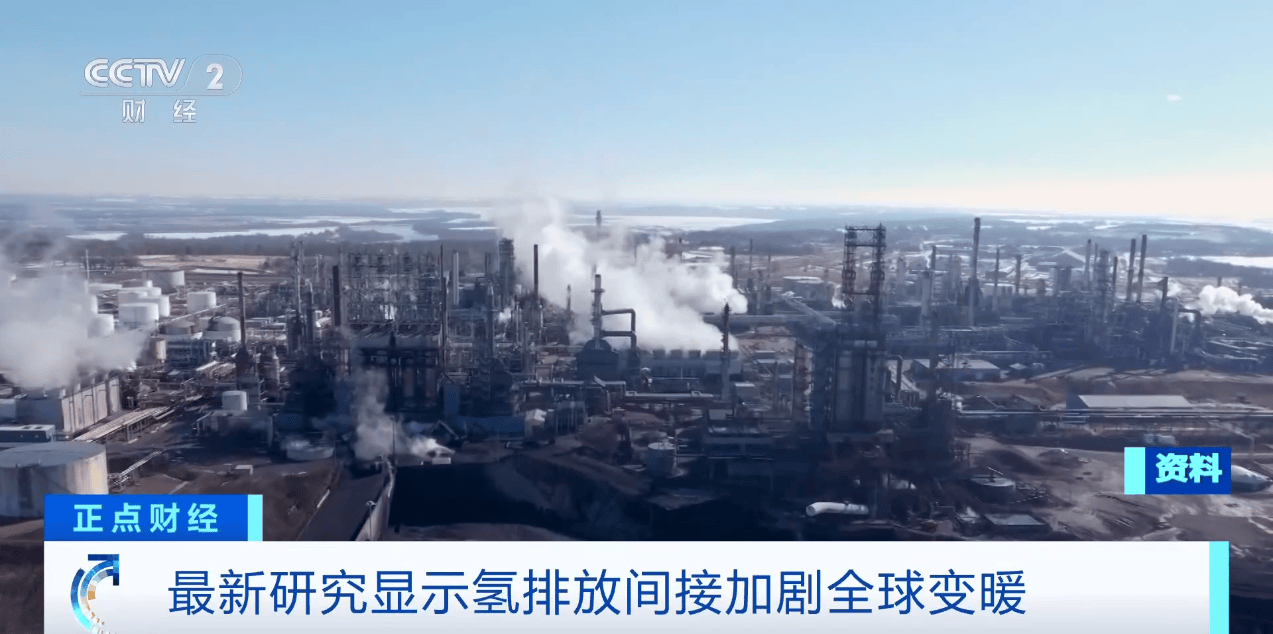
研究:全球变暖 氢排放“有份”
Xin Hua She· 2025-12-18 14:32
Core Insights - Hydrogen emissions indirectly contribute to global warming, with a cumulative impact of 0.02 degrees Celsius on the global average temperature from 1990 to 2020 [1][4] Group 1: Hydrogen Emissions and Global Warming - The main reason hydrogen gas exacerbates global warming is its consumption of natural substances in the atmosphere that break down greenhouse gases like methane [4] - Increased hydrogen in the atmosphere leads to a reduction in these natural purifying substances, extending methane's residence time and worsening warming [4] - Hydrogen emissions are primarily sourced from human activities, particularly the decomposition of compounds like methane, which is rapidly increasing due to fossil fuel use, agricultural production, and landfill activities [4] Group 2: Trends and Estimates - Since 1990, the annual hydrogen emissions from methane decomposition have increased by approximately 4 million tons, reaching 27 million tons per year by 2020 [4] - From the industrial era until 2003, atmospheric hydrogen concentration rose by about 70%, stabilizing briefly before rising again around 2010 [4] - The relationship between hydrogen emissions and methane increase creates a vicious cycle: methane decomposition produces hydrogen, more methane leads to more hydrogen, and increased hydrogen prolongs methane's atmospheric presence [4] Group 3: Implications for Clean Energy - The indirect impact of hydrogen emissions on global warming may diminish the benefits of replacing fossil fuels with hydrogen energy [5] - There is a need for deeper understanding of the global hydrogen cycle and its connection to global warming [5]

报告:氢排放,加剧全球变暖
中国能源报· 2025-12-18 12:12
Core Viewpoint - A recent study published in the British journal "Nature" indicates that hydrogen emissions indirectly contribute to global warming, with a cumulative contribution of 0.02 degrees Celsius to the rise in global average temperature from 1990 to 2020 [1][3]. Group 1: Hydrogen Emissions and Global Warming - The study highlights that hydrogen emissions consume natural substances in the atmosphere that can decompose methane, leading to an increased retention time of methane in the atmosphere and exacerbating warming [3]. - The increase in hydrogen emissions from 1990 to 2020 is primarily attributed to human activities, particularly the decomposition of compounds like methane, which has surged due to fossil fuel use, agricultural production, and landfill activities [3][4]. - Since the industrial era, atmospheric hydrogen concentration has risen by approximately 70% until 2003, with a brief stabilization before rising again around 2010 [3]. Group 2: Implications for Hydrogen as Clean Energy - The indirect effects of hydrogen emissions on global warming may diminish the benefits of replacing fossil fuels with hydrogen energy, indicating a need for deeper understanding of the global hydrogen cycle and its relationship with global warming [4].

北极气温创1900年以来最高
财联社· 2025-12-17 07:45
据新华社, 美国国家海洋和大气管理局16日发布的北极年度气候报告显示,在2024年10月至2025年9月这一统计周期内, 北极地区平均地表气温创 下自1900年有记录以来的最高值。 报告说,过去10年是北极地区有观测记录以来气温最高的10年。自2006年以来,北极地区年均升温速度超过全球平均升温速度的两倍。 ...

我国已进入拉尼娜状态,今年冬天是冷还是热?
财联社· 2025-12-16 08:59
Core Viewpoint - The article discusses the current La Niña phenomenon in China, its implications for winter weather, and the potential for drought conditions in the winter and spring seasons [1][5][7]. Group 1: La Niña Status and Events - La Niña is characterized by a significant and sustained cooling of sea surface temperatures in the central and eastern equatorial Pacific [1][3]. - The La Niña state is defined by the Niño 3.4 index falling below -0.5°C for at least five consecutive months to be classified as a La Niña event [3]. - La Niña phenomena occur every two to seven years, with increased frequency in recent years attributed to complex global warming mechanisms [3]. Group 2: Weather Predictions and Impacts - The current La Niña state is expected to lead to reduced precipitation in southern China, particularly in December, with a higher likelihood of cold air events causing temperature fluctuations [5][8]. - Experts predict a low probability of a double La Niña event this winter, which refers to consecutive winters experiencing La Niña conditions [3][7]. - The article highlights that while La Niña can influence winter temperatures, it is not the sole determinant, as other factors like Arctic sea ice and atmospheric circulation also play significant roles [8][9]. Group 3: Specific Regional Impacts - The likelihood of winter drought conditions in East and South China is noted, with potential for significant impacts on agriculture and water resources [7][10]. - In regions like Guizhou, which frequently experiences freezing rain, the probability of widespread low-temperature rain and snow events this winter is expected to be relatively low [12]. - The article emphasizes the need for preparedness against low-temperature and freezing rain disasters, particularly in high-risk areas [10].

我国进入拉尼娜状态,今年冬天到底是冷还是热?
Zhong Guo Ji Jin Bao· 2025-12-15 16:35
Group 1 - The core point of the article is that China has entered a La Niña state as of October 2023, which may have significant impacts on the climate and weather patterns in the region [1][3][6] - La Niña is characterized by a significant cooling of sea surface temperatures in the central and eastern Pacific Ocean, with the NINO 3.4 index dropping below -0.5 degrees Celsius [3][4] - The occurrence of La Niña is not equivalent to a La Niña event; a La Niña event is defined by the NINO 3.4 index remaining below -0.5 degrees Celsius for five consecutive months [3][5] Group 2 - La Niña phenomena typically occur every two to seven years, but their frequency has increased in recent years, which is closely related to the complexities of global warming [4] - The current La Niña state may lead to reduced precipitation in southern China during the winter, with a higher probability of drought conditions in the winter and spring [6][7] - The article notes that while La Niña can influence winter temperatures, it is not the sole determinant, as other factors such as Arctic sea ice and atmospheric circulation also play significant roles [6][7]