
Autonomous Vehicle

Search documents
Amazon's Zoox robotaxi unit clears regulatory hurdle, safety probe
CNBC· 2025-08-06 19:48
Core Insights - Amazon's Zoox robotaxi unit is increasing vehicle production at a new facility in Hayward, California, and has cleared a significant regulatory hurdle for self-driving robotaxis [1] - The National Highway Traffic Safety Administration (NHTSA) granted Zoox an exemption from certain requirements, marking a first for U.S.-built vehicles under an expanded program [1][2] - The NHTSA is closing a probe into Zoox's self-certification regarding federal safety standards, allowing the company to move forward with its autonomous vehicle initiatives [2] Regulatory Developments - NHTSA Chief Counsel Peter Simshauser stated that transportation innovators can expect expedited reviews and exemptions from Federal Motor Vehicle Safety Standards [2] - Zoox is required to remove any claims that its purpose-built vehicles meet all federal motor vehicle safety standards as part of the exemption process [2] - The Department of Transportation has expanded the exemption program to include domestically produced autonomous vehicles, which was previously limited to imported ones [3] Company Statements - Zoox expressed excitement about the new exemption process, indicating a desire to move past previous discussions and focus on future developments [3]


Waymo's Expansion Spooks Uber — Is Lyft The Smarter AV Play?
Benzinga· 2025-08-05 15:19
Core Viewpoint - The announcement of Waymo's robotaxi rollout in Dallas without Uber has raised concerns among investors, leading to a decline in Uber's stock, while Lyft continues to pursue a strategic partnership approach in the autonomous vehicle (AV) space [1][2]. Group 1: Company Strategies - Uber has historically relied on partnerships with companies like Waymo and GM Cruise to integrate robotaxis into its platform, but the recent exclusion from Waymo's Dallas expansion has created uncertainty [1][5]. - Lyft is adopting a more diversified partnership strategy, collaborating with Mobileye, May Mobility, Marubeni, and Baidu to establish its AV future, with planned rollouts in Dallas, Atlanta, and Europe [3][6]. - Lyft's establishment of the Driver Autonomous Forum in Atlanta indicates a long-term, inclusive approach to planning its AV rollout, leveraging experienced drivers for insights [4]. Group 2: Investment Considerations - Uber's market position is characterized by strong brand recognition but is vulnerable to being sidelined by Waymo, which could impact investor confidence [5]. - Lyft's leaner operational model and diversified partnerships may build greater trust among investors, presenting a more balanced risk profile as it scales its AV deployment [5][6]. - As the robotaxi market matures, Lyft's methodical approach could offer potentially higher rewards for investors compared to Uber's reliance on a single partner [6].


Tesla ETFs: What's Next After Worst Q2 in a Decade?
ZACKS· 2025-07-24 16:31
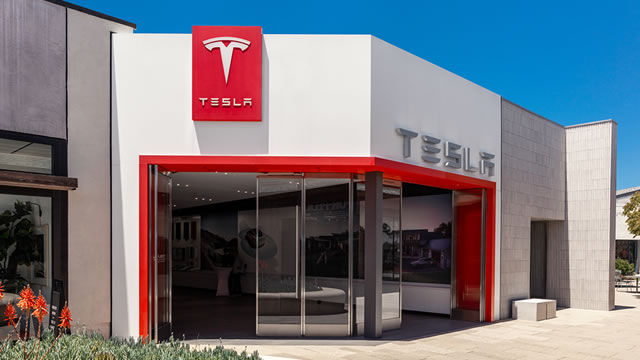
Core Viewpoint - Tesla reported disappointing first-quarter 2025 results, missing earnings and revenue estimates, with a significant decline in quarterly revenues, raising concerns about the company's brand image and leadership focus due to CEO Elon Musk's political activities [1][10][12] Financial Performance - Adjusted earnings per share were 33 cents, below the Zacks Consensus Estimate of 39 cents and up from 30 cents year-over-year [3] - Revenues fell 12% year-over-year to $22.5 billion, missing the Zacks Consensus Estimate of $22.43 billion, primarily due to a 16% decline in automotive revenues linked to a slump in vehicle sales [3] - Global deliveries for Q2 2025 were 384,122 vehicles, a 13.5% decline from the previous year, marking the worst year-over-year decline in the company's history [4] Growth Initiatives - Tesla has begun rolling out its paid robotaxi service in Austin, TX, with plans for expansion to other cities [6] - CEO Musk aims to have the robotaxi service available to "probably half of the population of the U.S. by the end of the year," pending regulatory approvals [7] - The company plans to launch a more affordable vehicle model in Q4 2025, delayed from June, and expects regulatory approval for its Full Self-Driving software in parts of Europe by year-end [8] Leadership and Political Engagement - Musk's increasing political involvement has raised investor concerns about his focus on Tesla, particularly after announcing a new political party and supporting controversial political movements [10][11][12] - The combination of declining sales and Musk's political activities has led to skepticism regarding Tesla's near-term outlook and leadership effectiveness [12] ETFs Impacted - Several ETFs with significant allocations to Tesla are under scrutiny due to the company's performance, including Simplify Volt TSLA Revolution ETF (TESL), Consumer Discretionary Select Sector SPDR Fund (XLY), The Nightview Fund (NITE), Fidelity MSCI Consumer Discretionary Index ETF (FDIS), and Vanguard Consumer Discretionary ETF (VCR) [2][13][14]

The 5 biggest takeaways from Tesla's Q2 earnings call
Business Insider· 2025-07-24 03:03
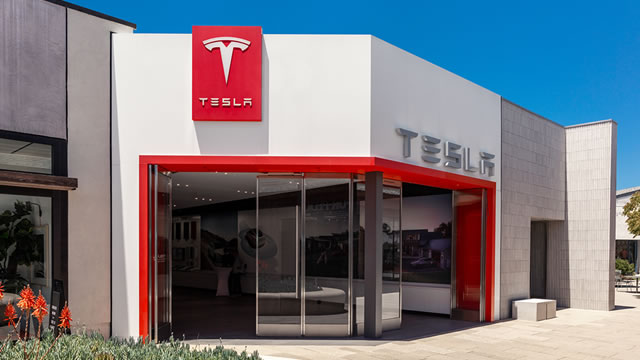
Core Insights - Tesla's second-quarter earnings revealed the steepest year-over-year revenue decline in a decade, falling below Wall Street estimates, leading to a more than 4% drop in share price after the earnings call [1] - CEO Elon Musk indicated that the company is entering a "weird transition period" due to shifting tariffs, unclear fiscal policy impacts, and political sentiment, suggesting potential rough quarters ahead [1][2] - Despite challenges, Musk expressed optimism for Tesla's economics by the end of next year as the company navigates waning EV incentives and evolving autonomous vehicle regulations [2] Group 1: Financial Performance and Future Outlook - The latest earnings report indicates that Tesla's core auto business may have seen the worst behind it, although it remains below what fundamentals would suggest for a trillion-dollar company [3] - Musk anticipates that a more affordable Tesla model, resembling the Model Y, will be available to the public in the fourth quarter [11] - The company plans to expand its vehicle offerings, including the first builds of a more affordable model in June, with volume production expected in the second half of 2025 [13] Group 2: Robotaxi Development - Tesla executives provided updates on the Robotaxi initiative, planning a quasi-robotaxi expansion in the San Francisco Bay Area, with a driver present to expedite the process while awaiting regulatory approval [8][12] - The current Robotaxi service in Austin is limited to select Tesla influencers and investors, with human safety monitors present during rides [9] - Musk has previously missed deadlines for Robotaxi timelines, raising questions about future projections [10] Group 3: Shareholder Concerns and Governance - Musk expressed concerns about his control over Tesla, fearing he could be ousted by activist shareholders if his shares decrease [14] - A significant majority of direct Tesla shareholders (51%) prefer Musk to focus more on the company rather than his political involvement [16] - The CFO declined to discuss potential investments in Musk's other company, xAI, during the earnings call, indicating a desire to keep the focus on Tesla [17][18]
Cyngn Engages Drata to Pursue SOC 2 and ISO 27001 Compliance as Part of Broader Cybersecurity Program
Prnewswire· 2025-07-23 11:05
Core Insights - Cyngn Inc. has partnered with Drata to pursue SOC 2 Type II and ISO 27001 certifications, reinforcing its commitment to data security and customer protection [1][3] - The initiative is part of a broader cybersecurity program that includes a bug bounty program to identify and resolve vulnerabilities [3][4] - Prescient Security will act as the independent auditor for the certifications, and the company has engaged specialized legal counsel in data privacy and cybersecurity [4] Company Overview - Cyngn develops autonomous vehicle technology aimed at addressing challenges in industrial organizations, such as labor shortages and safety incidents [5] - The company's DriveMod technology allows customers to implement self-driving technology without significant upfront costs or infrastructure changes [6] - DriveMod products include the Tugger, which can haul up to 12,000 lbs with a payback period of less than 2 years, and the Forklift, designed for non-standard pallets [7]


Uber: The 'Netflix Of Mobility' Set To Gain Big From The Autonomous Vehicle Race
Seeking Alpha· 2025-07-17 19:20
Core Viewpoint - The article discusses the investment strategies and experiences of a Latin-American fundamentalist investor, focusing on finding discounted stocks both regionally and globally [1]. Group 1: Investment Strategy - The investor employs a bottom-up analysis approach to identify value in stocks, while also considering macroeconomic factors that may influence investment opportunities [1]. Group 2: Professional Background - The investor has a diverse background, having worked as a Portfolio Manager at a large financial institution, as well as in investment banking and economic journalism [1]. - The investor holds an Economic BS and an MBA, indicating a strong educational foundation in finance and economics [1]. Group 3: Sector Focus - The investor has significant experience in the technology, retail, and banking sectors, suggesting a broad understanding of various industries [1].

X @Bloomberg
Bloomberg· 2025-07-17 16:25
Industry Competition - Competition in the autonomous vehicle space is intensifying among Uber, Tesla, and Waymo [1] - The ultimate winner in the autonomous vehicle race remains uncertain [1]
X @mert | helius.dev
mert | helius.dev· 2025-07-08 19:35
Partnerships & Collaborations - Volkswagen's autonomous vehicle subsidiary, Volkswagen ADMT, has selected Bee Maps (powered by Hivemapper) spatial intelligence services [1] Autonomous Vehicle Industry - The partnership between Robotaxis and Hivemapper is considered a strong strategic fit [1] Technology & Services - Hivemapper's spatial intelligence services will support Volkswagen ADMT's autonomous vehicle testing operations [1]
UBER Hits a 52-Week High: Reasons Why the Stock is Worth Buying Now
ZACKS· 2025-07-08 16:06
Core Insights - Uber Technologies (UBER) has seen a significant increase in its stock price, reaching a 52-week high of $97.12, with a year-to-date surge of 60.3%, outperforming rival Lyft's 24.6% gain and the Zacks Internet-Services industry's 3% decline [1][9] Autonomous Vehicle (AV) Market - Uber is making strategic moves to strengthen its position in the autonomous ride-sharing market, including potential acquisition talks for the U.S. arm of China's Pony AI [3][9] - The company has established partnerships with Pony AI to integrate robotaxis into its platform, allowing Uber to mitigate R&D costs associated with developing autonomous systems independently [4] - Uber's extensive market share in ride-hailing provides a competitive edge in scaling autonomous services as technology advances [5] Financial Performance - Uber has consistently surpassed earnings estimates, with an average beat of 212.3% over the last four quarters [6] - The Zacks Consensus Estimate for earnings has been revised upward for the second and third quarters of 2025, reflecting confidence in Uber's financial performance [10] - The company reported a free cash flow of $2.25 billion in Q1 2025, a 66.6% increase year-over-year, and has $7.2 billion in cash and equivalents [11] Growth and Expansion - Uber's gross bookings for Q2 2025 are projected to be between $45.75 billion and $47.25 billion, indicating a growth of 16-20% year-over-year [13] - The company has diversified its business beyond ridesharing into food delivery and freight, enhancing its risk management through geographic and product diversification [12] Investment Outlook - The average price target for UBER shares is $97.81, suggesting a potential upside of 4.5% from current levels, indicating a favorable investment opportunity [14] - The Zacks Consensus Estimate for 2026 anticipates a 15.2% increase in sales and a 21.8% rise in EPS, highlighting strong growth potential [14][15]

X @Investopedia
Investopedia· 2025-07-02 23:30
Companies to Benefit - Bank of America analysts identified Nvidia, Qualcomm, and Caterpillar as stocks that could benefit from the growing autonomous vehicle market [1] - Robotaxi makers are also expected to benefit from the autonomous vehicle market [1]


