Immigration Policy

Search documents
CNBC's The China Connection newsletter: China's K-visa plans spark worries of a talent flood
CNBC· 2025-10-01 08:49
Core Insights - China's new visa program, aimed at attracting global talent, has sparked public backlash due to concerns over its impact on the local job market and potential for fraud [2][4][9] - The K-visa allows young STEM graduates to enter China without local employer sponsorship, increasing flexibility for foreign professionals [3][10] - State media has defended the program, emphasizing the need for high-level talent to enhance China's technological capabilities [6][8] Group 1: Visa Program Details - The K-visa program was announced in August and rolled out recently, targeting foreign professionals in STEM fields [2][3] - The program allows for more flexible entry and duration of stay for young graduates, without the need for local employer backing [3][10] - The public response has been mixed, with concerns about the potential influx of foreign graduates affecting local job opportunities [4][9] Group 2: Public Reaction and State Response - Social media users have expressed fears that the K-visa could disadvantage local graduates and lead to fraudulent applications [4][5] - State media has labeled the criticism as "misleading," arguing that China still lacks sufficient high-level talent [6][8] - The backlash has been characterized as a "messaging problem" by some commentators, highlighting the small percentage of expatriates in China [7] Group 3: Economic Context - China's job market is under pressure, with urban unemployment reaching its highest level since February at 18.9% in August [9][10] - A record 12.2 million college graduates are entering the job market this year, exacerbating the mismatch between educated workers and available white-collar jobs [10] - Despite fears of mass immigration, experts suggest the K-visa will primarily target top tech talent, minimizing broader job market impacts [11][12] Group 4: Strategic Implications - The K-visa initiative reflects China's strategic aim to attract talent in key sectors like semiconductors and biotechnology, contrasting with U.S. visa restrictions [8][14] - The program is seen as a calculated move to enhance China's competitive edge rather than a broad liberalization of immigration policies [16][18] - The ultimate goal remains to build domestic capabilities in technology, with the K-visa serving as a tool for selective recruitment [17][18]

X @Bloomberg
Bloomberg· 2025-09-29 16:36
Foreign workers in the UK will need twice as long to quality for permanent residency, Labour announced on Monday, and migrants will be need to pass a “series of new tests” to prove they can be good citizens https://t.co/rCEVhn0Erg ...
Fed's Miran on Neutral Rate, Tight Monetary Policy, Rapid Rate Cuts
Youtube· 2025-09-25 13:23
Core Viewpoint - The discussion centers around the current state of the economy, the labor market, and the implications of monetary policy adjustments, particularly the neutral interest rate and its relationship with fiscal and immigration policies [1][11][12]. Economic Projections - There is a divergence in projections among Federal Open Market Committee (FOMC) members regarding the neutral rate, with some members advocating for a quicker adjustment to a more neutral policy stance [5][6]. - The governor believes that the neutral rate has decreased due to significant changes in fiscal policy and immigration, which have impacted national savings and population growth [9][10]. Monetary Policy Implications - The governor argues that current monetary policy is excessively tight and needs to adjust quickly to avoid negative consequences for the economy, particularly regarding employment [11][12][21]. - The relationship between monetary policy and financial conditions is complex, with the governor emphasizing that not all financial conditions are uniformly loose, particularly in the housing market [15][16]. Housing Market Dynamics - The housing market is expected to play a significant role in inflation dynamics, with population growth impacting demand for housing and subsequently shelter inflation [31][32]. - A decrease in population growth due to changes in immigration policy could lead to a relative change in shelter inflation, highlighting the importance of supply and demand in the housing market [32][33]. Immigration Policy Effects - The governor anticipates that immigration trends will continue to influence the economy and the neutral rate for the foreseeable future, suggesting that the impact of immigration is not merely a short-term phenomenon [35].


Fed’s Miran on Neutral Rate, Tight Monetary Policy, Rapid Rate Cuts
Bloomberg Television· 2025-09-25 13:23
Governor, welcome to the program, sir. We've got tons of time to talk about what's going to happen next. Your thoughts on the labor market, the balance of risk, the broader economy.I actually wanted to lead the conversation with this one. Governor, what was your experience like. I'm sure this was unexpected 12 months ago.What was it like walking into the room and was it different to what you expected. Good morning and thanks for having me. It's great to see you again.Look, you know, walking into the room, y ...
The three-headed problem that's throwing the US economy into chaos
Business Insider· 2025-09-25 08:08
There's a rule of thumb in apartment hunting: People want something affordable, spacious, and convenient, but in the end, they can only get two of the three. Big and cheap? Prepare for a long commute. Less expensive and downtown? Enjoy your shoebox. Spacious and well-located? Get ready to shell out big bucks. It's a classic "trilemma," or an impossible triangle: No matter how you, well, triangulate it, one priority has to go if the other two remain.President Donald Trump — and the American people along with ...

X @Bloomberg
Bloomberg· 2025-09-22 08:42
The Trump administration has raised the application fee for H-1B visas to $100,000 https://t.co/Nf0ikheuAw ...
Trump’s $100,000 visa targets a $280 billion India success story
Fortune Asia· 2025-09-22 08:35
Core Viewpoint - Donald Trump's new order to increase fees for H-1B visa applications poses significant challenges for Indian outsourcing firms, particularly Tata Consultancy Services Ltd. and Infosys Ltd., which rely heavily on this program to deploy engineers in the U.S. [1][2] Industry Impact - The H-1B visa program is crucial for Indian outsourcing firms and the U.S. tech sector, allowing them to bring skilled workers from abroad. The new $100,000 fee will add to existing costs, which currently include a $215 lottery registration fee and various filing fees [6][8] - Indian-born workers constituted 72.3% of all H-1B beneficiaries in the U.S. for the fiscal year ending September 2023, indicating the program's importance to the Indian workforce [9] - The changes are expected to increase operational costs for American corporations, potentially leading them to expand their global capability centers in India [11][12] Company Responses - Shares of Tata Consultancy Services and Infosys fell more than 3% following the announcement, reflecting investor concerns about the impact of the new visa fees [2] - Indian firms have been reducing their dependence on H-1B visas, increasing local hiring, and establishing delivery centers in the U.S. to adapt to previous immigration policy threats [15] - The increased costs associated with H-1B visas may lead Indian firms to limit the number of engineers sent to client sites, affecting key client relationships [16] Geopolitical Context - The visa policy changes are seen as part of a broader geopolitical strategy, increasing tensions in the India-U.S. relationship amid ongoing trade talks [4] - The move has sparked a range of reactions in India, from outrage to concern about the implications for families relying on H-1B visas [5]

X @BBC News (World)
BBC News (World)· 2025-09-22 06:04
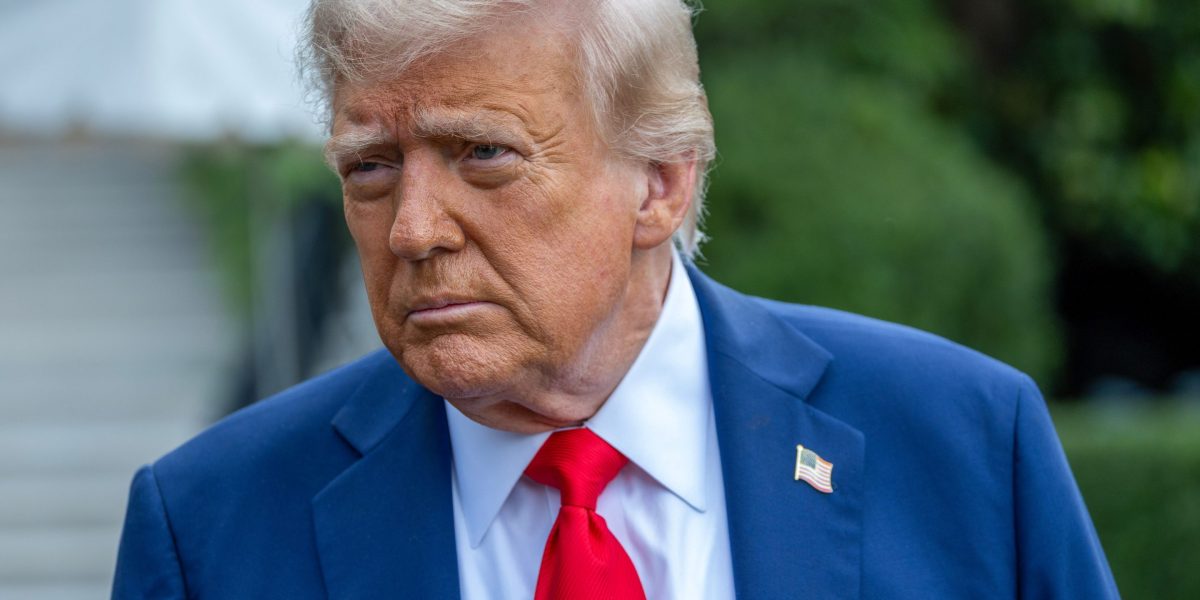
Trump's $100,000 H-1B visa shock: Why US may lose more than India https://t.co/lGX2Gtwp3u ...
New US H-1B visa fee could disrupt Indian IT operations, says industry body
Yahoo Finance· 2025-09-20 10:53
Core Points - The imposition of a new $100,000 annual fee on H-1B visa applications could disrupt the global operations of Indian technology services companies [1][3] - The new fee is part of a broader attempt by the U.S. government to overhaul the temporary employment visa system [2] - The abrupt implementation of this policy creates considerable uncertainty for businesses, professionals, and students globally [3] Industry Impact - Nasscom, representing India's $283 billion IT and business process outsourcing industry, highlighted that the new fee would impact Indian nationals and disrupt ongoing onshore projects [3] - The additional costs associated with the new fee will require adjustments from companies, potentially affecting their operations [3] - The policy could have ripple effects on the U.S. innovation ecosystem and global job markets [3] Company Responses - Major U.S. tech firms like Microsoft, JPMorgan, and Amazon have advised H-1B visa holders to remain in the United States following the announcement [4] - The response from these companies indicates a significant concern regarding the implications of the new fee on their workforce [4]
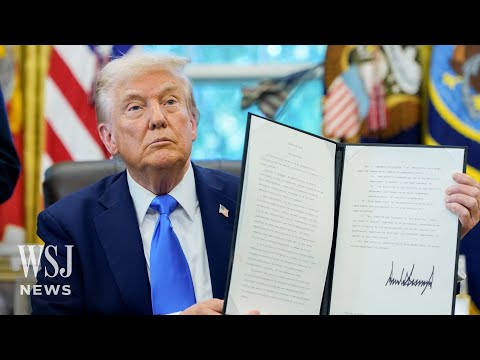
Trump Adds $100,000 Fee to H-1B Visa Applications | WSJ News
WSJ News· 2025-09-19 23:06
We need workers. We need great workers. And this pretty much ensures that that's what's going to happen.I think Sean, do you agree with it. >> Well, they're $100,000 per year. So, the whole idea is no more will these big tech companies or other big companies train foreign workers.They have to pay the government $100,000, then they have to pay the employee. So, it's just non-economic. If you're going to train somebody, you're going to train one of the recent graduates from one of the great universities acros ...