
Net Interest Income

Search documents
BIZD Vs. PBDC: Why Active Credit Selection Is Crucial For Total Return In 2026
Seeking Alpha· 2026-01-06 09:46
Group 1 - The BDC segment is facing challenges due to the Federal Reserve's ongoing interest rate cuts, leading to a decrease in net interest income for many non-bank lenders [1] - The analysis emphasizes the importance of selecting the best assets to navigate the current market conditions [1] - The goal is to identify profitable and undervalued investment opportunities primarily in the U.S. market to create a high-yield, balanced portfolio [1]


BOK Financial Stock Up Nearly 18% in 6 Months: Is It Worth Buying Now?
ZACKS· 2025-12-31 16:56
Core Insights - BOK Financial Corporation (BOKF) shares have increased by 17.9% over the past six months, significantly outperforming the industry growth of 3% and its peers, First Horizon Corporation (FHN) and Cullen/Frost Bankers, Inc. (CFR) [1][8] Performance Overview - The Zacks Consensus Estimate for BOKF's earnings for 2025 and 2026 has been revised upward, indicating a 1.1% and 7.7% rise respectively, reflecting analyst optimism about the company's future earnings [4][5][8] Growth Drivers - BOKF has experienced stable organic growth with a compound annual growth rate (CAGR) of 2% in loans over the six years ending in 2024, supported by a diversified business model and increased lending activity [9] - Deposits have also shown consistent growth, achieving a CAGR of 7.1% over the same period, bolstered by a balanced mix of commercial, consumer, wealth, and small business deposits [12] - The company expects loan growth of 5–7% in 2025, compared to $24.1 billion reported at the end of 2024, driven by a strong loan pipeline and rising deposit balances [15][16] Financial Metrics - BOKF's net interest income (NII) has benefited from higher interest rates, achieving a four-year CAGR of 2.8% through 2024, with continued growth in the first nine months of 2025 [17] - Despite a decline in net interest margin (NIM) to 2.75% in 2024 from 2.93% in 2023, NIM showed modest expansion in the first nine months of 2025 due to easing funding costs and improved asset yields [18] Asset Quality - The company has demonstrated strong improvement in asset quality, with non-performing assets declining at a CAGR of 24.6% over the five years ending in 2024, continuing to decline in the first nine months of 2025 [20] - Net charge-offs have recorded a five-year negative CAGR of 40.9% through 2024, indicating a resilient balance sheet capable of navigating potential economic slowdowns [21] Strategic Expansion - BOKF has strategically expanded into key neighboring markets, including a new office in Memphis, TN, and an expansion into the San Antonio market, enhancing its competitive standing [22][23] Capital Distribution - The company has a disciplined capital distribution strategy, raising its quarterly dividend by 3.6% to 57 cents per share in October 2024, with a current dividend yield of 2.11% [24][28] Near-Term Concerns - Rising operating expenses have recorded a CAGR of 3.4% over the six years ended 2024, expected to remain elevated due to ongoing investments in technology and higher employee-related compensation [29] - The company's liquidity position is relatively low compared to its elevated debt levels, with total debt of $4.2 billion against cash and equivalents of $1.4 billion as of September 30, 2025 [30] Valuation - BOKF stock is currently trading at a 12-month trailing price-to-earnings (P/E) ratio of 13.34X, higher than the industry's 12.98X, indicating a premium valuation [31] Conclusion - Despite near-term concerns, BOKF's consistent loan and deposit growth, improving asset quality, and favorable earnings estimate revisions suggest a well-run, growth-oriented bank with strong fundamentals and shareholder-friendly policies [34]



What Falling Interest Rates Mean for KeyCorp's Net Interest Income
ZACKS· 2025-12-31 16:25
Core Insights - KeyCorp (KEY) has experienced a volatile trend in net interest income (NII), with increases in 2020, 2021, and 2022, followed by declines in 2023 and 2024, but a rebound in the first nine months of 2025 due to lower deposit costs and asset repricing [1][11] Group 1: Net Interest Income Trends - In 2025, KeyCorp's NII is expected to rise by 22% year over year, with fourth-quarter NII projected to grow by 13% or more [5][11] - The net interest margin (NIM) is anticipated to be between 2.75% and 2.8% in the fourth quarter of 2025, with expectations to exceed 3% by the end of 2026 [5][11] - The decline in interest rates has led to a narrowing of the spread between earnings and costs, impacting NII, but lower funding costs and increased loan volumes are expected to support NII growth [2][3] Group 2: Peer Comparison - Fifth Third Bancorp (FITB) has shown a five-year compound annual growth rate (CAGR) of 4.2% in NII, with a 6.2% year-over-year increase in the first nine months of 2025 [7] - U.S. Bancorp (USB) has also demonstrated consistent NII growth, with a five-year CAGR of 4.4% and a 2% increase in NII year over year in the first nine months of 2025 [8] Group 3: Market Performance - KeyCorp's shares have increased by 16% over the past six months, slightly underperforming the industry growth of 17.4% [10]


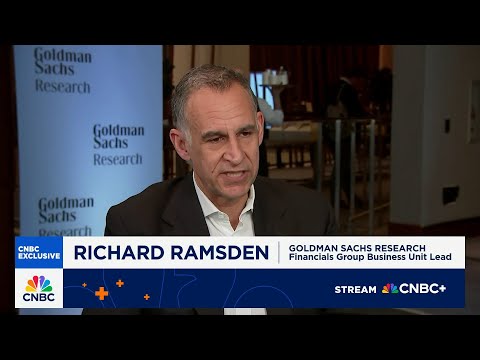
Goldman Sachs’ Richard Ramsden on the industry impact of increased expenses
CNBC Television· 2025-12-10 20:53
This is Richard Ramston. He basically runs this conference. Uh it's been going on for 36 years.I know there's record attendance. Uh and you had that conversation yesterday with Maryanne Lake, the CEO of Consumer Community Banking, which saw JP Morgan's stock drop as a result of the surprising guidance she gave on expenses. Um she of course said the biggest drivers were kind of growth related.Activity levels were higher. They were making strategic investments. What signal was the market sending here in its r ...

FHN vs. BOKF: Which Bank Stock Has Better Upside Potential?
ZACKS· 2025-12-04 17:56
Core Insights - The article compares First Horizon Corporation (FHN) and BOK Financial Corporation (BOKF) as two banks with distinct growth strategies, risk management, and customer engagement approaches [1] Group 1: First Horizon Corporation (FHN) - FHN has shown consistent growth in loans and deposits, indicating a strong business model and stable core markets [2] - Management expects continued growth in the commercial and industrial portfolio, mortgage-warehouse activity, and consumer lending demand [2] - Recent quarterly results show loan expansion across key categories and improved deposit strength due to promotional offerings and customer engagement [2] - FHN's net interest income (NII) has been improving, with expectations for further enhancement as loan demand increases and funding costs stabilize [3] - As of September 30, 2025, FHN held $2.1 billion in cash and interest-bearing deposits, with short-term borrowings of $4.3 billion and term borrowings of $1.3 billion [3] - FHN's revenue estimates for 2025 and 2026 imply year-over-year growth of 5.6% and 3.2%, respectively, with earnings expected to rise by 18.7% and 6.1% for the same years [10] - FHN's stock has gained 10.3% over the past year, outperforming the industry, which lost 5.4% [12] - FHN trades at a lower forward P/E of 11.69X compared to the industry average of 12.70X, indicating a more attractive valuation [16] - FHN has a dividend yield of 2.64%, having raised its quarterly dividend by 7% in January 2020 [19] Group 2: BOK Financial Corporation (BOKF) - BOKF has a balanced outlook with consistent loan and deposit expansion and favorable margin trends [4] - The company targets a year-over-year loan growth of 5-7% for 2025, focusing on diversifying its loan portfolio [4] - BOKF's NII is on an upward trend, expected to reach $1.33–$1.35 billion for 2025, up from $1.2 billion in 2024 [5] - Strategic market expansions, such as entering the San Antonio market and opening an office in Memphis, are enhancing BOKF's growth profile [6] - As of September 30, 2025, BOKF had total debt of $4.2 billion, with cash and equivalents totaling $1.4 billion, indicating a potentially unmanageable debt level [7] - BOKF's revenue estimates for 2025 and 2026 suggest year-over-year increases of 6.9% and 5.5%, respectively, with earnings expected to rise by 0.8% and 7.7% [11] - BOKF's stock has lost 1.1% over the past year, contrasting with FHN's performance [12] - BOKF trades at a higher forward P/E of 13.09X, reflecting a premium valuation compared to FHN [16] - BOKF has a dividend yield of 2.16%, having raised its quarterly dividend by 3.6% in October 2024 [19] Group 3: Comparative Analysis - FHN presents a more favorable upside profile due to steadier loan momentum, improving deposit stability, and a clearer runway for NII expansion [21] - BOKF's higher valuation, slower earnings growth outlook, and heavier debt load limit its relative appeal compared to FHN [22] - Both banks currently carry a Zacks Rank 3 (Hold), indicating a neutral outlook [22]

Why Is Annaly (NLY) Up 3.5% Since Last Earnings Report?
ZACKS· 2025-11-21 17:31
Core Viewpoint - Annaly Capital Management reported third-quarter earnings that surpassed estimates, but experienced a decline in book value year-over-year, raising questions about future performance and market trends [2][5]. Financial Performance - Adjusted earnings available for distribution per average share were 73 cents, exceeding the Zacks Consensus Estimate of 72 cents and up from 66 cents in the same quarter last year [2]. - Net interest income (NII) was $275.8 million, which fell short of the Zacks Consensus Estimate by 38.3%, compared to $13.4 million in the prior-year quarter [3]. - The average yield on interest-earning assets improved to 5.40%, up from 5.16% in the previous year [4]. - The net interest spread increased to 1.50% from 1.32% year-over-year, while the net interest margin rose to 1.70% from 1.52% [4]. Asset and Capital Metrics - Total assets at the end of the third quarter were $125.9 billion, reflecting a 12.2% increase from the prior quarter [3]. - Book value per share (BVPS) decreased to $19.25 from $19.54 in the prior-year quarter [5]. - The economic capital ratio improved to 14.8%, up from 14.6% year-over-year [5]. - Economic leverage remained stable at 5.7X as of September 30, 2025 [5]. Returns and Estimates - The annualized return on average equity was 14.7%, an increase from 12.9% in the prior-year quarter [6]. - Estimates for the stock have been trending downward over the past month, indicating a potential shift in market sentiment [7][10]. Stock Performance and Outlook - Annaly has a poor Growth Score of F and a Momentum Score of D, with an aggregate VGM Score of F, placing it in the bottom 40% for value investors [8]. - The company holds a Zacks Rank 3 (Hold), suggesting an expectation of in-line returns in the coming months [10].


Commerzbank (OTCPK:CRZB.F) Conference Transcript
2025-11-21 09:02
Summary of Commerzbank Conference Call Company Overview - **Company**: Commerzbank - **CFO**: Carsten Key Points Strategic Focus - Commerzbank is fully focused and unified in its strategy, which was announced at the beginning of the year, targeting growth and transformation by 2028 [2][3] Economic Outlook - The bank anticipates a **1.2% GDP growth** in Germany for the next year, with **0.8%** of this growth expected to be fueled by the government stimulus package [4][5] Net Interest Income (NII) - Guidance for NII has been increased to **EUR 8.4 billion** for 2026, up from an initial target of **EUR 7.7 billion** at the start of the year [6][9] - The bank expects **EUR 8.2 billion** for the current year, indicating a stable and upward trajectory for NII [9][11] Lending Growth - Corporate lending has shown strong growth at **13% year-on-year**, while mortgage growth is recovering from a depressed market [14][16] - The bank expects continued strong loan growth, particularly in the corporate segment, as stimulus packages take effect [17][19] Deposit Growth - Commerzbank has successfully attracted deposits, collecting **EUR 8 billion** through promotional offers [26] - The bank is guiding for a **43% beta** in Q4, with an average of around **40%** for the year [28] Asset Quality - The bank maintains a stable credit book with no significant concerns, expecting a risk guidance of **25 basis points** by 2028 [52][54] Capital Management - Commerzbank's capital ratio is strong at **14.7%**, with a target of **100% payout ratio** by 2028 [56][57] Fee Income - The bank is targeting a **7% annual growth** in commission income, already running at **7%** this year [38][41] Structural Hedge - The structural hedge is currently at **EUR 147 billion**, with potential to increase based on deposit growth [35] Competition and Market Dynamics - The bank acknowledges a competitive environment for deposits but has a strong depositor base and effective channels for attracting funds [62][63] Future Outlook - Commerzbank is optimistic about the impact of government stimulus on economic activity and its own business growth, particularly in lending and fee income [44][54] Additional Insights - The bank is transforming its branch setup, reducing the number of branches significantly while focusing on advisory services [50] - There is a growing trend in Germany for retail deposit collection to be price-led, but Commerzbank has managed to maintain a relatively high level of customer retention even after promotional rates expire [62][63]
Why Is AGNC Investment (AGNC) Up 0.6% Since Last Earnings Report?
ZACKS· 2025-11-19 17:31
Core Viewpoint - AGNC Investment's recent earnings report indicates a mixed performance, with a decline in net spread income and tangible net book value, while comprehensive income per share showed improvement [2][3][6]. Earnings Performance - The third-quarter 2025 net spread and dollar roll income per common share was 35 cents, missing the Zacks Consensus Estimate of 38 cents, and down from 43 cents in the previous year [2]. - Adjusted net interest and dollar roll income available to common stockholders was $430 million, a 2.4% increase from the year-ago quarter [2]. - Comprehensive income per common share was 78 cents, up from 64 cents in the year-ago quarter [3]. Financial Metrics - Net interest income was $148 million, missing the Zacks Consensus Estimate by 45.2%, with net interest expenses of $64 million in the prior-year quarter [4]. - The average asset yield on the portfolio increased to 4.95% from 4.73% year-over-year [4]. - The average net interest spread decreased to 1.78% from 2.21% in the previous year [5]. Balance Sheet and Portfolio - As of September 30, 2025, the tangible net book value per share was $8.28, down 6.1% year-over-year [6]. - The investment portfolio totaled $90.8 billion, including $76.3 billion in Agency mortgage-backed securities [7]. - Cash and cash equivalents were $450 million, down 11.2% from the prior quarter [8]. Market Sentiment and Outlook - There has been a downward trend in estimates revisions over the past month, indicating a negative sentiment among investors [9]. - AGNC Investment holds a Zacks Rank 4 (Sell), suggesting expectations of below-average returns in the coming months [11].


First Horizon Stock Rises Nearly 9% in 6 Months: Is It Worth Buying Now?
ZACKS· 2025-11-11 18:56
Core Viewpoint - First Horizon Corporation (FHN) has outperformed its industry with an 8.8% share price increase over the past six months, while the industry grew by 1.5% and the S&P 500 Index rose by 19.7% [1] Performance Summary - FHN's peers, Texas Capital Bancshares, Inc. (TCBI) and BOK Financial Corporation (BOKF), saw share price increases of 15.3% and 9.9%, respectively, during the same period [1] Factors Supporting FHN Stock - Steady loan growth is evident, with a five-year compound annual growth rate (CAGR) of 15% from 2019 to 2024, driven by strategic acquisitions and a diversified loan portfolio [4] - In the first nine months of 2025, loans increased year over year, supported by growth in commercial and industrial segments and stable mortgage lending activity [4] - Although deposits declined, management anticipates stabilization due to growth in promotional and noninterest-bearing deposits and strong customer retention [5] - FHN's net interest income (NII) has a five-year CAGR of 15.7% through 2024, with an upward trend continuing into 2025, aided by recent Fed rate cuts [6] - As of September 30, 2025, FHN held $2.1 billion in cash and interest-bearing deposits, indicating decent liquidity to support capital distributions [7] Shareholder Returns - FHN has maintained a consistent dividend, recently announcing a 7% increase to 15 cents per share, resulting in a dividend yield of 2.75%, higher than the industry average of 0.90% [9] - The company authorized a $1 billion share repurchase program in October 2024, with approximately $321 million remaining as of September 30, 2025 [10] Near-Term Challenges - Rising non-interest expenses have expanded at a five-year CAGR of 10.6%, primarily due to higher personnel and technology costs, which may weigh on margins [11] - As of September 2025, commercial and commercial real estate loans accounted for over 76% of total loans, exposing FHN to sector-specific risks [13] Estimates and Valuation Analysis - The Zacks Consensus Estimate for FHN's sales suggests a year-over-year increase of 5.6% for 2025 and 3.2% for 2026, with earnings expected to rise by 18.1% and 6.8% for the same years [14] - FHN stock is currently trading at a trailing price-to-earnings (P/E) ratio of 11.28X, lower than the industry's 12.6X [16] Investment Consideration - Despite near-term headwinds from elevated expenses and loan concentration risks, FHN is positioned to benefit from stable NII growth and improving funding conditions [19] - The company's strong fundamentals and sustainable capital distribution policy suggest potential for long-term shareholder value [20]

3 Reasons to Avoid BOH and 1 Stock to Buy Instead
Yahoo Finance· 2025-11-07 04:04
Core Viewpoint - Bank of Hawaii's stock has underperformed compared to the S&P 500, raising questions about its investment potential and risk profile [1] Group 1: Financial Performance - Bank of Hawaii's net interest income has plateaued over the last five years, showing no growth compared to the broader banking industry [4] - The bank's net interest margin (NIM) averaged a low 2.3% over the past two years, indicating weak profitability of its loan book [6] - Tangible book value per share (TBVPS) has seen a modest annual growth of 1.4% over five years, but it accelerated to 10.7% annually in the last two years, increasing from $28.99 to $35.56 per share [8] Group 2: Valuation and Market Position - Bank of Hawaii's shares are trading at 1.7 times forward price-to-book (P/B) ratio, suggesting that the stock is priced with a lot of positive expectations already factored in [9] - Despite not being a poor business, Bank of Hawaii does not meet the quality investment criteria, and there may be better opportunities available in the market [9]
