
AI Agent

Search documents
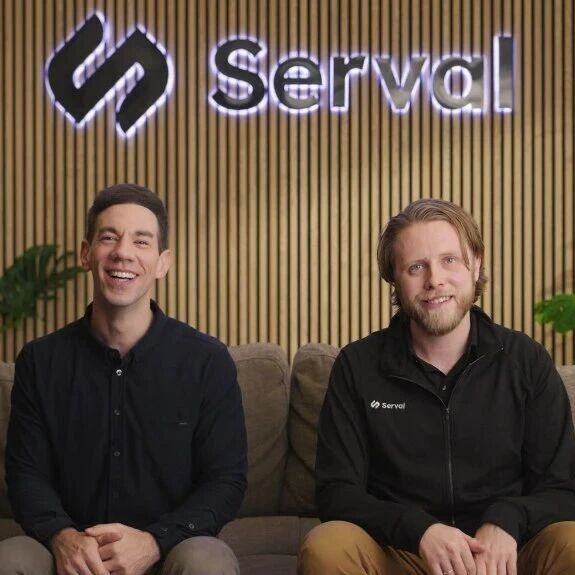
速递|Serval获4700万美元A轮融资,用“工具构建+工具使用”双Agent革新IT管理
Z Potentials· 2025-10-28 03:07
Core Insights - Serval, an AI company, has successfully raised $47 million in Series A funding led by Redpoint Ventures, with participation from top venture capital firms like First Round, General Catalyst, and Box Group [1] - The company boasts a notable client list, including leading AI firms such as Perplexity, Mercor, and Together AI, highlighting the importance of having reputable customers in addition to well-known investors [2] Company Overview - Serval focuses on automating IT service management through AI Agents, utilizing two distinct agents: one for creating automation scripts and another for responding to user requests based on predefined rules [2][3] - The CEO, Jake Stauch, emphasizes the goal of simplifying the tool-building process to make permanent automation easier than manual operations [3] Risk Management - Serval is aware of the risks associated with uncontrolled AI systems, which influenced their decision to avoid developing a universal service desk AI. The company aims to implement strict permission settings to prevent potential misuse [4] - The AI tools are designed with deterministic behavior, allowing for complex permission configurations that can restrict actions based on specific conditions [4][5] Innovation in AI Management - Serval offers a novel solution for managing AI agents by enabling real-time modifications to rules and permissions, ensuring comprehensive control over AI behavior [5] - The approach allows organizations to maintain oversight and governance over AI systems, addressing a common concern in the industry [5]

顶级阵容集结|李开复出席GOTC 2025主论坛,定义生成式AI下一站
Sou Hu Cai Jing· 2025-10-28 03:02
Core Insights - The GOTC Global Open Source Technology Summit (GOTC 2025) will take place in Beijing from November 1 to 2, featuring Dr. Kai-Fu Lee, CEO of 01.AI and Chairman of Innovation Works, as a keynote speaker [1][3] - Dr. Lee will discuss the advancements and opportunities in generative AI, focusing on the transition from ChatBots to autonomous decision-making agents [3][4] - The summit aims to connect global open source and AI ecosystems, gathering top scholars, industry leaders, and technical practitioners to explore innovative integration and high-quality development in the intelligent era [4] Company Insights - 01.AI, founded by Dr. Lee, is positioned as a leading player in the AI 2.0 wave, focusing on developing a global large language model platform and industry applications [3] - The company is recognized as a unicorn in the large model sector, emphasizing the rapid advancement of generative AI and the disruptive innovation of AI agents [3][4] - During the summit, 01.AI will launch the "Open Agent Kit platform," designed to provide intelligent solutions for enterprises and facilitate the integration of various open-source large models [4]

OpenAI画的饼,这家中国公司先吃上了
Sou Hu Cai Jing· 2025-10-27 23:22
Core Insights - The article emphasizes the shift from AI as a conversational tool to AI as a productivity tool, specifically in the context of marketing and sales [6][7][11] - It highlights the emergence of AI-driven systems that can autonomously handle various aspects of marketing, including content creation, audience targeting, and performance analysis [3][5][17] Group 1: AI in Marketing - A new system called "Global Marketing AI Agent" automates the entire marketing process, from script generation to data analysis, without human intervention [3][5] - The AI system is developed by a Chinese SaaS company, Taitong Technology, which is known for its "growth black technology" in the overseas market [6][26] - The focus is on delivering measurable business outcomes, such as ROI and GMV, rather than just engaging in conversational AI [10][11] Group 2: Features of the AI System - The AI system, Navos, offers four key features: market insights generation, content analysis for viral trends, simplified ad monitoring, and customizable data reporting [18][19][21][22] - Navos can generate comprehensive market reports from simple user queries, significantly reducing the time and effort required for traditional market research [18] - It includes algorithms for identifying high-performing content and optimizing ad strategies based on real-time data [19][21] Group 3: Industry Challenges and Solutions - The article discusses three major challenges faced by brands in overseas marketing: high content costs, localization difficulties, and fragmented advertising platforms [41][42][43] - The AI Agent addresses these challenges by streamlining processes that previously required large teams and extensive time, thus making overseas marketing more accessible to smaller brands [46][47] - The system is positioned as a transformative tool that can enhance efficiency and reduce costs in the marketing process, potentially democratizing access to global markets [47][48] Group 4: Competitive Advantage - Taitong Technology's extensive experience with over 100,000 enterprises has allowed it to build a comprehensive knowledge base that informs the AI's decision-making [26][28] - The company has established a robust infrastructure that integrates various marketing tools and data analytics, enabling the AI to function effectively in real-world scenarios [30][31] - The team behind the AI system consists of industry veterans who understand marketing dynamics, which contributes to the system's effectiveness [34]

红杉中国领投 Genspark 估值 10 亿美金,又一华人语音 AI ARR 超 5000 万美金
投资实习所· 2025-10-26 10:19
Core Insights - Genspark is raising over $200 million in its latest funding round, with a valuation exceeding $1 billion, indicating resilience against geopolitical impacts [1][2] - Genspark's annual run rate (ARR) has surpassed $50 million, with a 20% revenue growth over the past three months and a high customer retention rate [1][2] Funding and Valuation - Genspark's latest funding round is led by Sequoia China, with participation from LG Technology Ventures and SBI Investment, suggesting strong investor confidence [1][2] - The estimated valuation of Genspark is around $1 billion, reflecting its rapid growth and market potential [1][2] Product Development and Strategy - Genspark has launched six major products in the last two months, focusing on integrating popular functionalities into its platform [2] - The introduction of a customizable Super Agent and Super Agent Store allows users to create tailored AI agents quickly, enhancing user engagement [2][5] Market Trends and Competitors - The voice AI sector is experiencing significant growth, with ElevenLabs projected to reach an ARR of $300 million by year-end, driven by enterprise market demand [5][6] - Other companies in the voice AI space are also seeing rapid growth, with one achieving over $50 million in ARR and a tenfold revenue increase over two years [7]

CB Insights : AI Agent未来发展趋势报告(AI Agent Bible)
欧米伽未来研究所2025· 2025-10-26 04:02
Core Insights - A profound technological transformation is underway, with AI evolving from experimental "Copilot" to autonomous "Agent" [1][4] - The shift is not just theoretical; it has become a core priority for businesses, with over 500 related startups emerging globally since 2023 [1][4] Group 1: Evolution of AI Agents - The evolution of AI Agents is clear, moving from basic chatbots to "Copilot" and now to "Agent" with reasoning, memory, and tool usage capabilities [5] - The ultimate goal is to achieve fully autonomous Agents capable of independent planning and reflection [5] - AI Agents are expanding beyond customer service to assist in clinical decision-making, financial risk assessment, and legal documentation [5][6] Group 2: Market Dynamics and Commercialization - The most mature commercial applications of AI Agents are in software development and customer service, with 82% of organizations planning to use AI Agents in the next 12 months [5] - Data from Y Combinator indicates that over half of the companies in the 2025 spring batch are developing Agent-related solutions, focusing on regulated industries like healthcare and finance [6] Group 3: Economic Challenges - The rise of "Vibe Coding" has led to explosive revenue growth for coding Agents, with companies like Anysphere seeing their annual recurring revenue (ARR) soar from $100 million to $500 million in six months [7] - However, this growth is accompanied by a severe economic paradox, as reasoning models have drastically increased costs, leading to negative profit margins for some contracts [8] - Companies are responding by implementing strict rate limits and transitioning to usage-based pricing models [8] Group 4: Competitive Landscape - The competition is shifting towards infrastructure, data, and ecosystem, with major SaaS companies tightening API access to protect their data assets [9] - Three major cloud giants are adopting different strategies: Amazon as a neutral infrastructure layer, Google promoting an open market, and Microsoft embedding Agents into its productivity ecosystem [13] Group 5: Infrastructure Needs - The rapid development of Agents has created a demand for new infrastructure, including "Agentic Commerce" for autonomous transactions and "Agent monitoring" tools for reliability and governance [10] - The report concludes that the AI Agent revolution signifies a deep industrial restructuring, where success hinges on data, integration, security, and cost control rather than just algorithms [10]

Z Event|新加坡AI从业者下班一起聊AI?11.7新加坡线下饭局报名
Z Potentials· 2025-10-25 15:03
Group 1 - The event is scheduled for November 7, 2025, in Singapore, focusing on AI Agent discussions among professionals from large companies, startups, and entrepreneurs [1] - The gathering aims to facilitate idea exchange, experience sharing, and networking opportunities for participants [1] - Registration is required, with a deadline set for 8 PM the night before the event, and spots are limited on a first-come, first-served basis [2] Group 2 - The organization is actively recruiting a new cohort of interns, targeting creative individuals from the post-2000 generation [5][6] - The initiative is likened to a Chinese version of Y Combinator, aimed at discovering and nurturing creative young entrepreneurs [7]

Vibe Coding成AI主战场:22个明星玩家值得关注
量子位· 2025-10-25 06:23
Core Insights - The article emphasizes that Vibe Coding is the leading track in the second half of AI product development, with major international companies like Anthropic and OpenAI launching innovative coding products that integrate AI capabilities into development workflows [2][3]. Group 1: Domestic Competition - Domestic tech giants are actively competing in two main areas: professional developer tools and low-code/no-code platforms. AI programming products are introducing Agent features deeply integrated into IDEs, evolving from mere coding assistants to collaborative "execution teams" [3]. - In the low-code/no-code sector, companies are focusing on developing conversational AI native platforms that emphasize multimodal interaction and utilize multi-agent collaboration frameworks to simplify application development for users [3]. Group 2: AI 100 Rankings - The latest 2025 Q3 AI 100 list features 10 flagship products, with 9 of them enhancing their Agent functionalities. The "Innovation 100" category includes 12 products, with 5 adding or improving Agent features, while others focus on optimizing user experience throughout the development process [4][6]. - Notable products include: - **Kouzi Development Platform** from ByteDance, which offers a full-stack development capability for AI Agents, supporting zero-code construction and enterprise-level security features [6]. - **Alibaba Cloud Bailian**, a one-stop platform for large model development, allowing users to quickly build applications with a few clicks [7]. - **Wenxin Intelligent Agent Platform** from Baidu, which supports rapid AI Agent creation and offers a complete ecosystem for developers [10]. - **Dify** from Yuling Technology, which optimizes application construction processes through visual AI workflows [12]. Group 3: Emerging Trends - The article highlights a trend towards multi-agent collaboration and vertical specialization in AI products, indicating a shift from general-purpose solutions to more focused applications that address specific industry needs [38].

速递|前百度高管创Genspark估值超10亿美元,超越Manus,获红杉中国领投
Z Potentials· 2025-10-24 08:18
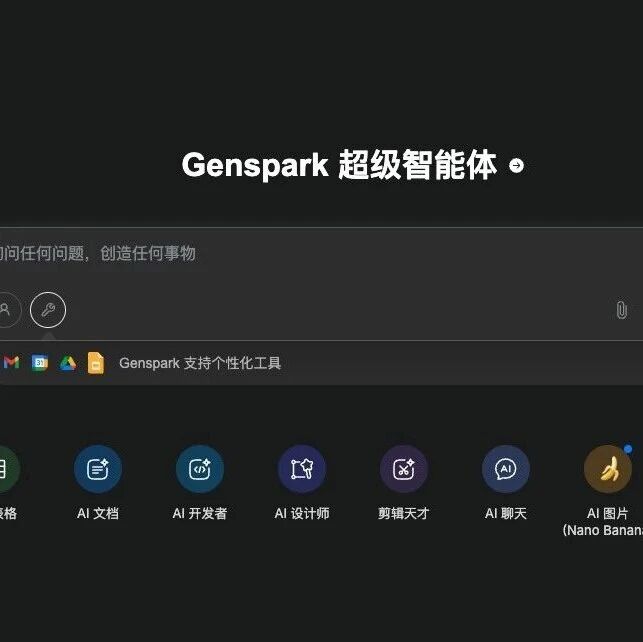
Core Insights - Genspark, a startup founded by former Baidu executives, has achieved a valuation exceeding $1 billion following its recent funding round [3] - The company launched its general AI Agent, Super Agent, in April and has since added multiple features, with annual recurring revenue surpassing $50 million just five months post-launch [3] - Genspark is seeking over $200 million in this funding round, with Sequoia China leading the investment, and potential investors including LG Technology Ventures and Japan's SBI Investment Group [3] Company Overview - Genspark was co-founded by Eric Jing and Kay Zhu, both former executives at Baidu [3] - The startup has over 40 employees across the US and Japan, recently establishing an office in Japan [3] - Sequoia Capital, which is backing Genspark, is also an investor in Genspark's competitor, Manus [3] Market Trends - AI Agents are projected to be one of the most significant technology trends by 2025 [3] - Genspark's previous funding round earlier this year valued the company at approximately $500 million [3]
港股迎企业级AI独角兽!明略科技启动招股,腾讯红彬等押注
Nan Fang Du Shi Bao· 2025-10-24 00:15
Core Viewpoint - Minglue Technology is set to launch an IPO in Hong Kong, aiming to raise approximately 1.018 billion HKD by offering 7.219 million Class A shares at a price of 141 HKD per share, positioning itself as the largest data intelligence application software provider in China and the first enterprise-level proprietary large model stock in the Hong Kong market [1][2]. Company Overview - Founded in 2006, Minglue Technology has evolved through three main business segments: marketing intelligence, operational intelligence, and industry solutions, including its flagship advertising data analysis platform, the "MiaoZhen System" [2][3]. - The company serves over 135 Fortune 500 companies, including Procter & Gamble, McDonald's, and Coca-Cola, with a focus on sectors such as retail, automotive, and consumer electronics [1][2]. Financial Performance - The MiaoZhen System generated 320 million CNY in revenue in the first half of 2025, maintaining a growth rate of 10.9%, while operational intelligence through smart store systems contributed 269 million CNY with a year-on-year growth of 16.8% [2][3]. - Minglue's adjusted operating loss has been narrowing, from 1.1 billion CNY in 2022 to 174 million CNY in 2023, and further down to 45.11 million CNY in 2024, indicating a trend towards profitability [5][6]. Product Development - The company has launched the DeepMiner proprietary large model product line, focusing on enterprise-level AI applications, which aims to address issues such as high "hallucination rates" and decision-making flaws in general AI models [3][4]. - Another key technology, HMLLM (Hypergraph Multimodal Large Language Model), integrates non-standard biological modal data to enhance marketing effectiveness by predicting consumer responses to advertisements [4]. Market Trends - The AI Agent market is projected to grow significantly, from 7.63 billion USD in 2025 to 50.31 billion USD by 2030, with a compound annual growth rate of 45.8%, indicating a robust opportunity for enterprise-level AI applications [4]. - The demand for proprietary large models is increasing due to rising concerns over data privacy and model controllability, creating a substantial growth space for leading companies in the sector [4][6]. Shareholder Composition - Minglue Technology has attracted significant investment from top-tier institutions, with Tencent being the largest external shareholder, holding 26.96% through three affiliated companies, alongside other major investors like Sequoia China and Kuaishou [5][6].
恒生电子白硕:AI Agent驱动投研投顾进入“人机协同”时代 重塑金融业务新范式
Zheng Quan Ri Bao Wang· 2025-10-23 11:19
Core Insights - The sixth ITDC 2025 conference in Shanghai focused on the theme "AI+: From Industrial AI to Financial AI," bringing together experts from various sectors to discuss the application and development trends of AI in asset management [1] Group 1: AI Technology in Asset Management - The continuous advancement of foundational large model capabilities and the proliferation of open-source models are driving the application of AI Agents in the financial industry, particularly in investment research and advisory [1][2] - AI Agent technology is evolving from "single-point functionality" to "process automation," allowing for the automatic understanding, decomposition, and execution of complex tasks, thus enhancing operational efficiency [1][2] Group 2: WarrenQ Platform - The WarrenQ platform, developed by Shanghai Hengsheng Juyuan Data Service Co., a subsidiary of Hengsheng Electronics, liberates analysts from tedious foundational tasks, enabling them to focus on core value creation [2] - WarrenQ enhances both marketing-oriented and product-oriented advisory services, significantly improving the efficiency and quality of investment advisory work [2] Group 3: Industry Impact - Hengsheng Electronics' intelligent investment research products have already served dozens of financial institutions, facilitating the intelligent upgrade of the entire investment research process [3] - The company aims to continue following the forefront of large model technology development to empower investment research scenarios and support financial institutions in achieving a digital transformation for high-quality development [3]
