半导体制造

Search documents
量子传感器,新突破!
半导体行业观察· 2025-04-05 02:35
Core Viewpoint - Quantum sensors are expected to significantly benefit multiple industries due to their enhanced sensitivity and new sensing capabilities compared to traditional sensors [2] Group 1: Quantum Sensor Innovations - Quantum sensors, including atomic clocks, quantum magnetometers, and quantum gyroscopes, are anticipated to revolutionize various sectors [2] - The transition from laboratory prototypes to commercial products requires optimization of size, weight, power, and cost (SWaP-C) [2] - The most effective method for achieving this is through scalable semiconductor manufacturing processes [2] Group 2: Manufacturing Techniques - Glass vapor cells are essential for quantum sensors, enabling interaction between lasers and atomic gas samples [5] - Traditional glassblowing techniques limit the miniaturization of vapor cells, while wafer-level semiconductor manufacturing can produce highly uniform vapor cells for mass production [5] - Innovations in manufacturing techniques, including alternative glass materials and various etching and bonding technologies, are crucial for enhancing performance [5] Group 3: Laser Technology - Lasers are a critical component in quantum sensors, with VCSELs (Vertical-Cavity Surface-Emitting Lasers) being particularly important for their scalability and integration [7][8] - The demand for VCSELs has surged due to their applications in smartphones, automotive infrared cameras, and data center interconnects [7] - VCSELs must meet specific requirements for atomic quantum sensors, including wavelength stability and narrow linewidth [7] Group 4: Market Challenges - The high production costs of quantum sensor components limit their target markets, creating a cycle that restricts scaling and cost reduction [9] - Current manufacturing processes for vapor cells are complex and expensive, necessitating collaboration between academia and industry to support semiconductor manufacturing for emerging quantum technologies [9] Group 5: Future Market Outlook - Innovations in vapor cell and VCSEL manufacturing have enabled the miniaturization of atomic clocks, providing a blueprint for transitioning other quantum sensors to mass production [10] - Semiconductor foundries are positioned to become key players in the quantum sensor value chain, with investments aimed at reducing manufacturing costs opening up larger market opportunities [10] - The demand for improved sensing solutions in timing, magnetic field sensing, and inertial sensing will drive the growth of quantum sensors [10]

Rapidus启动2纳米芯片试制,力争2027年量产
日经中文网· 2025-04-01 03:31
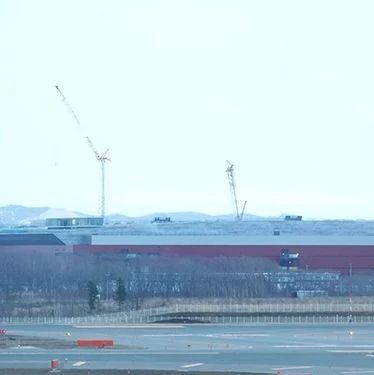
Core Viewpoint - Rapidus aims to produce cutting-edge 2-nanometer chips, requiring significant funding and support from the Japanese government and private sector to achieve mass production by 2027 [1][2]. Group 1: Funding and Support - The estimated cost for trial production of 2-nanometer chips is 2 trillion yen, while mass production will require an additional 3 trillion yen [1][2]. - As of now, Rapidus has secured 1.7225 trillion yen in support, including 920 billion yen from 2022 to 2024 and a maximum of 802.5 billion yen from the Ministry of Economy, Trade and Industry (METI) confirmed on March 31 [1][2]. - METI plans to provide subsidies and is discussing a potential investment of 100 billion yen through government agencies, pending legislative approval [2]. Group 2: Production Plans - The trial production line in Hokkaido will officially start with a workforce of 150, aiming to produce the first trial products by early summer [1][2]. - Rapidus has already received over 200 units of advanced extreme ultraviolet (EUV) lithography equipment necessary for semiconductor production [1]. Group 3: Market Strategy and Challenges - Rapidus intends to provide trial product data to customers by mid-July, with a goal of achieving a yield rate of 50% initially, and ultimately reaching 80-90% [2]. - The company recognizes the need for private funding, as current private contributions amount to only 7.3 billion yen from eight companies, including Toyota, NTT, and Sony [2][3]. - There are concerns regarding the risks associated with investing in a company without production experience, leading to cautious funding approaches from potential investors [3].