Housing Affordability

Search documents
Conservative states see lower inflation than liberal ones nationwide, White House data shows
Fox Business· 2025-12-23 23:10
Core Insights - Inflation has been lower in conservative-led states compared to liberal-led states, averaging 2.5% versus 3% respectively [1] - The analysis indicates significant differences in energy and transportation costs contributing to the inflation gap [1][4] Inflation Analysis - The White House Council of Economic Advisers (CEA) utilized regional inflation data adjusted for state populations due to the absence of official state-level Consumer Price Index (CPI) [2] - Metro areas in conservative states experienced a year-over-year inflation rate of 1.9%, while those in liberal states saw a rate of 3% [3] Energy and Transportation Costs - Energy inflation is a major factor driving higher overall inflation in liberal-run cities, with cities like Baltimore, Chicago, Los Angeles, and New York experiencing rapid increases in energy prices compared to conservative states [3] - Energy and transportation costs are significant contributors to the inflation gap, affecting household expenses quickly even with slight price increases [4] Housing Affordability - Housing inflation remains high nationwide, with prices rising faster in liberal-led states than in conservative-led states [5] - The Trump administration is actively working on proposals to address housing affordability, with a comprehensive plan expected to be announced early in the new year [8][6] Voter Concerns - The findings from the CEA come at a time when inflation is a primary concern for voters, influencing discussions on energy, housing, and transportation policies that impact the cost of living [9]


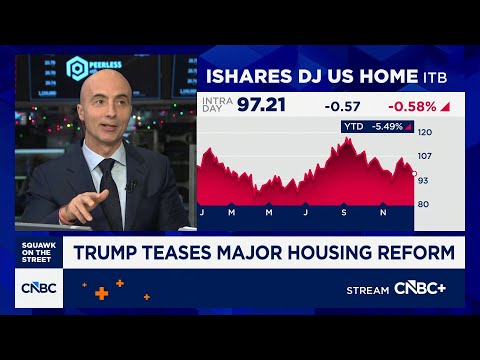
UBS’ John Lovallo on Trump’s teased housing reform plans
CNBC Television· 2025-12-23 16:28
Joining us now here at Post9 is John Lvalo, senior US home building and building products equity research analyst at UBS. Uh John, any any thoughts on kind of what we could see from this this big new plan that could impact affordability. >> Thanks Leslie.Yeah, so I think there's a few things. It could be short-term, intermediate, and then housing emergency. In the short term, we could utilize the GSC's to subsidize mortgages, to buy more NBS for their portfolio, and to reduce G fees.G fees could be 60 basis ...
Inflation FEARMONGERING collapses under strong economic data
Youtube· 2025-12-22 18:31
Economic Outlook - The White House is preparing to launch phase two of President Trump's economic initiatives, focusing on housing affordability and tax refunds [1][2] - Vice President JD Vance acknowledges public impatience regarding economic conditions while emphasizing the need for caution [2] Housing Affordability - Kevin Hasset indicates that top advisors are developing a comprehensive list of proposals aimed at improving housing affordability, which remains a significant concern for American families [2][11] - The Trump administration is reportedly working on housing proposals that have received approval from cabinet secretaries, with plans to reveal them soon [11][18] - Current mortgage rates are around 6.2%, with potential for a reduction in the near future, which could positively impact the housing market [13][15] Inflation and Consumer Spending - Recent data shows that rental growth has stagnated, with no increase in rental payments recorded in October 2025 for the first time in three and a half years, particularly in cities like Austin, Phoenix, Miami, and Orlando [31][32] - The decrease in rental prices is expected to boost disposable income for consumers, leading to increased spending at major retailers like Walmart and Target [33] Market Performance - The S&P 500 is nearing a record high, indicating positive sentiment in the market, which could benefit workers and the overall economy [26][27] - Nvidia and Micron are highlighted as companies benefiting from potential policy changes regarding chip access to China, reflecting the administration's strategy to support American businesses [29]

Senator Kelly tears through Trump's address to the nation
MSNBC· 2025-12-18 05:28
Welcome back. Joining me now after an unhinged, fact-free, very speedily delivered speech from the president of the United States, very loudly too, is somebody who is full of facts and definitely not unhinged, Democratic Senator Mark Kelly of Arizona. Thank you for being here. Your notes look like my notes from that speech. It was like trying to write very quickly. So, there's a lot to get to, including this likely illegal uh war in toward Venezuela. But, let's just start with the speech. What did you make ...

AMREP Stock Dips Post Q2 Earnings as Land Sales Slide, Margins Improve
ZACKS· 2025-12-16 18:16
Core Viewpoint - AMREP Corporation (AXR) has experienced significant declines in both net income and revenue for the second quarter of fiscal 2026, primarily due to a sharp drop in land sale revenues, while home sale revenues showed improvement [2][4][8]. Financial Performance - For Q2 fiscal 2026, AMREP reported a net income of $1.2 million, or $0.22 per diluted share, a 70.3% decrease from $4 million, or $0.75 per diluted share, in the same quarter last year [2]. - Revenue for the quarter fell 21.1% year over year to $9.4 million from $11.9 million [2]. - For the first six months of fiscal 2026, net income totaled $5.9 million, or $1.09 per diluted share, down 27.3% from $8.1 million, or $1.51 per diluted share, in the prior-year period, while revenue declined 12.1% to $27.3 million from $30.9 million [3]. Segment Performance - Land sale revenues plummeted 85.9% in Q2 and 45.3% for the six-month period, attributed to fewer land transactions [4]. - Home sale revenues increased by 44.8% in Q2 and 20.7% for the six months, driven by a higher number of homes sold [4]. - Other revenues, including landscaping and rental-related income, rose 18.6% in Q2 and 11.6% for the six-month period [4]. Profitability Metrics - Land sale gross margins improved to 80% in Q2 and 70% for the six-month period, compared to 60% and 52% respectively a year earlier [5]. - Home sale gross margins also improved to 25% from 20% in both comparable periods, despite higher input costs [5]. - Operating income declined 64.4% to $1.1 million in Q2 from $3.1 million a year earlier, reflecting lower land sale activity and higher cost pressures [6]. Management Insights - Management cited ongoing challenges such as municipal entitlement delays and infrastructure issues affecting land development and homebuilding activities [7]. - The company has adjusted its operating strategy by offering sales incentives, reducing certain home prices, slowing housing starts, and leasing completed homes to address demand softness [7]. Market Influences - The decline in earnings was mainly due to a significant reduction in land sale revenues, while homebuilding activity improved but faced pressure from higher construction costs [8]. - Interest income, although a positive contributor, declined 20.3% on a quarterly basis [8]. Future Outlook - AMREP did not provide formal earnings or revenue guidance but indicated that revenues and margins may continue to fluctuate due to market uncertainty and affordability constraints [9]. - The company expects reduced land sale revenues in fiscal 2026 compared to fiscal 2025, given a scaled-back development pipeline [9]. Strategic Developments - AMREP amended its revolving line of credit, extending the maturity to August 2028 and increasing the borrowing capacity to $6.5 million [10]. - The company expanded its portfolio of leased homes, ending the quarter with 28 homes rented to residential tenants, up from 21 at the end of the prior fiscal year [10].


Housing Market Will Likely Challenge Interiors Sector in 2026
Yahoo Finance· 2025-12-15 17:31
Core Insights - The performance of top U.S. home brands like RH, Williams Sonoma, and Arhaus has remained strong despite challenges in the housing market, with RH reporting a 9% revenue increase to $884 million in Q3 [2] - A report by TD Cowen suggests that the U.S. housing market will continue to face challenges, with expectations of slower home sales persisting into 2026 [3][4] - Affordability issues are becoming more pronounced, with home prices significantly outpacing median household incomes in states like California and New York [6] Company Performance - RH's CEO expressed optimism about future performance in a stronger housing market during the Q3 conference call [1] - Williams Sonoma achieved record revenues of $1.88 billion in Q3, while Arhaus saw an 8% sales increase to $345 million [2] - RH's revenue growth of 9% to $884 million exceeded expectations [2] Market Outlook - TD Cowen's report indicates that U.S. mortgage rates are expected to decrease to 5.5%, which may facilitate more transactions but not significantly boost market activity [4] - The report also highlights that the supply of existing homes is likely to outpace demand, hindering new housing starts in 2026 [5] Affordability Challenges - The average home price in California is $754,304, while the median household income is projected to be around $96,334 to $100,600 for 2024 [6] - In New York, the median home price is $502,060, with a median household income of $85,820 for 2024 [6] - The political landscape is shifting towards addressing affordable housing, as seen in campaigns like Zohran Mamdani's in New York City, where the median home price is $793,963 [7]



Trump says he has brought down mortgage payments by nearly $3,000 a year
Fox Business· 2025-12-12 18:41
Core Points - President Trump claims improvements in mortgage costs since his return to office, attributing affordability concerns to his policies and blaming the Biden administration for high housing costs [1][2] - A chart presented by Trump indicates that annual total mortgage payments increased by over $14,600 during Biden's term, while they have decreased by more than $2,900 since Trump resumed presidency [2][3] - Realtor.com confirms that Trump's claims are largely accurate for new homes, although median mortgage payments are still over 80% higher than at the end of Trump's first term [3][6] Mortgage Payment Analysis - Under Biden's administration, mortgage payments surged due to rising home prices and increased mortgage rates, with new home prices rising over 20% and average mortgage rates increasing from 2.74% to 6.96% from January 2021 to January 2025 [9] - Existing home prices saw an even more significant increase of 48% during the same period, with price growth slowing to about 2% this year [9] - The analysis from Realtor.com shows that while annual payments for existing homes increased by about $14,600 under Biden, savings on mortgage payments during Trump's second term were smaller, approximately $540 annually or $45 monthly [7][9] Current Market Trends - New home prices have been trending lower since late 2022, and mortgage rates have eased to about 6.2% recently [12] - The impact of presidential terms on the economy is complex, making it challenging to attribute changes directly to the administration in power [12]

Housing Affordability Seen Improving For The First Time Since 2020, But Don't Expect A Boom As Home Sales Expected To 'Remain Sluggish'
Yahoo Finance· 2025-12-09 17:31
Benzinga and Yahoo Finance LLC may earn commission or revenue on some items through the links below. After years of rising costs and limited options, Americans looking to buy a home next year may finally catch a small break. According to Realtor.com's latest housing forecast, mortgage rates are expected to dip slightly and incomes are projected to grow faster than both inflation and home prices. Affordability Makes A Comeback, But Slowly The typical monthly mortgage payment is expected to fall below 30% ...
Family Support Crucial for Nearly Half of Gen Z Adults: What This Means
Yahoo Finance· 2025-12-06 11:19
Core Insights - Generation Z is increasingly relying on financial assistance from their parents, with 46% of respondents in a Bank of America survey indicating they receive help for expenses such as groceries, rent, and phone plans [2][8] Financial Assistance - A third of those receiving help reported monthly aid of $1,000 or more, while 55% received up to $500 per month [3][8] Housing Affordability - Half of the respondents expressed a desire to buy a home within the next five years, but 31% indicated a wish to live alone, which may be challenging due to high housing costs [4] - More than a quarter of respondents identified housing costs as their primary barrier to financial success [4] - 54% of respondents stated they do not pay for housing [5] Financial Behavior - Despite facing high living costs, younger Americans are demonstrating discipline in their financial habits, with many adjusting their spending by dining out less and adhering to budgets [6] - Only 19% of Gen Z respondents are contributing to 401(k) plans, and less than 20% are invested in the stock market [7]

Younger Americans turn to riskier investments, spend more on nonessentials as homeownership dreams fade: study
Fox Business· 2025-12-06 01:05
Core Insights - Younger generations are increasingly making riskier investments and spending more recklessly as they abandon the American dream of homeownership, driven by declining housing affordability [1][2] - The study indicates that individuals born in the 1990s are projected to have a homeownership rate approximately 9.6 percentage points lower than that of their parents' generation [2] - Households with lower perceived probabilities of achieving homeownership tend to spend a larger share of their income on consumption, reduce work effort, and engage in riskier investments [2][5] Housing Affordability Trends - The affordability crisis in the housing market began around 2020 and intensified sharply between 2021 and 2022 due to skyrocketing home prices, rising mortgage rates, and tight housing inventory [9] - Since interest rates increased, market activity has stagnated, with homeowners reluctant to sell due to low mortgage rates and potential buyers facing limited inventory and higher borrowing costs [10] Behavioral Patterns - Renters with net worth below the median U.S. house price are found to spend more on credit cards, exert less effort at work, and participate more in cryptocurrency markets compared to homeowners with similar wealth [5] - These behavioral patterns are expected to compound over time, leading to larger wealth gaps between those who continue to pursue homeownership and those who give up [6] Recommendations - The authors of the study suggest implementing a subsidy to assist young renters in their pursuit of homeownership, which would enhance overall well-being more effectively than providing equal amounts to all or targeting only the poorest [8]