Inflation

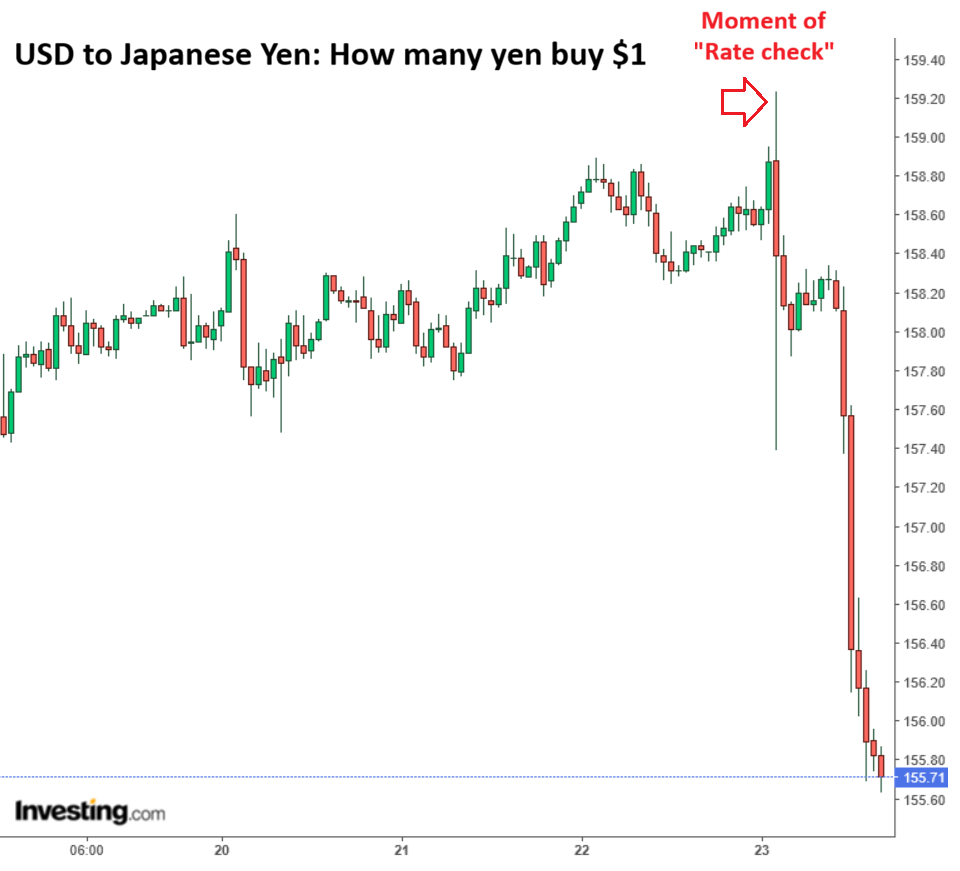
Search documents
Tariffs, Rate Decisions, and Inflation: Your Week Ahead Brief
Investing· 2026-01-26 09:11
Market Analysis by covering: US Dollar Japanese Yen, US Dollar Index Futures. Read 's Market Analysis on Investing.com ...


Fed Independence Is Coming Under Attack. What It Means for Markets.
Barrons· 2026-01-26 07:00
Core Viewpoint - The investigation of Federal Reserve Chair Jerome Powell by the Justice Department, influenced by President Donald Trump's pressure campaign, is expected to result in higher inflation [2]. Group 1 - The Federal Reserve's independence is facing challenges due to political pressures, particularly from the Trump administration [2]. - The ongoing scrutiny of Jerome Powell may undermine the credibility of the Federal Reserve, potentially affecting market stability [2].

美银:The Flow Show-Long Detroit, short Davos
美银· 2026-01-26 02:49
Investment Rating - The report indicates a "Sell" signal based on the BofA Bull & Bear Indicator, which is currently at 9.2, down from 9.4 [68][69]. Core Insights - The report highlights a significant outflow from equities, particularly from China ETFs, with a record outflow of $49.2 billion, while Japan and Europe saw inflows [21][45]. - The investment strategy suggests a rotation towards small and mid-cap stocks, driven by a favorable economic environment and government interventions aimed at affordability [22][27]. - Emerging Markets are positioned to enter a new secular bull market, supported by strong commodity prices and a shift in global economic dynamics [20][40]. Summary by Sections Market Performance - Year-to-date performance shows gold at 14.4%, commodities at 5.2%, and international stocks at 4.5%, while US stocks have only gained 1.0% [1]. - The report notes a significant decline in bond prices, with the 30-year US Treasury down 50% and JGB down 45% from peak to trough in the 2020s [3][18]. Economic Indicators - The report discusses the impact of Fed Chair nominations on yields, noting that yields have increased every time following nominations since 1970 [2][34]. - The MOVE index of Treasury volatility is at a four-year low, indicating market confidence that the new Fed Chair will not push 30-year Treasury yields above the 5% level [2]. Investment Flows - Weekly flows indicate $15.4 billion inflow to bonds and $4.9 billion to gold, while equities experienced a $43.2 billion outflow, marking a record driven by China ETFs [13][45]. - BofA private clients have shown a preference for IG bonds, municipal bonds, and TIPS ETFs, while selling REITs and high-yield bonds [15][51]. Sector Analysis - The report identifies financials and materials as sectors with inflows, while technology and consumer sectors faced outflows [47]. - The analysis suggests that small and mid-cap stocks are likely to outperform larger caps due to favorable policy changes and economic conditions [27][40].

美国:1 月美联储议息会议前瞻 - 还有空间,但暂不会行动-US Daily_ January FOMC Preview_ Further to Go, but Not for a While
2026-01-26 02:49
Summary of the January FOMC Preview Industry Overview - The document discusses the Federal Open Market Committee (FOMC) and its monetary policy decisions, particularly regarding the federal funds rate and labor market conditions. Key Points and Arguments - The January FOMC meeting is expected to be uneventful, with no change to the fed funds rate, which remains at 3.5-3.75% [2][3] - Chair Powell is anticipated to emphasize the recent three rate cuts aimed at stabilizing the labor market, indicating that the FOMC is well-positioned to assess their impact [5][6] - There is a consensus among 15 of 19 FOMC participants that additional rate cuts may be appropriate eventually, but the leadership seeks a stronger consensus for future cuts compared to the last cut in December [11][19] - The next expected rate cut is projected for June, followed by another in September, bringing the rate down to a range of 3-3.25% [18][22] - The risks over the next year or two are viewed as tilted to the downside, with hikes being unlikely, but potential reasons for additional cuts include a lower terminal rate or an increase in the unemployment rate [19][22] Labor Market Insights - The labor market is expected to stabilize this year, with an anticipated unemployment rate of 4.5% [6][7] - Job growth appears insufficient to keep pace with labor supply growth, indicating potential challenges ahead [6] - The stability of the unemployment rate since September is seen as a positive sign, but job growth remains a concern [6][8] Inflation Considerations - FOMC participants have differing views on inflation progress, with some focusing on core PCE inflation estimates that are close to 2%, while others rely on official numbers that may remain closer to 3% in the near term [15][17] - A firmer consensus for future cuts will require more convincing progress on inflation, which may take time to materialize [15][19] Additional Important Content - The document includes various exhibits illustrating job growth trends and inflation forecasts, which support the analysis presented [9][10][21] - The FOMC's approach to monetary policy is characterized by a cautious stance, reflecting the current economic uncertainties and the need for a careful assessment of labor market conditions and inflation data [2][19]
Explainer-How Singapore's unique monetary policy works
Yahoo Finance· 2026-01-25 23:05
Core Viewpoint - Singapore's central bank, the Monetary Authority of Singapore (MAS), manages monetary policy by adjusting the exchange rate of the Singapore dollar instead of changing domestic interest rates, which is a unique approach compared to many other economies [1]. Group 1: Economic Context - Singapore is a small, trade-reliant economy where gross exports and imports exceed three times its GDP, indicating a significant reliance on international trade [2]. - Nearly 40% of every Singapore dollar spent domestically is on imports, highlighting the importance of the exchange rate in influencing inflation more than domestic interest rates [2]. Group 2: S$NEER Overview - The S$NEER is an index that reflects the trade-weighted exchange rate of the Singapore dollar against the currencies of its major trading partners, which is crucial for determining general price levels in Singapore [4]. - The MAS allows the S$NEER to fluctuate within a policy band, which is not publicly disclosed, and intervenes by buying or selling Singapore dollars if the rate moves outside this band [5]. Group 3: Policy Band Mechanics - The MAS reviews the parameters of the policy band at least twice a year, with additional reviews possible in response to immediate economic conditions, such as high inflation [6]. - Starting in 2024, the MAS will announce monetary policy quarterly, enabling more timely assessments of the economic outlook [6]. - The three adjustable parameters of the policy band are the slope, level, and width, which influence the pace and extent of the Singapore dollar's appreciation or depreciation [7].
Singapore expected to keep monetary policy unchanged as growth outperforms
Yahoo Finance· 2026-01-25 23:01
Monetary Policy Outlook - Singapore is expected to maintain its monetary policy unchanged in the upcoming review, supported by strong semiconductor export demand and controlled inflation [1] - Out of 16 analysts surveyed, 15 predict that the Monetary Authority of Singapore (MAS) will not make any changes this week, following previous unchanged settings in July and October [1] Economic Growth - Singapore's GDP growth for 2025 is projected at 4.8%, surpassing the government's earlier forecast of around 4.0% and previous estimates of 1.5% to 2.5% [2] - The electronics purchasing managers' index reading of 50.9 in December indicates sustained momentum in the tech cycle, with AI-related demand and rising memory chip prices expected to benefit the semiconductor sector [2] Inflation and Future Policy Actions - Stable core inflation at just above 1% in November has alleviated immediate pressure for policy easing, with expectations for MAS to tighten policy in April as inflation stabilizes and trade uncertainties diminish [3] - Economists from Bank of America suggest that MAS may tighten policy as soon as the upcoming review, citing signs of strengthening inflation based on December data [4] - MAS is anticipated to raise its core inflation forecast range for 2026 by 50 basis points to 1% to 2% from the current range of 0.5% to 1.5% [4] Price Trends - Recent data indicates that price increases in travel-related and other components have outweighed declines in raw food and beverage prices, which will be reflected in MAS's updated inflation forecasts [5] Monetary Policy Mechanism - Singapore manages its monetary conditions by adjusting the local dollar's value against the currencies of its main trading partners within an undisclosed trading band, known as the Singapore dollar nominal effective exchange rate (S$NEER) [5] - MAS adjusts its settings through three levers: the slope, mid-point, and width of the band [6]
3 Cryptocurrencies to Buy if You're Worried About the Dollar Losing Value
Yahoo Finance· 2026-01-25 21:25
Core Viewpoint - The U.S. dollar is expected to weaken significantly due to persistent federal government deficits and rising national debt, which may lead to increased money printing [2]. Group 1: Economic Context - The Congressional Budget Office (CBO) projects that federal government deficits will continue for decades, pushing national debt towards approximately 150% of GDP [2]. - The need to pay interest on this growing debt is likely to necessitate the printing of more money, contributing to inflationary pressures [2]. Group 2: Investment Opportunities - Bitcoin is highlighted as a scarce asset with a maximum supply of 21 million coins, over 93% of which have already been mined, making it a potential hedge against inflation [5][6]. - Zcash mimics Bitcoin's supply design with a fixed cap of 21 million tokens and includes a privacy feature that may raise regulatory concerns, making it a higher-risk investment [7][9]. - Ethereum serves as the primary smart contract platform in the crypto sector, offering utility through decentralized applications and decentralized finance, while also having a reasonable supply situation [10].
Australia’s Labor Market Surges, Increasing Odds for RBA Rate Increase : Analysis
Crowdfund Insider· 2026-01-25 18:33
Employment Landscape - Australia's employment landscape showed remarkable resilience with a significant addition of 65,200 positions in December, predominantly in full-time employment [1] - The unemployment rate dropped to 4.1%, the lowest in seven months, while the participation rate increased to 66.7%, indicating more Australians are actively seeking or holding jobs [2] Economic Indicators - Trend data shows unemployment edged down to 4.2%, with over 100,000 roles created in the latter half of 2025, suggesting a thriving labor market despite global economic uncertainties [3] - The Commonwealth Bank of Australia (CBA) interprets the employment data as a signal for impending action from the Reserve Bank of Australia (RBA) [3] Monetary Policy Implications - CBA economist Harry Ottley emphasized that vigorous employment growth supports expectations for an interest rate adjustment in February, potentially raising the cash rate to 3.85% [4] - The RBA is concerned about persistent high job vacancies and recruitment struggles, indicating demand for workers is outpacing supply, which could lead to wage pressures and inflation [5] Future Outlook - The upcoming December quarter Consumer Price Index (CPI) report, scheduled for release on January 28, will be crucial in shaping the RBA's decisions regarding interest rates [6] - Analysts warn that ignoring employment signals could risk overheating the economy, complicating the RBA's efforts to balance growth and inflation [7] Sector Implications - The employment surge has implications for sectors like retail, construction, and services, where labor shortages are acute, necessitating close monitoring of trends influenced by international trade dynamics and commodity prices [9] - Stakeholders, including households and investors, should prepare for potential shifts in the financial landscape due to upcoming economic indicators [10]


Dollar Tree squanders huge opportunity with customers
Yahoo Finance· 2026-01-25 16:33
Core Insights - Dollar Tree has shifted from its traditional $1 pricing model to a multi-price strategy to attract a broader consumer base, including higher-income shoppers [1][3][4] Group 1: Consumer Demographics - 10.3% of consumers earning $100,000 or more now shop at Dollar Tree, up from 5.6% in 2021, indicating a growing appeal to higher-income shoppers [2] - Persistent inflation has pressured higher-income consumers to seek value, leading them to Dollar Tree [2][3] Group 2: Pricing Strategy - Dollar Tree's CEO highlighted that the company's multi-price assortment is designed to meet consumer needs in a budget-constrained environment [3] - The introduction of higher price points, including $5 and $7 items, marks a significant shift from the company's original pricing strategy [7] - The move to diversify pricing could alienate budget-conscious shoppers who may find the new prices unaffordable [4][8] Group 3: Market Positioning - The company aims to maintain its value proposition while expanding its product range, but this strategy carries risks of losing its core customer base [4][6] - In 2024, Dollar Tree acquired 170 leases from 99 Cents Only Stores, indicating a strategic move to strengthen its market presence [9]

US Government Struggles to Keep a Lid on 10-Year Treasury Yield and Mortgage Rates
Wolfstreet· 2026-01-25 16:07
Core Viewpoint - The U.S. government is prepared to intervene in the currency market to support the yen against the dollar, following significant fluctuations in the Japanese bond market and the yen's depreciation [2][5]. Group 1: Currency Market Intervention - A "rate check" was conducted by Treasury Secretary Scott Bessent to stabilize the yen, which had fallen sharply against the dollar [1][2]. - Following the "rate check," the yen appreciated from 159.2 to 155.7 yen per USD within hours [3]. Group 2: Bond Market Dynamics - The Japanese bond market experienced a meltdown, with the 30-year Japanese Government Bond yield rising by 42 basis points to 3.91%, the highest since its introduction in 1999 [5]. - The 10-year U.S. Treasury yield increased to 4.30%, up 17 basis points in a week, impacting mortgage rates which rose to 6.20% from 6.01% [6]. Group 3: Government Actions and Market Reactions - Bessent communicated with Japanese officials to address market concerns, leading to a decrease in the 10-year yield from 4.30% to 4.23% after the "rate check" [7]. - The U.S. government-sponsored enterprises, Fannie Mae and Freddie Mac, initiated buybacks of mortgage-backed securities (MBS) to help lower mortgage rates, with a directive to buy back $200 billion in MBS [9][10].