
Artificial Intelligence (AI)

Search documents
Bitcoin mining stocks drop as bitcoin tests $90,000 support
Yahoo Finance· 2026-01-20 15:36
Market Overview - Bitcoin mining stocks opened lower as Bitcoin's price retreated to a critical support level, trading at $90,489, down 2.28% over 24 hours, which negatively impacted mining stock valuations [1] - Major operators like MARA and Riot erased recent gains, reflecting a broader decline in cryptocurrency markets [1] Stock Performance - MARA led the losses, with shares falling 6.87% to $10.58, while Riot dropped 5.09% to $18.26 [2] - Other miners also experienced significant declines: IREN down 4.88% to $55.00, CleanSpark down 4.79% to $12.73, and Applied Digital down 6.36% to $35.02 [2] - Additional industry players recorded similar losses: Cipher down 4.79% to $17.90, Core Scientific down 4.16% to $18.11, TeraWulf down 3.10% to $13.42, and Hut 8 down 5.22% to $56.54 [3] Strategic Shifts - Bitcoin miners are increasingly attempting to decouple their stock performance from Bitcoin prices by pivoting towards high-performance computing (HPC) and AI [4] - Companies like Cipher, TeraWulf, IREN, Galaxy, and Hut 8 have signed major deals with hyperscalers or AI tech firms to support this shift [4] Recent Developments - Riot recently secured its first HPC/AI deal, acquiring its Rockdale site and entering a $311 million lease agreement with AMD, with potential contract extensions valued at approximately $1 billion [5] - CleanSpark's infrastructure advantages were noted by analysts, highlighting the value of its power assets for AI applications due to their proximity to major metropolitan areas [6] - HIVE announced plans to diversify its revenue and expand its power capacity with a 100-megawatt expansion in Paraguay, expected to be completed by 2026 [6]


TTD vs. MGNI: Which Ad-Tech Stock Is the Smarter Pick Now?
ZACKS· 2026-01-20 15:35
Industry Overview - The global digital advertising market is projected to grow at a CAGR of 15.4% from 2025 to 2030, indicating its attractiveness as a long-term growth market in technology [1]. Company Profiles The Trade Desk, Inc. (TTD) - TTD operates as a demand-side platform (DSP) in the digital advertising ecosystem, facing macroeconomic volatility that could pressure revenue growth due to reduced programmatic demand [2][4]. - The company is experiencing intense competition from major players like Meta Platforms, Apple, Google, and Amazon, which dominate the ad space with their control over inventory and first-party user data [5]. - TTD is investing in AI across its portfolio, leading to increased capital expenditures and operational costs, with total operating costs rising 17% year over year to $457 million [6]. - Geographic expansion poses complexities and risks, compounded by regulatory changes such as the deprecation of cookies and tightening data privacy laws [7]. - Despite challenges, TTD benefits from a shift towards an open Internet and expects decision-based CTV buying to become the default model, with 85% of clients using its AI-powered Kokai DSP [8]. Magnite, Inc. (MGNI) - MGNI operates as a supply-side platform (SSP) and is significantly benefiting from the connected TV (CTV) trend, with CTV accounting for approximately 45% of its total contribution excluding TAC [9]. - The company has established deep partnerships with major publishers and agency marketplaces, particularly in live sports and SMB advertising, with Netflix and Roku as key partners [11]. - MGNI is enhancing its ClearLine platform, which now has over 30 clients, and is integrating new technologies like the Model Context Protocol (MCP) to automate tasks [12]. - SpringServe, MGNI's CTV ad serving platform, is highlighted as a critical differentiator, especially after being selected by Spotify as its global programmatic partner [13]. - However, MGNI faces competitive pressures and macroeconomic uncertainties that could impact ad budgets, with a raised capex guidance to $80 million for 2025 [14]. Share Performance & Valuation - Over the past month, TTD shares have decreased by 4.8%, while MGNI shares have fallen by 12.5% [17]. - TTD is trading at a forward 12-month price/earnings ratio of 16.73X, compared to MGNI's 13.74X, indicating a higher valuation for TTD [18]. - Analysts have kept their earnings estimates unchanged for both TTD and MGNI over the past 60 days, suggesting stability in expectations [19][21]. - In terms of Zacks Rank, MGNI is currently rated as a better pick with a Zacks Rank 3 (Hold), while TTD carries a Zacks Rank 4 (Sell) [22].



U.S. Bancorp(USB) - 2025 Q4 - Earnings Call Transcript
2026-01-20 15:02
Financial Data and Key Metrics Changes - The company reported earnings per share of $1.26, an increase of approximately 18% year-over-year on an adjusted basis [4] - Net interest income increased by 3.3% year-over-year, supported by strong consumer deposit growth [4] - Total net revenue for the fourth quarter was $7.4 billion, a 5.1% increase, while full-year net revenue reached $28.7 billion [4][13] - The return on tangible common equity was 18.4%, and the efficiency ratio improved to 57.4% year-over-year [15] Business Line Data and Key Metrics Changes - Fee income represented 42% of total net revenues and grew 6.7% year-over-year, with broad-based strength across most fee businesses [7][16] - Average loans totaled $384 billion, up 1.4% from the prior quarter, with commercial and credit card loans growing by 10.1% and 5.7% respectively [15] - Non-interest expense totaled approximately $4.2 billion, up 0.7% linked quarter, influenced by severance charges [17] Market Data and Key Metrics Changes - The company experienced record consumer deposits this quarter, contributing to net interest income growth [10] - The ratio of non-performing assets to loans improved to 0.41%, indicating better asset quality [17] Company Strategy and Development Direction - The company is focused on restoring investor confidence and delivering strong financial results through three key priorities [5] - Strategic investments in technology, sales, and marketing are planned for 2026 to drive growth [6] - The acquisition of BTIG is expected to create considerable revenue synergies and enhance the capital markets franchise [8] Management's Comments on Operating Environment and Future Outlook - Management expressed confidence in the economic backdrop for 2026, highlighting strong consumer performance and improving credit quality metrics [20][88] - The company is closely monitoring potential policy changes that could impact the banking industry, particularly regarding capital and digital assets [88] Other Important Information - The company expects total net revenue growth of 4%-6% for 2026, with positive operating leverage of 200 basis points or more [18] - The BTIG acquisition is anticipated to contribute $175-$200 million of fee revenue per quarter [19] Q&A Session Summary Question: Share repurchase pace and capital ratios - Management plans to gradually increase share repurchases from $100 million to $200 million, focusing on client and loan growth first [24] Question: Impact of credit card rate caps - Management estimates that over 90% of clients would be negatively impacted by a 10% rate cap on credit cards, emphasizing the importance of financial education [25][26] Question: Revenue growth expectations for 2026 - Management expects mid-single-digit growth for both net interest income and fee revenue, driven by strong business momentum [30][31] Question: Balance sheet growth outlook - Loan growth is expected to be in the 3%-4% range, with a focus on commercial and card loans [40] Question: NIM expansion timeline - Management maintains a path to achieve a 3% net interest margin by 2027, driven by loan mix and fixed asset repricing [43] Question: Drivers of deposit growth - The company is seeing steady growth in consumer deposits, which are expected to be accretive in the long term [48][49] Question: Digital assets organization - The company is actively exploring opportunities in digital assets, particularly in capital markets and cryptocurrency custody [51] Question: BTIG acquisition impact - The acquisition is expected to be PPNR neutral initially, with potential for margin expansion post-merger costs [100]

GSK acquires RAPT Therapeutics for $2.2bn
Yahoo Finance· 2026-01-20 12:43
Core Viewpoint - GSK is acquiring RAPT Therapeutics for up to $2.2 billion to enhance its immunology portfolio, focusing on food allergy treatments [1][2]. Group 1: Acquisition Details - GSK will pay $58.00 per share for RAPT, resulting in an aggregate equity value of approximately $2.2 billion, significantly higher than RAPT's closing stock value of $35.10 on January 16 [1]. - The acquisition includes global commercial rights to ozureprubart, a long-acting anti-immunoglobulin E (IgE) prophylactic food allergy candidate, outside of specific Asian markets [2]. Group 2: Product Potential - Ozureprubart is currently in Phase IIb clinical trials and could become a "best-in-class" medication if approved, due to its once-quarterly dosing schedule, unlike other therapies that require more frequent dosing [3]. Group 3: Strategic Focus - GSK is emphasizing immunology as a key growth area, having previously engaged in a $12 billion deal with Hengrui Pharma for immunology and oncology assets [4]. - The company also established a five-year £50 million ($54.3 million) R&D agreement with the University of Cambridge to develop new treatments for immune dysfunction [5]. Group 4: Industry Context - The pharmaceutical industry is facing a significant patent cliff, with potential losses of $230 billion in the US market from 2025 to 2030, prompting companies to seek new growth avenues [6]. - GSK's Chief Scientific Officer highlighted the use of AI-driven early-stage R&D to strengthen its pipeline and mitigate losses from drug patent expirations [7].


NVIDIA (NASDAQ: NVDA) Price Prediction and Forecast 2026-2030 for January 20
247Wallst· 2026-01-20 12:00
Core Insights - NVIDIA's stock has shown volatility, gaining 1.59% over the last five trading sessions after a previous decline of 2.91%, and is down over 10% since its all-time high on October 29, 2025, but remains up 32.15% year-over-year [1] Financial Performance - In Q3 2025, NVIDIA reported record revenue of $57.0 billion and diluted EPS of $1.30, surpassing analyst expectations, with data center revenue reaching a record $51.2 billion, a 66% year-over-year increase [2] - Over the last decade, NVIDIA's revenue has grown by more than 553%, and net income has increased by over 1,323%, despite a slight contraction in 2020 due to the COVID-19 pandemic [6] Market Position - NVIDIA became the first publicly traded company to surpass a market cap of $5 trillion in late October 2025, following its earlier achievement of a $4 trillion market cap in July [3] - The company is recognized as a leading manufacturer of semiconductors, microchips, and GPUs, which are critical for the AI surge, resulting in a stock increase of 1,316.57% over the past five years and an astonishing 470,200% since going public in 1999 [4] Growth Drivers - NVIDIA holds a strong position in the GPU industry, with a market cap of $3.34 trillion, significantly higher than competitors like AMD and TSMC [8] - Major tech companies, including Alphabet, Amazon, Meta, and Microsoft, account for 40% of NVIDIA's revenue, driving demand for its products as they lead the AI revolution [9] - The AI market is projected to grow at a CAGR of 36.6% from 2024 to 2030, indicating substantial future growth potential for NVIDIA [10] Price Predictions - The consensus median one-year price target for NVIDIA is $263.44, representing a potential upside of 41.55% based on current share prices, with a year-end forecast for 2026 at $300.14, indicating a 61.27% upside [11] - Revenue and net income forecasts for 2026 to 2030 show significant growth, with projected revenue reaching $265.522 billion and net income at $175.412 billion by 2030 [12]


It’s Funny SML Holding (ASML) Moved Faster Than TSMC, Says Jim Cramer
Yahoo Finance· 2026-01-20 11:00
Group 1 - ASML Holding N.V. is a Dutch semiconductor manufacturing equipment provider with a monopoly in the high-end market due to its unique capability to produce EUV lithography machines [2] - The company's shares have increased by 79% over the past year and are up 16.8% year-to-date [2] - Analyst focus on ASML has intensified following TSMC's strong earnings report, with Bernstein reiterating an Outperform rating and a €1,300 price target, while RBC Capital set a $1,550 price target and an Outperform rating [2] Group 2 - Jim Cramer noted that ASML's stock price moved faster than TSMC's, leading to upgrades in capital equipment stocks [3] - Despite the potential of ASML as an investment, there is a belief that some AI stocks may offer higher returns with limited downside risk [3]


Novartis AG (NVS) Advances $23B U.S. Investment Plan With New RLT Logistics Hub
Yahoo Finance· 2026-01-20 10:00
Group 1 - Novartis AG is ranked ninth in a list of the Top 10 Oncology Stocks to Buy Now, indicating its strong position in the oncology market [1] - Barclays upgraded Novartis AG to Equal Weight from Underweight with a price target of CHF 120, citing a poor operational outlook for 2026 and noting that the company's pipeline is "fairly rich" but faces competition [1] - Novartis AG has unveiled a new 35,000-square-foot RLT facility in Winter Park, Florida, as part of its $23 billion U.S. investment strategy, aimed at supporting precision oncology treatments [2][3] Group 2 - The company has a robust oncology portfolio with over 30 high-value therapies and a growing radioligand therapy (RLT) pipeline, focusing on precision oncology and advanced manufacturing [3] - Novartis AG is investing heavily in targeted treatments like Pluvicto and Lutathera to address complex cancer needs globally [3]

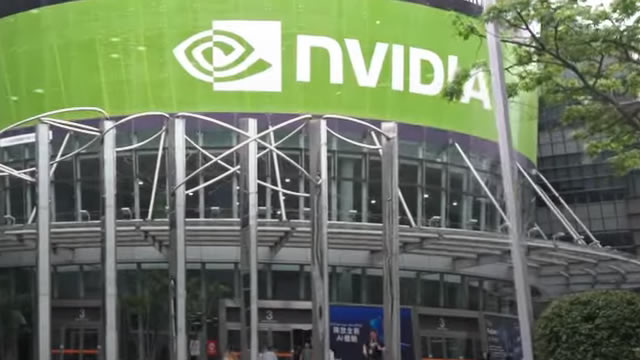
5 Tangible Risks That Can Upend Nvidia's Parabolic Climb in 2026
The Motley Fool· 2026-01-20 09:06
Core Insights - The rise of artificial intelligence (AI) has significantly impacted Nvidia, with its market cap increasing by over $4.1 trillion since the beginning of 2023, making it a leader in the AI revolution [2] - Nvidia's GPUs are the preferred choice for AI-accelerated data centers, and the company is expected to maintain its competitive edge with annual releases of advanced chips [3] Group 1: Risks to Nvidia's Growth - The potential for an AI bubble to burst poses a significant risk to Nvidia, as historical trends show that rapid technological adoption can lead to market corrections [5][8] - Internal competition from Nvidia's top customers developing their own AI solutions could undermine Nvidia's pricing power and gross margins [10][12] - Regulatory challenges in China, including export restrictions and tariffs, threaten Nvidia's sales in a key market, although there is potential for revenue if regulatory issues are resolved [13][15][16] Group 2: Innovation and Market Valuation Concerns - CEO Jensen Huang's aggressive innovation strategy, while successful, risks rapid depreciation of older GPU models, which could affect future sales and upgrade cycles [17][19][20] - Nvidia's price-to-sales (P/S) ratio has reached levels historically associated with market bubbles, raising concerns about sustainability in a potentially overvalued stock market [22][24]
Heartland Value Fund Q4 2025 Portfolio Manager Commentary (Mutual Fund:HRTVX)
Seeking Alpha· 2026-01-20 04:20
Group 1 - The article emphasizes the growing interest in small-cap value stocks as the market broadens beyond mega-cap tech stocks, which have dominated investment flows in recent years [2][21] - In Q4, the Russell 2000® Value Index returned 3.26%, outperforming the S&P 500's 2.66% gains, indicating a significant relative performance improvement for small stocks [3] - Small companies are projected to experience profit growth that will surpass large caps for the first time in 13 quarters, supported by favorable economic conditions such as lower interest rates and improved regulatory environments [4] Group 2 - Valuations of small stocks are becoming more attractive, with recent private acquisitions indicating increased investor interest; four holdings were taken private in the last quarter, raising the total to 14 for the year [5] - Despite the concentration of market capitalization, where just 10% of companies account for over 75% of the market, there is a belief that the small-cap rebound is still in its early stages [6] - The Heartland Value Fund gained 2.61% in Q4, slightly underperforming the Russell 2000® Value Index, but has outpaced it over longer time frames [9] Group 3 - Integer Holdings Corporation faced a significant stock decline of over 30% after lowering its growth outlook, but management remains optimistic about future growth and margin expansion [11] - Columbus McKinnon Corporation's stock dropped more than 40% following a $2.7 billion acquisition announcement, despite management's plans to improve growth and margin profiles post-acquisition [13][14] - Alexander & Baldwin's stock was down over 14% due to concerns about tourism, but the company was taken private at a 40% premium, indicating renewed investor interest in undervalued companies [20]


Figure Technology (FIGR) Surges 27% as Analysts Hike PT
Yahoo Finance· 2026-01-20 01:26
Core Viewpoint - Figure Technology Solutions Inc. (NASDAQ:FIGR) has shown significant stock performance, with a week-on-week increase of 27.2%, reaching an all-time high of $76.57 after price target upgrades from investment firms [1]. Group 1: Stock Performance and Price Targets - Piper Sandler raised its price target for FIGR from $64 to $75, maintaining an "outperform" rating after the company exceeded its consumer loan marketplace volume (CLMV) forecast by 20% [2]. - Mizuho also increased its price target for FIGR by 18%, from $54 to $64, while keeping an "outperform" rating, although this target is 13.4% lower than its recent closing price of $73.91 [5]. Group 2: Consumer Loan Marketplace Volume (CLMV) - FIGR reported a 131% increase in CLMV for Q4 2025, reaching $2.7 billion, up from $1.17 billion in Q4 2024. December alone saw a 133.6% rise in CLMV to $869 million from $372 million in December of the previous year [3]. - CLMV encompasses the total dollar amount of consumer loans from various sources, including home equity lines of credit and personal loans, as well as third-party loans traded on Figure Connect [4]. Group 3: Earnings Estimates - Following the strong CLMV results, Piper Sandler raised its earnings per share estimate for FIGR by 34% for Q4 2025 and by 18% for the years 2026 and 2027 [4].