
Dividend Yield

Search documents
Pinnacle Financial (PNFP) Could Be a Great Choice
ZACKS· 2026-02-27 17:46
Company Overview - Pinnacle Financial (PNFP) is based in Nashville and operates in the Finance sector, with a year-to-date share price change of 0.73% [3] - The company currently pays a dividend of $0.50 per share, resulting in a dividend yield of 2.08%, which is higher than the Banks - Southeast industry's yield of 2.03% and the S&P 500's yield of 1.35% [3] Dividend Performance - Pinnacle Financial's annualized dividend of $2.00 represents a significant increase of 108.3% from the previous year [4] - Over the past five years, the company has increased its dividend three times, achieving an average annual increase of 7.56% [4] - The current payout ratio is 11%, indicating that the company pays out 11% of its trailing 12-month earnings per share (EPS) as dividends [4] Earnings Growth - The Zacks Consensus Estimate for Pinnacle Financial's earnings in 2026 is projected at $10.22 per share, reflecting an expected increase of 22.10% from the previous year [5] - The company is viewed as a strong dividend play, particularly appealing to income investors due to its solid earnings growth prospects [6]



How To Earn $500 A Month From ADT Stock Ahead Of Q4 Earnings
Benzinga· 2026-02-27 13:50
Core Insights - ADT Inc. is set to release its fourth-quarter earnings on March 2, with analysts predicting earnings of 22 cents per share, an increase from 20 cents per share in the previous year [1] - The consensus estimate for ADT's quarterly revenue is $1.3 billion, up from $1.26 billion reported last year [1] - ADT has entered a five-year renewable commercial agreement with Origin AI and Verisure [1] Dividend Information - ADT currently offers an annual dividend yield of 2.71%, translating to a quarterly dividend of 5.5 cents per share [2] - To achieve a monthly income of $500 from dividends, an investor would need to own approximately 27,273 shares, equating to a total investment of about $221,184 [3] - For a more conservative monthly income goal of $100, an investor would need 5,455 shares, requiring an investment of around $44,240 [3] Dividend Yield Dynamics - The dividend yield is calculated by dividing the annual dividend payment by the current stock price, which can fluctuate [4] - Changes in stock price directly affect the dividend yield; for instance, if the stock price rises, the yield decreases, and vice versa [4] - The dividend payment itself can also change, impacting the yield; an increase in dividend payment raises the yield if the stock price remains constant [5] Stock Performance - ADT shares increased by 2% to close at $8.11 on Thursday [5]

Morgan Stanley A Vs. E Preferred Shares: Rating Change For Both
Seeking Alpha· 2026-02-27 13:00
Group 1 - The focus is on income-producing asset classes such as REITs, ETFs, Preferreds, and 'Dividend Champions' that target premium dividend yields up to 10% [1][3] - iREIT®+HOYA Capital is highlighted as a premier income-focused investing service that offers sustainable portfolio income, diversification, and inflation hedging [2][3] - The investment research provided includes strategies for trading options, particularly cash-secured puts, aimed at helping investors achieve dependable monthly income [3] Group 2 - The service offers a Free Two-Week Trial for potential investors to explore top ideas across exclusive income-focused portfolios [2] - The investment group aims to assist investors in preparing for retirement through various investment vehicles including CEFs, ETFs, BDCs, and REITs [3]


How To Earn $500 A Month From Carter's Stock Ahead Of Q4 Earnings
Benzinga· 2026-02-26 12:56
分组1 - Carter's, Inc. is expected to report fourth-quarter earnings of $1.70 per share, a decrease from $2.39 per share in the same period last year [1] - The consensus estimate for Carter's quarterly revenue is $922.87 million, up from $859.71 million reported last year [1] - UBS analyst Jay Sole maintains a Neutral rating on the stock and has raised the price target from $33 to $40 [1] 分组2 - Carter's has an annual dividend yield of 2.39%, translating to a quarterly dividend of 25 cents per share, or $1.00 annually [2] - To earn $500 monthly from dividends, an investment of approximately $251,520 or around 6,000 shares is required [3] - The dividend yield can fluctuate based on changes in the stock price and dividend payments [4][5][6] 分组3 - Shares of Carter's fell 1.1% to close at $41.92 on Wednesday [6]


How To Earn $500 A Month From Hormel Foods Stock Ahead Of Q1 Earnings
Benzinga· 2026-02-25 12:53
分组1 - Hormel Foods Corporation is set to release its first-quarter earnings on February 26, with expected earnings of 32 cents per share, down from 35 cents per share in the previous year [1] - The consensus estimate for Hormel Foods' quarterly revenue is $3.06 billion, an increase from $2.99 billion reported last year [1] - Donald Monk has been appointed as the chief technology officer, effective March 23 [1] 分组2 - Hormel Foods currently has an annual dividend yield of 4.53%, translating to a quarterly dividend of 29.25 cents per share, or $1.17 annually [2] - To achieve a monthly income of $500 from dividends, an investor would need approximately 5,128 shares, equating to a total investment of about $132,302 [3] - For a more conservative monthly income goal of $100, an investor would require 1,026 shares, or an investment of around $26,471 [3] 分组3 - The dividend yield is calculated by dividing the annual dividend payment by the current stock price, which can fluctuate based on stock price changes [4] - Changes in the dividend payment itself can also affect the dividend yield; an increase in the dividend payment raises the yield, while a decrease lowers it [5] - Hormel Foods shares increased by 2.5% to close at $25.80 on Tuesday [5]


Vedanta shares up 5% after BoFA upgrade to ‘buy’
BusinessLine· 2026-02-25 05:13
Core Viewpoint - Vedanta Ltd's shares experienced a significant increase of over 5% following an upgrade from Bank of America Corporation (BofA), which raised its price target to ₹840 from ₹480, indicating strong upside potential from current levels [1]. Group 1: Stock Performance - The stock reached a day's high of ₹731.50, reflecting a 5.2% increase from the previous close of ₹695.10 [1]. Group 2: Analyst Upgrade and Price Target - BofA upgraded Vedanta's stock rating from neutral to buy and set a new price target of ₹840 per share [4]. - The upgrade is attributed to an improved outlook on aluminium prices, supportive silver prices, and expectations of a healthy dividend yield [4]. Group 3: Financial Outlook - BofA estimates that Vedanta could achieve a dividend yield exceeding 6% by FY27E, making the stock more appealing to income-focused investors [4]. - The brokerage has raised its EBITDA estimates for FY26 to FY28 by 16–21%, driven by higher aluminium price forecasts and improved financial stability [6]. Group 4: Company Financial Stability - The upgrade reflects growing confidence in Vedanta's financial stability, with significant deleveraging at the parent company alleviating concerns regarding potential increases in brand-fee rates or inter-corporate loans [5]. - The improvement in the balance sheet is seen as reducing risk and enhancing corporate governance visibility [5]. Group 5: Earnings Drivers - Aluminium is identified as a key earnings driver for Vedanta, with expectations of firmer global prices enhancing earnings visibility [7]. - Steady silver prices and favorable currency movements are anticipated to further improve profitability across various segments [7].

New Mountain Finance Corporation Announces December 31, 2025 Financial Results
Businesswire· 2026-02-24 21:25
Core Insights - New Mountain Finance Corporation reported its financial results for the quarter and year ended December 31, 2025, highlighting stable net investment income and proactive measures to enhance financial flexibility [1][4]. Financial Performance - Net investment income for Q4 2025 was $33.0 million, or $0.32 per weighted average share, consistent with Q4 2024 [3][6]. - Regular and supplemental dividends paid per share in Q4 2025 were $0.32, slightly down from $0.33 in Q4 2024 [3]. - The annualized dividend yield as of December 31, 2025, was 15.7%, compared to 10.7% in the previous year [3]. - The net asset value (NAV) per share decreased to $11.52 from $12.06 as of September 30, 2025 [3][6]. Portfolio and Investment Activity - The investment portfolio's fair value was $2,755.5 million, with a weighted average yield to maturity (YTM) at cost of approximately 10.5% [7]. - The company signed a definitive agreement to sell $477 million of assets at 94% of fair value to enhance portfolio diversification and reduce payment-in-kind (PIK) income [6][8]. - Approximately 95% of the portfolio is rated green on the internal heatmap, indicating strong asset quality [6]. Management Strategy - Management is taking steps to strengthen the company, including reducing incentive fees and repurchasing shares worth $30 million since the end of Q3 2025 [4][6]. - The company plans to declare a first-quarter 2026 distribution of $0.32 per share, with expectations to reduce the dividend to $0.25 per share starting in Q2 2026 [6]. Liquidity and Capital Resources - As of December 31, 2025, the company had cash and cash equivalents of $80.7 million and total statutory debt outstanding of $1,492.7 million, resulting in a statutory debt-to-equity ratio of 1.26x [12]. - The company had $856.0 million of available capacity on its credit facilities as of the same date [12]. Portfolio Composition - As of December 31, 2025, the investment portfolio composition included 66.0% in first lien investments and 14.1% in senior loan funds [11]. - The company primarily targets middle-market businesses in defensive growth sectors, focusing on high-quality companies with sustainable growth drivers [8][21].


Retirees Should Know Why The High Yield Small Cap ETF XSHD Cut Payouts 28%
247Wallst· 2026-02-24 15:23
Core Viewpoint - Invesco's SmallCap High Dividend ETF (XSHD) has cut its distributions by 28% by mid-2025, with payouts down 40% from 2023 levels, raising concerns about the sustainability of its income stream due to its heavy concentration in mortgage REITs and interest rate sensitivity [1]. Group 1: Dividend Performance - XSHD's monthly distributions averaged $0.086 in early 2025 before dropping approximately 28% by mid-year, indicating stress among the ETF's underlying holdings [1]. - The most recent distribution in January 2026 was $0.06249, reflecting a sustained annualized payout decline of about 40% from 2023 levels [1]. Group 2: Fund Structure and Holdings - XSHD tracks small-cap U.S. stocks selected for high dividend yields and low volatility, with $74.4 million in net assets [1]. - The fund is heavily concentrated in real estate investment trusts (REITs), with financials representing 21.1% of holdings, making its income dependent on interest rate spreads and property cash flows [1]. Group 3: Market Performance - XSHD has experienced a total return decline of 14.06% over five years, significantly underperforming the broader small-cap market, which saw a gain of 17.23% during the same period [1]. - Even with dividends reinvested, XSHD investors faced negative real returns while taking on concentration risk in volatile mortgage REITs [1].

How To Earn $500 A Month From Lowe's Stock Ahead Of Q4 Earnings - Lowe's Companies (NYSE:LOW)
Benzinga· 2026-02-24 13:15
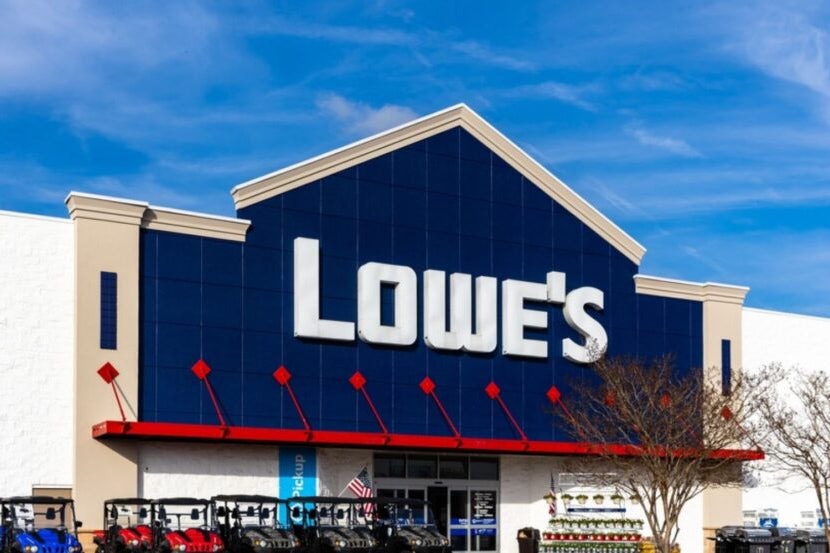
Lowe’s Companies, Inc. (NYSE:LOW) will release earnings for its fourth quarter before the opening bell on Wednesday, Feb. 25.Analysts expect the company to report quarterly earnings of $1.94 per share. That’s up from $1.93 per share in the year-ago period. The consensus estimate for Lowe’s quarterly revenue is $20.34 billion (it reported $18.55 billion last year), according to Benzinga Pro.Ahead of quarterly earnings, RBC Capital analyst Steven Shemesh, on Monday, maintained Lowe’s with a Sector Perform and ...

Domino's Pizza Hikes Its Dividend By 14.3% After Free Cash Flow Rises 29% - Value Buyers Love DPZ Stock
Yahoo Finance· 2026-02-23 16:58
Domino's Pizza Inc (DPZ) announced today (pre-market) a huge $1.00 increase in its dividend per share, or +14.3%, after its Q4 free cash flow rose over 29% YoY and 31% in 2025. As a result, value buyers love DPZ stock as it looks undervalued. DPZ is up $10.00 today at $394.58 per share in morning trading, +2.6%. It could have over 20% upside, based on its average historical yield and FCF margin projections. This article will show why. More News from Barchart DPZ stock - last 6 months - Barchart - Feb. 2 ...
