
Tariff Policy

Search documents
33亿预期落空!恩智浦(NXPI.US)Q3展望逊色引投资者抛售
Zhi Tong Cai Jing· 2025-07-21 23:35
Group 1 - NXP Semiconductors' Q3 revenue outlook of $3.05 billion to $3.25 billion did not meet some investors' optimistic expectations, leading to a more than 5% drop in after-hours trading [1] - The company's revenue forecast reflects ongoing challenges in the industry, particularly due to the impact of tariffs from the Trump administration, which have disrupted global supply chains and created uncertainties in customer orders [1][2] - Despite the disappointing guidance, NXP's adjusted earnings per share forecast of $2.89 to $3.30 exceeds analysts' average prediction of $3.06, indicating a potential positive outlook for core markets [2] Group 2 - The automotive and industrial sectors are experiencing weakened demand, affecting NXP and its competitors like Infineon Technologies and STMicroelectronics [2] - Analysts warn that automotive chip manufacturers may face increased pricing pressure as Renault has lowered its outlook, and European customers' restocking demand to avoid tariffs is expected to end soon [3] - The oversupply of electric vehicle chips, particularly due to weak demand outside of China, has been suppressing industry sales for 18 months [2][3]

更新我们的关税假设_ 缓慢攀升至更高水平-US Daily_ Updating Our Tariff Assumptions_ A Slightly Slower Rise to a Higher Level (Phillips_Peng)
2025-07-19 14:57
Summary of Key Points from the Conference Call Industry Overview - The discussion revolves around the impact of proposed tariff changes on various sectors of the U.S. economy, particularly focusing on trade policies announced by President Trump. Core Insights and Arguments - **Tariff Proposals**: President Trump has proposed higher tariffs on countries that account for ¾ of U.S. imports, with potential baseline tariff rates rising to 15-20% [2][4][5] - **Sector-Specific Tariffs**: A significant increase in sectoral tariffs, particularly a 50% tariff on copper, was announced, which is double the previously expected rate [2][7] - **Pharmaceutical Tariffs**: There is uncertainty regarding the implementation of tariffs on pharmaceuticals, which may be delayed for up to 18 months, potentially affecting the overall effective tariff rate [2][10][18] - **Effective Tariff Rate (ETR) Forecast**: The near-term ETR is expected to rise slightly more slowly than previously anticipated but will still end the year approximately 14 percentage points (pp) higher than it started [2][21] - **Country-Specific Tariffs**: Proposed country-specific tariffs could add an additional 3.2pp to the ETR if implemented [22] Additional Important Content - **Historical Context**: Previous tariff deadlines have shown a pattern where proposed increases are often reversed or reduced before implementation, leading to a higher ETR than before but lower than initially proposed [11][12] - **Legal Risks**: There are potential legal challenges that could impact tariff rates, particularly concerning the baseline tariff and sectoral tariffs [14] - **Sectoral Investigations**: Ongoing investigations into pharmaceuticals and semiconductors are expected to conclude soon, which could lead to further tariff announcements [8] - **Impact on Trading Partners**: The proposed tariffs will have varying impacts on different trading partners, with specific rates outlined for countries like Brazil (50%), the EU (30%), and Canada (35%) [5][24] Conclusion - The overall sentiment indicates a cautious approach to the anticipated rise in tariffs, with a focus on the implications for various sectors and trading partners. The potential for delays and legal challenges adds complexity to the tariff landscape, necessitating close monitoring of developments in trade policy.
宏观研究关注焦点_ 关税邮件、美国通胀_ 中国通缩、中国经济增长-What's Top of Mind in Macro Research_ Tariff mail, US inflation_China deflation, China growth
2025-07-19 14:57
Summary of Key Points from the Conference Call Transcript Industry Overview - The discussion primarily revolves around macroeconomic factors affecting global trade, particularly focusing on tariffs proposed by the Trump Administration and their implications for various economies, including the EU, Brazil, and Mexico [1][2][3]. Core Insights and Arguments - **Tariff Implications**: - A proposed 30% tariff on the EU could reduce Euro area GDP by over 1.2% through the end of 2026 [1]. - A proposed 50% tariff on Brazil may lower Brazil's GDP growth by more than 0.3-0.4 percentage points [1]. - The 30% tariff on Mexico is expected to have modest impacts due to current exemptions for USMCA-compliant exports, but significant impacts could arise if these exemptions are removed [1]. - **Expectations on Tariff Implementation**: - It is generally anticipated that the higher proposed tariffs will not take effect, viewing them as a negotiating tactic. A more likely scenario is an increase of the baseline tariff from 10% to 15% for countries that do not reach agreements with the US by the August 1 deadline [2]. - The expectation is for a slight decrease in the near-term US effective tariff rate, with a potential rise to a level approximately 3 percentage points higher than previously estimated [2]. - **Market Reactions**: - Market participants do not expect most proposed tariffs to be enacted, which has contributed to a muted market reaction. The S&P 500 reached new all-time highs, with expectations for further rises in US, European, and emerging market equities [3]. Additional Important Insights - **Inflation Trends**: - Despite a below-consensus rise in US core CPI in June, expectations are for core CPI/PCE inflation to rise to 3.1%/3.3% year-on-year by December, driven by higher tariffs impacting core goods prices [6]. - In contrast, the UK experienced an unexpected rise in CPI, with services inflation expected to remain above target levels throughout 2025 [7]. - **China's Economic Situation**: - China is experiencing its 33rd consecutive month of year-on-year PPI deflation, with expectations for continued price declines. Headline PPI inflation is projected to decline by 2.8% year-on-year this year and 1.0% next year [8]. - **Commodity Market Outlook**: - The Brent crude oil price forecast for 2H25 has been raised to $66 per barrel, while the LME copper price forecast for August 2025 has been lowered to $9,550 per ton [14]. - **US Housing Market**: - Home price appreciation forecasts for 2025 and 2026 have been lowered to 0.5% and 1.2%, respectively, reflecting ongoing weakness in home price data and a gradual recovery in housing supply [14]. - **Treasury Cash Balance**: - The Treasury's cash balance is expected to be replenished following a recent increase in the debt limit, potentially returning to $850 billion by the end of Q3, which may lead to upward pressure on funding costs [14]. Conclusion - The macroeconomic landscape is influenced by proposed tariffs, inflation trends, and commodity prices, with significant implications for global GDP growth and market performance. The focus remains on how these factors will evolve in the coming quarters, particularly in relation to trade negotiations and economic recovery efforts across different regions.
Insteel(IIIN) - 2025 Q3 - Earnings Call Transcript
2025-07-17 15:00
Financial Data and Key Metrics Changes - Net earnings for Q3 2025 increased to $15.2 million or $0.78 per share compared to $6.6 million or $0.34 per share in the prior year, with adjusted earnings at $0.81 per share excluding non-recurring charges [4][10] - Average selling prices rose 11.7% year over year and 8.2% sequentially from Q2 2025, reflecting pricing actions taken to manage rising raw material costs [4][6] - Gross profit for the quarter increased to $30.8 million, with gross margin expanding by 650 basis points to 17.1% [6][7] Business Line Data and Key Metrics Changes - Shipments for the quarter increased by 10.5% year over year and 3.5% sequentially, driven by acquisitions and improving demand in construction markets [6][10] - SG&A expenses rose to $10.6 million or 5.9% of net sales compared to $7.9 million or 5.4% in the prior year, primarily due to increased compensation expenses [8][9] Market Data and Key Metrics Changes - The U.S. wire rod market remains tight, with public prices for steel wire rod increasing by approximately $190 per ton since January [5] - The architectural billing index increased to 47.2, indicating early signs of stabilization, while the Dodge Amendment Index rose 6.8% month over month to 225.1, suggesting a growing pipeline for nonresidential construction [13][14] Company Strategy and Development Direction - The company aims to capitalize on improving demand trends while managing working capital and maintaining strong customer relationships [17] - The administration's tariff strategy is seen as a work in progress, with only about 10% of revenue directly affected by imports, indicating a cautious approach to import competition [20][21] Management's Comments on Operating Environment and Future Outlook - Management expressed optimism about ongoing demand recovery despite macroeconomic uncertainties, noting that customer confidence remains strong [19] - The company is well-positioned to navigate near-term challenges while pursuing growth opportunities, both organic and through acquisitions [29] Other Important Information - The effective tax rate for the quarter fell to 23.3%, with expectations to remain around 23.4% for the remainder of the year [10] - The company ended the quarter with $53.7 million in cash and is debt-free, providing financial flexibility for growth opportunities [12] Q&A Session Summary Question: Have quoting levels for newer projects followed the strong business activity trajectory? - Management noted that raw material constraints have caused backlogs to grow, but they remain optimistic about overall market conditions [35] Question: What is the potential timeline to resolve the recent Section 232 tariff disconnect? - Management believes the administration's intent is for the tariff to be on the full value of the product, and they are actively engaging with the Department of Commerce on this matter [37] Question: How is the integration of Engineered Wire Products going? - Management expressed satisfaction with the integration process, noting that they are learning from the acquired facility and seeing positive operational results [39] Question: Do you anticipate being able to maintain current margin levels? - Management expects to pass through higher costs and does not anticipate margin deterioration in the current market environment [53] Question: What needs to occur for the housing market to improve? - Management indicated that while they do not solely rely on housing, infrastructure investments are expected to drive demand for their products [55] Question: What is the outlook for cash balance at year-end? - Management stated that they are not dissatisfied with the current cash position and will assess the year-end outlook as they approach the end of the fiscal year [56] Question: Can you quantify the domestic wire rod supply shortage? - Management estimated that they will have imported 25% to 30% of their steel requirements, approximating the domestic shortfall [57]

Pre-Markets in the Red to Start a Fresh Week
ZACKS· 2025-07-14 16:05
Market Overview - Pre-market futures are lower across all major indexes due to new tariff threats from President Trump, which have dampened market enthusiasm after reaching near record highs last week [1][2] - Trump announced a new +35% tariff on all Canadian imports and a +30% tariff on both the EU and Mexico, effective if no new trade deals are reached by August 1st [2] Tariff Impact - Over $99 billion in revenues have been collected from tariff policies, marking an increase of more than +110% from the previous year [3] - Economists express concerns that higher tariffs could lead to increased prices for consumers as companies pass on costs to maintain profitability [3] Trade Deal Status - The U.S. has not established new trade deals, with only an incomplete agreement with the UK and a preliminary deal with China regarding rare earth materials [4][5] - The 90-day window for establishing new trade policies has closed without resolution, raising questions about the potential for further delays [5] Economic Data Releases - This week will see significant economic data releases, including the Consumer Price Index (CPI) and Producer Price Index (PPI), with CPI expected to rise to +2.7% from +2.4% [6] - Other economic reports include Empire State and Philly Fed manufacturing reports, Retail Sales, Industrial Production, Business Inventories, Homebuilder Confidence, and Housing Starts/Building Permits [7] Earnings Reports - Major banks such as JPMorgan, Citigroup, and Wells Fargo will report earnings on Tuesday, followed by Bank of America and Goldman Sachs later in the week [8] - Other companies reporting include Netflix, Johnson & Johnson, and 3M, contributing to a busy earnings week [8]



摩根大通:东盟股票策略_审视交易、谈判及新关税情况
摩根· 2025-07-14 00:36
Investment Rating - The report upgrades Vietnam to Overweight (OW) within ASEAN, alongside Singapore and the Philippines, while maintaining Neutral on Indonesia and Malaysia, and Underweight on Thailand [1][18]. Core Insights - Vietnam's recent tariff deal with the US, setting a 20% rate on domestically-produced goods, is viewed as a significant positive development, potentially boosting foreign direct investment (FDI) and supporting economic growth [3][19]. - The report anticipates that announcements of trade deals and lower tariffs will serve as key catalysts for market movements in the near term, particularly for countries actively negotiating with the US [4][19]. - Despite the positive outlook, the report cautions that it is still early for earnings forecasts to rebound, with potential risks of downward revisions remaining [4][19]. Summary by Sections Tariff Negotiations - Vietnam has successfully negotiated a reduction in tariffs from 46% to 20%, with a 40% tariff on transshipment goods, which may impact exports with significant Chinese content [5][19]. - Other ASEAN countries, including Thailand, Malaysia, Indonesia, and the Philippines, are still in discussions with the US regarding tariff negotiations [1][5]. Economic Growth and FDI - Vietnam's GDP growth is projected to approach 8% in 2Q25, driven by public spending and investment disbursement, distinguishing it from other ASEAN nations with limited fiscal room [18][20]. - The report highlights that Vietnam's manufacturing and export sectors are expected to remain resilient, supported by a favorable tariff environment compared to China [19][20]. Sector Focus - Key sectors to watch include industrial real estate, ports, logistics, construction, and technology producers, which are expected to benefit from the lifting of uncertainties surrounding trade policies [4][15]. - The report recommends a focus on domestic growth proxies, particularly in Vietnam's banking, industrial, and consumer discretionary sectors [18][19].

突然,黄金拉升!关税又有新消息
Mei Ri Shang Bao· 2025-07-11 12:44
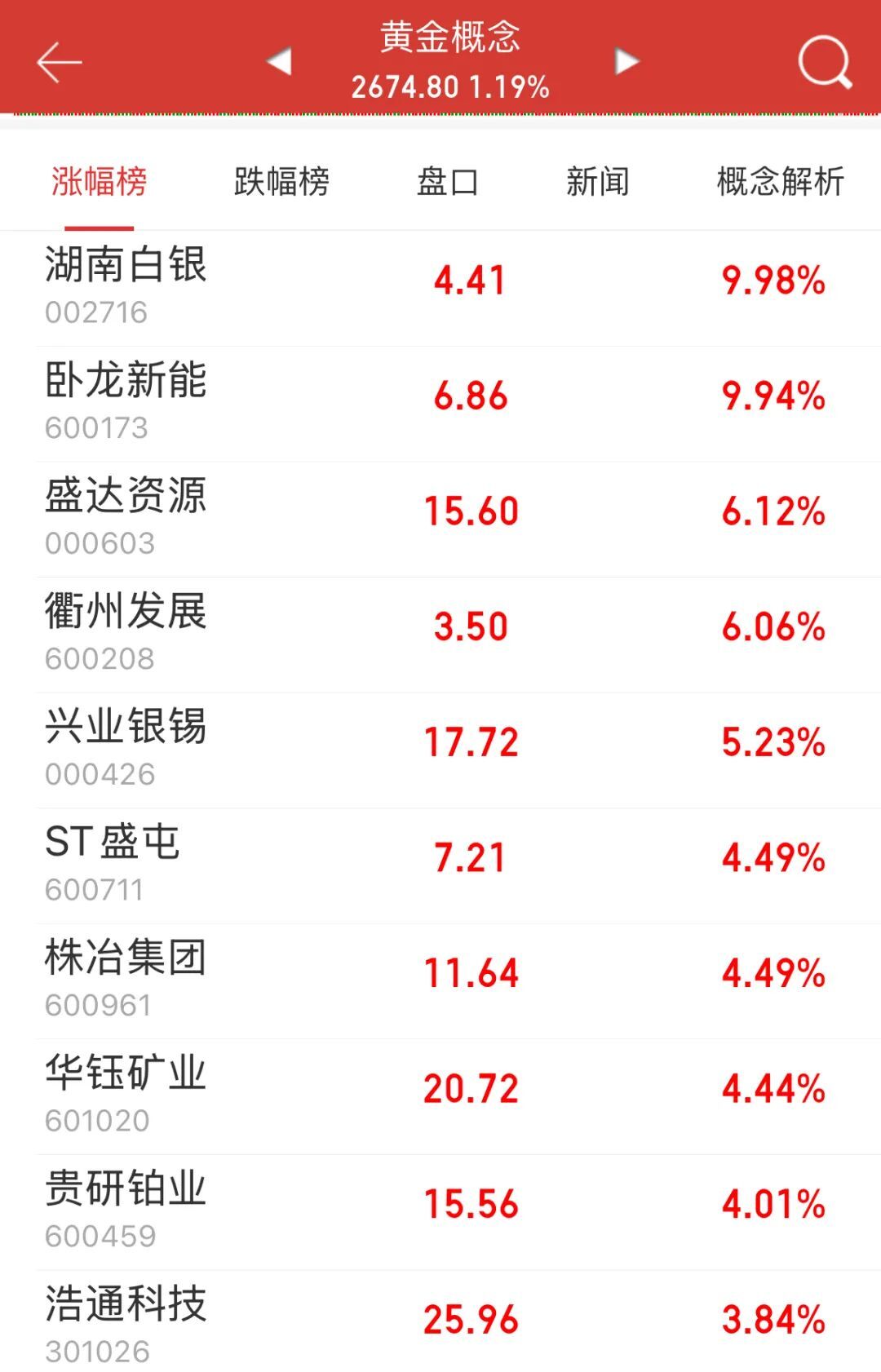
Group 1 - Spot gold prices reached $3,340 per ounce, with silver showing even more significant gains [1] - Domestic gold jewelry brands have increased prices, and related A-share stocks have also seen notable rises, with the gold concept sector up 1.19% and the precious metals sector up 1.35% [1] - COMEX gold futures fluctuated between $3,100 and $3,400 per ounce for over two months after hitting $3,500 in April [3] Group 2 - On July 10, gold prices strengthened due to tariff policy disturbances and the Federal Reserve's consideration of a rate cut, with New York gold futures closing at $3,333 per ounce [5] - As of July 11, international gold prices continued to rise, with spot gold at $3,334.82 per ounce and New York gold futures at $3,346.65 per ounce [5] - Recent economic data from the UK and France showed mixed results, with the UK experiencing a slight economic decline and France's CPI showing higher-than-expected growth [7] Group 3 - Analysts suggest that the recent rebound in gold prices may continue, with the potential for prices to break the $3,500 per ounce mark again this year, forecasting a range of $3,600 to $3,710 as the highest levels [9] - Market sentiment has improved significantly, which typically leads to a decrease in total gold holdings, potentially limiting upward price movement [9] - The re-emergence of tariff policies and economic growth expectations may test market risk appetite, which could support further increases in gold prices [9]
贵金属数据日报-20250710
Guo Mao Qi Huo· 2025-07-10 06:19
Report Summary 1. Industry Investment Rating - Not provided in the report 2. Core Viewpoints - Short - term: On July 9, the main contract of Shanghai gold futures closed down 1.0% to 776.82 yuan/gram, and the main contract of Shanghai silver futures closed down 0.2% to 889 yuan/kilogram. Trump extended the tariff suspension to August 1 and pressured for talks. The new tariff letter's tax rate did not increase significantly, and the US said it would meet with Chinese officials next month. This eased tariff concerns and reduced safe - haven demand, which was bearish for precious metals from a macro perspective. Also, the US economic data was okay, the economic downturn risk in the second half of the year weakened, and the Fed was unlikely to cut interest rates in the short term, which also suppressed precious metals. However, due to tariff policy uncertainties, China's central bank's continuous gold - buying for 8 months, and weakening US inflation expectations with a September rate - cut expectation, gold prices were unlikely to decline significantly. So, in the short term, precious metals were expected to continue to fluctuate [4]. - Medium - to - long - term: Against the backdrop of the trade war, the Fed still had a certain probability of cutting interest rates this year. With global geopolitical uncertainties, intensifying major - power games, and the trend of de - dollarization, global central banks' gold - buying continued. The medium - to - long - term upward trend of gold remained unchanged. The strategy suggested continuous low - buying [4]. 3. Summary by Directory Price Tracking - **15 - point prices of domestic and foreign gold and silver**: On July 9, 2025, London gold spot was 3293.35 dollars/ounce, down 1.3% from July 8; London silver spot was 36.60 dollars/ounce, down 0.7%. COMEX gold was 3301.80 dollars/ounce, down 1.3%; CONEX silver was 36.80 dollars/ounce, down 0.7%. AU2508 was 764.70 yuan/gram, down 1.2%; AG2508 was 8879.00 yuan/kilogram, down 0.5%. AU (T + D) was 763.00 yuan/gram, down 1.2%; AG (T + D) was 8864.00 yuan/kilogram, down 0.6% [3]. - **Price differences/ratios**: On July 9, 2025, the gold TD - SHFE active price difference was - 1.7 yuan/gram, up - 8.6% from July 8; the silver TD - SHFE active price difference was - 15 yuan/kilogram, up 36.4%. The gold domestic - foreign (TD - London) price difference was 5.50 yuan/gram, up 11.3%; the silver domestic - foreign (TD - London) price difference was - 574 yuan/kilogram, up - 1.9%. The SHFE gold - silver main ratio was 86.12, down - 0.7%; the COMEX main ratio was 89.72, down - 0.6%. AU2512 - 2508 was 3.82 yuan/gram, down - 6.4%; AG2512 - 2508 was 40 yuan/kilogram, down - 14.9% [3]. Position Data - **ETF and COMEX non - commercial positions**: As of July 8, 2025, the gold ETF - SPDR was 946.51 tons, down - 0.12% from July 7; the silver ETF - SLV was 14935.15145 tons, up 0.45%. COMEX gold non - commercial long positions were 258631 contracts, up 1.00%; non - commercial short positions were 56651 contracts, down - 7.24%; non - commercial net long positions were 201980 contracts, up 3.58%. CONEX silver non - commercial long positions were 82747 contracts, down - 2.06%; non - commercial short positions were 19347 contracts, down - 10.20%; non - commercial net long positions were 63400 contracts, up 0.72% [3]. Inventory Data - **Domestic and foreign inventories**: On July 9, 2025, SHFE gold inventory was 21585.00 kilograms, up 0.13% from July 8; SHFE silver inventory was 1320909.00 kilograms, down - 1.04%. On July 8, COMEX gold inventory was 36876794 ounces, up 0.43% from July 7; COMEX silver inventory was 497932946 ounces, down - 0.07% [3]. Related Market Indexes - **July 9, 2025 data**: The dollar index was 97.49, up 0.01% from July 8; the US 2 - year Treasury yield was 3.90%, unchanged; the 10 - year Treasury yield was 4.42%, up 0.06%. VIX was 16.81, down - 5.51%; the S&P 500 was 6225.52, up 0.45%; NYMEX crude oil was 68.18 dollars/barrel, down - 0.07%. The dollar/yuan central parity rate was 7.15, up 0.38% [4].
【期货热点追踪】伦铜、沪铜期货价格下跌,特朗普宣布对铜产品征收50%的关税,COMEX与LME价差或扩大至每吨3000美元,铜价未来走势如何?
news flash· 2025-07-09 02:43
Core Insights - Copper futures prices have declined following Trump's announcement of a 50% tariff on copper products, which may lead to a widening price gap between COMEX and LME to $3,000 per ton [1] Group 1: Market Impact - The announcement of tariffs is expected to significantly affect copper prices, leading to potential volatility in the market [1] - The widening price gap between COMEX and LME could create trading opportunities for investors [1] Group 2: Future Outlook - The future trajectory of copper prices remains uncertain, influenced by geopolitical factors and trade policies [1]
摩根士丹利:新兴市场资金流动受美元驱动,但影响程度如何?
摩根· 2025-07-09 02:40
Investment Rating - The report maintains an unchanged view on emerging markets (EM) inflows, driven by lower yields and a weaker USD, which are expected to support EM inflows [1][10]. Core Insights - A 1% decrease in the USD is projected to result in approximately US$360 million inflows into EM local markets [10][29]. - A 1% outflow from foreign US Treasury holdings into EM local markets could equate to around 3% of local debt market size, 48% of daily FX turnover, and 0.8% of GDP across GBIEM countries [10][39]. - Current valuations in sovereign credit show little risk premium for tariff policy, with idiosyncratic drivers being the main source of dispersion [10][44]. Summary by Sections EM Flows and USD Sensitivity - The analysis indicates that EM local flows are significantly influenced by USD movements, with historical data supporting this relationship [21][32]. - The report highlights that the relationship between USD weakness and EM inflows has been consistently negative and statistically significant over the past decade [32][36]. Sovereign Credit Strategy - The report notes that EMBI index spreads are trading close to historical lows, with minimal risk premium priced in for potential tariff impacts [44][45]. - Specific countries like Zambia are on the verge of a credit rating upgrade, which could enhance their debt carrying capacity [70][50]. Regional Strategies - In Latin America, the Mexican Peso (MXN) has shown mild long positioning despite recent rallies, with its performance linked to US risk appetite [3][62]. - The report emphasizes the importance of macroeconomic fundamentals in shaping currency performance, particularly in the context of upcoming elections in Chile [83]. Trade Recommendations - The report includes specific trade recommendations, such as buying Zambia's 2053 bond with a target price of 77, reflecting a positive outlook on its credit rating upgrade [70][61]. - It also suggests maintaining positions in Turkey's sovereign credit, anticipating gradual rate cuts and resilience against economic shocks [71][75].
