
Tariffs

Search documents
Costco adds Biden Commerce Sec. Gina Raimondo to board on heels of Trump tariff lawsuit
CNBC· 2025-12-04 22:37
Core Viewpoint - Costco is taking legal action to recover funds paid for tariffs imposed by the Trump administration, while also enhancing its board with the nomination of Gina Raimondo, former Commerce Secretary, to leverage her extensive experience in global business and politics [2][4]. Group 1: Legal Actions and Tariffs - Costco has filed a federal lawsuit seeking to recover the money it has paid this year for tariffs that are currently under legal dispute [4]. - The lawsuit requests a federal court to order the return of tariff payments without waiting for the Supreme Court's ruling on their legality [4]. - The retailer expresses concern that without such an order, it may not be able to reclaim the funds even if the Supreme Court rules against the tariffs [4]. Group 2: Board of Directors - Costco has nominated Gina Raimondo, former Secretary of Commerce, to its board of directors [2]. - The Chairman of Costco, Tony James, highlighted Raimondo's extensive experience in global business, politics, and international security as a valuable addition to the board [2]. - Raimondo's background includes serving as Rhode Island's treasurer and working in venture capital prior to her role in the Biden administration [2].


Why Pimco Ignored 'Sell America' Calls and Won Big
Bloomberg Television· 2025-12-04 22:03
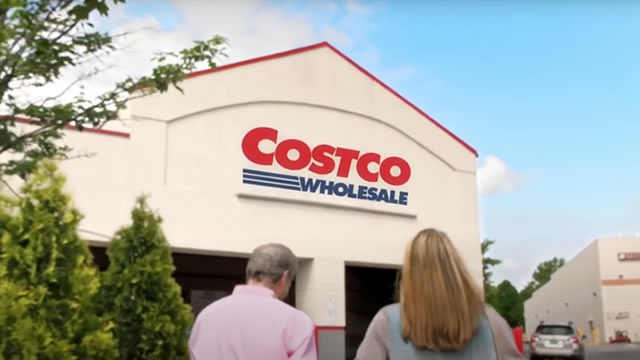
And a great story on the Bloomberg terminal, Mohammed, about you and your team and really just the decision making you guys had to make back in April, back in March. And, well, a lot of people were bailing or at least thinking about bailing on US assets. You stood firm and you've reaped the benefits.Explain why. Thank you, Romain. Thank you, David, for having me.I think the context is at that time there was plenty of uncertainty and the view was that this tariff related uncertainty will further add to the c ...

Energy Transfer LP (ET): A Bull Case Theory
Insider Monkey· 2025-12-04 19:16
Core Insights - Artificial intelligence (AI) is identified as the greatest investment opportunity of the current era, with a strong emphasis on the urgency to invest now [1][13] - The energy demands of AI technologies are highlighted, with data centers consuming as much energy as small cities, leading to concerns about power grid strain and rising electricity prices [2][3] Investment Opportunity - A specific company is positioned as a critical player in the AI energy sector, owning essential energy infrastructure assets that will benefit from the increasing energy demands of AI [3][7] - This company is not a chipmaker or cloud platform but is described as a "toll booth" operator in the AI energy boom, collecting fees from energy exports [5][6] Financial Position - The company is noted for being debt-free and holding a significant cash reserve, amounting to nearly one-third of its market capitalization, which positions it favorably compared to other energy firms burdened with debt [8][10] - It is trading at less than 7 times earnings, indicating a potentially undervalued investment opportunity in the context of its critical role in the AI and energy sectors [10][12] Market Trends - The article discusses the broader trends of onshoring driven by tariffs and a surge in U.S. LNG exports, which the company is well-positioned to capitalize on [14][5] - The influx of talent into the AI sector is expected to drive rapid advancements and innovation, further solidifying the importance of investing in AI-related companies [12][11] Future Outlook - The company is described as having a unique footprint in nuclear energy, which is positioned as a future source of clean and reliable power, aligning with the growing energy needs of AI [7][14] - The potential for significant returns is emphasized, with projections of over 100% return within 12 to 24 months for investors who act quickly [15][19]


Home Depot, Lowe's rival files Chapter 11 bankruptcy
Yahoo Finance· 2025-12-04 18:47
Group 1: Impact of Tariffs on Home Construction - President Trump's tariffs have increased builder costs by $7,500 to $10,000 per home, according to estimates from U.S. homebuilders [1] - Rising lumber prices are expected to add about $4,900 per home on average, significantly impacting the home construction industry [2] - A $1,000 increase in the median price of a new home can disqualify approximately 106,000 potential buyers [1] Group 2: North American Builder's Supply Bankruptcy - North American Builder's Supply filed for Chapter 11 bankruptcy protection on December 3, 2025, reporting estimated assets and liabilities between $500,001 and $1 million [5][7] - The bankruptcy filing is attributed to financial distress, including claims and a lawsuit from creditor Proventure Capital LLC, indicating creditor pressure and litigation [7] - The Chapter 11 filing suggests the company may be seeking reorganization rather than outright liquidation [8]


CEOs see younger consumers driving growth amid tariffs, AI changes
Reuters· 2025-12-04 18:39
Younger consumers are helping to drive growth in some consumer products despite higher prices from tariffs and other economic headwinds, while artificial intelligence boosts efficiencies and margins, several CEOs told Reuters on Thursday. ...

Stanley Black & Decker, Inc. (SWK) Presents at Goldman Sachs Industrials and Materials Conference 2025 Transcript
Seeking Alpha· 2025-12-04 18:38
Core Viewpoint - The company remains confident in its long-term growth trajectory despite facing challenges and headwinds in the manufacturing sector, particularly due to long supply chains extending to Asia [1][2]. Group 1: Financial Targets - The company aims for mid-single-digit top line growth, a gross margin exceeding 35%, and an EBITDA margin in the high teens or better [1]. - Tariffs have delayed the company’s progress by approximately 12 months, but price adjustments have been made to offset these tariffs [2]. Group 2: Mitigation Strategies - The company is actively pursuing mitigation strategies to recover margins affected by tariffs, indicating a proactive approach to managing costs and maintaining profitability [2]. - There is a desire for a more stable and construction-friendly environment to support business operations [2].


Trump’s Market Whiplash: A Rollercoaster for Your Portfolio (and Sanity)
Stock Market News· 2025-12-04 18:00
Market Volatility and Policy Changes - The stock market is experiencing significant volatility driven by recent policy announcements from the Trump administration, affecting various sectors and investor sentiment [1][2] - The rollback of the Biden-era Corporate Average Fuel Economy (CAFE) standards to a target of 34.5 miles per gallon by 2031 has been welcomed by traditional automakers, leading to stock price increases for companies like Ford, Stellantis, and General Motors [3][4] - Conversely, electric vehicle manufacturers such as Tesla and Rivian may face challenges due to the rollback of the CAFE credit trading program, potentially impacting their revenue streams [5] Trade Relations and Tariffs - The Trump administration is threatening to withdraw from the United States-Mexico-Canada Agreement (USMCA) and impose new tariffs on goods from China, Mexico, and Canada, creating uncertainty for companies in the North American supply chain [7][10] - The Canadian Dollar showed only mild weakness in response to these threats, indicating a level of market fatigue regarding trade uncertainties [8] - Analysts predict that the effective tariff rate could approach 20%, leading to higher inflation and increased market volatility, with companies likely passing on 70% of tariff costs to consumers [11][10] Impact on Specific Companies - Costco is proactively suing the U.S. government for refunds on duties already paid, highlighting the financial impact of tariffs on corporate bottom lines [12][13] - The pharmaceutical sector is reacting to Trump's plans to negotiate lower prices for GLP-1 weight-loss drugs, with shares of major manufacturers like Eli Lilly and Novo Nordisk experiencing declines [14][15] - Analysts are concerned about the long-term implications for these companies' revenues, particularly for Novo Nordisk, which holds a significant market share in the GLP-1 drug market [15] Broader Market Implications - The unpredictability of the Trump administration continues to create a complex environment for investors, necessitating a diversified portfolio and vigilance in response to ongoing policy shifts [16][17] - The market is characterized by a mix of deregulation and protectionism, with the potential for significant impacts on corporate margins and stock valuations [17][18]


Why former CEA chair Furman says Fed shouldn't cut rates in December
Youtube· 2025-12-04 17:24
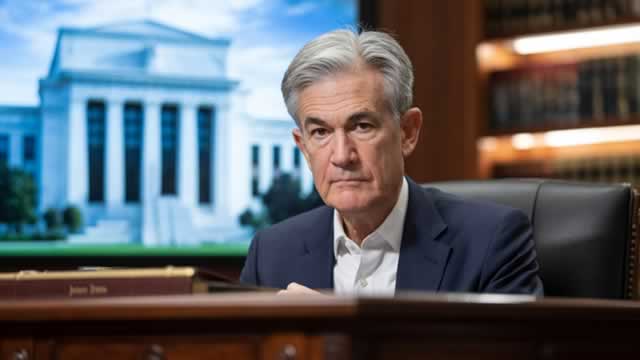
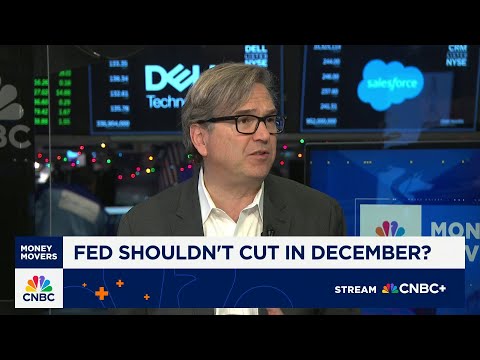
The odds for a rate cut at next week's meeting now 90% according to the bond market. But our next guest says the Fed should not be cutting. Joining us here is former CEA chair Jason Ferman who is now a professor at Harvard Kennedy School was in the Obama administration.It's great to have you Jason. Welcome. >> Great to be with you.>> You do not think the Fed should be cutting. >> Yes. First of all, I don't disagree.They are going to cut next week. >> But they have a dual mandate. They are about onetenth of ...
Why former CEA chair Furman says Fed shouldn’t cut rates in December
CNBC Television· 2025-12-04 17:24
The odds for a rate cut at next week's meeting now 90% according to the bond market. But our next guest says the Fed should not be cutting. Joining us here is former CEA chair Jason Ferman who is now a professor at Harvard Kennedy School was in the Obama administration.It's great to have you Jason. Welcome. >> Great to be with you.>> You do not think the Fed should be cutting. >> Yes. First of all, I don't disagree.They are going to cut next week. >> But they have a dual mandate. They are about onetenth of ...
Official Job Market Data Is Delayed: Here's What Private Sources Say
Yahoo Finance· 2025-12-04 17:20
Core Insights - The U.S. job market is showing signs of significant slowdown, with private reports indicating job losses and reduced hiring activity [2][5][8] Job Market Data - U.S. employers shed 9,000 jobs in November, an improvement from the 15,500 jobs lost in October, marking the fifth month of negative job growth in the last seven months [2] - Employers announced 71,321 job cuts in November, up from 57,727 in the same month last year, but down from 153,074 in October [3] - The total job cuts tracked by Challenger this year reached 1,170,821, the highest since the pandemic began, while hiring announcements at 497,151 are the lowest since the end of the Great Recession in 2010 [7] Economic Implications - The slowdown in the job market is raising concerns about the overall health of the economy, particularly outside the education and health care sectors, which continue to see growth [5][7] - Factors such as tariffs and trade policy uncertainty are contributing to the job market's decline, with employers halting expansion plans and consumers reducing spending due to higher prices [6]