Geopolitical Risks

Search documents
Gold Heads for Biggest Weekly Gain Since 2020 on Haven Demand
Yahoo Finance· 2025-10-17 10:23
Core Insights - Gold is experiencing its largest weekly gain in five years, with prices reaching an all-time high near $4,380 an ounce, marking an increase of approximately 8% this week, the highest since March 2020 [1] - Silver has also reached new highs, with prices hitting nearly $54.50 an ounce, reflecting an increase of over 85% this year [3] Group 1: Market Drivers - Concerns over credit quality in the US and renewed trade tensions with China are driving investors towards precious metals as safe-haven assets [2] - Geopolitical risks, rising public debt, and threats to the Federal Reserve's independence are contributing to the increased demand for gold and silver [2] Group 2: Price Movements and Trends - Gold has surged more than 60% this year, supported by central bank purchases and inflows into exchange-traded funds, with traders anticipating at least one significant US rate cut by year-end [3] - The London silver market has tightened significantly, leading to a price increase above New York silver futures, with borrowing costs for silver sitting around 20% [4] Group 3: Supply and Demand Dynamics - Over the past week, over 15 million ounces of silver have been withdrawn from Comex warehouses in New York, with much of it likely heading to London to alleviate tightness in the market [5] - A notable outflow of 10 million ounces from silver-backed exchange-traded funds occurred on Thursday, contributing to the ongoing supply dynamics [5]
Commodity trade faces geopolitical turbulence, Willis reports
Globenewswire· 2025-10-16 08:00
Core Insights - Commodity traders are facing renewed geopolitical risks due to military conflicts, increasing tariffs, and pressure on global supply chains, which may lead to volatility-driven profits for some players [1][2] Risk Analysis - The report identifies tariffs as the biggest economic threat to commodity traders, reshaping trade flows and injecting unprecedented policy uncertainty [7] - China remains the largest buyer in most commodity sectors, with slowing growth and deflation risks potentially affecting balance sheets, necessitating close monitoring of the economy [7] - Climate change is reshaping commodity markets, altering seasonal fuel demand and straining logistics [7] - Geopolitical tensions, particularly around Ukraine, continue to impact commodity markets, raising fears of supply shocks due to potential Black Sea trade disruptions [7] - Maritime trade faces rising disruptions from drone-enabled attacks and weakening global security guarantees, increasing costs and threatening the flow of global commodities [7] Emerging Risks - The evolution of European sustainability regulations could become a significant concern, impacting the global market's operation and balancing the need for reliable imports with data privacy and climate impact [3] - Potential turmoil in the global bond market may arise from the end of extraordinary stimulus measures aimed at combating post-pandemic inflation, with isolated examples raising concerns for larger problems [3] Industry Perspective - The current protectionist era is prompting governments and businesses to move towards onshore production, yet trade remains crucial for commodities that are difficult to produce in many regions [4]


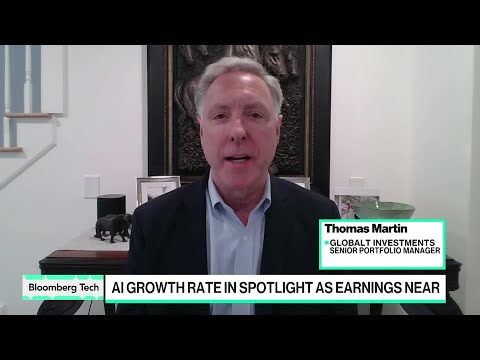
We’re Not in an AI Bubble: Globalt’s Martin
Bloomberg Technology· 2025-10-15 20:58
Is this a bubble. Well, thanks for having me on your program. And of course, that is the question that people are asking when things like this just go parabolic, to use a word that captures the imagination.People wonder, you know, how long can this go on. And they start comparing it to the past. We don't believe that it's a bubble.The underlying factor and force is the the usefulness that can be gotten from these A. I. models.And we're only at the very, very beginning of that. You know, companies are having ...
More Rate Cuts Can Push Gold Miners to Higher Levels
Etftrends· 2025-10-13 18:35
Core Insights - The recent rate cut has fueled a gold rally, pushing prices above $4,000, driven by market uncertainty regarding inflation, tariffs, and geopolitical risks [1][2] - Investors are weighing mixed signals from the Federal Reserve regarding inflation and jobs, with additional rate cuts potentially acting as a catalyst for gold's bullish trend [2][3] Gold Market Dynamics - Ongoing market factors such as rising geopolitical tensions and strong ETF inflows are supporting gold's appeal despite uncertain policy directions from the Fed [3] - Gold miners are positioned to benefit from rising gold demand, as their performance is expected to correlate with the upward movement in gold prices [3] Investment Options - Direxion offers leveraged gold mining ETFs, such as the Direxion Daily Gold Miners Bull 2X ETF (NUGT), which aims for double the performance of the NYSE Arca Gold Miners Index [4] - The Direxion Daily Jr Gold Miners Bull 2X ETF (JNUG) provides 200% exposure to the daily performance of the MVIS Global Junior Gold Miners Index, targeting smaller mining companies [5]

2025年展望:驾驭全球能源格局研究报告
Sou Hu Cai Jing· 2025-10-09 09:08
Core Insights - The report "2025 Outlook: Navigating the Global Energy Landscape" by Nextcontinent analyzes key trends, structural changes, and challenges in the global energy sector as it transitions towards sustainability by 2025 [1] Group 1: Global Energy Demand and Supply - Global energy demand is projected to grow by 2.2% in 2024, with electricity demand increasing by 4.3%, driven by high temperatures, electrification, and digitalization [2][15] - Renewable energy sources are expected to account for 38% of the growth in global energy supply in 2024, with solar PV contributing approximately 480 TWh, doubling every three years since 2016 [2][16][17] - Fossil fuels will still dominate global energy supply, accounting for 65% of electricity generation in 2024, but their growth rate is slowing, with oil's share in total energy demand dropping below 30% for the first time in fifty years [2][16] Group 2: Geopolitical Influences - Geopolitical tensions, particularly in regions like the Middle East and Ukraine, are disrupting fossil fuel supply chains, highlighting the importance of key transit routes [3][43] - The concentration of critical mineral supply chains in China poses new vulnerabilities, with 85-95% of battery components and 80% of solar panels produced there [3][45] - Western nations are responding to these risks by localizing clean energy manufacturing through policies like the U.S. Inflation Reduction Act and the EU's Net Zero Industry Act [3][46] Group 3: Investment Trends - Global energy investment is expected to exceed $3 trillion in 2024, with around $2 trillion directed towards clean energy technologies [3] - Investment in solar energy is projected to surpass $50 billion, while other areas like grid infrastructure and battery storage are also seeing growth [3] - There are significant regional disparities in clean energy investment, with the U.S. reducing its clean energy funding while China and the EU continue to increase their investments [3] Group 4: Technological Innovations - Digitalization and technological advancements are reshaping the energy sector, with AI optimizing energy grid efficiency and predictive maintenance reducing unplanned outages by 35% [4] - The demand for electricity from data centers is surging, consuming between 240-340 TWh in 2022, which is expected to grow rapidly [4] - The energy sector is facing a skills gap, necessitating the development of talent in renewable energy, nuclear energy, and digital grid management [4] Group 5: Regional Insights - In North America, energy demand is declining due to efficiency gains, while renewable energy capacity is expected to triple by 2035 [27][28] - The European Union is rapidly reducing emissions, with a target of sourcing 80% of electricity from renewables by 2030 [29][30] - Asia, particularly China, is the fastest-growing energy market, accounting for over two-thirds of global oil demand growth and leading in renewable energy production [31]

Robert Kiyosaki Slams Warren Buffett's Gold and Silver U-Turn, Predicts Market Crash
Yahoo Finance· 2025-10-04 16:17
Group 1 - Robert Kiyosaki expresses concerns over Warren Buffett's endorsement of gold and silver, suggesting it may indicate a potential market crash [1][2] - Buffett's shift towards precious metals is notable given his historical criticism of gold and silver investments, which he previously deemed as sentiment-driven assets [2][4] - The recent surge in gold prices is attributed to factors such as a weaker US dollar, inflation, trade tariffs, and geopolitical uncertainties, including a potential US government shutdown [3][4] Group 2 - Kiyosaki's comments highlight the need for investors to prepare for possible market turbulence and to diversify their portfolios to manage risks [5] - Buffett's recent investment strategy change coincides with inflationary concerns in the US economy, prompting a search for protection against currency depreciation [4]
X @Bloomberg
Bloomberg· 2025-10-02 15:15
Market Trends - African stock markets are experiencing significant growth [1] - This growth is attracting renewed interest from global investors [1] Investment Opportunities & Risks - Investors are seeking returns amidst a tariff war and rising geopolitical risks [1]
Gold (XAUUSD) & Silver Price Forecast: Fed Cut Bets and Geopolitical Risks Drive Demand
FX Empire· 2025-09-30 08:28
Core Viewpoint - The content emphasizes the importance of conducting personal due diligence and consulting competent advisors before making any financial decisions, particularly in the context of investments and trading activities [1]. Group 1 - The website provides general news, personal analysis, and third-party content intended for educational and research purposes [1]. - It explicitly states that the information does not constitute any recommendation or advice for investment actions [1]. - Users are advised to perform their own research and consider their financial situation before making decisions [1]. Group 2 - The website includes information about complex financial instruments such as cryptocurrencies and contracts for difference (CFDs), which carry a high risk of losing money [1]. - It encourages users to understand how these instruments work and the associated risks before investing [1].
X @Bloomberg
Bloomberg· 2025-09-24 16:16
With geopolitical risks left and right, plus the additional strain of cyberattacks, it's far from business as usual for UK business. Get The Readout with @AllegraStratton https://t.co/H3pShdeZv7 ...
Gold prices hit fresh high as analysts predict it could be best-performing asset of the year
New York Post· 2025-09-23 19:18
Group 1: Gold Price Surge - Gold futures reached a new high of over $3,800, driven by investor demand for safe-haven assets [1] - The real gold price, adjusted for inflation, hit a record high for the first time since 1980 earlier this month [3][4] - Deutsche Bank analysts predict gold prices could exceed $4,000 by year-end, indicating a potential full-year return of over 50% [1] Group 2: Investment Drivers - Investors typically purchase gold as a hedge against inflation and economic uncertainty due to its value retention capabilities [3][14] - Despite gold's rise, major stock indexes have also reached record highs this year, reflecting a bullish sentiment in the stock market [3] - Factors contributing to gold's price increase include anxiety over tariffs, high interest rates, a weaker US dollar, potential government shutdowns, and a slow labor market [9] Group 3: Central Bank Activity - Central banks globally have been increasing their gold reserves amid geopolitical crises, such as the Russia-Ukraine war and the conflict in Gaza [10] - A World Gold Council survey indicates that 85% of central bankers view gold's performance during turbulent times as relevant to their portfolios, with 71% considering it a hedge against geopolitical risks [11] - The survey also revealed that 95% of central bankers expect global gold reserves to rise this year [11] Group 4: Interest Rates and Gold Appeal - The Federal Reserve's recent interest rate cut is expected to make gold more attractive, as lower rates typically lead to lower Treasury yields [15][16] - As gold does not pay interest, a lower interest rate environment enhances its appeal as an investment [16]