三核驱动

Search documents
“一城独大”的时代要过去了?
创业邦· 2025-12-05 11:15
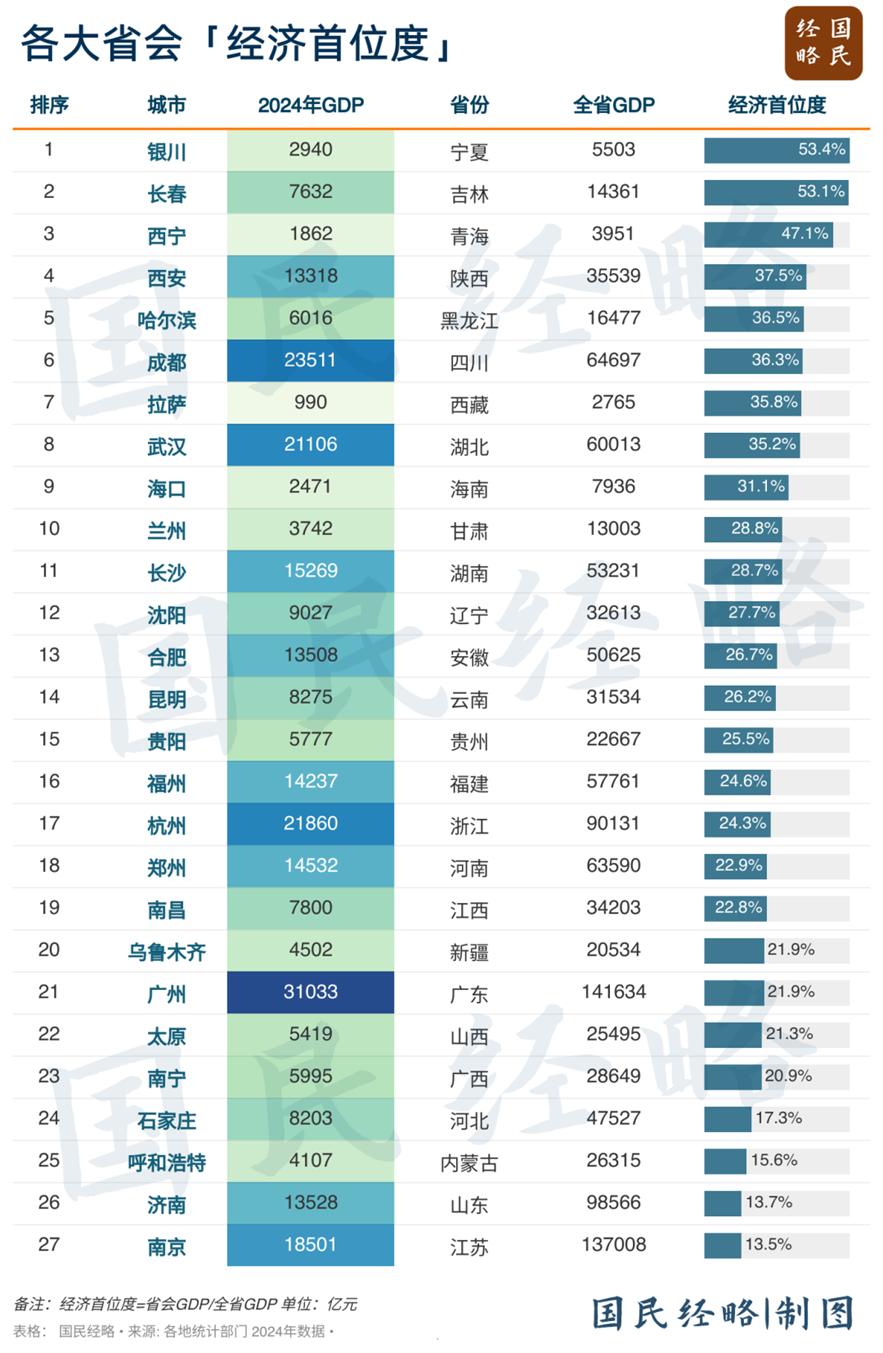
Core Viewpoint - The article discusses the shift from a "one city dominates" model in provincial capitals to a more balanced approach that encourages the development of multiple sub-center cities within provinces, as highlighted by recent government policies aimed at promoting high-quality urban development [5][10]. Group 1: Government Policies and Initiatives - The State Council has issued opinions to promote the cultivation of provincial sub-center cities, indicating a strategic shift from focusing solely on provincial capitals [5]. - The concept of developing multiple centers in provinces has been discussed since 2020, with various documents emphasizing the need to avoid the pitfalls of a single dominant city [5][7]. Group 2: Economic Disparities and Historical Context - The "strong provincial capital" strategy has historically been a common characteristic of regional development in China, leading to significant economic disparities between provincial capitals and other cities [7][10]. - In economically developed provinces, cities often exhibit a "dual-core" model, where political and economic centers are distinct, promoting balanced resource distribution and regional collaboration [7][10]. Group 3: Economic Performance of Provincial Capitals - The article provides a ranking of provincial capitals based on their economic primacy, with cities like Yinchuan and Changchun showing high economic dominance, contributing over 50% to their respective provincial GDPs [8]. - The economic performance of provincial capitals varies significantly, with some cities like Xi'an and Chengdu experiencing rapid growth, further widening the gap with other cities in their provinces [10][11]. Group 4: Challenges and Future Directions - The article highlights the challenges of implementing the shift from a "one city dominates" model, noting that historical patterns and administrative practices complicate the transition [15][20]. - There is a need for a balanced approach to resource allocation that does not solely rely on administrative decisions but also considers local strengths and opportunities for development [21][22].


“一城独大”的时代要过去了?
3 6 Ke· 2025-12-04 08:29
Core Viewpoint - The article discusses the phenomenon of "one city dominance" in provincial capitals of China, highlighting the economic imbalance it creates and the challenges in addressing this issue. It emphasizes the need for a more balanced regional development strategy rather than relying solely on strong provincial capitals to drive growth [1][7]. Economic Disparities - The article notes that in economically developed provinces, cities often exhibit a "dual-core" economic structure, where political and economic centers are distinct, leading to more balanced resource distribution and regional collaboration [1]. - In contrast, many central and western provinces show a "one city dominance" pattern, where the provincial capital absorbs a disproportionate share of resources, exacerbating regional disparities [2][3]. Case Studies - The case of Jilin Province illustrates the decline of Jilin City relative to Changchun, with Jilin's GDP dropping from nearly half of Changchun's in 2000 to only one-fifth by 2024, leading to significant population loss in Jilin City [3][5]. - Similarly, in Shaanxi Province, Xi'an's rapid development has widened the gap with other cities, creating a situation where Xi'an is the only city with significant economic opportunities, further driving talent migration [5]. Resource Allocation Challenges - The article highlights that resource allocation often favors provincial capitals, leading to complaints from other cities that feel marginalized. For instance, in Hubei, despite strong economic performance from cities like Xiangyang and Yichang, resources remain concentrated in Wuhan [10]. - The "city-managed county" system has led to uneven resource distribution, where urban areas benefit more than rural counterparts, complicating efforts for balanced regional growth [11]. Proposed Solutions - The article suggests that breaking the "one city dominance" requires a shift in policy to promote regional development through decentralization and the establishment of secondary centers, allowing for a more equitable distribution of resources [7][12]. - It also points out that successful regional development depends on localities leveraging their unique advantages rather than relying solely on administrative directives [13].