扩权强县

Search documents
中国城市的等级金字塔
Sou Hu Cai Jing· 2025-12-31 04:26
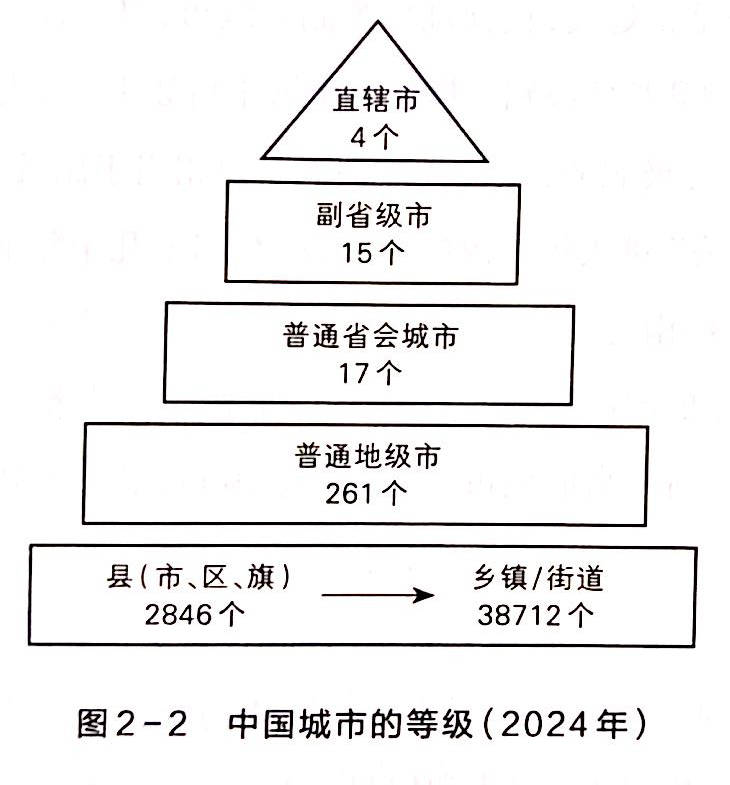
Core Viewpoint - The allocation of scarce public resources in China is primarily determined by administrative hierarchy rather than market price mechanisms, which helps to understand the development disparities and business environments among cities [2][8]. Group 1: City Hierarchy - China's governance structure is characterized by a "centralized system with a combination of vertical and horizontal management," where higher-level governments control resource allocation for lower-level governments [2][4]. - The top of the city hierarchy consists of four municipalities: Beijing, Shanghai, Tianjin, and Chongqing, which have the highest administrative levels and receive preferential resource allocation [4][5]. - The second tier includes 15 sub-provincial cities, which have administrative levels between provinces and prefecture-level cities, allowing them to access resources similarly to municipalities [5][6]. Group 2: Resource Allocation Mechanism - The distribution of fiscal funds follows a top-down approach, where higher-level governments prioritize their own financial needs, often leading to a significant reduction in resources available for lower-level governments [8][9]. - The allocation of educational resources, particularly prestigious universities, is also influenced by city administrative levels, with most top universities located in higher-tier cities, creating disparities in access to quality education [10][11]. Group 3: Economic Research Findings - A study published in 2018 found that cities with higher administrative levels have higher total factor productivity (TFP) in manufacturing, with a 6% increase in TFP for each level increase in city hierarchy [11]. - The same research indicated that higher administrative levels lead to greater resource misallocation, with a 10% increase in misallocation for each level increase, suggesting that while more resources are available, efficiency decreases [11].

“一城独大”的时代要过去了?
3 6 Ke· 2025-12-04 08:29
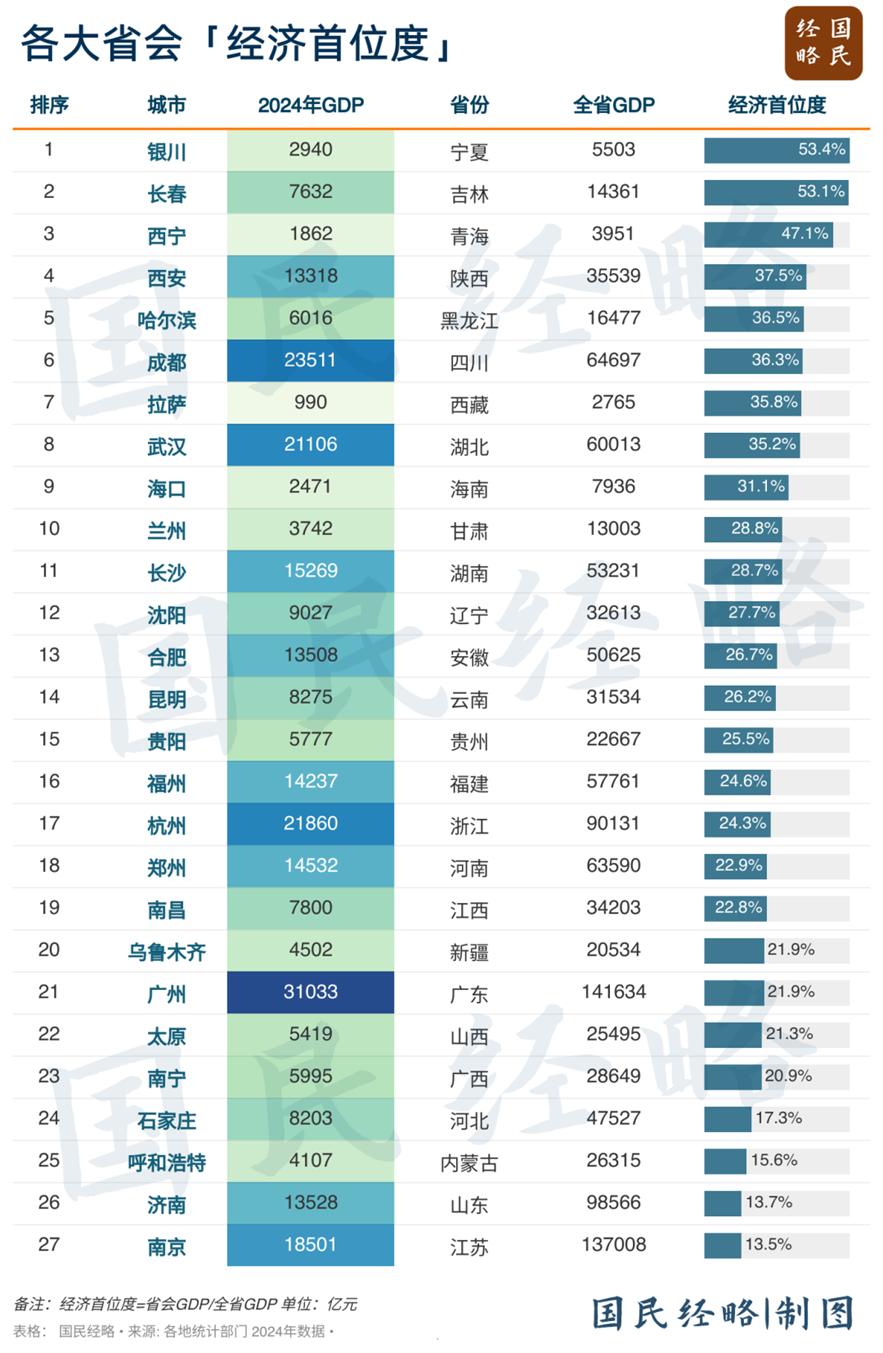
Core Viewpoint - The article discusses the phenomenon of "one city dominance" in provincial capitals of China, highlighting the economic imbalance it creates and the challenges in addressing this issue. It emphasizes the need for a more balanced regional development strategy rather than relying solely on strong provincial capitals to drive growth [1][7]. Economic Disparities - The article notes that in economically developed provinces, cities often exhibit a "dual-core" economic structure, where political and economic centers are distinct, leading to more balanced resource distribution and regional collaboration [1]. - In contrast, many central and western provinces show a "one city dominance" pattern, where the provincial capital absorbs a disproportionate share of resources, exacerbating regional disparities [2][3]. Case Studies - The case of Jilin Province illustrates the decline of Jilin City relative to Changchun, with Jilin's GDP dropping from nearly half of Changchun's in 2000 to only one-fifth by 2024, leading to significant population loss in Jilin City [3][5]. - Similarly, in Shaanxi Province, Xi'an's rapid development has widened the gap with other cities, creating a situation where Xi'an is the only city with significant economic opportunities, further driving talent migration [5]. Resource Allocation Challenges - The article highlights that resource allocation often favors provincial capitals, leading to complaints from other cities that feel marginalized. For instance, in Hubei, despite strong economic performance from cities like Xiangyang and Yichang, resources remain concentrated in Wuhan [10]. - The "city-managed county" system has led to uneven resource distribution, where urban areas benefit more than rural counterparts, complicating efforts for balanced regional growth [11]. Proposed Solutions - The article suggests that breaking the "one city dominance" requires a shift in policy to promote regional development through decentralization and the establishment of secondary centers, allowing for a more equitable distribution of resources [7][12]. - It also points out that successful regional development depends on localities leveraging their unique advantages rather than relying solely on administrative directives [13].