
三生共融

Search documents
农业观察:从“种菜”到“三生共融” 都市田园何以蜕变?
Zhong Guo Xin Wen Wang· 2025-12-17 06:45
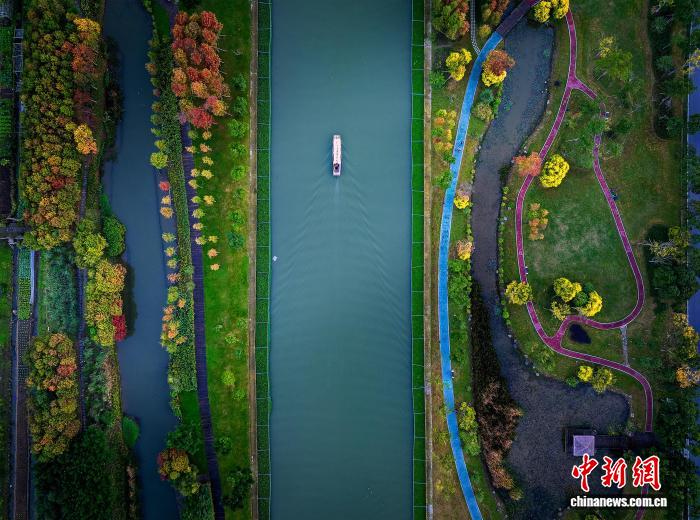
Core Insights - The article discusses the transformation of the coastal urban agricultural area in Wenzhou, Zhejiang, from traditional farming to a modern integrated agricultural complex, emphasizing the concept of "three-in-one" integration of production, life, and ecology [1][2]. Group 1: Agricultural Transformation - The coastal urban agricultural area has evolved into a modern agricultural complex, leveraging the opportunity provided by the provincial-level modern agricultural park construction [1]. - The core philosophy of development is to not only focus on farming but also on creating beautiful landscapes, as articulated by local officials [1]. Group 2: Integration of Agriculture and Tourism - The area promotes deep integration of "agriculture+" by developing various cultural and tourism projects, such as agricultural parks and water-based sightseeing areas, transforming farmland into public spaces for recreation and education [2]. - The Zhongtang River Park exemplifies this transformation, featuring ecological pathways and scenic viewpoints, becoming a popular destination for local residents [2]. Group 3: Educational Initiatives - The integration extends into education, with initiatives combining agricultural experiences with scientific education and ecological tourism, aimed at children [5]. - The Muye Camp within the area offers hands-on agricultural activities, allowing children to learn through participation in farming [5]. Group 4: Digital Innovation - The digital wave has introduced new opportunities, with the creation of unique agricultural IPs like "Xigugu" and "Huacai Cai" to enhance the visibility and appeal of local agriculture [5]. - The development of cultural and creative products featuring these IPs has helped bridge the gap between agriculture and the cultural industry [5]. Group 5: Community Engagement - The area is becoming a vibrant community space where families engage in recreational activities, reflecting the successful activation of local resources and the enhancement of agricultural value through technology and tourism [5].

顶尖专家学者齐聚肇庆,共商南药食养产业发展新路径
Nan Fang Nong Cun Bao· 2025-11-20 14:02
Core Insights - The conference focused on the development of the southern medicine and food nurturing industry, emphasizing high-quality growth through technology and ecological practices [3][5][8] Group 1: Technology Empowerment - Experts highlighted the need for technological innovation to overcome challenges in the cinnamon industry, including value chain fragmentation and strict EU standards [13][14][18] - Four innovation pathways were proposed for cinnamon: genetic innovation, low-temperature oil extraction, controlled release technology, and comprehensive utilization of raw materials [19][20][22] - The development of the agarwood industry was discussed, with breakthroughs in cultivation reducing the yield time from 8-10 years to 3 years, enhancing both profitability and product quality [25][27][30] Group 2: Resource Development - The potential of the medicinal plant Baji Tian was explored, with emphasis on its historical use and modern pharmacological benefits, including anti-osteoporosis and immune regulation [38][46][48] - The integration of food and medicinal uses of orchid species was discussed, highlighting their dual value and the need for industry-oriented research to enhance competitiveness [52][56][60] Group 3: Ecological Practices - The concept of "returning to nature" for medicinal materials was introduced, advocating for organic cultivation methods that improve quality without chemical inputs [66][68][72] - The "rubber and medicine" co-cultivation model was presented, demonstrating a 40% increase in land utilization while reducing chemical fertilizer and pesticide use [78][81][84] Group 4: Industry Integration - The integration of tropical agriculture with health tourism was emphasized as a means to create a sustainable value chain that encompasses production, ecology, and lifestyle [90][92][99] - The case of Cai Zhi Lin was shared as a model for integrating medicine, healthcare, and nutrition, showcasing a comprehensive approach to the southern medicine industry [100][103][106]
