上海房价走势

Search documents
最近五年上海哪里的房价最稳定
3 6 Ke· 2026-02-05 02:50
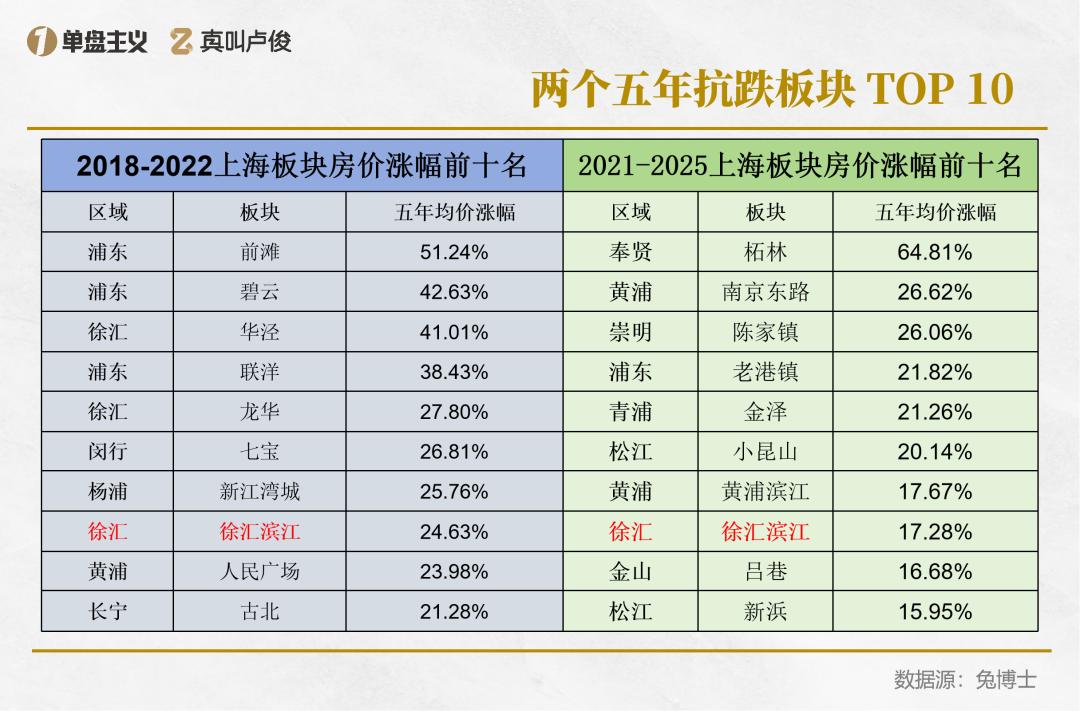
Core Insights - The article discusses the increasing divide in Shanghai's housing market, highlighting a disparity between perceived price drops and actual market conditions, particularly in desirable areas where prices remain stable or even increase [1] - It emphasizes that the resilience of housing prices in certain districts is influenced by various factors beyond just location, including infrastructure development and demographic changes [27] Group 1: Market Trends - The market temperature has indeed cooled, but the actual median price drop across major districts is only around 3.5% from the peak in 2021 to 2025, which contrasts sharply with more dramatic narratives of price declines [3] - Among 209 districts, 24 experienced over a 20% price drop, primarily in suburban areas where supply exceeds demand and amenities are still developing [5] - The average transaction size has increased, with over 80% of districts seeing growth in average transaction area, indicating a shift towards larger, more desirable living spaces [8] Group 2: Price Dynamics - Significant price increases in certain districts are driven by three key factors: major infrastructure projects, urban integration, and the release of scarce resources [12][19] - For example, the completion of new transit lines has redefined the accessibility and value of areas like Chenjia Town, leading to price increases [12] - The average price per square meter in various districts has shown substantial growth, with areas like Zhulin seeing a rise from 14,364 yuan/m² in 2021 to 23,673 yuan/m² in 2025 [16] Group 3: Structural Challenges - Districts experiencing significant price declines often face structural issues, such as outdated housing stock and slow urban renewal, leading to a net outflow of higher-income residents seeking better living conditions [21] - Traditional industries' migration or stagnation has also weakened local purchasing power, particularly in areas like Pudong's Gaoqiao and Caolu, where industrial shifts have not been matched by new job creation [21] - Over-supply of homogeneous housing in new urban developments has led to imbalances in supply and demand, causing price pressures in some areas [24] Group 4: Value Assessment - The article suggests that the importance of location is evolving, with a more complex value system emerging that includes factors like resource availability, demographic trends, and urban amenities [27] - Areas like Qingpu Jinze have seen price stability due to successful integration of industry and population growth, demonstrating the importance of planning and development [29] - High-end markets in central districts like Xuhui and Huangpu are less affected by market fluctuations due to their unique offerings and limited supply [31]

律师视角下上海房价走势分析
Sou Hu Cai Jing· 2025-07-30 07:36
Core Viewpoint - The analysis of Shanghai's housing price trends in the second half of 2025 suggests that both increases and decreases in prices have legal justifications, reflecting the complexity of legal relationships and the dual nature of policy regulation [1] Group 1: Legal Relationships - The real estate market is a complex system of multiple legal relationships, where the rights and obligations of different parties lead to varying legal implications of price changes [3] - For property owners, price increases enhance asset value, while decreases may lead to asset depreciation and potential loan defaults [3] - Potential buyers face lower entry barriers with price drops but may worry about future asset devaluation [3] Group 2: Debt Relationships - The relationship between banks and borrowers creates dual legal impacts from price changes; rising prices reduce legal risks for banks, while falling prices may lead to systemic financial risks [5] Group 3: Contractual Relationships - The sensitivity to price changes differs between developers and buyers due to their contractual relationships; rising prices may benefit developers, while falling prices could increase buyer default rates [7] Group 4: Policy Regulation - The dual nature of policy regulation in China's real estate market influences price trends, with policies aimed at both stabilizing the market and preventing risks [10][11] - Policies may tighten during overheated markets and loosen during downturns, allowing for both potential price declines and recoveries [11] Group 5: Risk Distribution in Contracts - Real estate contracts inherently include risk distribution mechanisms that account for both price increases and decreases, reflecting the dual expectations of market fluctuations [12] - Price adjustment clauses in contracts can either allow developers to adjust prices based on market conditions or lock in prices, depending on the parties' expectations at the time of signing [14] Group 6: Dispute Resolution - In disputes over price fluctuations, legal arguments can support both price increases and decreases, demonstrating the dual pathways available in legal reasoning [16] - Different dispute resolution bodies may have varying approaches to price fluctuations, affecting the outcomes of cases [16] Group 7: Compliance and Risk Management - Legal services should focus on building multi-dimensional compliance strategies to address potential price fluctuations, emphasizing risk management and opportunity identification [17] - Lawyers must ensure clients adhere to legal standards, especially in volatile markets, to avoid severe legal consequences [22]