专利集中到期(LOE)

Search documents
AI赋能+专利集中到期,2026年将是医疗保健私募激动人心的一年!
Hua Er Jie Jian Wen· 2026-01-26 08:12
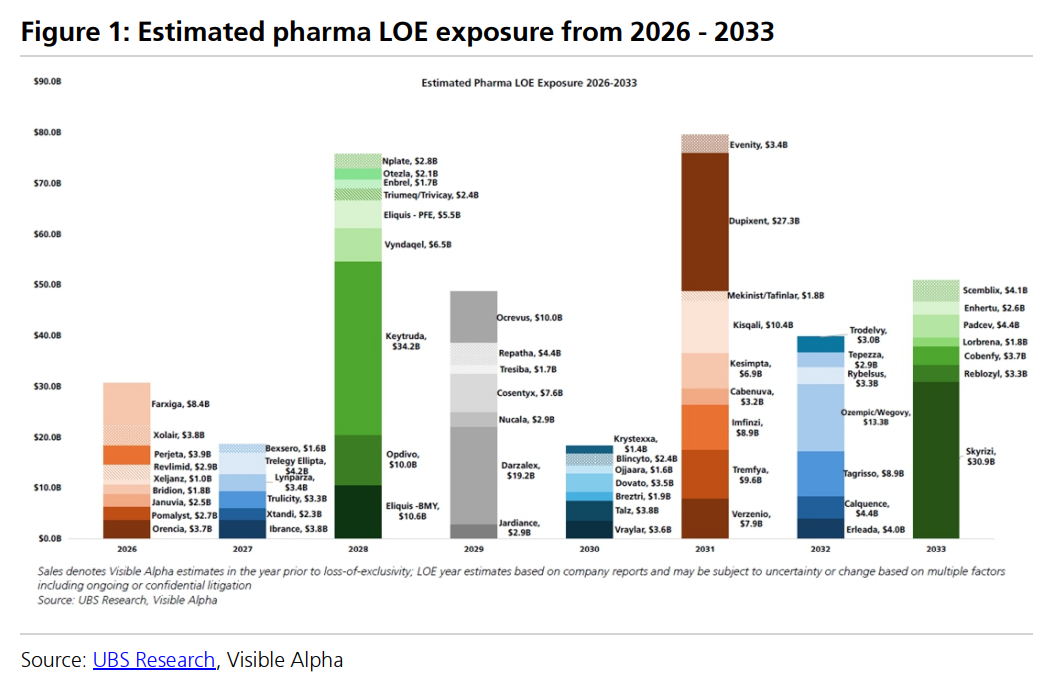
Core Viewpoint - The U.S. healthcare private equity market is at a critical turning point, with expectations for a revival in 2026 driven by macroeconomic clarity, advancements in AI technology, and the impending expiration of pharmaceutical patents [1][4]. Market Sentiment Recovery - The healthcare sector faced significant pressure in 2025 due to drug price reforms, insurance policy adjustments, FDA approval uncertainties, and high interest rates, leading to a decline in risk appetite across most sub-industries [2]. - Signs of recovery began to emerge in the second half of 2025, with expectations that stabilization in interest rates and gradual resolution of policy uncertainties could sustain this momentum into 2026 [3]. Patent Expiration and M&A Dynamics - A key structural factor for the anticipated recovery in private healthcare in 2026 is the upcoming expiration of patents for major pharmaceutical companies, with UBS estimating a concentrated period of patent expirations from 2026 to 2033 [4]. - The demand for strategic acquisitions of high-quality private biotech assets is expected to rise as multinational pharmaceutical companies increasingly rely on external innovation [4][7]. M&A Trends and Exit Strategies - In 2025, private biotech company acquisitions reached $16.4 billion, a year-on-year increase of approximately 150%, indicating a shift towards M&A as a primary exit strategy for private equity funds [7]. - The competitive landscape for acquisitions is likely to intensify in 2026, focusing on differentiated mechanisms and late-stage clinical assets as the patent cliff approaches [7]. Key Therapeutic Areas for Private Equity - UBS highlights three therapeutic areas that may serve as catalysts for private equity in 2026: - Psychedelics are entering a critical validation phase, with multiple Phase III clinical data expected to be disclosed in 2026, making it suitable for defensive capital allocation [8]. - The KRAS target may undergo paradigm validation, particularly if RVMD's Phase III data in pancreatic cancer is positive, potentially reshaping market perceptions of the KRAS pathway's commercial potential [10]. - Weight loss and metabolic diseases remain high-interest areas for acquisitions, with new oral GLP-1 and long-acting weight loss drugs expected to drive continued M&A activity [10]. AI's Evolving Role in Healthcare - AI is transitioning from a concept-driven valuation tool to a direct influence on cost structures within the healthcare sector, particularly in medical IT and managed care [11]. - The current phase of AI is expected to benefit private equity and growth assets more than creating uniform valuation premiums in the secondary market [11]. Exit Activity and Market Dynamics - In 2025, healthcare VC investments showed a pattern of early stability followed by late recovery, with a notable increase in PE-led exit activities, primarily through M&A [12]. - The number and quality of IPOs in healthcare are expected to marginally improve in 2026, enhancing risk appetite in both primary and private markets, although UBS does not foresee a comprehensive boom year [13].